Blue Ice Cave Tours In Iceland: Which Tours Reach Jokulsarlon
Blue ice caves sit under Vatnajokull, an easy hop from the glacier lagoon, and every tour here starts at the Jokulsarlon car park or brings you there from Reykjavik. This guide compares the options by price, duration and what the ticket covers.
Short answer
Blue ice cave tours from Jokulsarlon run roughly October to April and cost from $164 to $195 per person for a 2.5 to 3 hour trip, including crampons, helmet and a guide. Multi-day options from Reykjavik bundle the cave with the glacier lagoon from $633. The park bans summer natural-cave tours, so winter is the window.
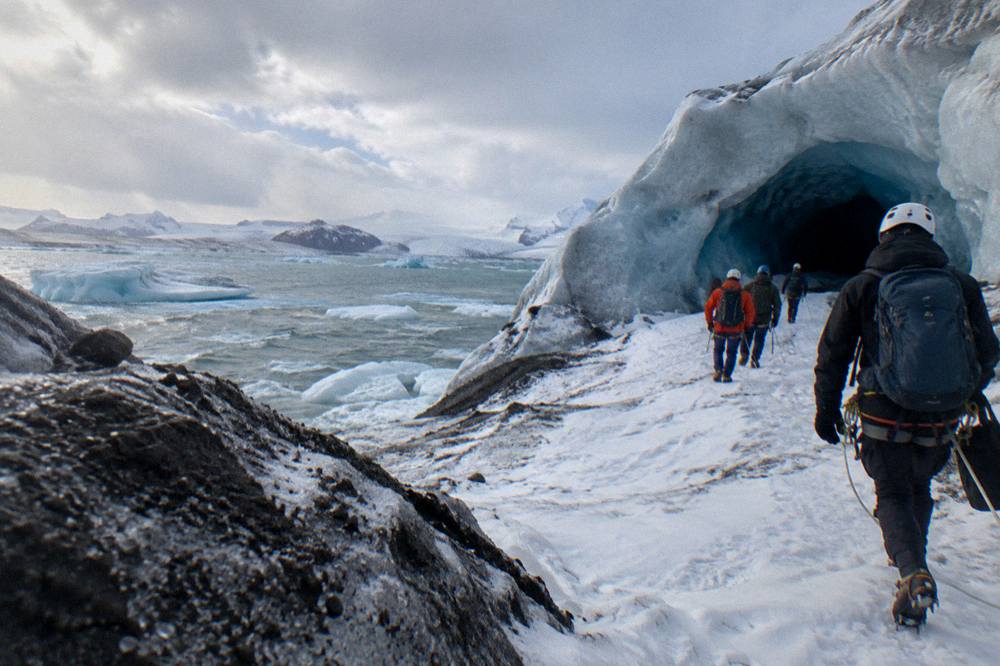
The blue ice cave is the headline winter sight of southeast Iceland. It sits inside the glacier, not on it, and the only practical way in is with an operator contracted to run tours inside Vatnajokull National Park. Almost all of those operators gather their guests at Jokulsarlon, whose main car park sits near Diamond Beach, but the caves themselves are up on Breiðamerkurjökull, reached by Super Jeep or 4WD from there. That geography is why so many travellers end up comparing blue ice cave tours against lagoon day trips, glacier hikes and multi-day south coast runs. Before settling on a pickup point, read the plain-language guide to the crystal ice cave tour for prices, seasons, meeting points and how the different options stack up.
This guide covers the tours that actually reach a blue ice cave from the Jokulsarlon side of Vatnajokull: the short drive-in super jeep tours, the longer hiking versions, the small-group options, and the multi-day packages from Reykjavik that fold the cave into a bigger south coast itinerary. Nothing here can promise the cave itself: ice conditions are assessed daily and entry always depends on the day. Since each winter reshapes these caves, the guide to Iceland's most beautiful ice caves helps you weigh which Jokulsarlon trip gives the best odds of that famous blue.
What Is A Blue Ice Cave And Why Is The Ice Blue?
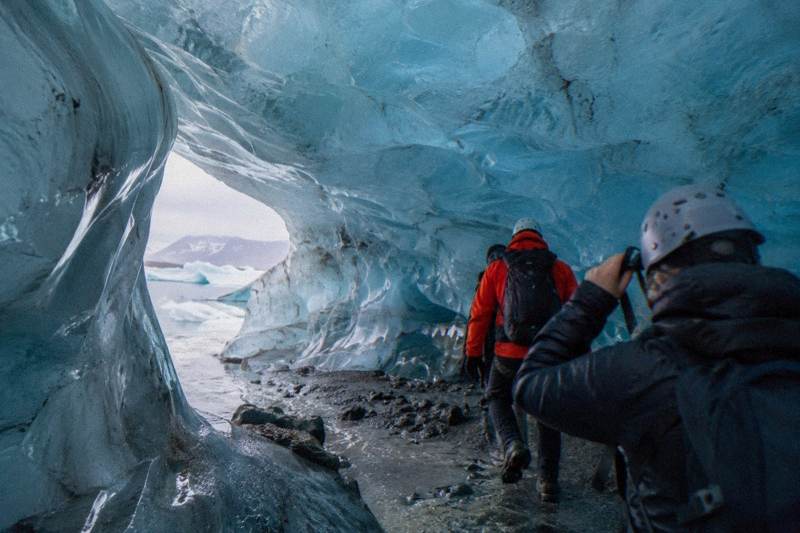
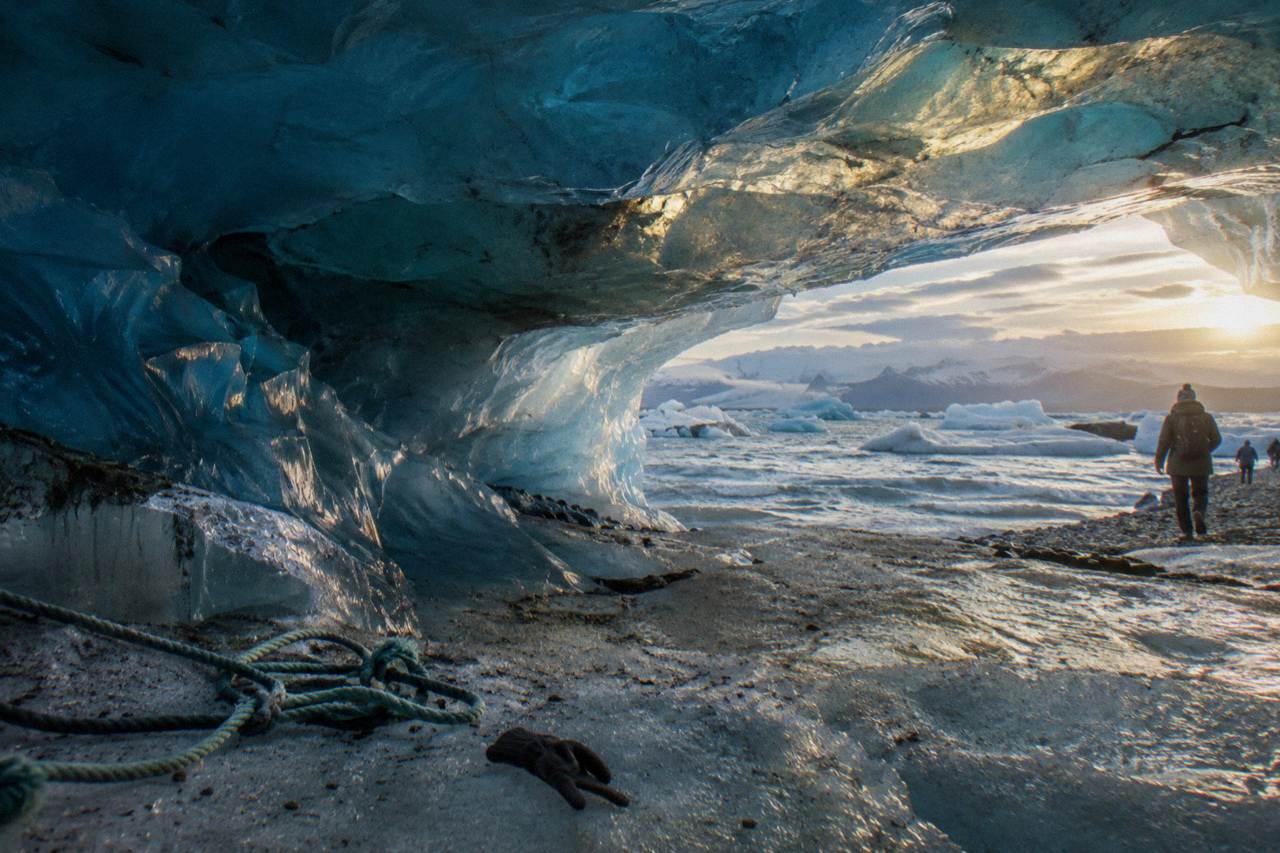
A blue ice cave is a hollow carved by meltwater under a glacier, where centuries of compression have squeezed nearly all the air out of the ice so it absorbs every colour of light except deep blue. The caves near Jokulsarlon form under Breidamerkurjokull, an outlet glacier of Vatnajokull, and they change shape or disappear entirely each summer, so guides locate and assess new chambers every autumn. Entry is a winter activity and never a certainty on any single day. Because cave access shifts with the weather, many travellers line up a backup plan, and the comparison of glacier tours from Jokulsarlon weighs the hikes, ice cave trips and kayak outings against one another.
Glacier ice starts as snow, and snow is full of trapped air. As layer after layer builds up over decades, the air is compressed out and the ice crystals grow and realign. The result is ice so dense that red and yellow wavelengths are absorbed while blue passes through, which is why a cave wall can glow like stained glass even on a grey day. The deeper and older the ice, the more intense the colour tends to be. For the same phenomenon playing out on drifting icebergs, the science behind Jokulsarlon's shifting blue colour traces how the lagoon formed and why its ice keeps changing shade as it melts.
The catch is that these are natural caves, sculpted by meltwater rivers that run under the glacier in summer. Each warm season reshapes or destroys them, and each autumn the operators who hold park contracts go out, find the season's chambers and judge whether each one is safe to enter. That is not marketing caution. After a fatal collapse on Breidamerkurjokull in August 2024, the national park imposed stricter operator conditions, including a lead guide requirement and a daily safety assessment of each cave and of any overhanging ice, as Iceland Review reported at the time.
Two practical points follow. First, no tour can promise a specific cave, a specific colour or a specific size, and any operator that does is overreaching. Second, the word blue in "blue ice cave" describes the general phenomenon: the cave you enter depends on the season's conditions and the guide's judgment that morning. If a cave is judged unsafe, operators reroute to another chamber or, in the worst case, offer an amended trip.
Katla, the other famous ice cave in Iceland, sits under Myrdalsjokull near Vik, a different glacier in a different region. Katla runs year-round because it is not a natural winter cave in the same sense. It is not covered by the tours compared here, and a traveller choosing between the two regions should know that the Vatnajokull caves from Jokulsarlon are seasonal natural caves while Katla is a separate product altogether. For a wider look at the whole category, see the companion guide on the best ice cave tours in Iceland.
Which Blue Ice Cave Tours Start At Jokulsarlon?
Seven day tours in the Ice Cave category start at the Jokulsarlon car park, priced from $164 to $195 per person for trips of 2.5 to 3 hours, all including crampons, helmet and safety gear and a guide unless stated otherwise. Two multi-day tours from Reykjavik add an ice cave stop on a two-day south coast itinerary from $633 and $689. None includes transport to the lagoon itself. If you want to weigh ice caving against glacier hiking or kayaking from the same lagoon, the guide to picking a glacier tour at Jokulsarlon lays out every option side by side.
The defining feature of this group is the meeting point. Every one of the day tours gathers at or beside Jokulsarlon: the main lagoon parking, the boat tour and cafe parking, or an operator's kiosk at the lagoon. That means you either drive yourself roughly 370 km east from Reykjavik on Route 1, or you arrive on a Reykjavik day trip or multi-day tour and meet the cave team at the lagoon. Hotel pickup is not included on several of these tours, so you make your own way to the meeting point.
The core comparison, using each tour's own figures:
| Tour | Duration | Price (from, per person) | Rating and reviews | Meeting point |
|---|---|---|---|---|
| Guided Vatnajokull Ice Cave | 3 hours | $164 | 4.2 from 2,194 reviews | Jokulsarlon |
| Crystal Cave Super Jeep | 2.5 hours | $168 | 4.2 from 1,772 reviews | Jokulsarlon parking lot |
| The Original Ice Cave Tour | 3 hours | $176 | 4.5 from 1,238 reviews | Jokulsarlon main parking |
| Crystal Blue Super Jeep | 3 hours | $168 | 4.4 from 635 reviews | Tröll Expeditions Jökulsárlón, meet on location |
| Blue Ice Cave | 3 hours | $195 | 4.6 from 973 reviews | Jökulsárlón boat tours and cafe parking |
| Small Group Ice Cave | 2 hours 30 minutes | $194 | 4.8 from 298 reviews | Jokulsarlon |
| Frozen Wonders Small Group | Not stated | $195 | 5.0 from 404 reviews | Jökulsárlón |
Read the price spread carefully, because the gap between $164 and $195 buys different formats rather than a better cave. The super jeep versions, Crystal Cave Super Jeep at $168 and Crystal Blue Super Jeep at $168, use modified vehicles to carry guests close to the glacier edge, which keeps walking short. The Blue Ice Cave at $195 meets at the boat tour and cafe parking and runs 3 hours with a guide. The small-group options, Small Group Ice Cave at $194 and the 5.0-rated Frozen Wonders at $195, trade a higher price for fewer guests per guide. None of these differences guarantees a bluer cave; they change the group size, the ride and the walk.
The two multi-day entries are a different animal. The 2-Day Blue Ice Cave, Glacier Lagoon and South Coast Small Group tour from Reykjavik, from $689 per person, rated 4.9 across 795 reviews, includes hotel pickup, breakfast, touring transport and an ice cave stop. The 2-Day Ice Cave and Glacier Hike, from $633 and rated 4.7 across 218 reviews, pairs the cave with a glacier hike and also includes breakfast. For travellers who want the cave plus the lagoon in one winter package, these two are not the only covered options that do both from Reykjavik, since the three-day tours combine them as well.
Among the day tours, the Guided Vatnajokull Ice Cave tour is the entry point of the group at $164, running 3 hours from the Jokulsarlon side with gear included and a guide on every departure. Its 4.2 rating across 2,194 reviews is the largest review pool of any ice cave day tour covered here, which makes it a reasonable baseline: if you want the standard cave experience at the lowest covered price, this is the reference point, and the more expensive options justify themselves only if you specifically want a super jeep ride or a small group.
What Do Blue Ice Cave Tours Cost Beyond The Ticket Price?
The tour price, from $164 to $195 per person for day trips, is not your total spend. Add the 1,110 ISK regional parking fee for a passenger car at Jokulsarlon, payable at machines or by the Parka app and valid until midnight the day paid, plus meals which no day tour includes, plus either a rental car and fuel for the 370 km drive or a Reykjavik day trip from $211 to get you there.
Parking at Jokulsarlon is a Vatnajokull National Park regional fee, not a lagoon charge. A passenger car up to 5 seats pays 1,110 ISK, a 6 to 9 seater pays 1,440 ISK, and the fee is collected by licence-plate photo on entry, payable at machines in the car parks or through the Parka app. The ticket is valid until midnight on the day of payment with free in and out that day, and there is a 50 percent discount if you visited another fee-based Vatnajokull service area the same date. The full scale is on the park's official price list. One tour in this category, Crystal Cave Super Jeep, names the parking fee as a guest expense, and it is unclear whether a single payment covers the Diamond Beach lots across the road, so budget for the machines rather than assuming a transfer.
Food is the other quiet cost. Every day tour in the table lists food and drinks as not included or does not state them. The cafe at Jokulsarlon is open year-round except 24 to 26 December and 31 December to 2 January, with October and November hours of 09:00 to 18:00 per the lagoon operator, so a hot drink and a bowl of soup before or after a cave trip is easy, at your own expense.
A rough winter budget for a self-driving couple, using only the figures verified above:
| Item | Figure | Basis |
|---|---|---|
| Ice cave day tour | from $164 per person | lowest covered price, Guided Vatnajokull Ice Cave |
| Small-group upgrade | from $194 per person | Small Group Ice Cave, 2h 30m |
| Parking at Jokulsarlon | 1,110 ISK per car | park regional fee, up to 5 seats, valid to midnight |
| Meals on site | paid separately | no covered day tour includes food |
| Transport to the lagoon | drive or day trip | about 370 km; Reykjavik day trips from $211 |
Cancellation terms are the one place where the covered tours are uniform: every ice cave tour here comes with free cancellation up to 24 hours before departure. That matters in winter, when a storm can close Route 1 and turn a planned lagoon day into a long wait in Vik or Hofn. Booking early with free cancellation costs nothing if the forecast turns.
One more comparison worth making before you commit: the 2-day packages. From $633 per person, the 2-Day Ice Cave and Glacier Hike covers the cave, a hike, breakfast, transport and guiding across two days, with lunch and dinner paid on the road. Against a $164 day tour plus a $225 day trip plus a night's accommodation, the package arithmetic is not automatic; it depends on what accommodation in the Hofn or Vik area costs on your dates. Do that sum before assuming the multi-day is either a bargain or a rip-off.
What Gear And Fitness Do Ice Cave Tours Require?
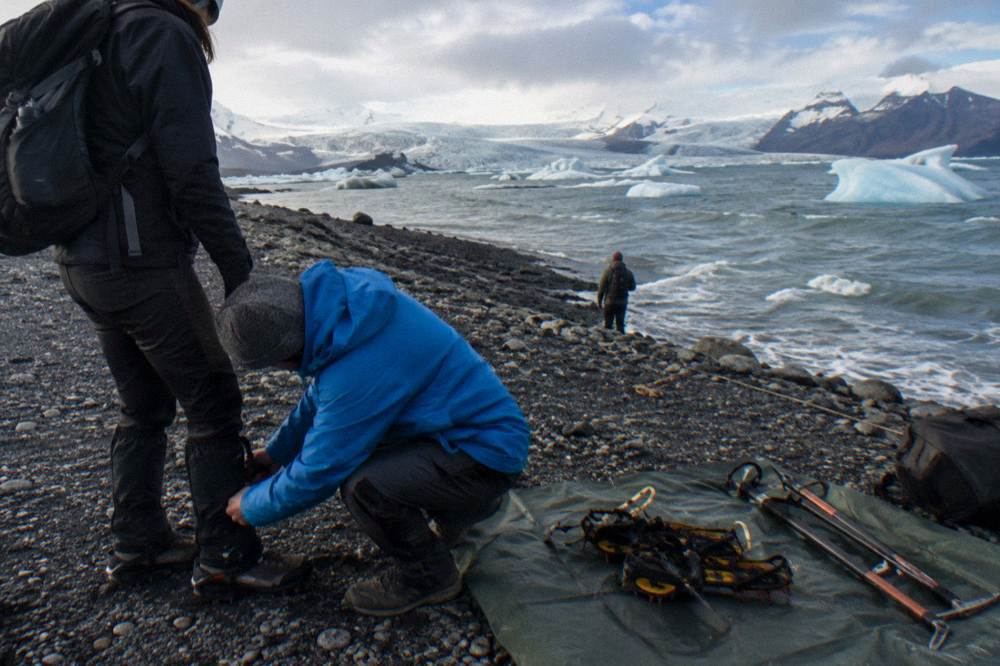
Every day tour in this category includes the technical kit: crampons, helmet and safety gear come with the ticket, and a guide leads each trip. What is never included is your clothing and boots. Several operators name warm layers, sturdy footwear, winter clothing or shoes as guest responsibilities, and the standard advice is waterproof outer layers, insulated mid-layers and stiff-soled boots that hold a crampon strap.
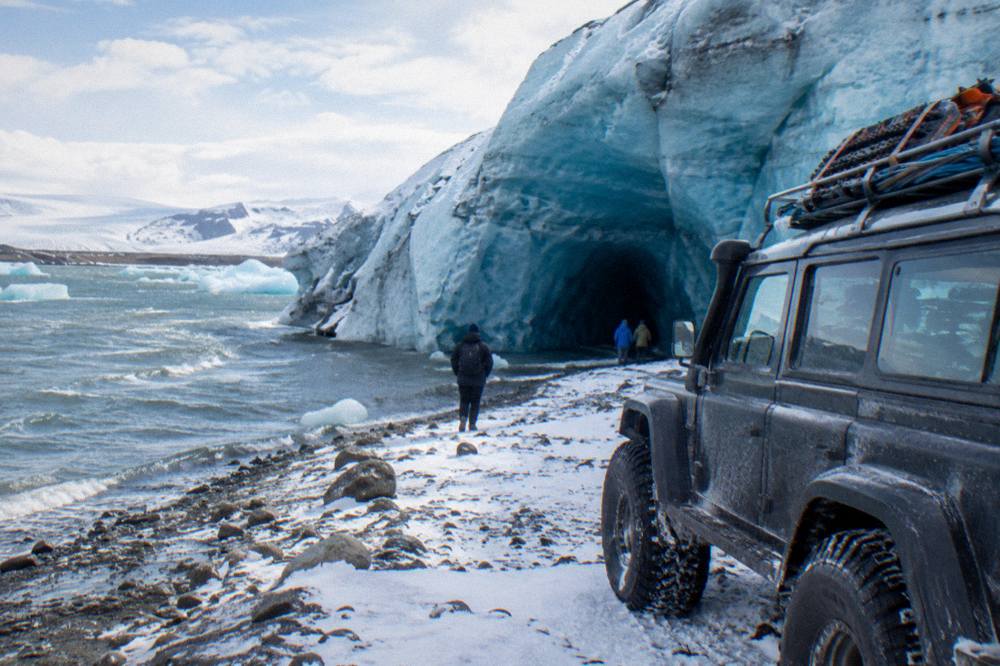
The gear split is consistent across the category. Crampons, helmet and safety equipment are included on Small Group Ice Cave, Frozen Wonders, Blue Ice Cave, both Crystal super jeep tours, The Original Ice Cave and Guided Vatnajokull Ice Cave, and all but Frozen Wonders include a guide. That is the technical floor: you will not be asked to bring or rent a helmet. None of the 27 tours include personal kit. The Crystal Cave Super Jeep tour lists food, drinks and transport to Jokulsarlon as excluded items, The Original Ice Cave lists food, drinks and hotel transfer, and the multi-day tours go further, publishing rental prices: hiking boots at 3,000 ISK, a waterproof jacket at 1,750 ISK, waterproof pants at 1,750 ISK, and smaller items priced individually on the booking page.
Fitness expectations differ by format more than by price. The super jeep tours keep the walk to the glacier edge short because the vehicle does the distance; the hiking-format tours, and especially the 6-Hour Hike to a Remote Ice Cave at $279 rated 4.9 across 273 reviews, trade comfort for a longer approach on the glacier itself. For the standard 2.5 to 3 hour cave tours, reasonable mobility and warm clothes are the whole requirement; you are not signing up for mountaineering. If you want the fuller picture on layering for a lagoon-area winter day, the what to wear guide for a Jokulsarlon boat tour applies almost unchanged to cave trips.
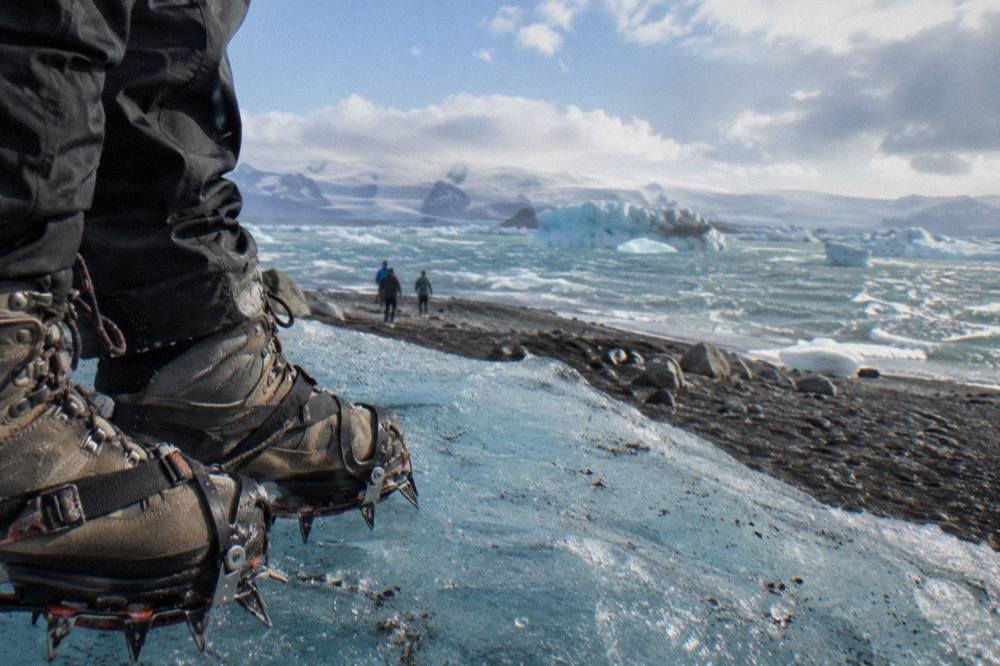
The safety framing matters here too. Safetravel, Iceland's travel safety service, states that you should never go onto a glacier without experience or the proper equipment and describes hiring a certified glacier guide as highly recommended. Commercial access to the Breidamerkurjokull caves runs through park-contracted operators with daily assessments, which is precisely the service these tours sell. The crevasse maps the safety service publishes were updated in March 2026, a reminder that the glacier is a moving, surveyed hazard zone rather than scenery. A fuller discussion of whether going without a tour is even possible sits in the companion piece on visiting an ice cave without a tour.
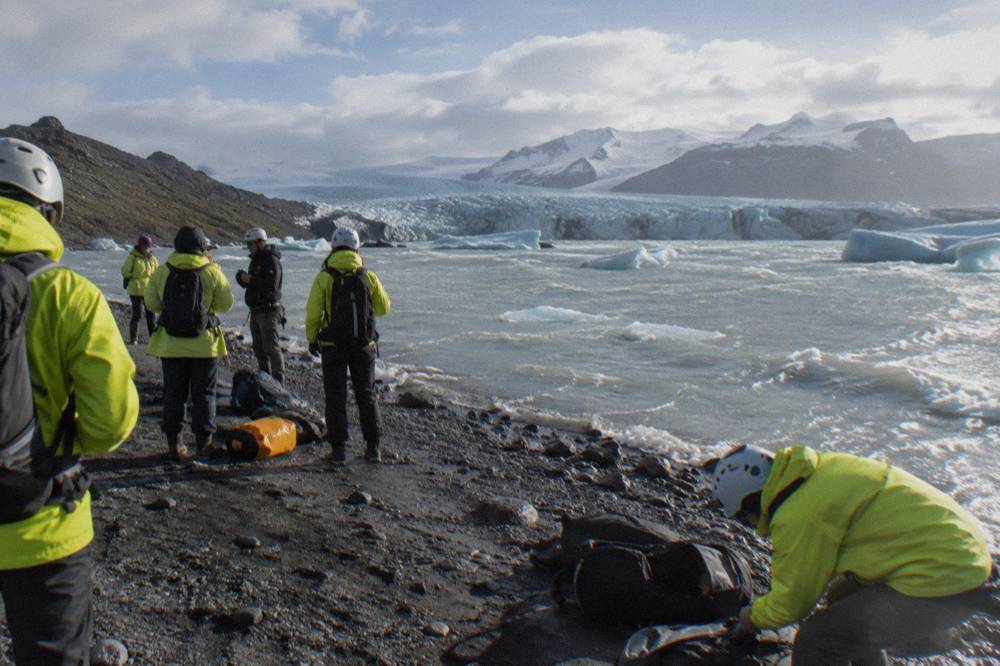
When Is Blue Ice Cave Season In Iceland?
The natural blue ice cave season around Jokulsarlon runs roughly October to April, conditions permitting. One major operator's FAQ publishes cave-specific dates within that window for 2026-27, but the season is set by the glacier, not the calendar, and tours outside it do not exist inside the national park after the summer ban. Katla's cave near Vik, a different region and product, is one year-round alternative; the man-made Langjokull tunnel is another.
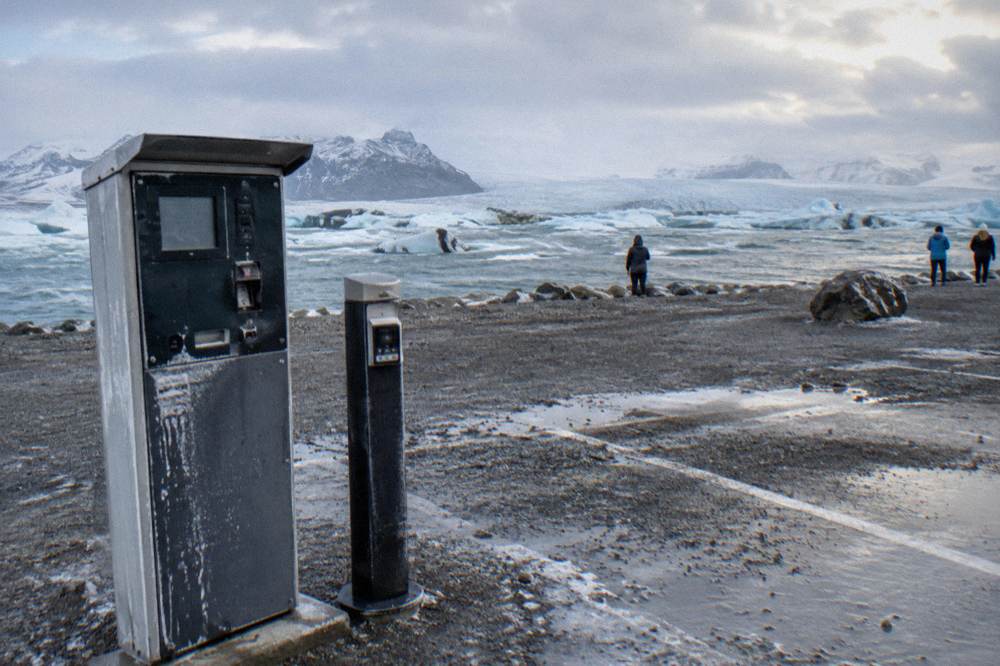
The season logic is physical. Meltwater sculpts the caves in summer and would also flood and destabilise them, which is why the park now bars summer natural-cave tours entirely: RUV reported the park authority's position in September 2025 that taking summer groups into natural ice caves is unacceptable. From autumn the water recedes, the ice re-freezes, operators locate the new season's chambers and the daily assessments begin. The operator FAQ frames the answer honestly: roughly October to April, with cave-specific dates varying.
Daylight shapes the experience inside that window. At Hofn, the reference station east of the lagoon, 1 November still has 7 hours 58 minutes of daylight, but by 1 December it is down to 4 hours 59 and the winter solstice bottoms out near 4 to 5 hours. January 1st starts at 4 hours 21. Midwinter cave tours are therefore short-day trips by necessity, and a combined cave-plus-lagoon day in December needs tight timing. More of these guides are collected on Jokulsarlon Glacier Lagoon Tours.
| Month (1st of month) | Daylight at Hofn | Ice cave season status |
|---|---|---|
| October | 11h 20m | season opening, conditions permitting |
| November | 7h 58m | full season |
| December | 4h 59m | full season, shortest days |
| January | 4h 21m | full season |
| February | 7h 06m | full season |
| March | 10h 10m | late season |
| April | 13h 33m | season closing, cave dependent |
Weather normals add a planning caution. The nearest long-record station is Kirkjubaejarklaustur, about 200 km west of the lagoon, and its 1981-2010 normals show December and January daily means hovering around 0 °C with 145 to 177 mm of rain or snow, and November similar. The coast right at the lagoon can differ from that station, so treat the numbers as a general winter profile, not a forecast. For road and weather decisions, check the Icelandic Met Office forecast and road conditions at umferdin.is/en, and read the fuller breakdown in the Jokulsarlon weather guide.
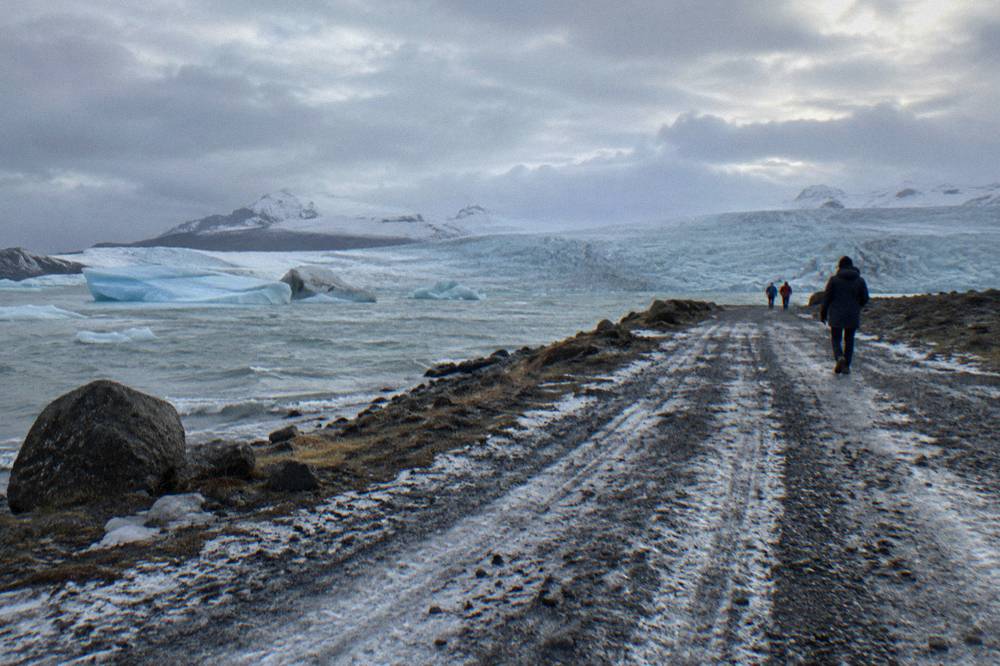
Winter driving rules bear repeating for anyone self-driving to the meeting point: headlights front and rear around the clock, a rental car with winter tyres, and limited daylight, per Safetravel's winter driving guidance. A 4x4 does not remove skid risk.
Can You Combine A Blue Ice Cave With The Glacier Lagoon Or A Glacier Hike?
Yes, three ways. Multi-day tours from Reykjavik bundle the cave with lagoon stops and even a glacier hike from $633. Independently, you can book a lagoon day trip from Reykjavik from $211 and a separate cave day tour from $164 and stay a night near the lagoon. Or, from the same car park, a glacier hike or kayak session can precede or follow a cave tour on one long day.
The packaged route is the simplest. The 2-Day Ice Cave and Glacier Hike ($633, 4.7 from 218 reviews) pairs cave and hike with breakfast included and lunch and dinner bought on the road, while the 2-Day Small Group, Blue Ice Cave ($689, 4.9 from 795 reviews) runs a small-group format with the cave and the lagoon across two days. Both tours include a guide, and pickup only where the tour's own details confirm it. For travellers who would rather not drive Route 1 in winter at all, these packages remove the hardest part of the trip.
The self-built route is often cheaper and always more flexible. A Reykjavik day trip such as the most reviewed option in that category, from $211 and rated 4.7 across 4,069 reviews, gets you to the lagoon with a guide; from $234 the Gray Line 14.5-hour version runs the same logic from the BSÍ terminal. Add a night in the Hofn area, then a $164 to $195 cave tour the next morning from the same car park. The trade is winter road risk on your own schedule versus the package's fixed itinerary, a comparison worked through in detail in self-drive versus tour travel to Jokulsarlon.
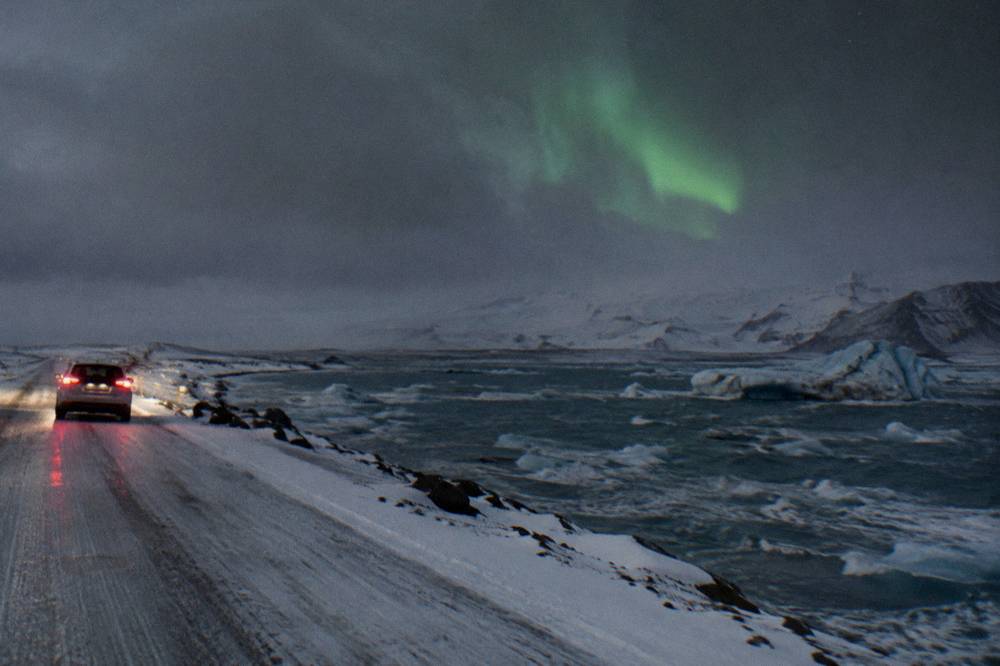
The same-day stack works too, because everything shares one parking area. The Skaftafell Glacier Hike at $96, rated 4.8 from 57 reviews, is the cheapest glacier experience covered on this site, though its meeting point is the Jökulsárlón Glacier Lagoon Parking. The Vatnajokull Hike at 4.5 hours ($149, 4.8 from 1,081 reviews) and the kayaking tour at 1.5 hours ($155, 4.7 from 532 reviews) also gather at or near the lagoon, and the 6-Hour Hike to a Remote Ice Cave ($279, 4.9 from 273 reviews) is effectively a hike and a cave in one product. Whether stacking two glacier activities in a midwinter day of 5 hours of daylight is realistic is another question; October, February and March make it far easier than December. More on that in how long you need at Jokulsarlon.
| Combination | From (per person) | What it covers |
|---|---|---|
| 2-day package, cave and hike | $633 | cave, glacier hike, breakfast, transport, 2 days |
| 2-day package, small group | $689 | cave, lagoon, south coast, breakfast, pickup |
| Day trip plus separate cave tour plus a night | $211 plus $164 plus lodging | full flexibility, self-managed |
| Cave tour plus glacier hike same day | $164 plus $96 | two activities, one parking area, long day |
How Do You Choose Between The Jokulsarlon Ice Cave Options?
Choose by format and group size, not by promised colour. Super jeep tours at $168 suit anyone who wants minimal walking; the 3-hour guided tours at $164 to $195 are the standard; small-group versions at $194 to $195 cap numbers for photographers; and the 6-hour remote hike at $279 is for fit travellers wanting the deepest glacier experience. Review pools range from 298 to 2,194, so read ratings with the count attached.
Start with the two super jeep products, because they are easy to confuse. Crystal Cave Super Jeep ($168, 4.2 from 1,772 reviews) meets at the Jokulsarlon parking lot and runs 2.5 hours; the park parking fee and transport to Jokulsarlon sit with the guest, the most explicit exclusions in the category. Crystal Blue Super Jeep ($168, 4.4 from 635 reviews) runs 3 hours from the Tröll Expeditions meeting point at the lagoon. Same price, same drive-in format, one extra half hour and a slightly better rating on a much smaller review pool.
The guided 3-hour tours are the backbone. The Original Ice Cave Tour on Vatnajokull ($176, 4.5 from 1,238 reviews) meets at Jökulsárlón Main Parking, includes gear and guide, and states plainly that hotel pickup and food are excluded. The Blue Ice Cave ($195, 4.6 from 973 reviews) meets at the boat tours and cafe parking. The Guided Vatnajokull Ice Cave ($164, 4.2 from 2,194 reviews) is the price floor with the deepest review pool. If those three descriptions sound similar, that is because they are: same glacier, same season, same gear, and the choice comes down to schedule, meeting point convenience and price.
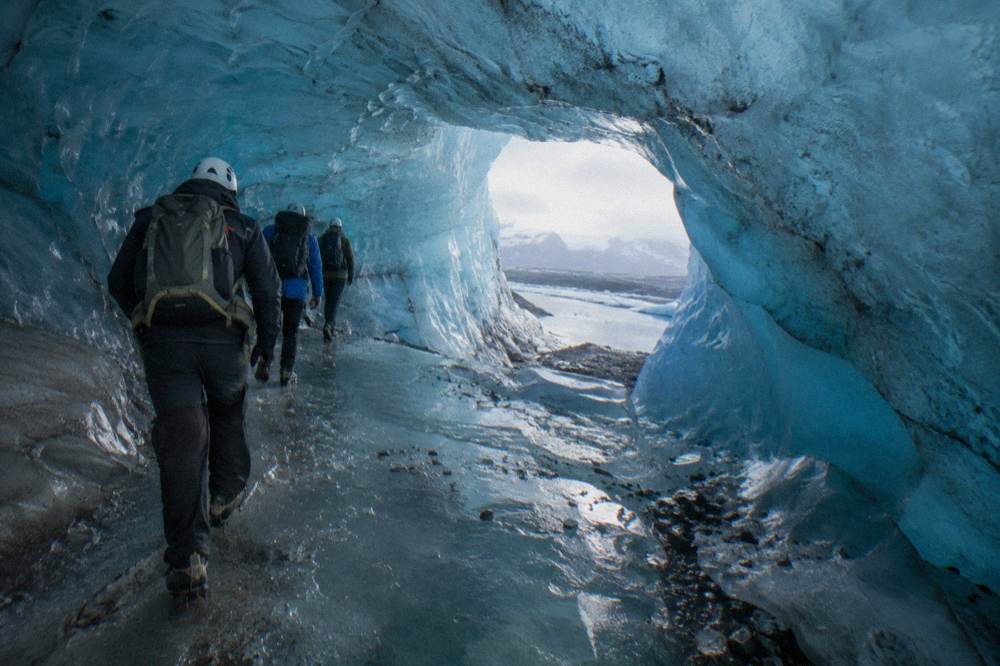
The small-group tier is where the extra dollars go furthest if you photograph. Small Group Ice Cave ($194, 4.8 from 298 reviews) runs 2 hours 30 minutes from the Jokulsarlon meeting point, with no pickup, food or drinks included. Frozen Wonders ($195) carries a 5.0 rating from 404 reviews, the strongest score in the category with a pool well past the point of statistical noise, though its duration is not mentioned, so check the booking page for timing before you plan the day around it.
A note on reading these numbers honestly: a 5.0 from 404 reviews is an excellent signal, but it is not proof of a better cave than a 4.2 from 2,194. The cave is the same glacier system; the operator, group size and luck with the day's chamber differ. Treat ratings as a quality-of-organisation signal, and treat any claim that one tour reaches a bluer cave as unsupported.
How Do You Get To The Meeting Point And Plan The Day?
Every day tour here meets at Jokulsarlon, about 370 km east of Reykjavik on Route 1. In season that means either an overnight near the lagoon, a multi-day tour that drives you, or a very long single day. Parking is 1,110 ISK for a car, the cafe is open year-round except late December holidays, and rangers supervise the site every day of the year.
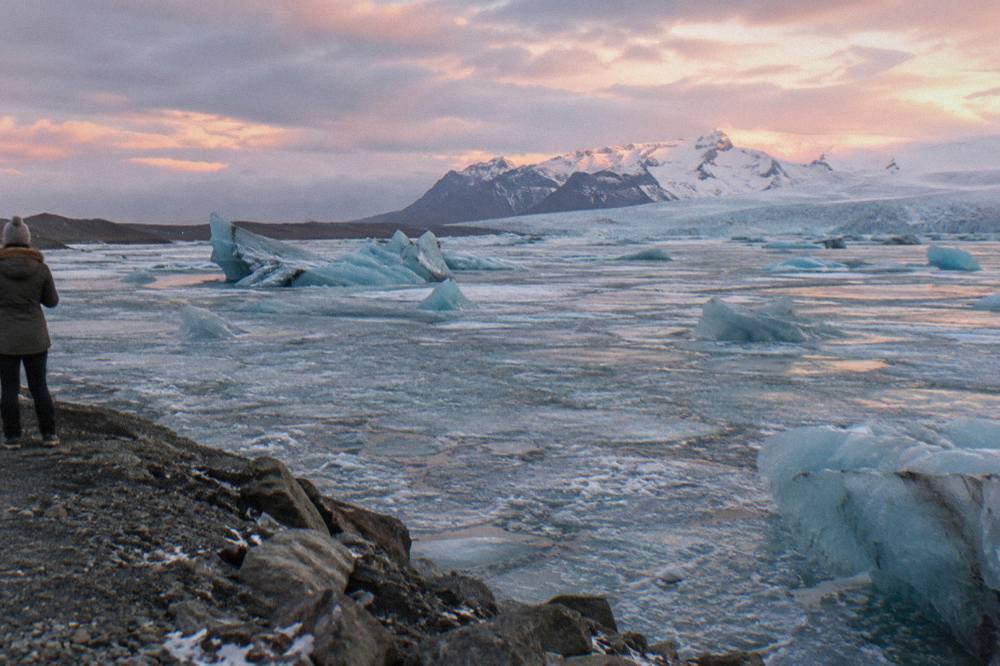
The drive is the part first-time visitors underestimate. Those figures come from the lagoon operator's own guidance, and they exclude stops at Seljalandsfoss, Skogafoss, Vik or any of the fuel and food breaks a winter day demands. Add limited daylight from the Hofn table above and the honest conclusion is that a same-day Reykjavik-to-cave-to-Reykjavik self-drive in deep winter is aggressive; most travellers overnight in the Hofn area or join a tour that does the driving. Accommodation options are covered separately in where to stay near Jokulsarlon.
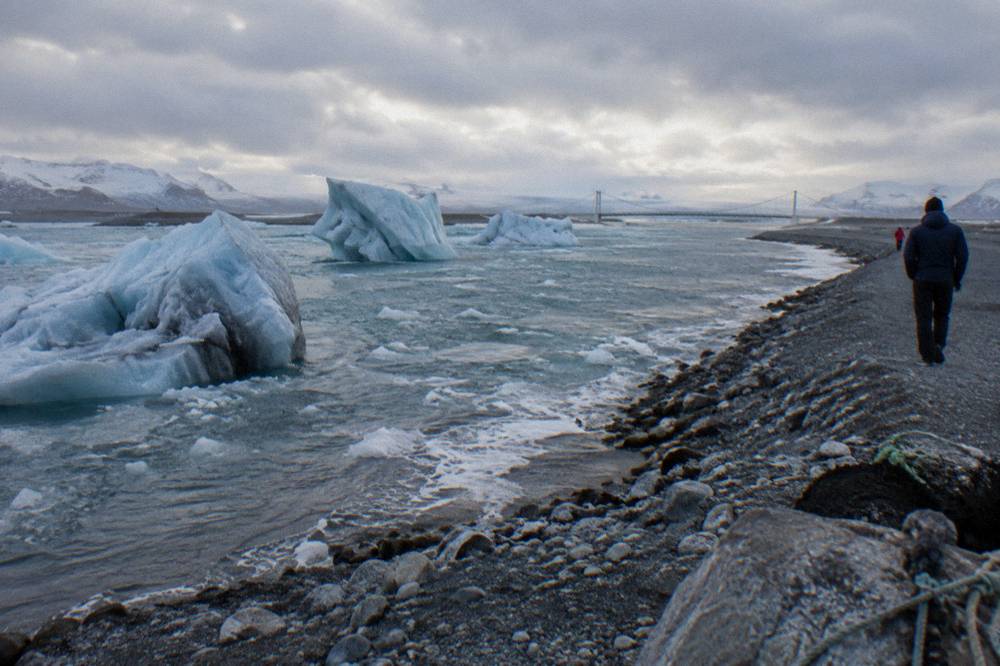
On site, the practicalities are simple. The main car park beside the lagoon reopened on 8 October 2026 after a week of paving works, a closure that generated a lot of confusing advice online; it is open now. Flush toilets sit at Jokulsarlon, the cafe runs year-round except 24 to 26 December and 31 December to 2 January, and camping at the lagoon is not permitted. Diamond Beach is about 500 m across the road, and the park asks visitors to walk under the Route 1 bridge rather than over it. Rangers supervise Jokulsarlon, Fellsfjara and Fjallsarlon every single day of the year, and the Breidamerkurjokull ice caves sit inside their beat.
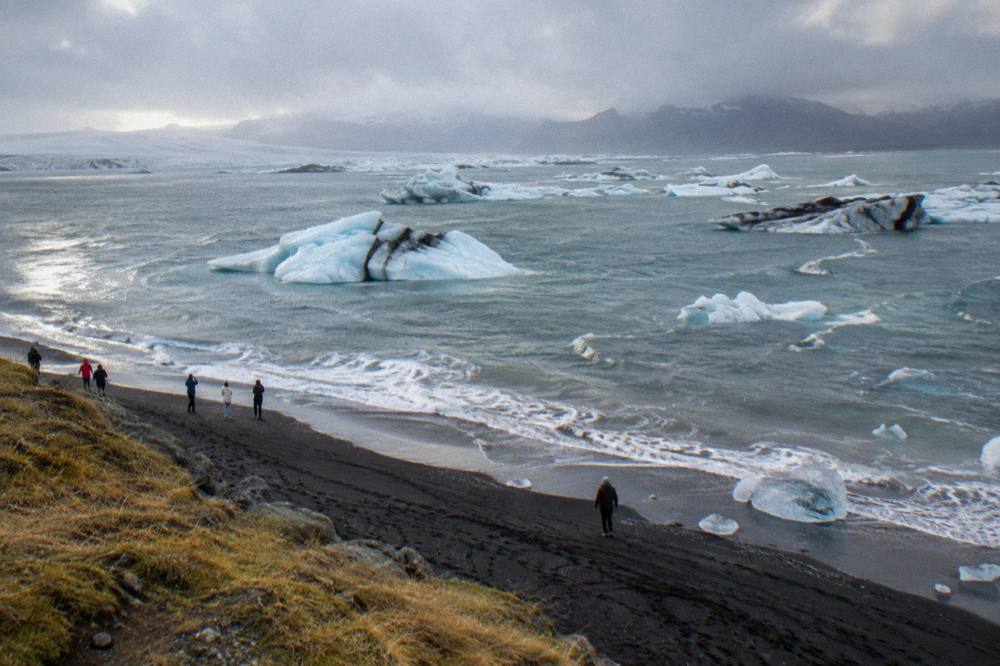
A sample winter day, assembled only from verified figures: pay the 1,110 ISK parking fee on arrival, coffee at the cafe, a 3-hour cave tour mid-morning inside the daylight window, soup after, then Diamond Beach under the bridge with a careful eye on the surf, and the drive east or west before dark. Sneaker-wave guidance from Safetravel's black-beach page applies on any open Atlantic black beach, including this one: at orange hazard level stay at least 25 m from the waterline, and at red the beach itself is closed with the viewing area open. The advice not to stand between grounded ice and the sea is consistent visitor guidance, and worth following whatever colour the signs show that day.
What Does The Blue Ice Cave Price Spread Actually Buy?
Across the covered day tours, the $164 to $195 spread buys format and duration rather than a better cave. Super jeep pairs at $168 minimise walking; standard guided tours at $164 to $195 run 3 hours; small groups at $194 to $195 cap guest numbers. Above the day market sit the 6-hour hike-in at $279 and the multi-day packages at $633 to $689.
One way to see the whole market at a glance is to plot the covered options by price and format:
| Format | Tours covered | Price range (per person) | Typical duration |
|---|---|---|---|
| Price-floor guided cave tour | Guided Vatnajokull Ice Cave | $164 | 3 hours |
| Super jeep drive-in | Crystal Cave, Crystal Blue | $168 | 2.5 to 3 hours |
| Classic guided tour | Original Ice Cave, Blue Ice Cave | $176 to $195 | 3 hours |
| Small group | Small Group Ice Cave, Frozen Wonders | $194 to $195 | 2h 30m or not stated |
| Hike-in remote cave | 6-Hour Hike to Remote Ice Cave | $279 | 6 hours |
| 2-day package from Reykjavik | 2-day ice cave tours | $633 to $689 | 2 days |
| Private full day (lagoon region) | Private Full Day | $2,054 per group, up to 5 | 14 hours |
The private full day is not an ice cave product per se; it is a private 14-hour lagoon, Diamond Beach and waterfalls day, and an ice cave stop is not mentioned, so check the booking page. It appears here because travellers weighing a premium private format sometimes price it against stacked group tours. Three private lagoon-region products exist on this site, from $1,560 to $2,054 per group, and the private Jokulsarlon tour guide works through them.
The decision, compressed: if budget leads, take the $164 floor. If walking is a concern, take a $168 super jeep. If you want fewer people around your photos, pay the small-group premium. If you want the glacier itself rather than its edge, pay for the hike-in. And if you want the cave plus the lagoon plus the south coast without driving, the packages earn their price honestly.
Whatever you choose, book the cave day before you book anything else. Winter seats on small-group tours are the scarce item on a short-season, short-daylight calendar, and every tour here holds free cancellation up to 24 hours before departure. That combination, scarce supply and free cancellation, makes early booking the rational move rather than an anxious one.
Common Questions About Blue Ice Cave Tours In Iceland
When Is Blue Ice Cave Season In Iceland?
The natural caves under Vatnajokull run roughly October to April, conditions permitting. Summer natural-cave tours inside the national park were banned after the August 2024 collapse, so winter is the only window from the Jokulsarlon side. Katla near Vik, a different region, is the year-round alternative.
Can You Combine A Blue Ice Cave With The Glacier Lagoon?
Yes. Two-day tours from Reykjavik bundle the cave with lagoon stops from $633 per person. Independently, stay a night near the lagoon and pair a $164 to $195 cave tour with a lagoon day trip, keeping in mind that the boats run May to October while the caves are a winter experience.
What Is The Cheapest Blue Ice Cave Tour From Jokulsarlon?
The Guided Vatnajokull Ice Cave tour at from $164 per person, 3 hours, rated 4.2 across 2,194 reviews, is the lowest price among covered ice cave day tours. Gear, meaning crampons, helmet and safety equipment, is included; meals and transport to the lagoon are not.
Do Ice Cave Tours Include Boots And Warm Clothing?
No. Crampons, helmet and safety gear are included on every covered day tour, but clothing and footwear are your responsibility. Some multi-day tours rent boots at 3,000 ISK and waterproof jackets at 1,750 ISK, listed on their booking pages.
Is A Blue Ice Cave Guaranteed On These Tours?
No. Ice cave entry is always conditions permitting, and operators assess each cave daily under park rules tightened in 2024. Ice conditions change with weather, tides and glacier activity, so a tour may use a different chamber than planned or amend the trip.
How Do You Get To The Ice Cave Meeting Point?
All covered day tours meet at or beside Jokulsarlon, about 370 km east of Reykjavik. Options are a rental car, a Reykjavik day trip plus an overnight, or a multi-day tour that drives you. Parking is 1,110 ISK for a car.