What Is The Most Beautiful Ice Cave In Iceland?
An honest look at which ice caves you can actually visit from Jokulsarlon, why their beauty changes every winter, and how to pick a tour without falling for photographs that no longer exist.
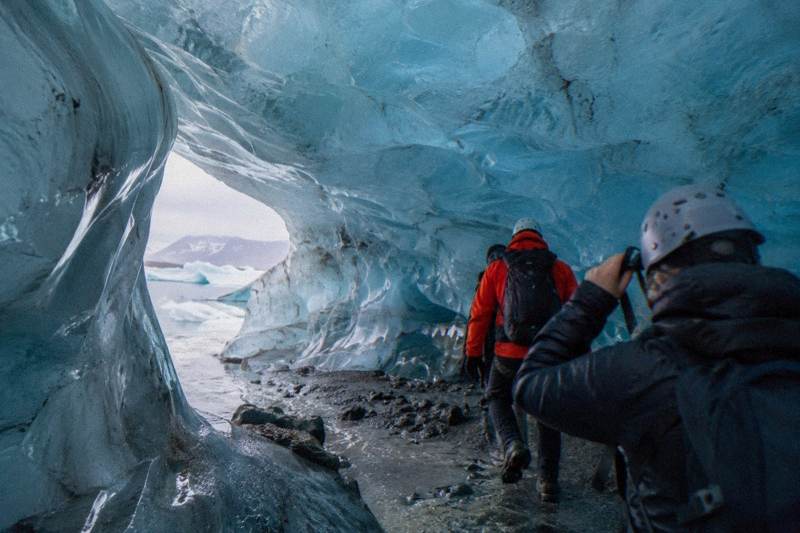
There is no fixed answer, because Iceland's natural ice caves are carved and closed by the glacier itself every year. The caves that tour operators visit sit in and around Vatnajokull, Europe's largest ice cap, and most ice cave tours sold from Jokulsarlon visit a cave on Breidamerkurjokull, the outlet glacier that also feeds the lagoon. Whichever cave is bluest and most sculpted this season is a matter of that season's melt, not a permanent ranking. Since the same glacier can look wildly different depending on when you arrive, the month by month guide to picking the best time to visit the ice caves explains how daylight and weather shape each part of the season.
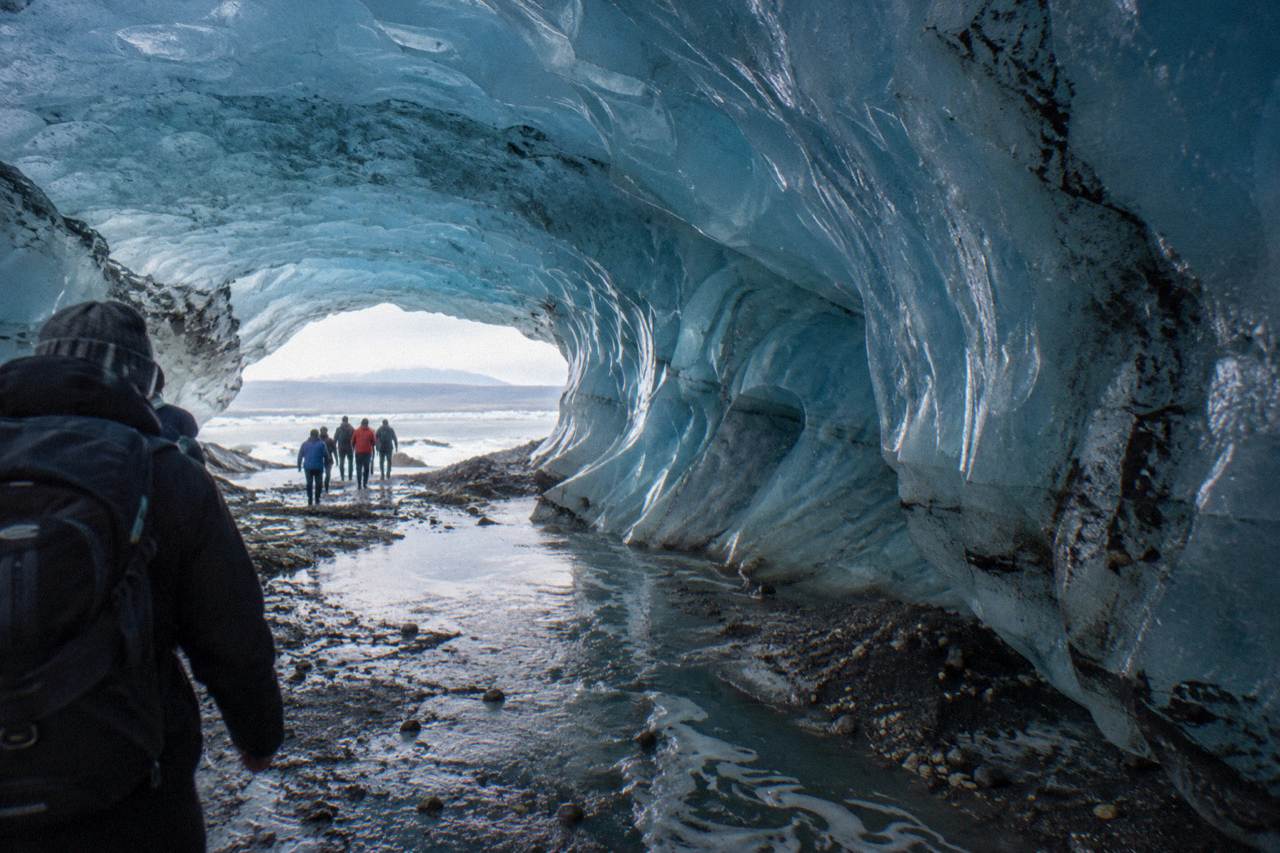
The honest version of the answer is this: the cave you will actually walk into does not exist yet when you are reading this. Glacial ice caves form where summer meltwater carves channels under the ice, which refreeze and stabilize into visitable condition as temperatures drop. An operator may name a cave "Crystal" or "Blue" or "Neptune" and market it as a signature, but the physical chamber is remade annually. Melt one season can open a cathedral of scalloped blue walls; the next season the same spot can be crushed flat or filled with rubble. Any article, including this one, that promises you one specific chamber is promising something nobody can deliver.
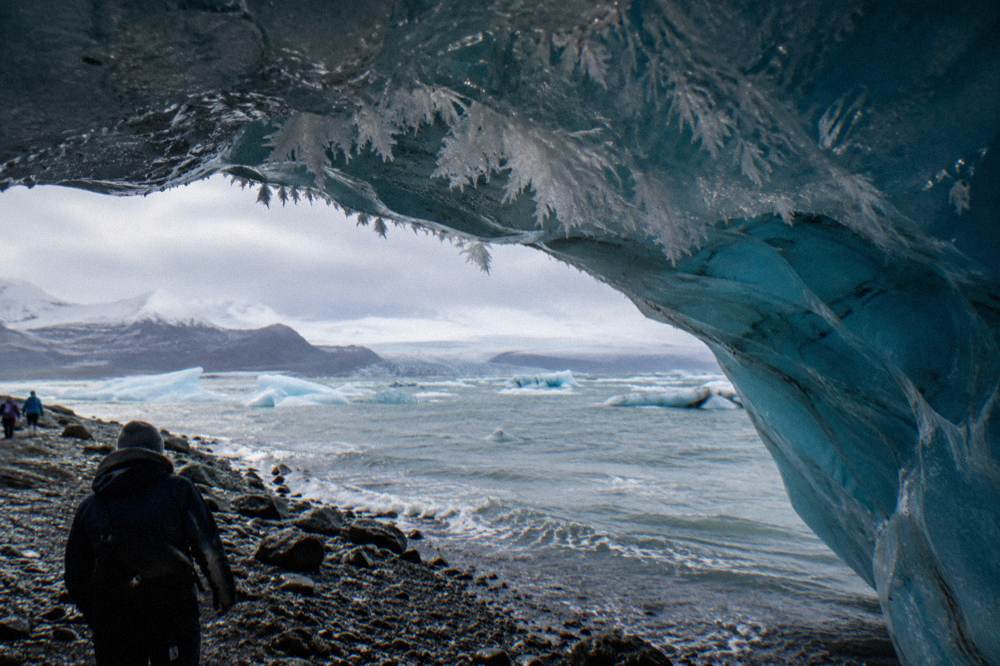
What can be said with confidence is narrower and more useful. The ice under Vatnajokull is old, compressed and largely free of air bubbles, which is what gives the famous deep blue colour, and the ice caves reachable from Jokulsarlon sit directly on that ice cap. That is why the southeast corner of Iceland, rather than the west or the north, is where the bulk of the country's blue ice cave photography comes from. The colour is a property of the glacier, not of any one cave, so a well-formed cave on Breidamerkurjokull in a good year is as blue as anything in the country.
It is also worth being skeptical of the photographs doing the deciding for you. Many of the most shared ice cave images online were taken in chambers that collapsed years ago, sometimes shot with wide lenses that exaggerate scale, occasionally colour-graded past anything the human eye sees. A tour that shows you a slightly smaller, genuinely blue cave on the day is delivering the real thing. A brochure's glowing sapphire tunnel may come from an earlier season, a chamber that has since melted away.
If you are choosing a tour rather than a cave, the practical decision is about format: how long on the ice, what transport from the parking area, what size of group, and what happens if conditions on the day rule the planned cave unsafe. Those differences are real and listed on every booking page. The cave itself is a moving target.
Which Ice Caves Can You Actually Visit From Jokulsarlon?
The tours covered here visit natural ice caves on the Vatnajokull ice cap, with several describing a cave on Breidamerkurjokull above the lagoon. All of them start at Jokulsarlon itself, usually the main parking area on Route 1, roughly 370 km east of Reykjavik, so you either drive there yourself or arrive on a south coast day trip and book a cave tour separately. Entry is conditions permitting, as the booking pages state.
That last clause is not legal small print, it is the entire operating model. Ice conditions change daily with glacier activity, weather, tides and currents, and after the fatal collapse of a cave on Breidamerkurjokull in August 2024, the national park imposed stricter operator conditions: a lead guide requirement and daily safety assessments of each cave before any group enters. Natural ice cave tours inside the national park are banned outright in summer, so the winter season is the only season. The practical window runs roughly October to April, with cave-specific dates varying by operator and by the glacier itself.
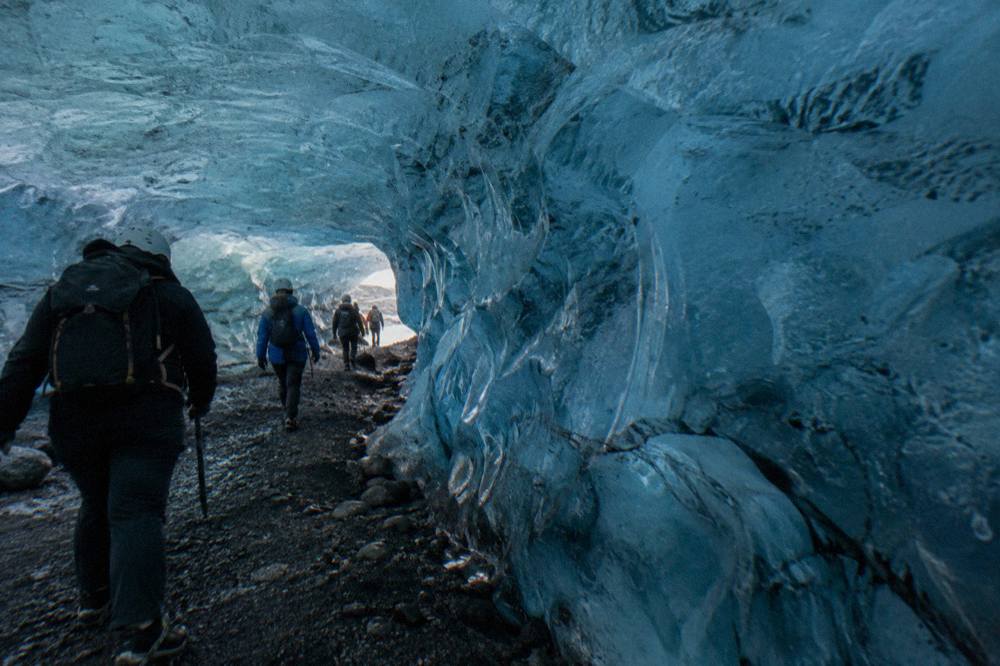
Because every covered tour meets at the lagoon, the first thing to understand is the geography. Jokulsarlon sits on Route 1 about 370 km east of Reykjavik, a long drive that leaves little time for stops on a single-day tour. Ice cave guests typically either stay a night or two in the Hofn or Vik area, or join a multi-day south coast tour and add the cave excursion. Meeting points are specific and worth checking before you book: some tours meet at Jokulsarlon Main Parking, others at named operator bases in the same parking area. Pickup from your accommodation is not mentioned for these ice cave tours, so check each booking page before you go.
Here is how the three most established options compare on paper. Prices are per person, from the booking pages, and every tour includes crampons, helmet and safety gear plus a guide.
| Tour | Duration | Price from | Rating and reviews | Meeting point |
|---|---|---|---|---|
| Crystal Cave Super Jeep, 2.5 Hours | 2.5 hours | $168 | 4.2 across 1,772 reviews | Jokulsarlon Parking Lot |
| The Original Ice Cave Tour | 3 hours | $176 | 4.5 across 1,238 reviews | Jokulsarlon Main Parking |
| Guided Vatnajokull Ice Cave, 3 Hours | 3 hours | $164 | 4.2 across 2,194 reviews | Jokulsarlon |
The Guided Vatnajokull Ice Cave is the cheapest of the three at from $164 per person and, alongside the Original tour, one of the two three-hour formats; what fills that time beyond the cave visit is not mentioned, so check the booking page for the day's plan. The Crystal Cave Super Jeep tour reaches its cave partly by modified vehicle, which matters in deep snow years when the approach is longer. All three carry free cancellation up to 24 hours before, which is worth having on a weather-dependent booking.
One cost detail that surprises people: the regional parking fee at Jokulsarlon, currently 1,110 ISK for a passenger car of up to 5 seats, is set by the national park and is not part of any tour price. The Crystal Cave Super Jeep tour page is the only one of the three that names it in its exclusions, but it applies to anyone parking there.
What Makes An Ice Cave Beautiful, And Why Does It Change Every Winter?
Blue colour, sculpted walls and light passing through old ice are what photographers chase, and all three depend on the glacier's annual melt cycle. Summer water carves chambers and channels; winter cold stabilizes them; the next summer rewrites them. A cave praised in one February can be unrecognizable, unsafe or simply gone by the next, which is why no honest operator will name "the most beautiful cave" in advance.
The blue itself deserves a plain explanation, because it is the one thing a visitor can genuinely count on. Glacier ice starts as snow, and as decade after decade of snowfall compresses into ice, air bubbles are squeezed out. Ice with fewer bubbles absorbs the long red wavelengths of light and scatters the short blue ones, so thick, old ice reads as blue to the eye. Vatnajokull is old ice on a huge scale, which is why the caves around Jokulsarlon trend deeper blue than younger ice formations elsewhere. The site's longer piece on why Jokulsarlon water looks blue covers the same physics from the lagoon side.
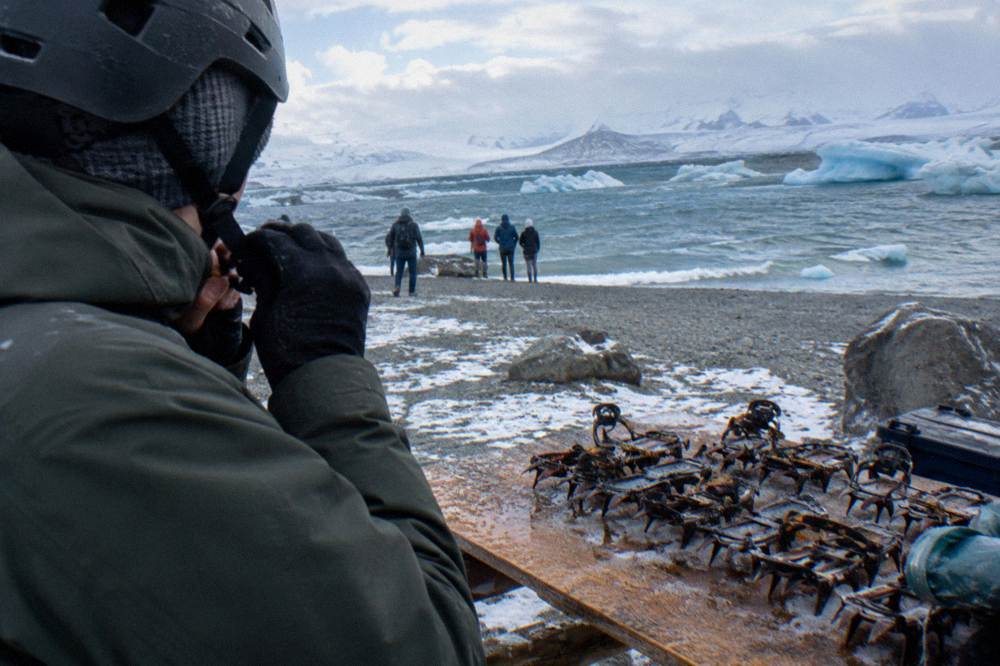
The sculpting is the part nobody can promise. Water moving under the glacier in summer melts smooth, flowing surfaces: scalloped walls, rounded ceilings, channels like frozen rivers. How much of that survives into winter depends on how the water drained, how cold the autumn was, and whether the ice above deformed or collapsed. Operators assess each candidate cave daily in season, per the post-2024 rules, and sometimes the day's safest cave is a 40-minute chamber rather than the headline one. Guests on the same tour across two different weeks can have genuinely different experiences, and both are the product working as intended.
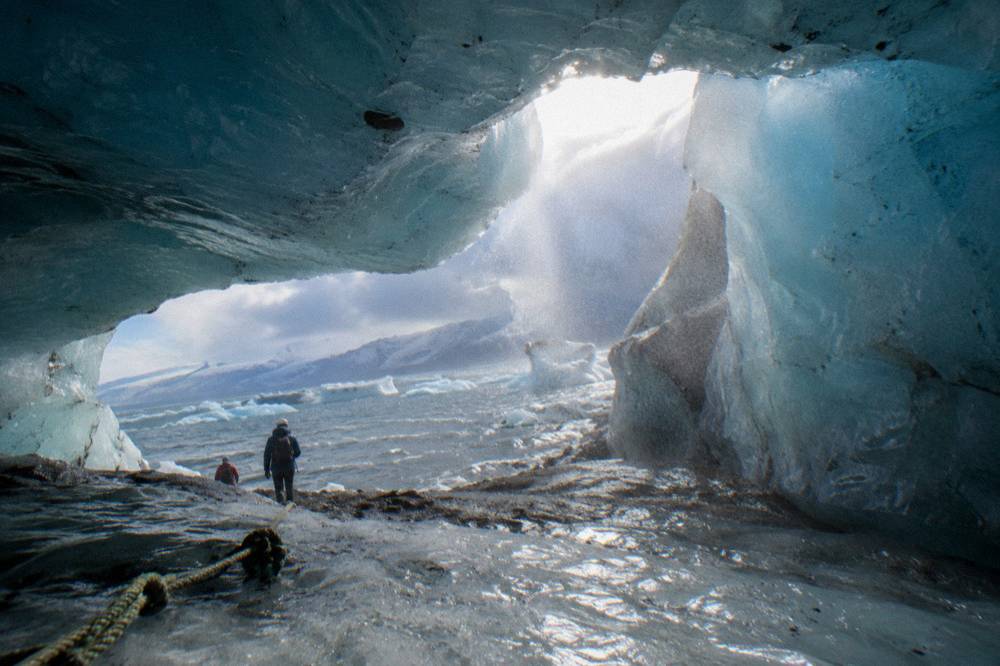
Scale works differently than photos suggest, too. Wide-angle lenses in tight chambers make spaces look cathedral-like on screen, and some famous images are simply older, bigger caves. The reliable pleasures are smaller: the way light filters through the ceiling, the texture of the walls under a headlamp, the sound of the glacier settling. Judge any of these trips by the blue of the ice and the guiding rather than by the name of a chamber.
If a quieter experience matters more than a headline name, the Small Group Ice Cave option runs 2 hours 30 minutes from Jokulsarlon, is rated 4.8 across 298 reviews, and costs from $194 per person, a premium that buys the smaller group size. Its booking page says gear is included and pickup is not, with the meeting point at the 781 postal area by the lagoon. As with every ice cave tour here, the visit itself is conditions permitting and never promised.
How Do You Choose An Ice Cave Tour At Jokulsarlon?
Compare duration, transport, group size and price rather than cave names, because the cave is chosen for safety on the day. The covered tours run 2.5 to 3 hours, cost from $164 to $195 per person, and include crampons, helmet and safety gear with a certified guide. The meaningful differences are super jeep versus walk-in access, group size, and how much time each spends inside the ice.
Start with the format. A 2.5-hour super jeep tour spends part of its runtime driving a modified vehicle across the sandur toward the glacier, which is its own kind of fun in snow. A 3-hour tour like the Original or the Guided Vatnajokull trip spends more of its total on the ice itself. Neither is objectively better; families with young children or anyone with limited mobility should read each tour page's requirements carefully, since both involve walking on crampons over uneven ice. The kayak and glacier hike alternatives covered elsewhere on this site's glacier hike guides are separate formats: the kayak tour does not enter an ice cave, though some glacier hikes do.
| What the tour includes | Crystal Cave Super Jeep | The Original Ice Cave | Guided Vatnajokull Ice Cave |
|---|---|---|---|
| Crampons, helmet, safety gear | Included | Included | Included |
| Guide | Included | Included | Included |
| Duration | 2.5 hours | 3 hours | 3 hours |
| Hotel pickup | Not included | Not included | Not stated |
| Food and drinks | Not included | Not included | Not stated |
| Free cancellation | 24 hours before | 24 hours before | 24 hours before |
Ratings on this route tell a consistent story rather than a dramatic one. The Original Ice Cave Tour sits at 4.5 across 1,238 reviews, the highest of the three main options, while the Super Jeep and Guided Vatnajokull tours both sit at 4.2, across 1,772 and 2,194 reviews respectively. Those are large, mature review pools for a weather-dependent product, and the spread between 4.2 and 4.5 is a rounding error in practice. The stronger signal is what reviews repeatedly mention: guide quality and the blue of the ice, in that order.
Price differences are small enough that they should not decide alone. The Guided Vatnajokull tour from $164, the Super Jeep from $168, the Original from $176, the small group option from $194 and the Frozen Wonders small group trip from $195. All are per person. Against that, think about what a bad day costs: a cheap tour with a huge group in a marginal cave is worse value than a dearer small group with room to move and photograph. The buyer's guide to Iceland's best ice cave tour walks through this trade-off in more detail.
Booking timing matters more in this category than in most. The season is short, roughly October to April, and the sweet spot months, when there is enough snow for stable caves and enough daylight to enjoy them, are the ones to aim for. Daylight at Hofn, the nearest town with daylight data, runs 11 hours 20 minutes on 1 October but only 7 hours 58 on 1 November and 4 hours 59 on 1 December, so late-season tours genuinely race the dark. A tour booked weeks ahead, with free cancellation up to 24 hours before, costs nothing extra and keeps your options open.
When Is The Best Time To See Blue Ice At Vatnajokull?
The natural ice cave season runs roughly October to April, and one major operator runs its crystal cave about 1 October to 15 April with cave-specific dates varying. Midwinter, November to February, tends to give the most stable ice and the most intense blue, at the cost of very short days. Late autumn and early spring trade light for marginally softer conditions.
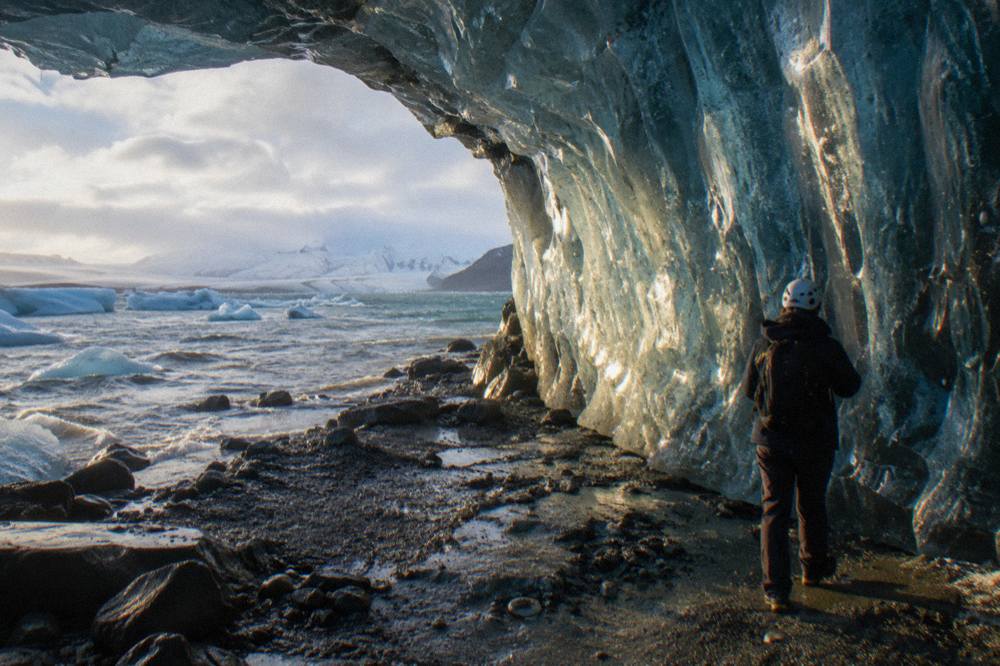
The operator FAQ behind much of the region's cave tourism is explicit that natural-cave dates vary, and the glacier is the final authority anyway. With that caveat, the calendar in practice looks like this: October opens the season with longer days and freshly formed caves that the first assessments of the winter will either approve or reject. November through January is deep winter, when daylight shrinks toward the 4 hours recorded at Hofn in late December and tours run compact, cold and often spectacular. February and March bring back the light, 5 hours 57 by 21 January rising to over 10 hours by 1 March, and remain firmly in season. April closes most caves as meltwater returns.
There is no reliable "best month" for cave beauty; it varies year to year and the honest answer is that cave condition reports from the operators on the ground are worth more than any month table. What can be planned around is daylight and cold. Colder months stabilize ice; more daylight extends the day. If seeing the lagoon and Diamond Beach in reasonable light on the same trip matters, late March has obvious appeal: caves still open, 12 hours of daylight by month's end, and a chance of both experiences without headlamps for the beach.
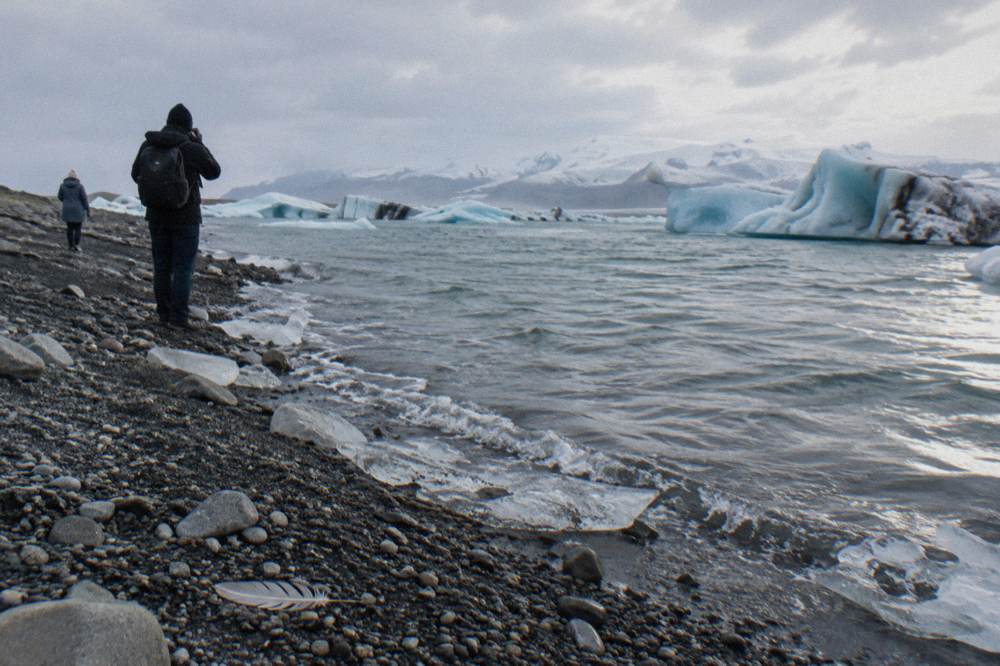
Whatever the month, driving yourself to a morning ice cave tour from Reykjavik in winter is a serious commitment: the drive covers roughly 370 km, in limited daylight, on a road that safetravel.is advises checking at umferdin.is before setting out, with headlights on front and rear around the clock. Most cave guests either stay locally or build the cave into a multi-day south coast itinerary. Weather forecasts for the southeast are at en.vedur.is, and the emergency number in Iceland is 112.
The Frozen Wonders Small Group Trip is the category's stand-out review score: 5.0 across 404 reviews, from $195 per person, meeting at Jokulsarlon. Its tour page does not state a duration, so check the booking page for the current format, and the cave entry itself is conditions permitting. A perfect score over four hundred reviews on a product that cannot promise its own headline attraction says something encouraging about how these operations handle the unpredictable parts.
What Should You Expect On The Day Of An Ice Cave Tour?
Expect to arrive at the Jokulsarlon parking area on your own steam, check in with the operator, and be fitted with crampons, helmet and safety gear before a short drive or walk to the glacier's edge. Guides lead the group onto the ice, assess conditions on the day, and the visit lasts roughly half an hour inside the cave itself within a 2.5 to 3 hour total.
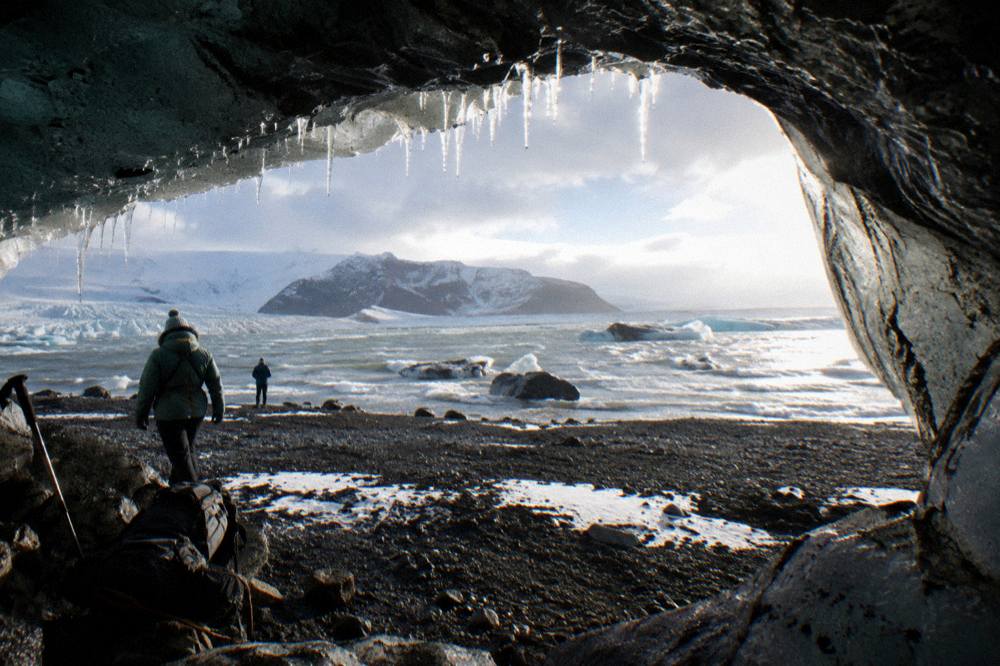
Dress is the question operators field most, and the rule of thumb is winter clothing you can move in: warm layers, a waterproof outer layer, and sturdy boots, since several tour pages explicitly exclude shoes and clothing from their inclusions. The site's gear and clothing guide for cold-weather tours was written for the lagoon boats but the layering logic is the same. Gloves and a hat matter more than people expect; inside the cave the temperature sits near freezing and the time standing still adds up. Rental gear appears on some booking pages at posted ISK prices on multi-day products, so check yours rather than assuming.
The safety briefing is genuine, not theatre. After the 2024 collapse the park requires a lead guide and a daily assessment of each cave, and safetravel.is maintains that hiring a certified glacier guide is highly recommended, full stop, for anyone going onto the ice. You will be told to stay with the group, follow the guide's line, and not touch or lean on features the guide has not cleared. Crampon technique is quick to learn and the guides teach it patiently.
Photography deserves a word of realism. Caves are dark, contrasty and often full of other guests, so the best images come from a wide lens, no flash where asked, and patience while the group moves through. Drone owners should note the park's rules are strict: drones are banned at Jokulsarlon and the Diamond Beach side entirely from 15 April to 15 July, and heavily restricted outside those dates, so check the park's drone page before packing one.
Finally, have a plan for the rest of the day, because the lagoon and Diamond Beach are a 500 m walk apart and the parking fee, 1,110 ISK for a car, is valid until midnight with free re-entry that day. Many guests book an ice cave tour in the morning and spend the afternoon at the shoreline, or arrive on one of the day trips from Reykjavik and add a cave tour on a second visit. However you build it, Jokulsarlon Glacier Lagoon Tours exists to help you plan exactly this kind of trip around the lagoon.
Common Questions About The Most Beautiful Ice Cave In Iceland
What Is The Most Beautiful Ice Cave In Iceland?
There is no permanent answer. Natural ice caves around Vatnajokull are reformed by meltwater each summer and reassessed for safety each day in winter, so the most beautiful cave changes every season. The ice the covered tours visit sits on Breidamerkurjokull above Jokulsarlon, and its deep blue colour is a property of the old glacier ice itself.
Can You Visit An Ice Cave In Summer?
Not the natural caves inside Vatnajokull National Park. After the August 2024 collapse on Breidamerkurjokull, summer tours into natural ice caves in the park were banned. The visitable season runs roughly October to April, conditions permitting, with some man-made ice tunnels elsewhere in Iceland operating differently.
Which Ice Cave Tour From Jokulsarlon Is The Best Value?
Among the three main options, the Guided Vatnajokull Ice Cave is the lowest entry price at from $164 per person for a 3-hour format including gear and guide, rated 4.2 across 2,194 reviews. The Original Ice Cave Tour, from $176 and rated 4.5 across 1,238 reviews, holds the highest rating of the three. All include free cancellation up to 24 hours before.
Are Ice Cave Tours Safe?
Commercial tours run under tightened park rules: a lead guide, daily safety assessment of each cave, and included safety gear. Operators decide on the day which cave is safe, and entry is never guaranteed. Safetravel.is describes hiring a certified glacier guide as highly recommended for anyone going onto glacier ice, and going without a guide is not advisable.
Do You Need To Get To Jokulsarlon First?
Yes. The covered ice cave tours all start at Jokulsarlon, about 370 km east of Reykjavik on Route 1, a long drive from the capital. Pickup varies by tour, so check the booking page. Most guests either drive and stay locally or join a multi-day south coast tour that reaches the lagoon.
Is The Blue Colour Guaranteed?
No, and neither is entry. Ice conditions change daily with glacier activity, weather and tides, and a cave's colour, size and shape vary season to season. The blue of old Vatnajokull ice is consistent, but how it shows in any given chamber depends on the year and the day.