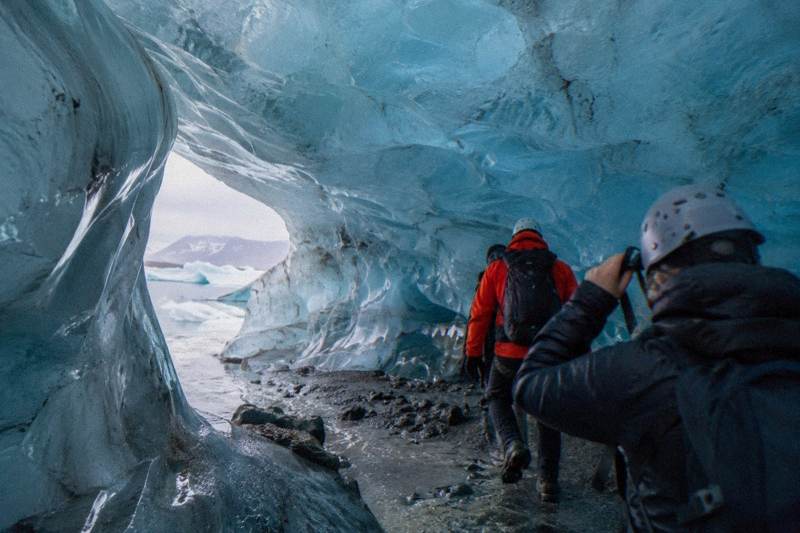
What Is The Best Month To Visit The Ice Caves?
A month by month guide to timing an ice cave tour at Vatnajokull near Jokulsarlon, covering the season, daylight, weather and how to pick dates.
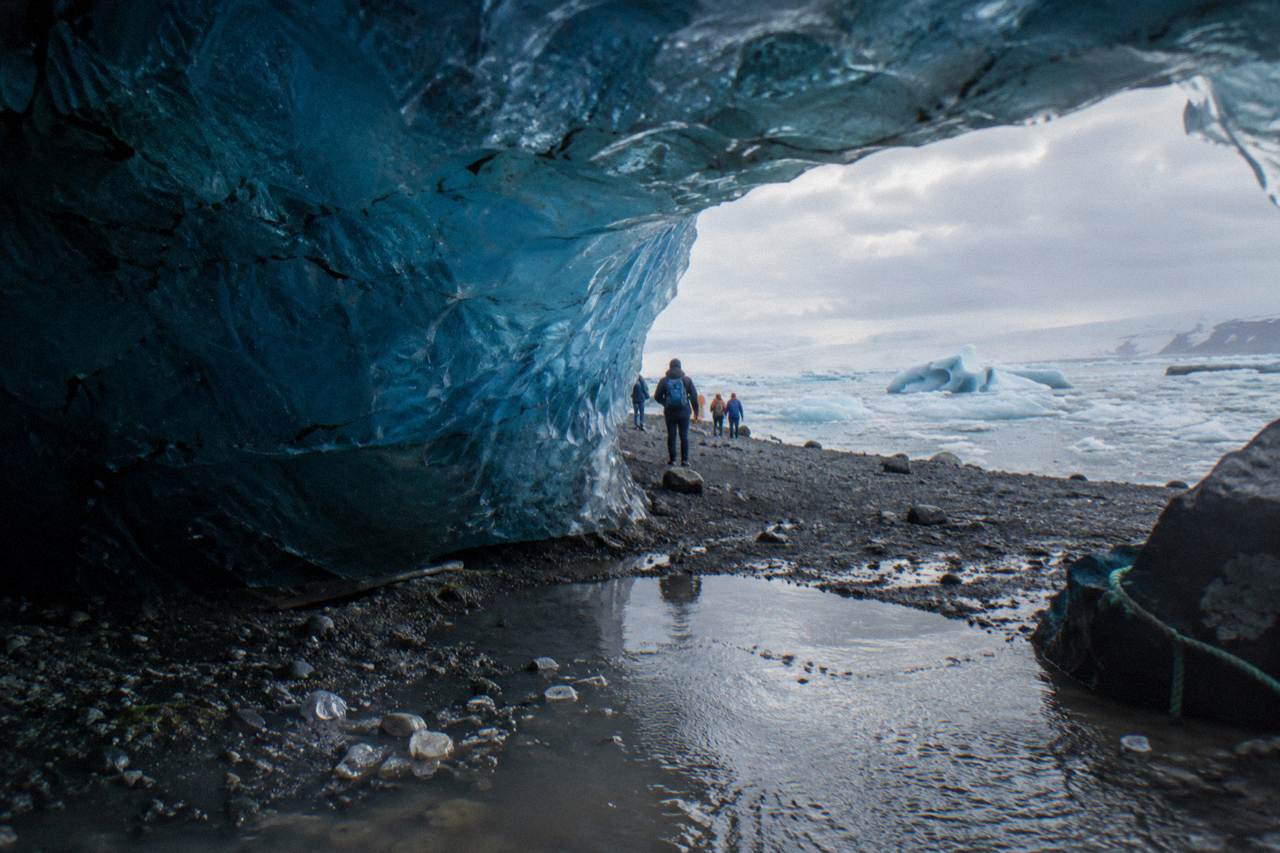
There is no single best month, because the natural ice cave season at Vatnajokull runs roughly from October to April, conditions permitting, per the operator FAQ. December to February typically brings the most stable ice and the deepest blue tones, though days are very short. Early spring, March into April, adds daylight while the caves usually stay open. Every month inside that window involves trade-offs this guide lays out. Once the timing question is settled, the next step is choosing which cave to actually enter, and the guide to Iceland's most beautiful ice cave explains why that answer shifts from one winter to the next.
The honest starting point is that the caves decide, not the calendar. A major operator's FAQ describes the natural cave season as roughly October to April, with cave-specific dates, and one tour notes the visit depends on safety. Ice conditions change daily with glacier activity, weather, tides and currents, the same caution the lagoon operator applies to its boat trips. No operator promises entry, a particular colour, or a particular cave, and this article will not either.
What you can plan is the window. Inside October to April, the months differ sharply in three ways that matter to a visitor: how much daylight you get at the lagoon, how cold and wet the weather runs, and how busy the tours and parking get. Those differences are measurable, and the rest of this article works through them month by month so you can pick dates with a clear picture.
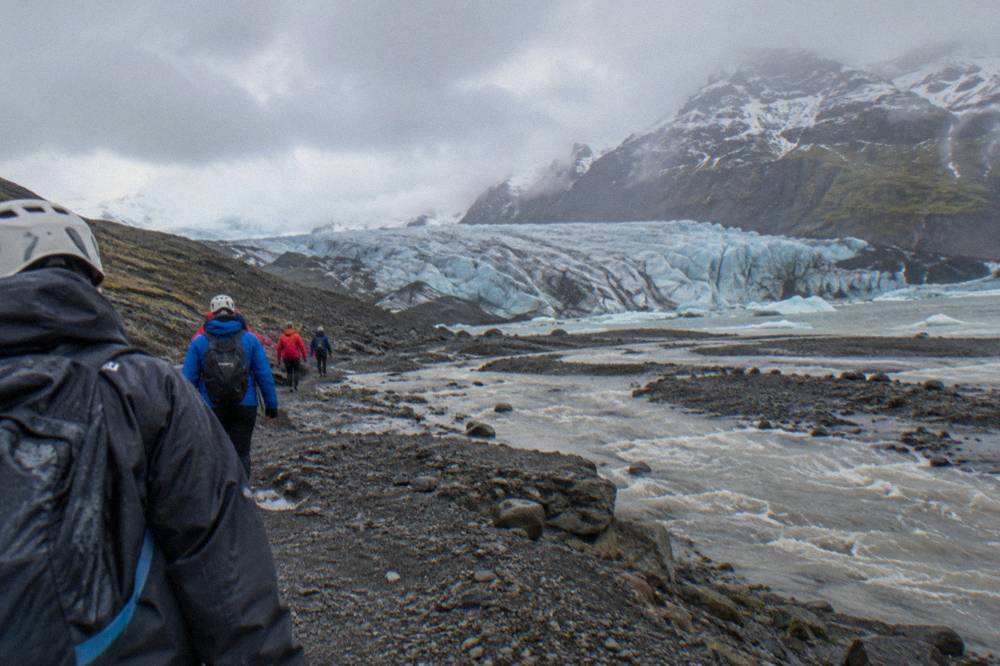
One more framing point. The tours covered here all start at Jokulsarlon, about 370 km east of Reykjavik on Route 1, a considerable drive even without stops. If you are coming from the capital, the month you choose also determines the road and light you will drive in, which is why the daylight section below matters as much as the cave calendar. Before settling on a date, the guide to weather at Jokulsarlon month by month shows how temperature, rain, and daylight shape both the drive east and the tours themselves.
When Does The Ice Cave Season Run At Vatnajokull?
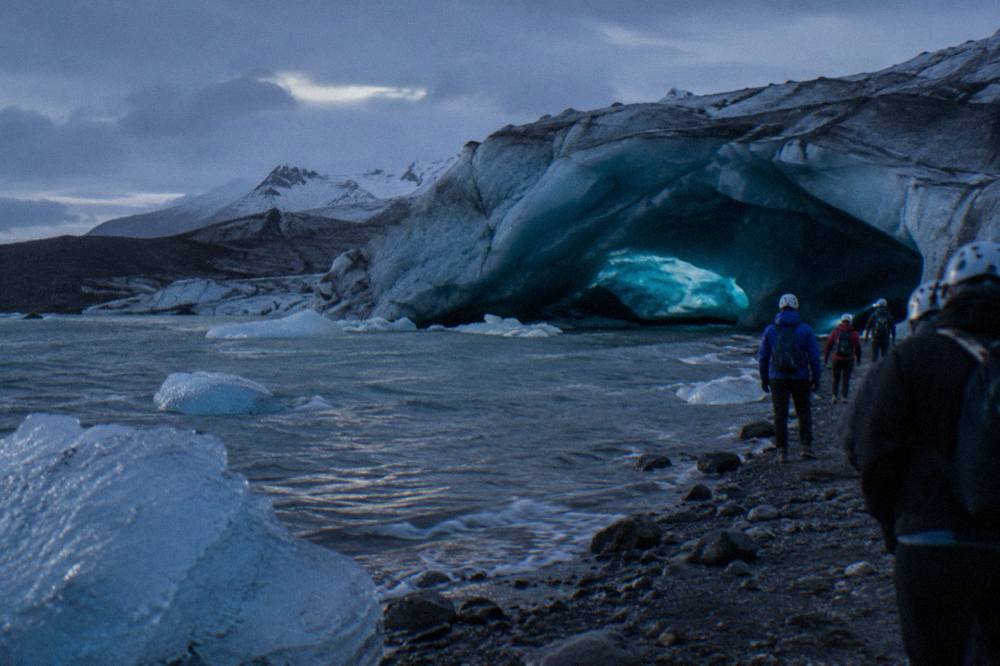
Natural ice cave tours at Vatnajokull run roughly October to April, conditions permitting. The operator FAQ behind that window lists cave-specific dates, such as a crystal cave from 1 October to 15 April, and notes that natural cave dates vary year to year. Summer tours inside the national park were banned after the August 2024 collapse, so winter is the only season.
The word "roughly" is doing real work in that answer. One operator's FAQ lists a crystal cave opening 1 October and closing 15 April, another cave running to 30 April, and a third opening as late as 26 October. Those dates belong to that operator's caves. The general rule worth planning around is October through April, with each cave having its own dates inside that span, and with operators reserving the right to close or reroute a cave when safety assessments change.
The summer ban is firm rather than vague. After a tourist died on Breidamerkurjokull in August 2024, the national park imposed stricter operator conditions, including a lead guide and daily safety assessments of each cave, and summer tours inside natural ice caves have since been banned. The RUV report on the summer ban is the clearest public statement of the rule. Practical consequence: there is no July or August ice cave tour at the lagoon to time a trip around, and any product suggesting otherwise should be read carefully to see what it actually visits.
Two further rules shape the season. Commercial access to the Breidamerkurjokull caves runs through operators with park contracts, so independent entry is not the alternative it might be at an unprotected site. And the operator ice cave FAQ that publishes the seasonal dates also repeats that conditions, not dates, decide each day. Booking a date inside the window buys you a chance at the cave, and a professional operation buys you a safe decision either way.
What Are Ice Cave Conditions Like Month By Month?
October and November open the season with forming ice and shrinking light, December and January deliver the deepest winter short days, and February to April combine solid ice with returning daylight. Each month carries a different balance of cave reliability, weather risk and crowd levels, summarized in the table below from the seasonal and daylight facts.
The month by month picture below combines the operator season window with daylight data for Hofn, the nearest town east of the lagoon with such records, within minutes of the same day length. Weather characterizations come from the climate normals at Kirkjubaejarklaustur, about 200 km west; the coast near the lagoon differs, so treat those as a regional guide rather than a forecast.
| Month | Caves open | Daylight on the 1st | Typical conditions and trade-offs |
|---|---|---|---|
| October | Season opens, dates vary by cave | 11 h 20 m | Still much daylight for driving; early season ice forming, some caves open later in the month |
| November | Yes | 7 h 58 | Shorter days and colder means stabilising ice; fewer visitors than midwinter holidays |
| December | Yes | 4 h 59 | Deepest winter, about 4 to 5 hours of light; holiday crowds around Christmas |
| January | Yes | 4 h 21 | Least daylight of the year; solid ice, cold snaps possible, quiet before the season's end rush |
| February | Yes | 7 h 06 | Light returns fast; cold holds the ice; a strong all-round month |
| March | Yes | 10 h 10 | Longest daylight while caves stay open; most balanced month for photography and driving |
| April | Caves close mid to late month | 13 h 33 | Last weeks of the season; warmer spells can end a cave early, book early in the month |
| May to September | No natural ice cave tours in the park | 16 h 53 to 14 h 34 | Summer ban in force; glacier hikes and lagoon boats fill the gap |
Reading the table honestly: October is the gamble month. The operator FAQ shows caves opening anywhere from 1 October to late October depending on the cave, so an early October booking might find your first-choice cave not yet running. December and January offer the most winter character, ice at its most solid, and the shortest days, which compresses a lagoon visit into a narrow bright window and puts much of the drive in the dark. Safetravel's winter driving guidance applies year-round in Iceland but bites hardest in these two months: lights on front and rear at all times, a rental car with winter tyres, and road conditions checked at umferdin.is/en before setting out.
February and March are where the question gets interesting, and the daylight numbers show why. Light jumps from 7 h 06 on 1 February to 10 h 10 on 1 March, while the ice, still held by winter cold, tends to be at its most reliable of the whole season. You get a full working day for the drive out, the cave tour, and Diamond Beach across the road from the lagoon. April rewards early-month bookers: the daylight is generous at 13 h 33 on the first, but the same FAQ that sets closing dates mid to late April also warns that dates vary, and a warm spring can end a cave before its listed date.
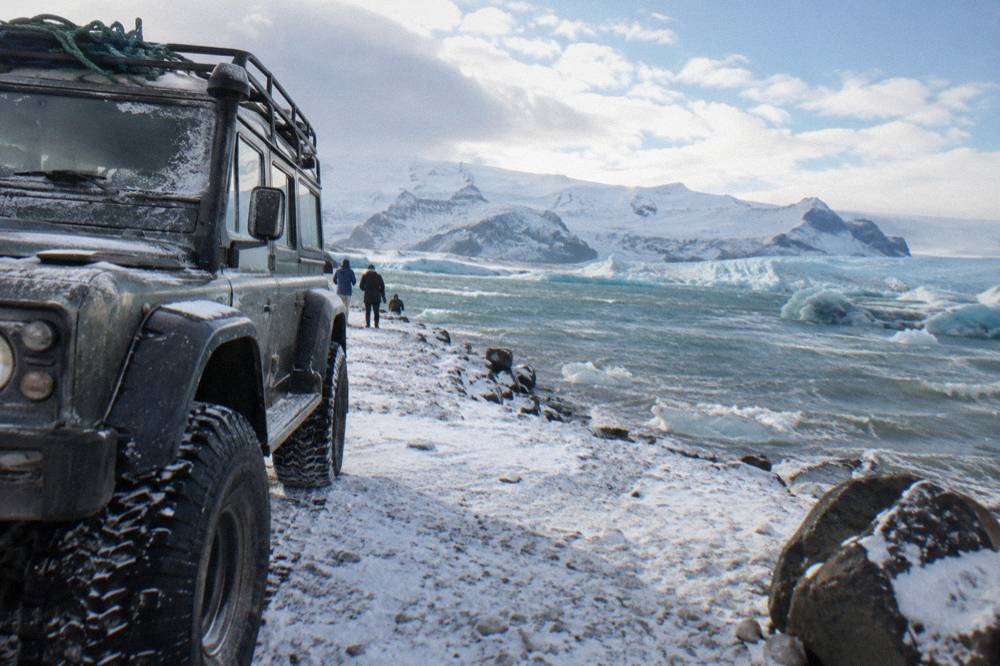
For travellers who land in the midwinter months and want a compact outing, the Crystal Cave Super Jeep Tour runs 2.5 hours from the Jokulsarlon parking lot, from $168 per person, rated 4.2 across 1,772 reviews, with crampons, helmet and safety gear included and free cancellation up to 24 hours before.
How Does Daylight Affect Ice Cave Planning?
Daylight controls the drive as much as the tour. Hofn, the nearest town with daylight data, records 4 h 21 m of daylight on 1 January against 10 h 10 m on 1 March, and Iceland keeps UTC+0 all year. In deep winter, plan the lagoon, the cave and Diamond Beach into a narrow bright window and expect to drive in the dark.
The numbers are worth seeing in full, because they change more between November and March than most visitors expect. The figures below are for Hofn from timeanddate.com; Jokulsarlon sits within a few minutes of these values.
| Date | Daylight at Hofn |
|---|---|
| 1 January | 4 h 21 m |
| 1 February | 7 h 06 m |
| 1 March | 10 h 10 m |
| 1 April | 13 h 33 m |
| 1 October | 11 h 20 m |
| 1 November | 7 h 58 m |
| 1 December | 4 h 59 m |
Two practical readings follow. First, a January ice cave day is short at both ends: with sunrise near 11:00 and sunset near 15:00 at midwinter, a tour that meets midday leaves little margin, and the roughly 370 km drive from Reykjavik will happen partly in darkness regardless of when you leave. That is manageable with winter driving habits, but it is not the relaxed road trip of a March visit. Second, the light grows fast: February alone adds almost three hours of daylight over January. A late February trip feels like a different country from an early January one while the ice is still close to its most solid.
The cave itself is dark by nature, which cuts the other way. Interior blue tones photograph well in any month, and in deep winter the bright part of the day is short. What daylight really buys you is the rest of the day: the lagoon, the 500 m walk across Route 1 to Diamond Beach, and the stops on the drive. If those matter to you, weight February to April over December to January. The Hofn sun tables let you check exact times for your dates.
If you want the longest day that still sits safely inside the season, The Original Ice Cave Tour on Vatnajokull runs three hours from the Jokulsarlon main parking area, from $176 per person, rated 4.5 across 1,238 reviews, with gear included and free cancellation up to 24 hours before.
How Cold And Wet Is The Weather Near The Ice Caves?
The nearest long-term station, Kirkjubaejarklaustur about 200 km west, averages 0.1 °C in January and 11.6 °C in July, with 1,700 mm of precipitation a year spread across every month. Expect temperatures around freezing and regular precipitation in any ice cave month; the coast near the lagoon differs from the station.
Those normals matter less for comfort, since you will be dressed for a glacier anyway, and more for expectations. Precipitation at the station falls in every single month of the year, including 145 mm in November and 163 mm in October, so a visit in any part of the season can meet rain at sea level turning to snow on the approach. Daily means sit at or just above freezing from November through March, cold enough to hold cave ice, mild enough that roads are more often wet than icy near the coast.
| Month | Mean daily temperature | Mean precipitation |
|---|---|---|
| October | 4.6 °C | 163 mm |
| November | 1.8 °C | 145 mm |
| December | 0.3 °C | 177 mm |
| January | 0.1 °C | 157 mm |
| February | 0.0 °C | 141 mm |
| March | 0.8 °C | 133 mm |
| April | 3.3 °C | 121 mm |
The station caveat deserves repeating: these are 1981 to 2010 normals for Kirkjubaejarklaustur, not forecasts for the lagoon, and the coast near Jokulsarlon runs its own pattern. For an actual trip decision, check the Icelandic Met Office forecast in the days before, and road conditions at umferdin.is/en on the morning itself. The month you pick sets the odds, the forecast sets the day.
What this means for clothing is simple and month-independent: waterproofs, warm layers and sturdy boots for every ice cave trip, because a wet 2 °C day in November feels colder than a dry minus 5 °C day in February. The covered tours include crampons, helmet and safety gear, but several state plainly that clothing and shoes are not included, so the boots are yours to bring. The site's packing angle is covered in more depth in the guide to what to wear on a Jokulsarlon boat tour, whose layering logic carries over to ice caves.
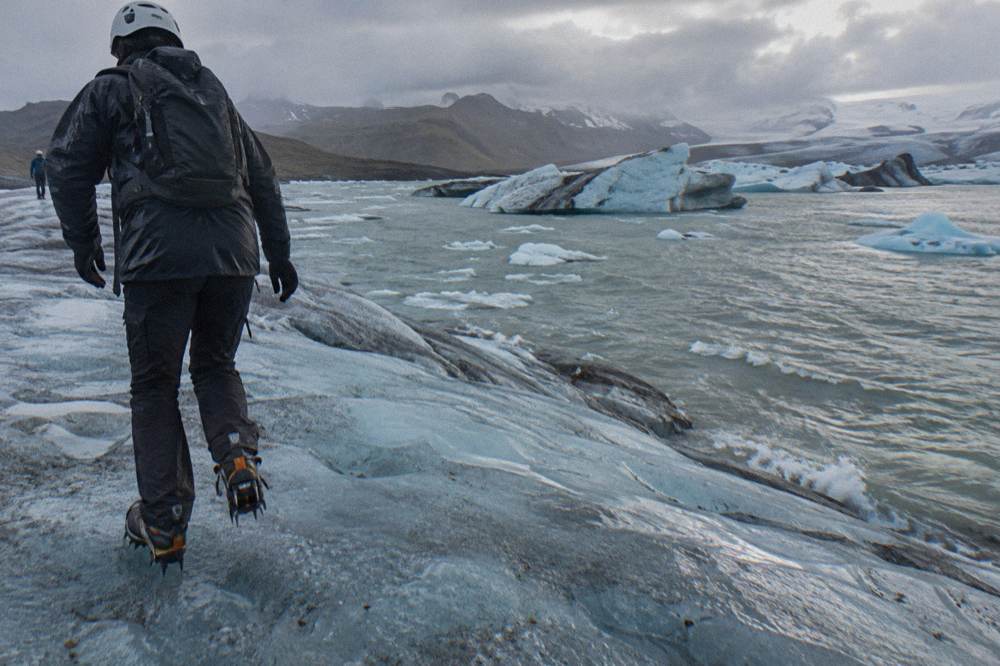
Which Jokulsarlon Ice Cave Tour Fits Which Month?
All three featured ice cave tours run from the Jokulsarlon parking area inside the same October to April window, so the month rarely changes which tour you can take, only how you experience it. Prices run from $164 to $176 per person, durations from 2.5 to 3 hours, and every one includes glacier safety gear.
The Guided Vatnajokull Ice Cave Tour is the reference point: three hours, from $164 per person, rated 4.2 across 2,194 reviews, meeting at Jokulsarlon with a guide and full safety gear included, and pickup is not mentioned, so check the live booking page if you need a ride. For a fuller treatment of that tour, see the ice cave tour from Jokulsarlon guide, and you can also check availability on the operator's booking page for the dates you have in mind.
| Tour | Duration | Price from | Rating and reviews | Meeting point |
|---|---|---|---|---|
| Guided Vatnajokull Ice Cave | 3 hours | $164 per person | 4.2 across 2,194 | Jokulsarlon |
| Crystal Cave Super Jeep | 2.5 hours | $168 per person | 4.2 across 1,772 | Jokulsarlon parking lot |
| The Original Ice Cave Tour | 3 hours | $176 per person | 4.5 across 1,238 | Jokulsarlon main parking |
Pickup details are not mentioned, so the month affects the getting-there as much as the tour itself. In December or January you are driving to the lagoon in darkness at one or both ends; from February onward the same drive fits inside daylight with stops to spare. If the drive feels like too much on winter roads, the alternative is a multi-day south coast tour that reaches the lagoon with an ice cave stop, or the pairing covered in the glacier hike and Jokulsarlon combo guide. Choosing between cave styles rather than months is its own question, handled in which ice cave is better, Vatnajokull or Katla.
A note on the group-side differences: super jeep and standard guided tours alike rely on vehicle transport to reach the cave areas, and in a low-snow month like late October or April the approach can be longer and rougher than in deep winter. None of that is a reason to pick or avoid a month by itself, but it explains why two travellers in the same week can report very different physical days. Whichever you choose, this site, Jokulsarlon Glacier Lagoon Tours, keeps the full set of options in one place for comparison.
What Should You Book Around When Picking Dates?
Book the cave tour for the start of your trip window, not the last day, so a weather closure leaves room to rebook. Keep the day flexible for the lagoon, Diamond Beach and the drive, and leave Reykjavik early in the short-day months. All three featured tours allow free cancellation up to 24 hours before.
The single best piece of timing advice for ice caves is slack. Every tour states conditions decide on the day, and the park's post-2024 safety regime means an assessment can close a cave that seemed fine the evening before. Booking the cave on day two or three of a south coast stay rather than the final morning gives you a rebooking chance inside the same trip. The free cancellation up to 24 hours before, common to the three tours above, works the same way for your side of the plan.
Second, budget the day generously. The tour is 2.5 to 3 hours, but the lagoon itself, the 500 m walk to Diamond Beach across Route 1, and the drive each deserve time, and parking at the lagoon is a paid park fee of 1,110 ISK for a passenger car, valid until midnight of the day paid. In November to January the long drive each way plus a midday tour fills every daylight minute; from March you can add a waterfall stop and still arrive before dark. The planning tradeoffs between driving yourself and a guided day trip are laid out in the self-drive versus tour comparison for Jokulsarlon.
Third, match your month to your priorities honestly. If photography of the lagoon and beach matters most, take February or March for daylight. If you want the fullest winter experience and accept short days, December and January deliver it. If your dates were fixed by a shoulder-season flight deal in October or April, favor April's first half, since October's opening days can find caves still firming up and your first-choice cave not yet running. There is no wrong month inside the window, only different trips.
If your dates are set and you are ready to compare the tours that run inside the season, these three cover the range from a 2.5 hour super jeep outing to a full three hour guided cave walk, all from the Jokulsarlon parking area.
Common Questions About Ice Cave Timing
What Is The Best Month To Visit The Ice Caves?
There is no single best month. The natural ice cave season at Vatnajokull runs roughly October to April, conditions permitting. February and March balance reliable ice with returning daylight, while December and January offer the deepest winter but only about four to five hours of daylight at the lagoon.
Can You Visit The Ice Caves In Summer?
No. After the August 2024 fatal collapse on Breidamerkurjokull, natural ice cave tours were banned inside Vatnajokull National Park during summer, and stricter operator conditions including a lead guide and daily safety assessments now apply in winter.
Do Ice Cave Tours Get Cancelled For Weather?
Yes, sometimes. Every covered tour states that the ice cave visit depends on conditions assessed on the day, and ice is never guaranteed. Booking early in your trip window leaves room to rebook if a cave closes.
How Many Hours Of Daylight Are There In Winter?
At Hofn, the nearest town with daylight data, daylight runs 4 h 21 m on 1 January, 7 h 06 m on 1 February and 10 h 10 m on 1 March. Iceland keeps UTC+0 all year with no daylight saving.
Which Month Has The Bluest Ice Caves?
No month guarantees a colour. Cave ice and its blue tones vary with conditions, and operators never promise a shade or a specific cave. Deep winter months often produce the densest ice, but the cave you see is decided by the daily safety assessment.