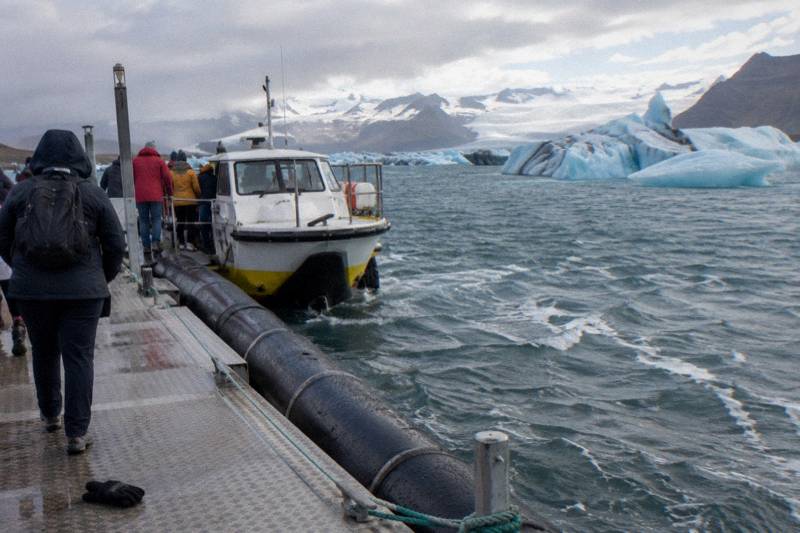
Jokulsarlon Weather: What To Expect By Month
Weather at Jokulsarlon decides almost everything: whether the amphibian boats run, whether an ice cave is open, how much daylight you have, and how demanding the drive on Route 1 will be. Here is what the verified climate records and daylight tables actually say, month by month.
Short answer
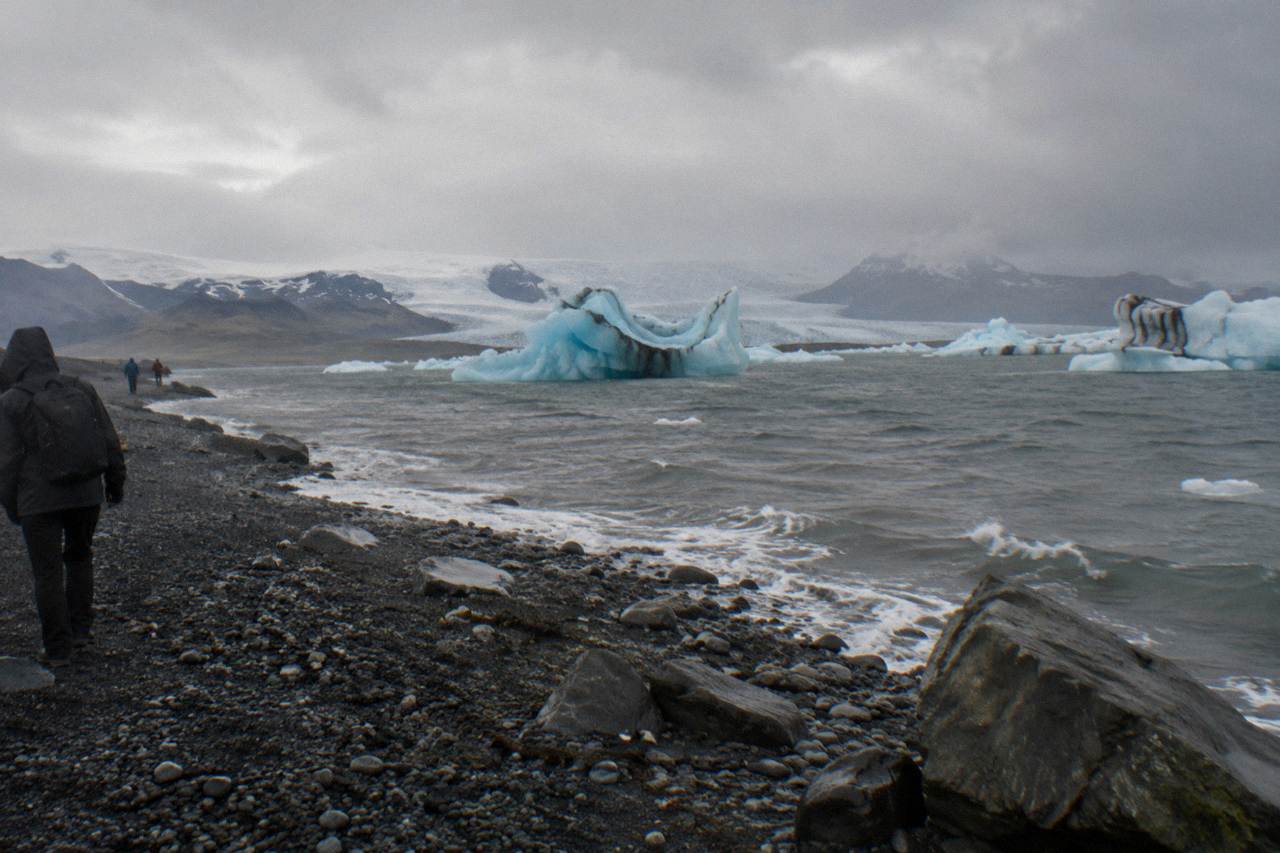
Jokulsarlon sits on Iceland's southeast coast, where weather changes fast and rain falls on roughly half the days of the year. The nearest long-term records come from Kirkjubaejarklaustur, about 200 km west: daily means run from about 0.0 °C in February to 11.6 °C in July, and daylight at Hofn ranges from about 4 hours in December to nearly 21 in June.
Weather is the single biggest variable in any Jokulsarlon plan. The lagoon sits about 370 km east of Reykjavik on Route 1, on an open sandur plain where the Atlantic meets glacial meltwater. A calm blue morning can become horizontal sleet by early afternoon, and the tour operators who work the lagoon adjust their plans daily around exactly that.
This guide lays out what the verified records show: long-term temperature and rainfall normals, measured daylight hours for nearby Hofn, and how each season changes what runs. One caveat before the numbers. The nearest climate station with published 1981-2010 normals is Kirkjubaejarklaustur, roughly 200 km west of the lagoon. It is a long-term reference for the coast, though conditions right at Jokulsarlon can differ from the station readings. Treat the figures as a planning baseline, not a promise, and check the live forecast at the Icelandic Met Office before you travel.
What Kind Of Weather Does Jokulsarlon Have?
Jokulsarlon has a cold oceanic climate with no dry season: the Kirkjubaejarklaustur normals record a daily mean of about 0 °C in the depths of winter and 11.6 °C in July, with rain or snow on 182 days a year totalling roughly 1,700 mm. The lagoon itself is windier than the station suggests, and the weather can swing from sunshine to storm within a few hours on any day of the year.
That 182-day figure comes from the same station records, counting days with at least 1 mm of precipitation. It means that on any given visit, precipitation falling somewhere is roughly a coin flip, and in winter much of it arrives as snow or freezing rain rather than rain. The practical consequence for travellers is simple: waterproof layers matter more here than almost anywhere else in Iceland, and the visitors who enjoy the lagoon most are the ones who plan for weather rather than around it.
Wind is the factor the normals understate. The sandur plain between the glacier and the sea offers no shelter from the wind. Wind, not temperature, is what closes boat tours, cancels super-jeep transfers to ice caves, and makes the walk to Diamond Beach genuinely unpleasant. Operators make those calls on the day, which is one reason free cancellation matters when booking.
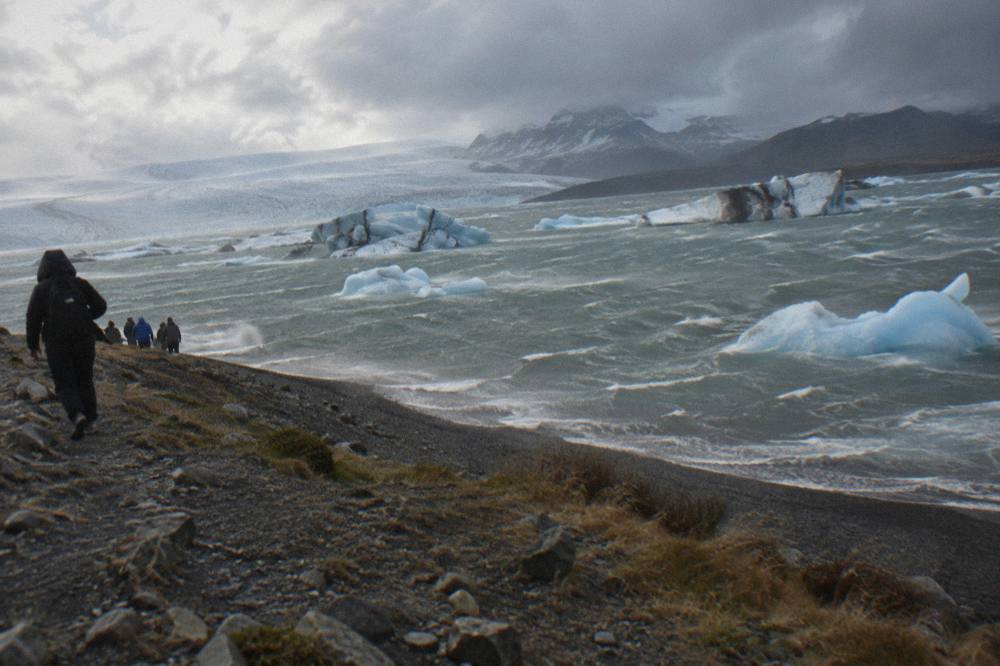
For a broader picture of how wind, rain and seasonal ice shape the lagoon scene, the guide to Jokulsarlon in winter and the guide to Jokulsarlon in summer break down what each season means for tours, light and crowds.
How Cold Does It Get At The Lagoon?
On the Kirkjubaejarklaustur record, the coldest months are January and February with daily means of 0.1 °C and 0.0 °C, and December sits at 0.3C: winter at the lagoon hovers around freezing rather than far below it. July is the warmest month at a mean of 11.6 °C, with a mean maximum of 15.4 °C, so even summer days feel cool, especially in wind.
The ocean moderates everything. This is not continental cold: it is near-freezing damp cold, which many travellers find harder on the body than drier, deeper cold elsewhere. Mean maximum temperature in January is just 2.4 °C on the long-term record. When the wind blows, though, effective temperatures fall quickly, and the coast near the lagoon runs colder than the station numbers suggest.
What that means for packing is straightforward. Insulated waterproof outer layers, a hat and gloves are sensible in every month, and especially advisable from October through April. If your trip includes a glacier hike or an ice cave tour, note that most of those tours do not include clothing or boots in the base price: winter clothing, hiking boots and food are common exclusions, so check the inclusions before assuming gear is provided. The what to wear guide covers layering in detail.
Weather also decides which day trip represents the best value on a marginal-visibility day, since the lagoon itself is viewable in almost any conditions while boats and caves are not.
| Day trip | Duration | Rating and reviews | From price | Lagoon boat ride |
|---|---|---|---|---|
| BusTravel Diamond Beach Day Trip | 14 hours | 4.7 across 4,069 reviews | $211 per person | Optional paid add-on |
| Gray Line 14.5-Hour South Coast | 14.5 hours | 4.5 across 1,582 reviews | $234 per person | Not included |
| 14 to 15 Hour Day Trip | 14 to 15 hours | 4.5 across 1,460 reviews | $225 per person | Optional paid add-on |
All three include a guide and offer free cancellation up to 24 hours before, which is worth having when a storm system is bearing down on the south coast. The BusTravel day trip is the most reviewed option covered here, 4.7 across 4,069 reviews, from $211 per person with pickup in Reykjavik available as a selectable option.
How Much Rain Falls At Jokulsarlon Each Month?
Every month records at least 104 mm of precipitation on the Kirkjubaejarklaustur normals, from that low of 104 mm in May to a high of 177 mm in December, totalling about 1,700 mm across the year. There is no dry season at the lagoon: August through December are the wettest stretch, and May is the relatively driest month on the long-term record.
The month-by-month distribution matters more than the total, because it shapes both what you will see and what will run. Here is the full table, with the station caveat repeated: these are Kirkjubaejarklaustur figures, about 200 km west, and the coast at the lagoon differs.
| Month | Daily mean temp | Precipitation |
|---|---|---|
| January | 0.1 °C | 157 mm |
| February | 0.0 °C | 141 mm |
| March | 0.8 °C | 133 mm |
| April | 3.3 °C | 121 mm |
| May | 6.9 °C | 104 mm |
| June | 9.8 °C | 113 mm |
| July | 11.6 °C | 123 mm |
| August | 11.0 °C | 166 mm |
| September | 8.1 °C | 158 mm |
| October | 4.6 °C | 163 mm |
| November | 1.8 °C | 145 mm |
| December | 0.3 °C | 177 mm |
Rain here rarely arrives as a gentle shower. It comes in fast fronts off the Atlantic, often with wind, and in winter the same systems deliver snow, sleet or freezing rain depending on a degree or two of temperature. Rain gear that fails in sustained wind fails here, so a proper shell jacket works better than a folded poncho.
The practical silver lining: showers pass quickly. A wet hour at the lagoon is frequently followed by a bright one, and drifting cloud breaks are when the icebergs photograph best, with dark water and shifting light. Visitors who wait out a squall in the lagoon cafe, open year-round except 24 to 26 December and 31 December to 2 January, often get a second, better look at the water.
How Many Hours Of Daylight Does Jokulsarlon Get?
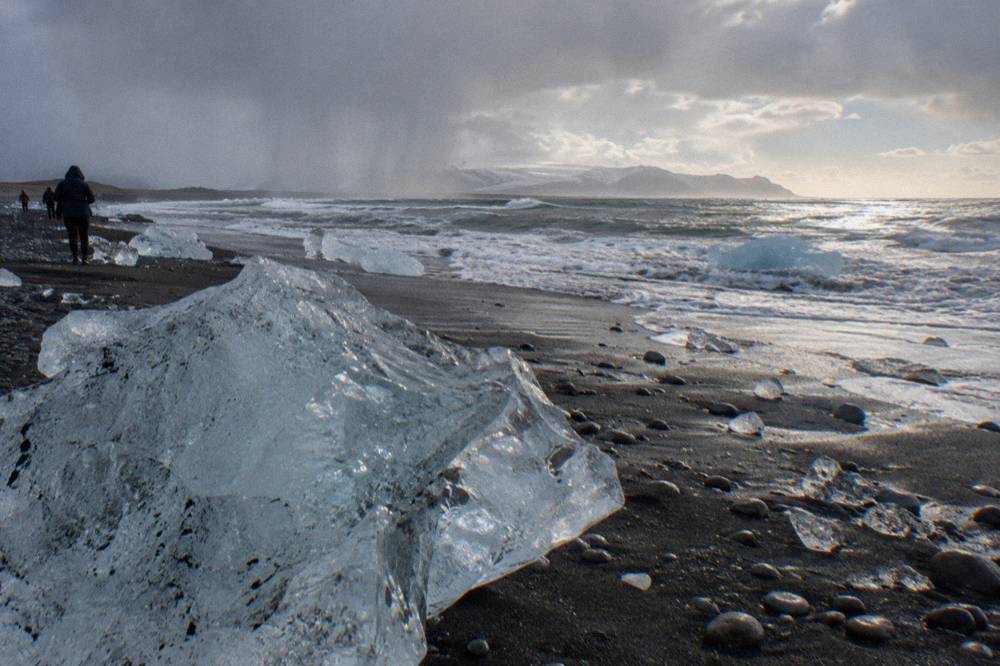
Daylight at Hofn, within minutes of the lagoon, swings from about 4 hours 21 minutes on 1 January to 20 hours 11 minutes on 1 June, peaking at 21 hours 14 minutes on 21 June when the sun sets at 23:39. There is no true midnight sun this far south, but June nights stay bright, while December offers barely four hours of grey light.
Iceland keeps UTC+0 all year with no daylight saving, so the shift through the seasons is entirely astronomical. The table below gives day length on the first of each month from the timeanddate.com calculations for Hofn, the nearest reference point to the lagoon.
| Date | Daylight at Hofn |
|---|---|
| 1 January | 4h 21m |
| 1 February | 7h 06m |
| 1 March | 10h 10m |
| 1 April | 13h 33m |
| 1 May | 16h 53m |
| 1 June | 20h 11m |
| 21 June | 21h 14m |
| 1 August | 17h 59m |
| 1 September | 14h 34m |
| 1 October | 11h 20m |
| 1 November | 7h 58m |
| 21 December | 4h 03m |
The December figure deserves emphasis for anyone planning a winter day trip from Reykjavik. With roughly 4 hours between sunrise and sunset around 21 December, and a 14-hour round trip on the bus, you will see the lagoon in low light at best. That is not a reason to skip winter: low light on icebergs is dramatic, and the ice cave season runs through these months. It is a reason to set expectations. Midwinter photography rewards the patience of waiting for the brief window around solar noon.
Late spring and summer reverse the equation. A 1 May visit comes with nearly 17 hours of daylight, and by mid-June you can stand at Diamond Beach at 11 pm in usable light. That flexibility is why summer visitors can stack a lagoon stop, a Diamond Beach walk and a detour without racing the clock. The catch is that summer also brings the nesting season restrictions: drones are banned at Jokulsarlon and Fellsfjara between 15 April and 15 July under the park's drone rules, and outside that window flights are limited to set early and late hours.
What Is The Best Season To Visit Jokulsarlon?
There is no single best season: May to September offers long daylight, boat operations and milder temperatures, while October to April brings ice cave season, fewer crowds and dramatic low light at the cost of about 4 to 8 hours of daylight and winter driving conditions. The boat season runs May to October, sometimes into November, and ice caves run roughly October to April, so late spring and early autumn overlap both only rarely.
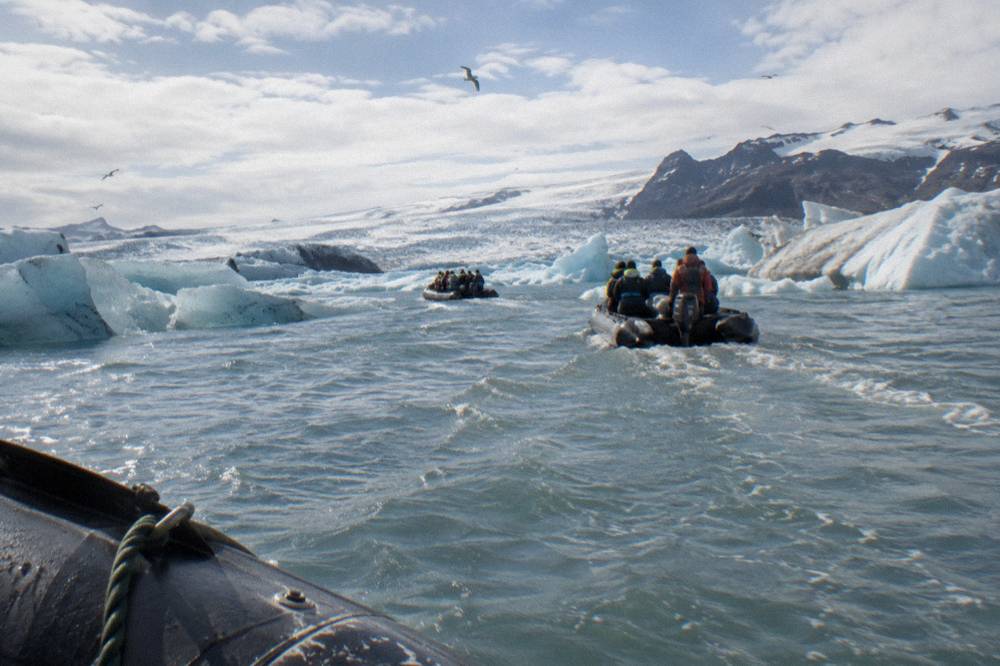
The two headline activities run in opposite halves of the year, which is the honest core of the answer. The lagoon operator's amphibian boats, 30 to 40 minutes on the water, run May to October and sometimes into November depending on weather and ice, with the zodiacs, 1 hour 15 minutes, on a similar May to October schedule. No winter boat tours are listed by the main operator once the season ends. The ice caves under Vatnajokull invert that: the operator FAQ cites natural cave seasons of roughly October to April, conditions permitting, and after the August 2024 fatal collapse on Breidamerkurjokull, natural ice cave tours are not run inside the national park in summer at all.
That makes your choice of season really a choice of activity, with weather as the deciding layer on top. A June trip buys you daylight, boats and the best odds of a calm day, at the price of peak crowds and no caves. A February trip buys you a cave, emptier viewpoints and moody light, at the price of short days, cold and a drive that demands winter respect. Shoulder months, May, September and early October, split the difference, and September carries 158 mm of rain on the station record, so a September boat ride falls inside the season but the ice caves wait for the colder months.
For travellers weighting the choice around ice, the best month to visit the ice caves goes deeper on cave conditions, and the boat tour season guide covers exactly when the amphibians and zodiacs stop running.
Does Weather Cancel Tours At Jokulsarlon?
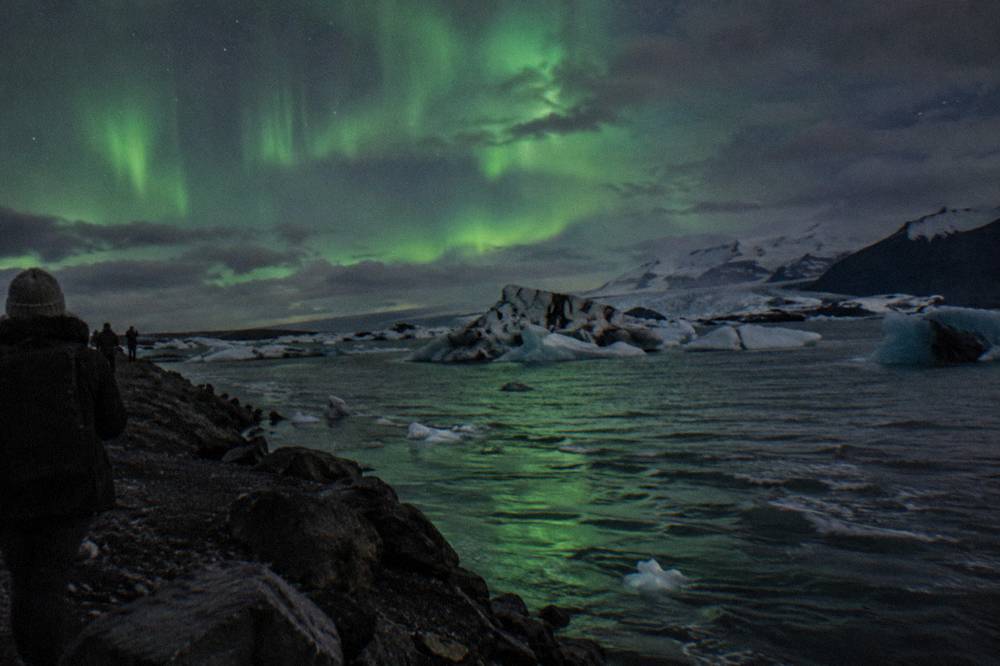
Yes: operators suspend boat rides, ice cave trips and super-jeep transfers when wind, ice or visibility make them unsafe, and ice conditions on the lagoon change daily with glacier activity, weather, tides and ocean currents. No operator promises icebergs, cave entry or any specific conditions, and every tour decision is made on the day by the operator.
The lagoon operator's own FAQ is blunt on this: ice conditions change daily, and icebergs are never guaranteed. The same logic governs the caves. Since the 2024 accident, park rules require each cave to be safety-assessed daily by the operator before a group enters, with a lead guide on every trip, and a cave that fails assessment is closed that day regardless of bookings. Travellers sometimes read that as a downside; it is the opposite. A cancellation in this landscape means the safety system worked.
The good news for bookers is that cancellation terms are traveller-friendly across the options covered here. Every day trip and ice cave tour listed offers free cancellation up to 24 hours before departure, and the lagoon operator's direct boat terms allow a full refund 24 hours or more ahead, with rebooking or a full refund if the operator cancels for weather. Read the specific terms on the booking page before you rely on them, but the pattern is consistent: weather risk falls mostly on the operator, not on you, provided you book things you can still cancel.
One structural note on boats specifically: no standalone lagoon boat tour is sold through the booking platforms this site covers. The amphibian and zodiac rides are sold direct by the lagoon operator at the site, at the operator's own prices in ISK, and some Reykjavik day trips list the boat as an optional paid add-on at booking. Only two day trips covered here include a boat ride in the base price: the Boat Ride Included, 14 Hours trip from $292, 4.7 across 492 reviews, and the Reykjavik Excursions Boat Tour from $328, 4.7 across 126 reviews. If weather cancels the boat element, those inclusions are handled per the operator's terms, which is another reason the 24-hour free cancellation window matters.
How Does Weather Affect The Drive From Reykjavik?
The drive is about 370 km on Route 1, and in winter it demands a rental car suitable for winter conditions, headlights on front and rear at all hours, and a check of live road conditions before departure, because storms can close sections of the ring road with little notice.
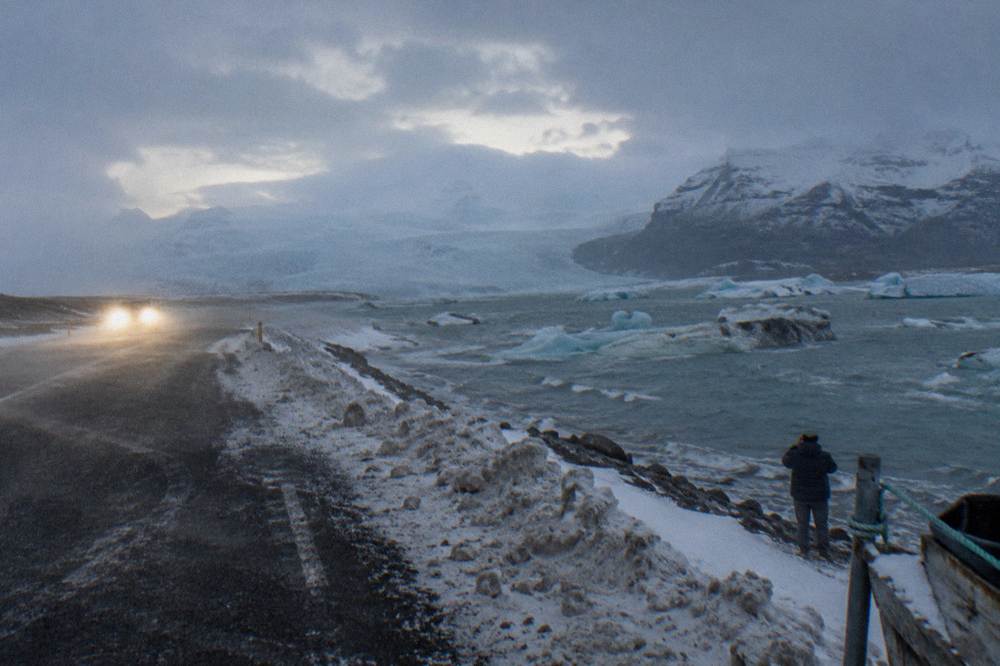
Safetravel's winter driving guidance sets the baseline: lights on 24 hours a day, a winter-tyred vehicle, and realistic expectations about limited daylight. A 4x4 does not remove skid risk, a point the page makes explicitly, and the flat sandur stretches near the lagoon are prone to both wind and blowing sand in storms. Live road conditions are published at umferdin.is/en and forecasts at en.vedur.is, and both are worth checking on the morning of the drive, not the night before.
The road itself does occasionally close. The ring road beside the lagoon closed overnight for roadworks in late September 2026, and the main lagoon car park closed for paving in early October before reopening on 8 October, both reminders that the infrastructure around this stretch of coast requires maintenance and that closures, when they happen, often have no detour. Organized tours absorb that risk for you: the driver and operator monitor conditions and adjust, which is a real part of what a guided day trip sells.
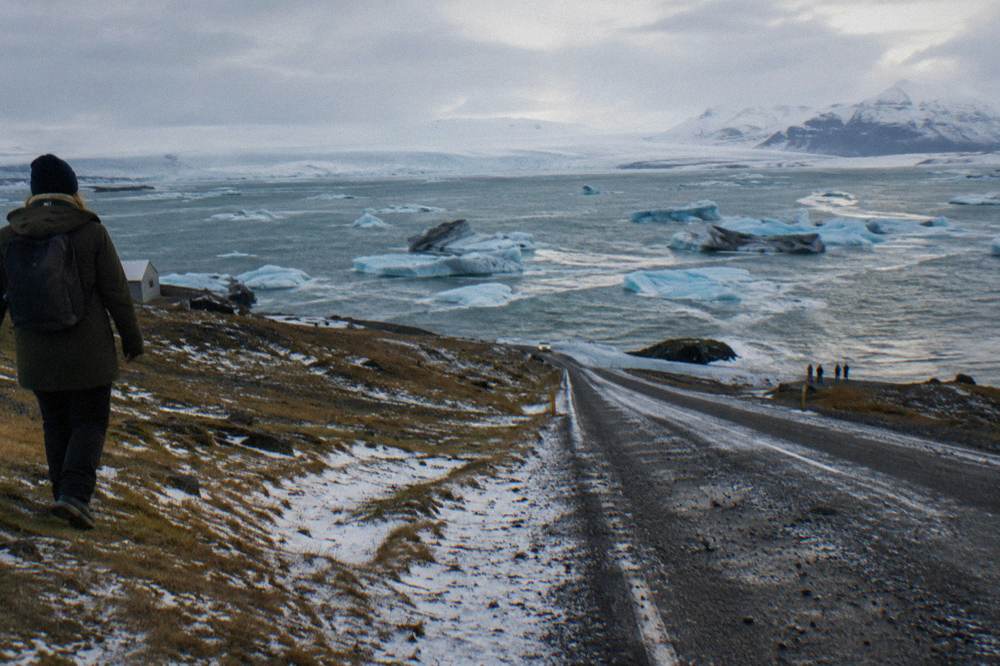
For travellers weighing the two approaches honestly, the self-drive versus tour comparison for Jokulsarlon works through cost, flexibility and weather risk, and the Reykjavik to Jokulsarlon route guide covers the drive itself.
What Should You Pack For Lagoon Weather?
Pack for wind and wet in every month: a real waterproof shell jacket and trousers, insulating mid-layers, a hat, gloves and sturdy waterproof footwear, with the layers heaviest from October to April. The station record never averages above 11.6 °C, rain falls year-round, and the wind chill on the open sandur can drop effective temperatures well below the air reading.
Specific activities add requirements. Ice cave and glacier hike tours include the technical gear, crampons, helmet and safety equipment, but most list clothing, shoes and boots as exclusions, so you arrive dressed or you rent. One multi-day option prices boot rental at 3,000 ISK and a waterproof jacket at 1,750 ISK as paid extras, which gives a realistic sense of what rental add-ons cost if you travel light. The lagoon cafe provides a warm refuge, but day trips explicitly exclude food and drinks, budget for meals at scheduled stops.
A few small items earn their space here more than almost anywhere in Iceland. Sunglasses matter even in winter, because low sun on wet ice is genuinely blinding, and sunscreen is not paranoia at these latitudes. Handheld wind protection for phones matters too: sustained gusts have ended more than one filming attempt at Diamond Beach. If you plan to fly a drone, read the park's seasonal hour limits first, noted earlier in this guide, because the red-shaded busy zone around the lagoon is prohibited entirely.
Which Tour Types Suit Which Weather?
Boat-based days suit calm summer conditions, ice cave trips suit cold stable winter weather, and scenic day trips run in nearly everything, which makes a guided Reykjavik day trip the most weather-proof choice: the lagoon, Diamond Beach and the waterfalls are viewable in poor visibility that would cancel a boat or cave. Choose your tour around the weather you are most likely to get in your travel month.
The full spread of options covered here makes that trade-off concrete. Day trips from Reykjavik run from $211 to $328 per person depending on inclusions, with the boat-inclusive Reykjavik Excursions tour at the top of that range. Ice cave trips from the lagoon car park run from $164 to $195 per person and all meet at Jokulsarlon itself, which means you must reach the lagoon first, about 370 km from Reykjavik. Glacier hikes run from $96 for a three-hour Skaftafell-area hike to $279 for a six-hour hike to a remote ice cave, 4.9 across 273 reviews.
| Tour type | Price range covered | Best weather fit | Runs roughly |
|---|---|---|---|
| Reykjavik day trip | $211 to $328 per person | Any conditions | Season not stated |
| Ice cave tour | $164 to $195 per person | Cold, stable winter | October to April |
| Glacier hike | $96 to $279 per person | Dry, calm days | Season not stated |
| Lagoon kayaking | $155 per person | Flat calm only | Season not stated |
| Multi-day south coast | $633 to $1,092 per person | Any conditions | Season not stated |
The kayaking option deserves a special weather note. A 1.5-hour paddle on the lagoon, from $155 per person and 4.7 across 532 reviews, is by nature the most weather-sensitive product here: wind makes a lagoon paddle impossible in a way it does not make a shoreline viewpoint impossible, and the operator does not recommend private boats or kayaks on the lagoon at all because icebergs roll. Book it, but hold the cancellation terms close.
Multi-day tours change the weather calculus rather than escaping it. A 2-day or 3-day south coast itinerary, from $633 per person, gives more than one day on the south coast, so one spell of poor weather at the lagoon is less likely to spoil the whole trip. Breakfast is included on these trips; lunch and dinner are bought en route. That doubling of chances is, in weather terms, the strongest argument for going multi-day.
What Weather Warnings Should You Take Seriously?
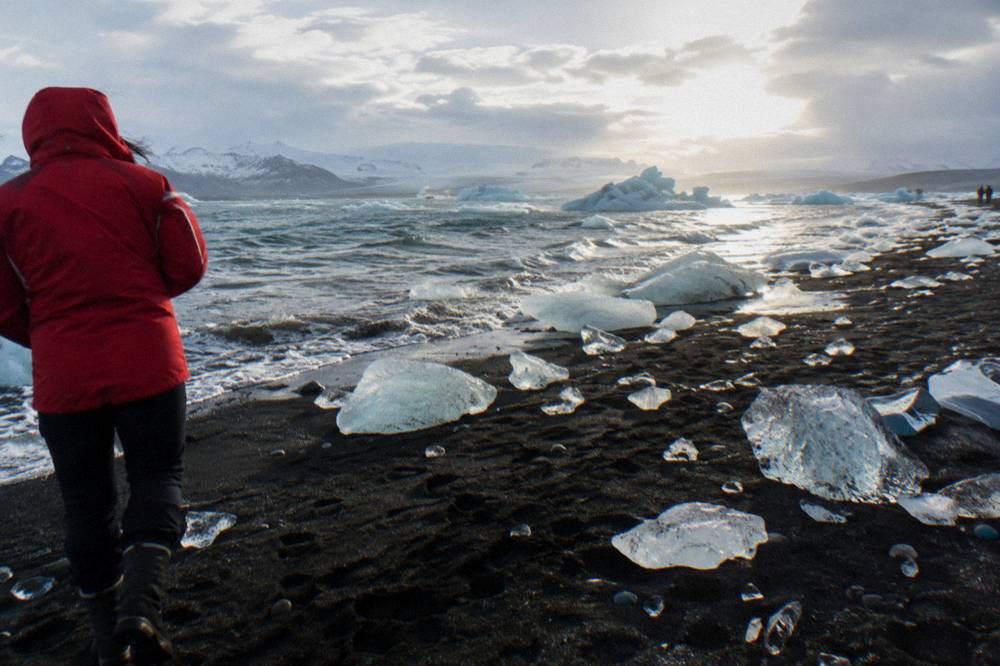
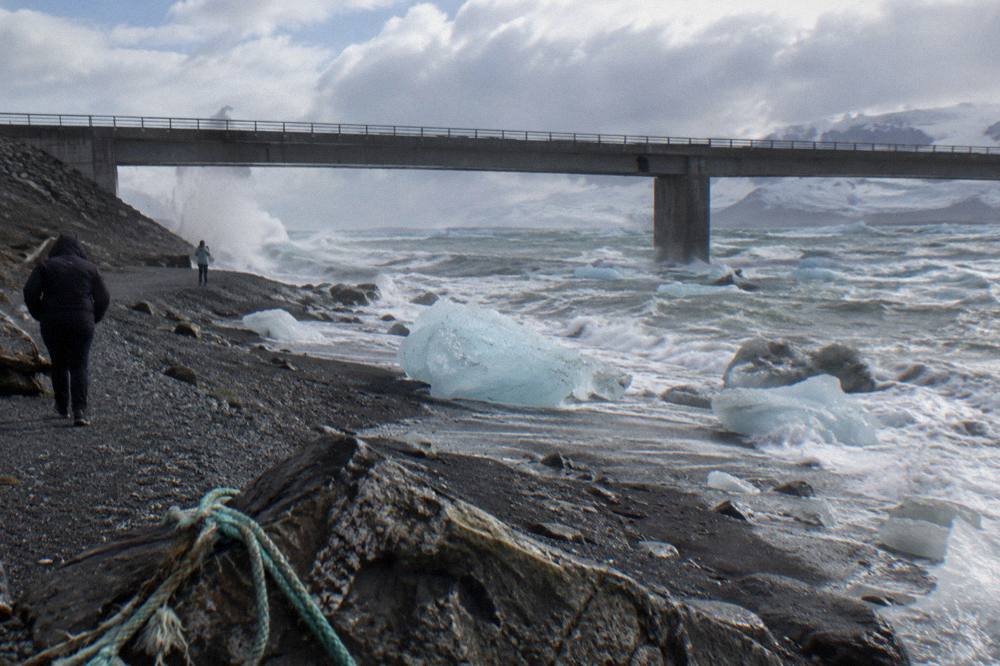
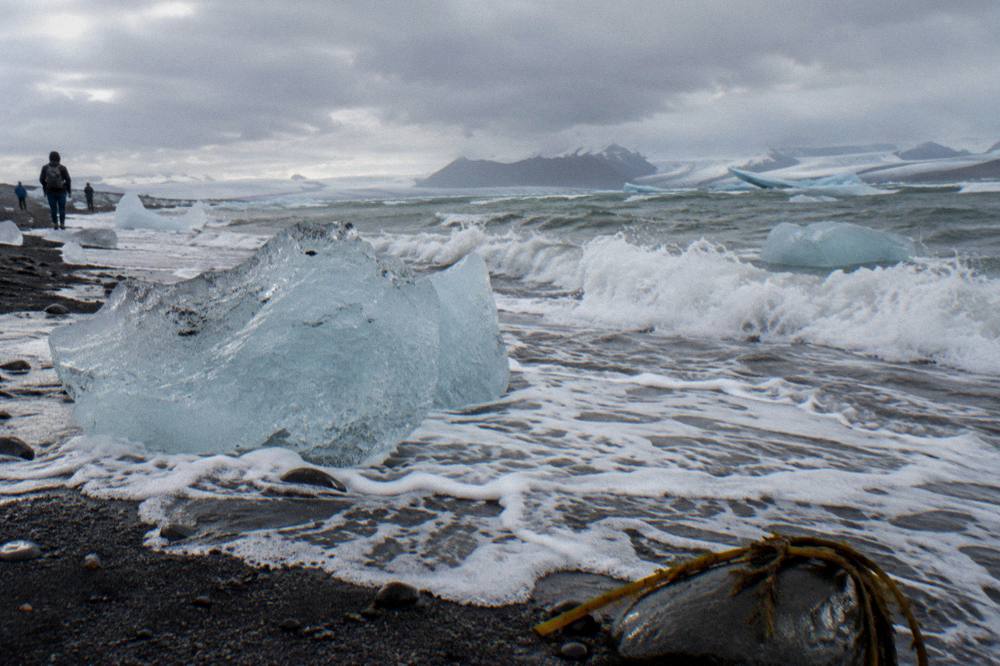
Treat every warning about the sea at Diamond Beach seriously: sneaker waves on open Atlantic black beaches arrive without warning, surge far above the normal waterline, and can sweep an adult out to sea in seconds, so stay well back from the waterline at all times and keep a constant watch on the sea.
Safetravel's black beach guidance, written for Reynisfjara but applying equally to any open Atlantic black beach including Fellsfjara, sets out colour-coded hazard levels for the beach and the safety steps that go with each. There is no Diamond Beach specific warning page, and that is exactly why the general rule travels with you: never turn your back on the surf, never stand between ice and the sea, and keep children well back from the waterline. That last piece, not standing between ice and the sea, is visitor guidance rather than an official ban, but the physics behind it needs no regulation.
The glacier itself carries the other set of warnings. Safetravel is explicit that you should never go onto a glacier without experience or proper equipment, and that hiring a certified glacier guide is highly recommended. Crevasse maps covering the region were updated in March 2026, and the park's ranger team supervises Jokulsarlon, Fellsfjara and the Breidamerkurjokull ice cave areas every day of the year, phone 842-4355, which is the number to call with a question or a concern on site.
One small park rule ties weather and terrain together: to reach Diamond Beach from the lagoon, about 500 m across the road, walk under the Route 1 bridge, not over it. The park asks visitors not to hike over the ring-road bridge, and the under-route below is the alternative on foot. In storm conditions the river mouth beside it can surge, so the same surf awareness applies the whole way.
Where Can You Check The Forecast Before You Go?
The two sources locals rely on are en.vedur.is, the Icelandic Met Office, for forecasts and warnings, and umferdin.is/en for live road conditions, with safetravel.is consolidating travel advisories and 112 as the emergency number. Check the Met Office the day before and the morning of any lagoon trip, because south-coast forecasts firm up only a day or so out.
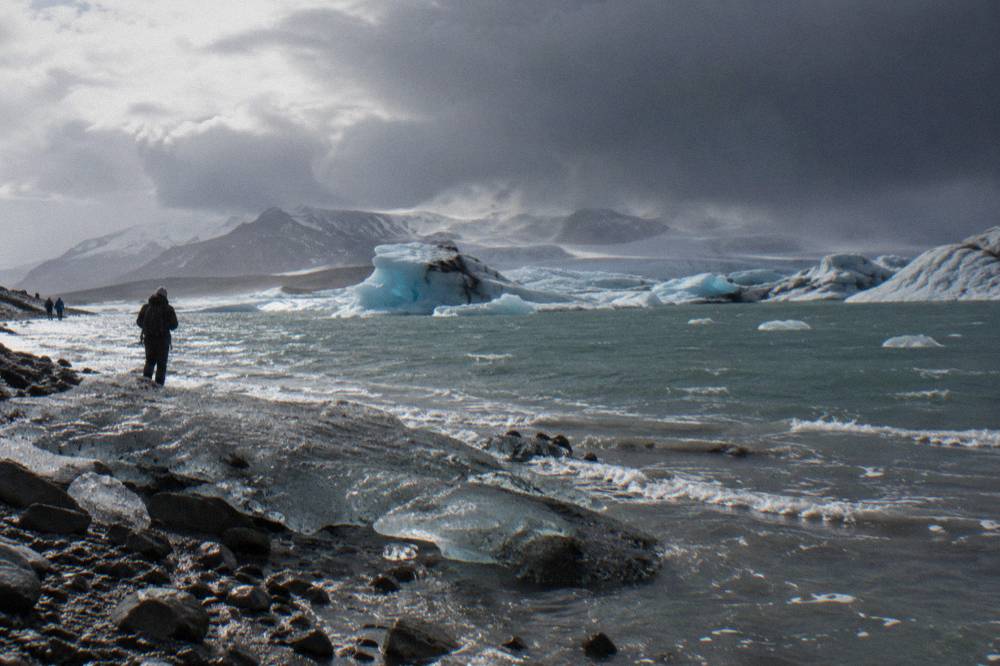
The Met Office publishes wind, precipitation and aurora outlooks with marine warnings for the southeast coast, and its colour-coded warnings are the ones to check before setting out. Road conditions at umferdin.is/en matter from October through April, and even in summer a check costs nothing. If you are booking rather than self-driving, your operator makes those checks for you, and the free cancellation up to 24 hours before, standard across the day trips and cave tours covered here, is your safety valve if the forecast turns genuinely bad.
Booking ahead is still the right call in almost every month, because the most in-demand days fill regardless of weather. The advance booking guide for Jokulsarlon tours works through how far ahead each tour type realistically needs, and Jokulsarlon Glacier Lagoon Tours lays out the full range of day trips, cave tours and multi-day options in one place.
Common Questions About Jokulsarlon Weather
What Kind Of Weather Does Jokulsarlon Have?
Cold oceanic weather with no dry season. The Kirkjubaejarklaustur normals, about 200 km west, record daily means from 0.0 °C in February to 11.6 °C in July, with about 1,700 mm of precipitation across 182 days with at least 1 mm. The coast at the lagoon is typically windier than the station figures suggest.
How Many Hours Of Daylight Does Jokulsarlon Get?
Daylight at nearby Hofn ranges from about 4 hours in late December to 21 hours 14 minutes on 21 June, when the sun sets at 23:39. Iceland keeps UTC+0 year-round with no daylight saving.
What Is The Wettest Month At Jokulsarlon?
On the station record, December is wettest at 177 mm, followed by August at 166 mm and October at 163 mm. May is the relatively driest month at 104 mm, but no month is genuinely dry.
Does Bad Weather Cancel Jokulsarlon Tours?
Yes. Boat rides, ice cave trips and super-jeep transfers are suspended when wind, ice or visibility make them unsafe, and ice conditions on the lagoon change daily. Every tour covered here offers free cancellation up to 24 hours before, so weather risk falls mostly on the operator.
When Can You See Ice At Diamond Beach?
Ice on the beach varies with tides, wind and glacier calving, and there is no reliable best month. Some days carry large clear chunks, others very little, which is why the operator states plainly that icebergs are never guaranteed.
Is The Drive To Jokulsarlon Dangerous In Winter?
It demands preparation rather than being dangerous: a rental car suitable for winter conditions with winter tyres, headlights on at all hours, and a live check of road conditions at umferdin.is/en and forecasts at en.vedur.is before setting out. The route is about 370 km on Route 1.