Jokulsarlon In Winter: Ice Caves, Light And What Runs
Winter swaps the boat season for the ice cave season at Jokulsarlon, cuts the day to as little as four hours of light, and turns the drive east into a genuine road-condition exercise. Here is what runs, what it costs, and how to plan around the light.
Short answer
In winter the lagoon boats stop and the ice caves open, roughly October to April, conditions permitting. Lagoon-start ice cave tours run from about $168 per person. Parking is 1,110 ISK for a car. Daylight shrinks to 4h03 at the solstice near Hofn, and winter driving rules apply on Route 1.
What Is Jokulsarlon Like In Winter?
Winter at Jokulsarlon is the quiet season with the shortest days and the coldest, clearest ice. The lagoon itself is reachable year-round, the lagoon boats pause after October or November, and the winter options are the ice cave and glacier hike tours that meet at the lagoon. Roughly 370 km on Route 1 separate it from Reykjavik. If the long drive from Reykjavik calls for an overnight stop, the guide to Hofn's tours, hikes, and winter driving covers everything to do in the closest town east of the lagoon.
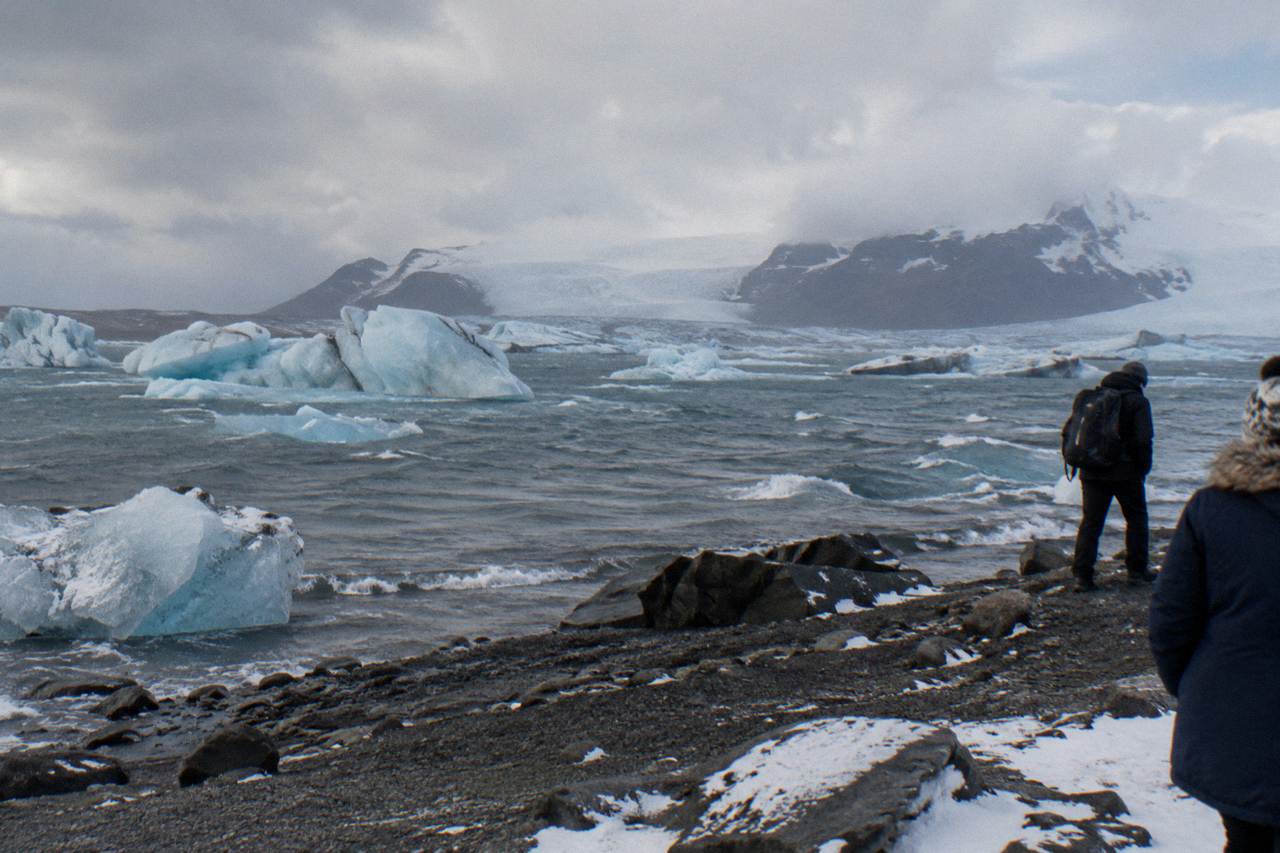
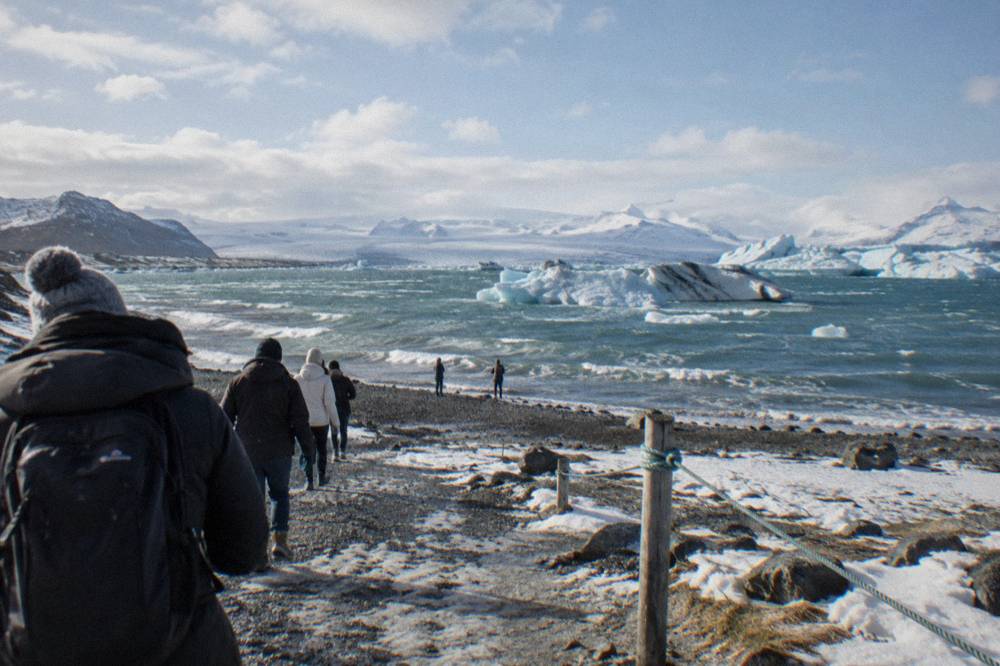
The lagoon does not freeze into a walkable sheet, and it is never safe to treat it as one. Icebergs calve from Breidamerkurjokull year-round, drift across the water and out to sea, and in winter they can accumulate at the lagoon mouth in dramatic numbers. Seals gather in large numbers at the lagoon mouth to catch fish in winter, the operator notes, so the cold months can be the better season for watching them from shore. Ice on the beach and bergs in the lagoon are never guaranteed on any given day: the operator is blunt that ice conditions change daily depending on glacier activity, weather, tides and ocean currents.
What changes most is the rhythm of a visit. A summer traveller can arrive at 22:00 and still have light; a winter traveller has a narrow window, often between about 11:00 and 15:00 around the solstice, in which everything visible happens. That compression is not a drawback if you plan for it. It pushes the day into a tight, deliberate shape: a morning drive in the dark, a few hours at the lagoon and Diamond Beach, and an ice cave departure timed to the light. The area around the lagoon stays accessible year-round, and flush toilets are available on site. Since the lagoon, the beach and the ice caves all sit inside the same protected area, the guide to Vatnajokull National Park explains how parking fees, tour access and park rules work across the region.
For a contrast with the long June days, the companion piece is the summer season guide, and the weather and conditions explainer covers what the coast actually serves up between cold fronts.
Which Tours Run At Jokulsarlon In Winter?
The tours that run in the cold months are the lagoon-start ice cave tours and glacier hike options that meet at the lagoon car park, from about $96 to $279 per person. The lagoon boats pause after October or November, so nothing on the water runs in winter, including the boat add-on on the Reykjavik day trips. Nothing on the water runs all winter.
This is the single biggest seasonal fact to plan around: the two things a summer visitor associates with Jokulsarlon, the amphibian and the zodiac, are summer products. The operator runs the amphibian May to October, sometimes into November depending on weather and ice, and the zodiac May to October. No winter boat tours are listed by the main operator after the season ends. So a winter booking decision is really a decision between three formats: an ice cave tour from the lagoon, a glacier hike, or a Reykjavik day trip that shows you the lagoon and Diamond Beach from shore. The general boat season guide covers the summer side of that divide.
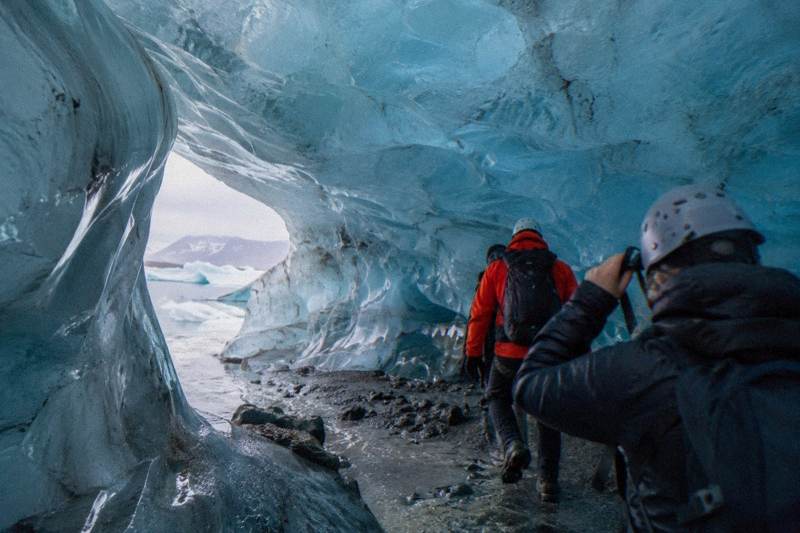
The ice cave category is where winter is the peak, not the shoulder. Every ice cave tour on this site starts at Jokulsarlon itself, at the main parking area or an operator hut beside it, which matters because it means getting to the lagoon first, about 370 km east of Reykjavik on Route 1. The three options below are the natural shortlist for a winter visit.
A winter comparison of what actually operates, with figures exactly as the booking pages state them:
| Tour | Duration | Price from | Rating | Winter status |
|---|---|---|---|---|
| The Original Ice Cave Tour | 3 hours | $176 per person | 4.5 across 1,238 reviews | Runs in ice cave season, conditions permitting |
| Guided Vatnajokull Ice Cave | 3 hours | $164 per person | 4.2 across 2,194 reviews | Runs in ice cave season, conditions permitting |
| Crystal Cave Super Jeep | 2.5 hours | $168 per person | 4.2 across 1,772 reviews | Runs in ice cave season, conditions permitting |
| Crystal Blue Super Jeep Tour | 3 hours | $168 per person | 4.4 across 635 reviews | Runs in ice cave season, conditions permitting |
| Skaftafell Glacier Hike | 3 hours | $96 per person | 4.8 across 57 reviews | Lowest from-price among lagoon-start options |
| Vatnajokull Hike | 4.5 hours | $149 per person | 4.8 across 1,081 reviews | Guided hike that meets at the Jokulsarlon main parking lot |
| Amphibian and zodiac boats | 30 to 40 min, 1 h 15 min | Operator direct, ISK | not applicable | Not running: season ends October or November |
The Reykjavik day trips are a separate question. A 14-hour winter day trip to the lagoon and Diamond Beach is a long commitment when daylight is this short, and several of those tours list the lagoon boat ride as an optional paid add-on or exclude it outright, which in winter is moot. If the shore view is what you want and you would rather not drive, the day trip options from Reykjavik are covered in full elsewhere on this site.
What Is The Ice Cave Season At Jokulsarlon?
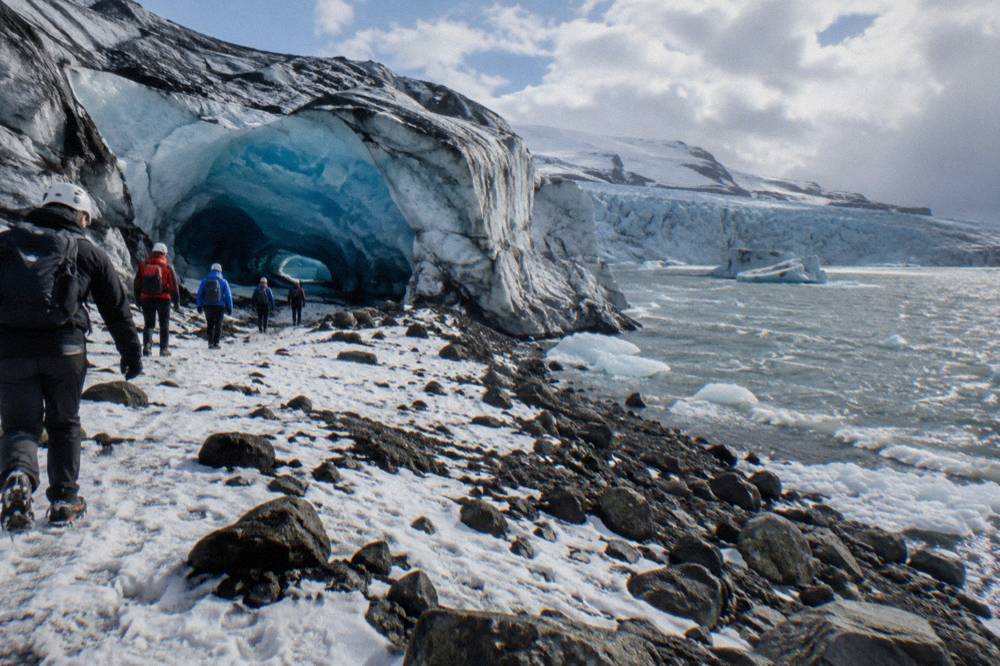
The natural ice caves under Vatnajokull run roughly October to April, conditions permitting, with specific dates varying by cave and by operator. Summer tours into natural ice caves inside the national park were banned after the August 2024 collapse, and since then operators must run a lead guide system with daily safety assessment of each cave.
That is the honest shape of the season: wide at the edges, firm at the rules. One operator's FAQ cites roughly October to April for the season, with start and end dates that differ from cave to cave, and two of the cave tours note that departures run weather permitting. Never plan around a guaranteed cave entry, a guaranteed colour or a guaranteed size.
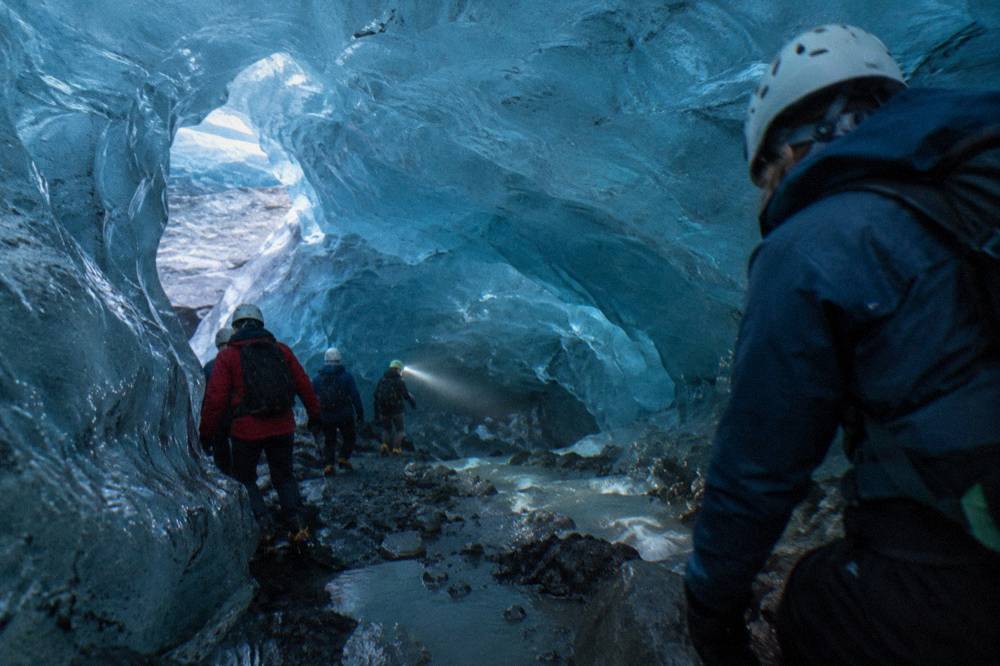
The safety framework is worth knowing as a traveller, because it explains why these tours are structured the way they are. After a tourist died on Breidamerkurjokull in August 2024, the park imposed stricter operator conditions: a lead guide requirement, daily safety assessments of each cave and overhanging ice, and a professional oversight council. The following year the national broadcaster reported that taking summer groups into natural ice caves was ruled unacceptable inside the park. None of this makes the tours risky to book; it makes them tightly run. The inclusions cover safety gear, and one super jeep cave tour names a certified guide.
The featured option for a first winter visit is The Original Ice Cave Tour, about 3 hours from the Jokulsarlon main parking area, from $176 per person, rated 4.5 across 1,238 reviews, with gear included and free cancellation up to 24 hours before. Food and drinks are not included, and there is no pickup: you meet at the lagoon.
How Much Daylight Does Jokulsarlon Get In Winter?
Daylight at Jokulsarlon bottoms out at 4h03 on 21 December, with sunrise 10:57 and sunset 15:00 near Hofn, and climbs to 7h58 by 1 November and about 10 hours by 1 March. Iceland keeps UTC+0 all year with no daylight saving, and the lagoon sits within minutes of the Hofn figures.
The daylight budget is the planning constraint that decides everything else. A winter visit is not a full day at the lagoon; it is a precision operation built around a five-to-eight hour window, depending on the month. The table below gives the day length at Hofn on the first of each winter month, from timeanddate.com's calculations for that station, which the lagoon matches within minutes. The wider set of guides lives on Jokulsarlon Glacier Lagoon Tours.
| Date | Daylight at Hofn | Planning implication |
|---|---|---|
| 1 November | 7h58 | Full morning and afternoon possible |
| 1 December | 4h59 (about 5 hours) | Midday-only plan |
| 21 December | 4h03 (sunrise 10:57, sunset 15:00) | Tightest window of the year |
| 1 January | 4h21 | Midday-only plan, dark drive likely |
| 1 February | 7h06 | Window widening fast |
| 1 March | 10h10 | Nearly a full sightseeing day |
Two practical consequences follow. First, winter daylight around the lagoon runs short, so book the departure time you are given and plan the drive around it. Second, the drive east is very likely to begin or end in darkness. Some travellers treat that as a bonus, but no honest page can promise a sighting, because the northern lights depend on solar activity and cloud cover that no operator controls. Treat any display as a gift, never as part of the plan.
Because that midday slot is the one thing you cannot move, it is worth locking in the cave tour before anything else on the itinerary. Free cancellation up to 24 hours before means a provisional booking costs you nothing if the forecast turns.
The cold itself is moderate by continental standards. The nearest long-term station, Kirkjubaejarklaustur about 200 km west, records 1981 to 2010 daily means of 0.1 °C in January and 1.8 °C in November, with a July mean of 11.6 °C for contrast; the coast right at the lagoon differs from that station, and wind rather than temperature is what makes it feel harsh. Precipitation at the same station runs 133 to 177 mm per month from October to March, so a waterproof layer matters more than an extreme-cold parka.
Because Iceland never shifts its clocks, the numbers in the table are exactly what you get: no spring-forward or fall-back adjustment ever changes them. The climb back from the solstice is fast and fairly even. Hofn gains nearly three hours between 1 January and 1 February, then just over three more across February, so moving a trip by two or three weeks can turn a midday-only plan into a genuine morning-and-afternoon day. The same logic works in reverse: early November buys you almost eight hours of light, while early December buys about five.
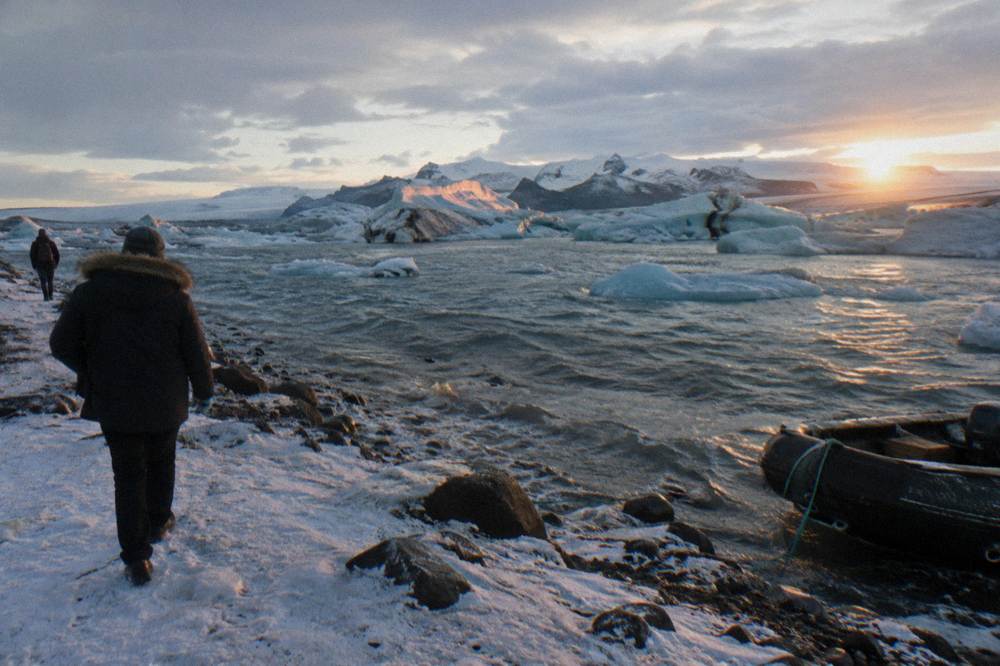
Shape the day around that light rather than fighting it. On the darkest day the sun rises at 10:57, so there is nothing to gain from a pre-dawn start; the midday cave slot is the anchor, and everything else fits around it. The parking ticket stays valid until midnight on the day paid, which covers a second pass at Diamond Beach, about 500 m across the road, once the tour crowds thin out. Winter rules already require vehicle lights around the clock, and the dark drive east still calls for a car fit for winter conditions, a careful pace, and daily checks of road conditions and weather forecasts. If the aurora is the hope rather than the plan, a ticket that runs to midnight at least removes one small friction from an evening wait.
Is It Safe To Drive To Jokulsarlon In Winter?
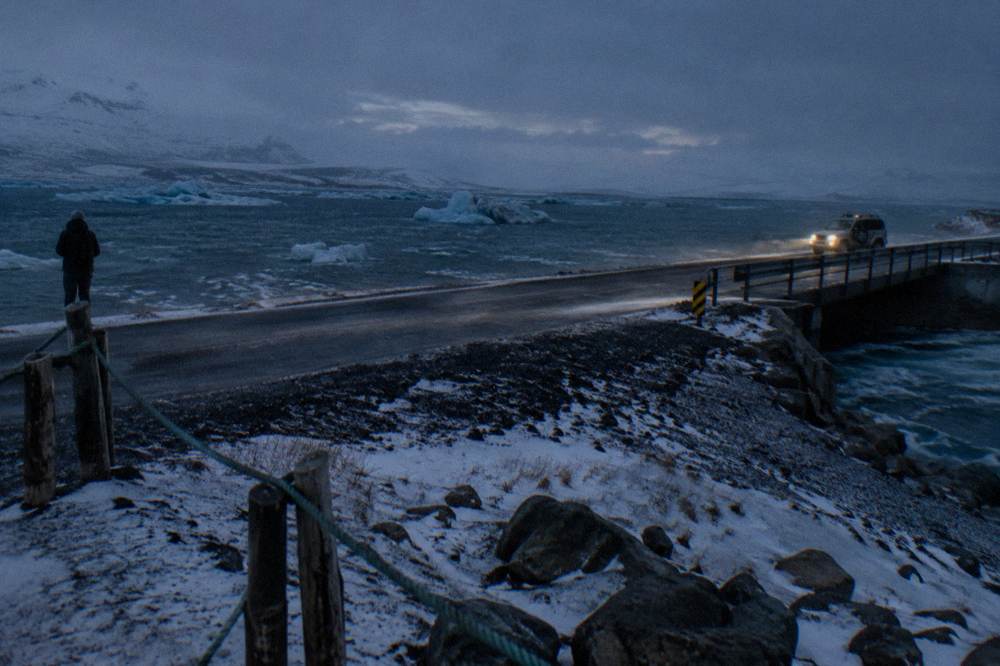
Driving to Jokulsarlon in winter is routine for thousands of travellers and demanding on bad days: Route 1 is about 370 km from Reykjavik, and safetravel's winter rules apply, lights on front and rear around the clock, a rental car with winter tyres, and daily checks of road conditions at umferdin.is/en and forecasts at en.vedur.is.
The section of road beside the lagoon crosses the concrete bridge over the glacial river. What makes the drive serious in winter is not distance but variability: snow, drifting snow and wind can close sections of the ring road for hours at a time, and safetravel's winter driving guidance is explicit that a 4x4 does not remove skid risk. Lights on front and rear 24 hours a day are mandatory, and emergency calls go to 112.
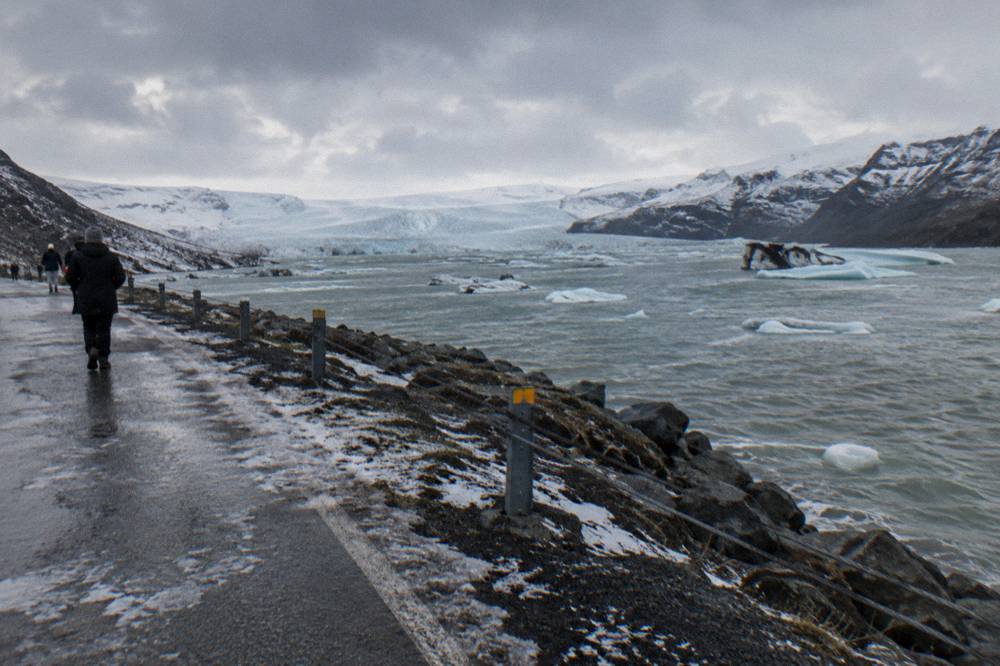
A reasonable winter self-drive plan splits the journey: overnight in Vik or Kirkjubaejarklaustur going east, the lagoon and an ice cave at midday, and Hofn or back west the following day. Travellers who would rather not drive at all have a different trade-off, weighed in full in the self-drive versus tour comparison. The guided option replaces the driving with a 14-to-15-hour day on a coach, which in December darkness means leaving Reykjavik before dawn and returning after dark, with the lagoon stop in whatever midday light the day provides.
For orientation on the route itself, including where the fuel and food stops fall, see the Reykjavik to Jokulsarlon drive guide.
If the drive is covered and the question is which cave tour to bolt onto it, the Guided Vatnajokull Ice Cave runs about 3 hours from Jokulsarlon, from $164 per person, rated 4.2 across 2,194 reviews, gear and guide included, with free cancellation up to 24 hours before.
What Does Jokulsarlon Cost To Visit In Winter?
A winter visit costs the park parking fee of 1,110 ISK for a passenger car, valid until midnight with free re-entry that day, plus whatever tour you add: lagoon-start ice cave tours run from $164 to $195 per person and glacier hikes from $96 to $279. There is no admission price for the lagoon itself, and the cafe at the lagoon stays open through winter except 24 to 26 December and 31 December to 2 January.
Parking is collected by licence-plate photo on entry and paid at machines in the car parks or through the Parka app, per the park's official pricelist. The fee drops 50 percent if you visited another fee-based Vatnajokull service area the same day, which matters to anyone combining Skaftafell and the lagoon in one drive. The park page does not state that the fee covers the Diamond Beach lots, so treat that as a separate question and check on site.
| Cost item | Figure | Basis |
|---|---|---|
| Parking, car up to 5 seats | 1,110 ISK | Per day, valid until midnight |
| Parking, 6 to 9 seats | 1,440 ISK | Per day |
| Parking, motorcycle | 450 ISK | Per day |
| Lagoon entry | No admission price stated | Open site within the national park |
| Ice cave tour, cheapest listed | from $164 | Guided Vatnajokull Ice Cave, per person |
| Ice cave tour, featured | from $176 | The Original Ice Cave Tour, per person |
| Glacier hike, cheapest | from $96 | Skaftafell Glacier Hike, per person |
| Boats | Not running | Season ends October or November |
One winter note on the parking layout: the main car park beside the lagoon was closed for paving for the first week of October 2026 and reopened on 8 October, with markings still to be painted afterwards. That work is finished, but it is a useful reminder that the Fellsfjara lots on the Diamond Beach side are real alternatives with their own access under the Route 1 bridge. Camping at the lagoon is not permitted in any season, so winter visitors need a roof in Hofn, Vik or points between, a question covered by the where to stay guide.
Budget for food separately on every lagoon-start tour. Across the ice cave and hike tours, food and drinks are either not included or simply not mentioned, and the cafe's winter hours run 09:00 to 17:00 from December to February, 09:00 to 18:00 through March. Self-catering from a Hofn shop is the pattern most winter travellers settle into.
What Should You Know About Diamond Beach In Winter?
Diamond Beach sits about 500 m across Route 1 from the lagoon, reached on foot under the bridge rather than over it, per the park's own page, and in winter the same sneaker-wave hazard applies as on any open Atlantic black beach: stay well back from the waterline and keep a constant eye on the sea.
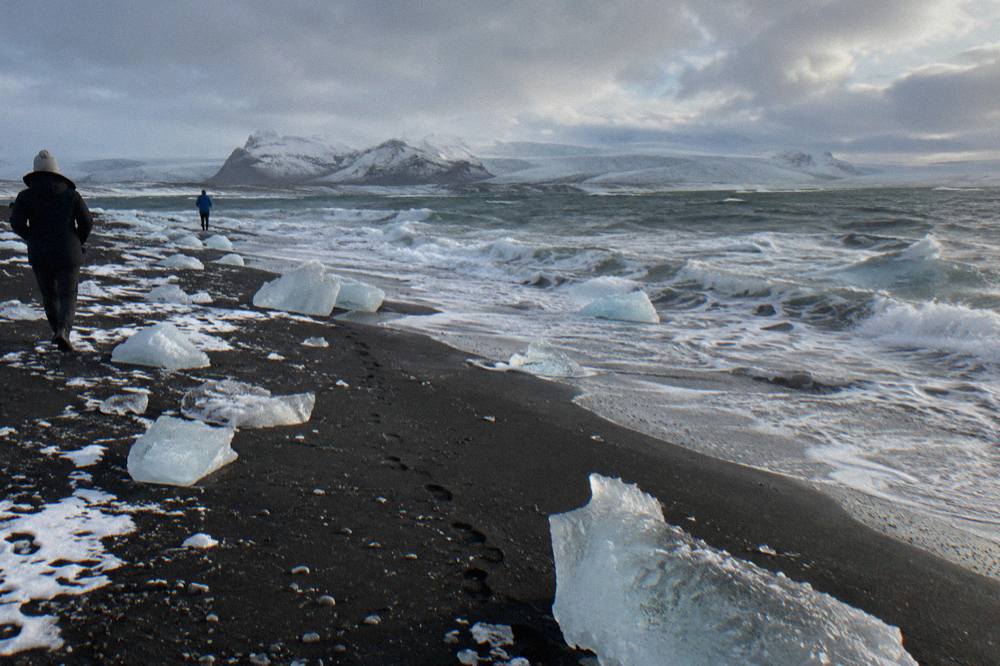
Winter is often the better ice season on the sand. Bergs that escape the lagoon wash up and sit glittering against black volcanic sand, and in low December light the photographic effect is the reason many people make the trip at all. But the ice itself is a hazard multiplier. Standing between a grounded iceberg and the sea is exactly what visitor guidance warns against, because a wave that lifts the ice moves it inland toward whoever is posing beside it. The park asks visitors to walk under the Route 1 bridge, not over it, and the safetravel black-beach page, written for Reynisfjara but applying the same physics to any open Atlantic beach, describes sneaker waves that arrive without warning and surge far above the normal line.
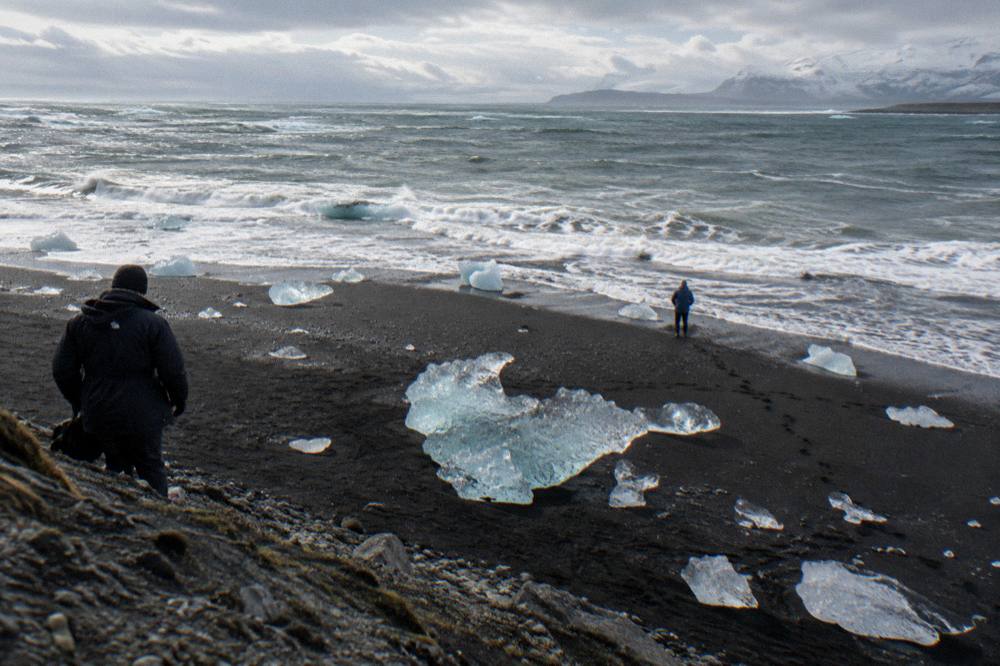
Time the beach to the same midday window as everything else. In December the usable light runs roughly 11:00 to 15:00, and the walk from the lagoon parking across the road to the sand adds little distance but real care on icy days. Ice accumulation on the beach varies with tides and wind, so no month is reliably best; some days deliver a beach full of ice, others nearly none, and both are normal. The fuller Diamond Beach guide covers the layout, the parking and the photography angles in detail, and the question is Diamond Beach worth it is answered honestly on the blog side of this site.
Drones deserve a specific winter warning. Recreational drones are banned outright at Jokulsarlon and Fellsfjara from 15 April to 15 July for the nesting season, and outside that window they are only permitted before or after set hours that shift through the winter months, per the park's drone rules. Winter visitors who want aerial ice footage should read those hour bands before flying, and commercial filming always needs a permit.
For the last leg of the decision, a compact super-jeep option is the Crystal Cave Super Jeep Tour, about 2.5 hours from the Jokulsarlon parking lot, from $168 per person, rated 4.2 across 1,772 reviews, gear and guide included, free cancellation up to 24 hours before. Note its own exclusion list: no food or drinks, and no transport from Reykjavik, so it suits travellers already at the lagoon.
That is the winter picture in one frame: no boats, caves instead, four to eight hours of light, a 1,110 ISK parking fee, and a shortlist of tours that either meet you at the lagoon car park or set out from Reykjavik.
Common Questions About Jokulsarlon In Winter
Does Jokulsarlon Freeze In Winter?
The lagoon does not become a walkable ice sheet. Icebergs calve year-round and drift through the water, and in winter they can pile up at the lagoon mouth. The operator does not recommend private boats or kayaks on the lagoon at any time because icebergs roll.
Do The Jokulsarlon Boat Tours Run In Winter?
No. The amphibian runs May to October, sometimes into November depending on weather and ice, and the zodiac runs May to October. No winter boat tours are listed by the main operator after the season ends.
Can You Visit The Ice Caves In Winter?
Yes, winter is the ice cave season, roughly October to April, conditions permitting, with a certified guide and provided safety gear. Entry is never guaranteed and operators assess each cave daily. Summer tours into natural ice caves inside the national park are not run.
How Much Daylight Does Jokulsarlon Get In December?
Around the solstice, about 4 hours: at Hofn, within minutes of the lagoon, 21 December gives 4h03 of daylight with sunrise 10:57 and sunset 15:00. By 1 February the figure is 7h06.
Is The Drive To Jokulsarlon Safe In Winter?
It is routine on good days and demanding in snow and wind. It is about 370 km from Reykjavik along Route 1. Winter rules apply: lights on front and rear 24 hours a day, a rental car with winter tyres, road conditions checked at umferdin.is/en and forecasts at en.vedur.is, emergency 112.
What Does Parking Cost At Jokulsarlon In Winter?
The Vatnajokull National Park regional fee is 1,110 ISK for a passenger car up to 5 seats, valid until midnight on the day paid with free re-entry, payable at machines or via the Parka app. A 50 percent discount applies if another fee-based park service area was visited the same day.