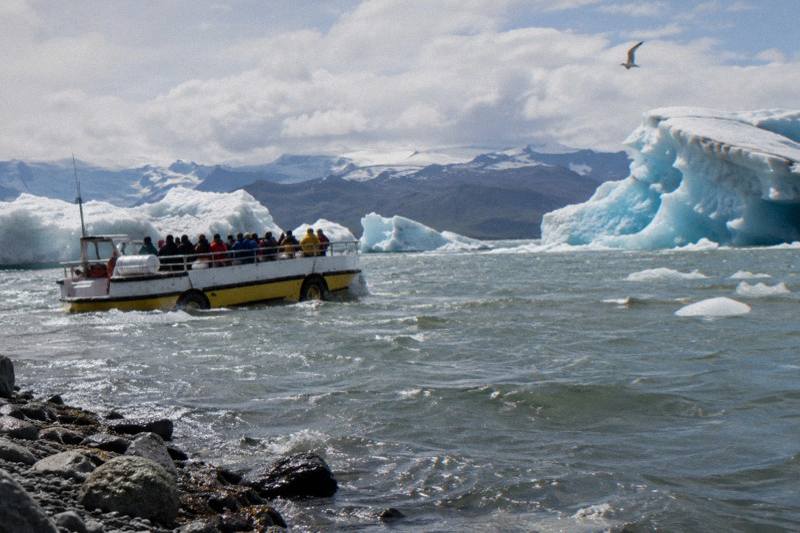
Jokulsarlon In Summer: Boat Season And Long Daylight
Summer is the season when everything at Jokulsarlon is open at once: amphibian and zodiac boats on the water, roughly 14 to 21 hours of daylight, and the busiest timetables of the year. Here is what to expect and how to plan around it.
Short answer
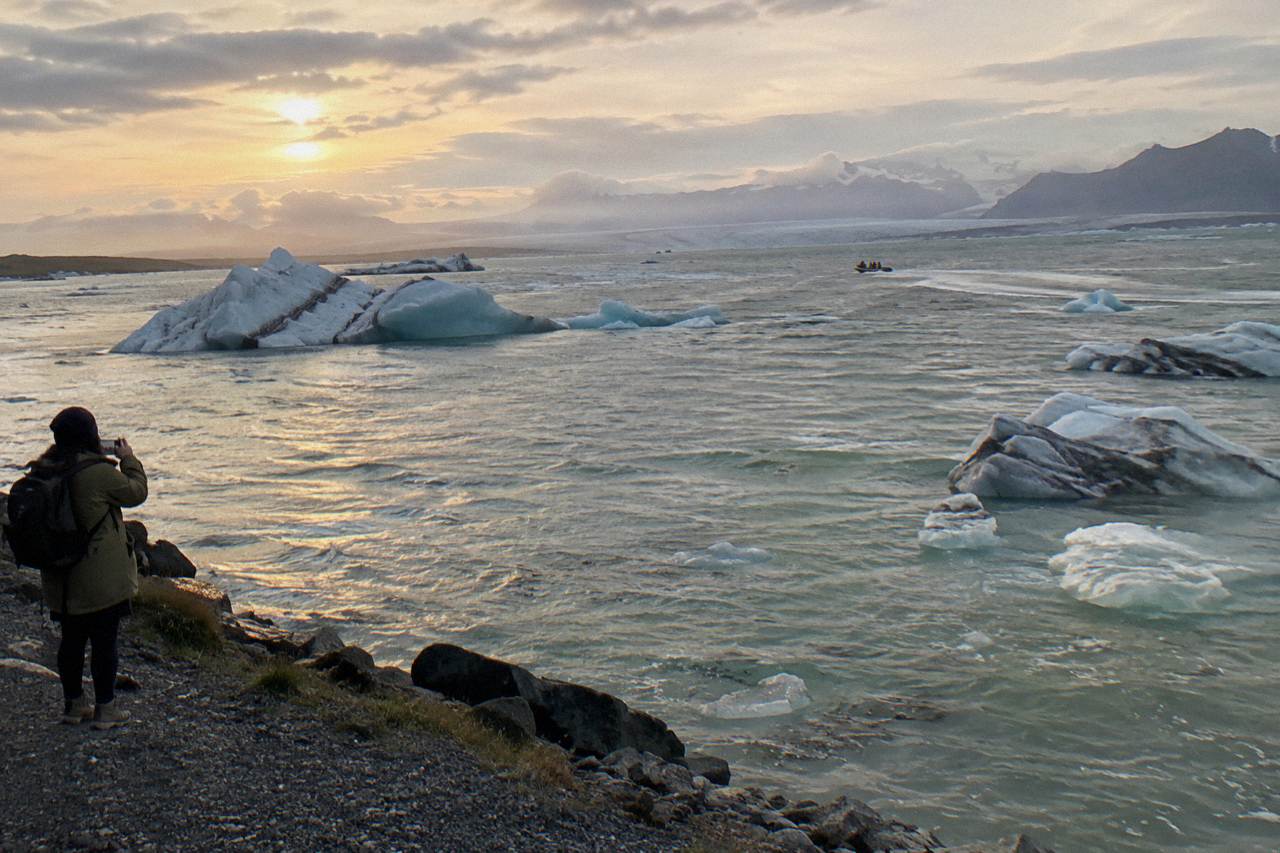
Summer at Jokulsarlon means boat season, with amphibian tours running May to October and sometimes into November, up to 20h55 of daylight in July, and about 40 amphibian departures a day in the July to August high season. Ice caves inside the national park are closed to summer tours, but glacier hikes, kayaking and Diamond Beach fill the gap.
Summer is the one season when everything at Jokulsarlon operates at the same time. The lagoon operator puts amphibian and zodiac boats on the water, the glacier guides run hikes off the surrounding ice caps, and the daylight stretches so long that a 14-hour day trip from Reykjavik still returns under a bright sky. It is also the busiest stretch of the year, with the operator reporting about 40 amphibian departures a day in the July to August high season. This guide walks through what summer actually looks like at the lagoon, which tours run, which do not, and how to choose between the main day trips. Because most day trips pair the lagoon with the black sand just across the road, the guide to planning your stop at Diamond Beach shows how to fit the beach into the same bright summer evening.
What Is Summer Actually Like At Jokulsarlon?
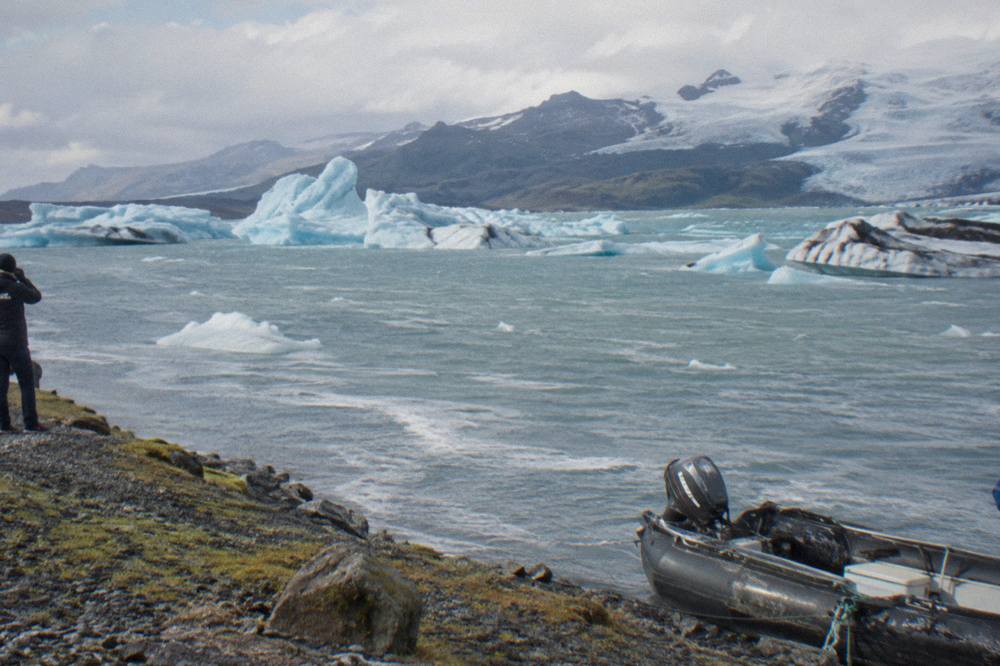
Summer at Jokulsarlon means mild coastal temperatures, long days, open water on the lagoon and the full range of tours running at once. It is the period when every service at the site operates on its fullest schedule.
The lagoon sits on Iceland's south coast, about 370 km east of Reykjavik on Route 1. In summer that distance matters less than it does in winter, because the light lasts so long that a day trip can leave Reykjavik early, spend real time at the lagoon and still get back before dark, or what passes for dark in June. The sun sets at 23:39 on 21 June and the day still runs 21 hours 14 minutes, so there is no true midnight sun here, only a long twilight.
Temperatures on the coast are cooler than the inland reading might suggest. The verified climate normals come from Kirkjubaejarklaustur, about 200 km west of the lagoon, and the coast near the lagoon differs: daily means run 9.8 °C in June, 11.6 °C in July and 11.0 °C in August at that station, with July's mean maximum at 15.4 °C. Rain does not disappear in summer either. The same station records 104 to 166 mm per month across the season, so waterproof layers stay in the pack even in July. Wind off the glacier can make the shoreline feel close to winter temperatures at any hour.
What the summer visitor gets in exchange is access. The amphibian and zodiac boats run, the cafe at the lagoon is open 09:00 to 19:00 from June to September, rangers supervise the site every day of the year, and the wildlife is at its most visible. Seals are frequently seen resting on icebergs or swimming in the lagoon, and the park notes large seal colonies where the rivers meet the sea.
| Month | Mean daily temperature | Mean precipitation | Character of the month |
|---|---|---|---|
| June | 9.8 °C | 113 mm | Boats running, nesting birds, long light |
| July | 11.6 °C | 123 mm | Warmest month, peak boat schedule |
| August | 11.0 °C | 166 mm | Wettest summer month, still full season |
The table uses Kirkjubaejarklaustur normals from 1981 to 2010, the nearest verified station, and the coast by the lagoon can differ from those figures. Treat them as planning ranges rather than a forecast, and check the live forecast before any long drive.
When Do The Boat Tours Run At Jokulsarlon In Summer?
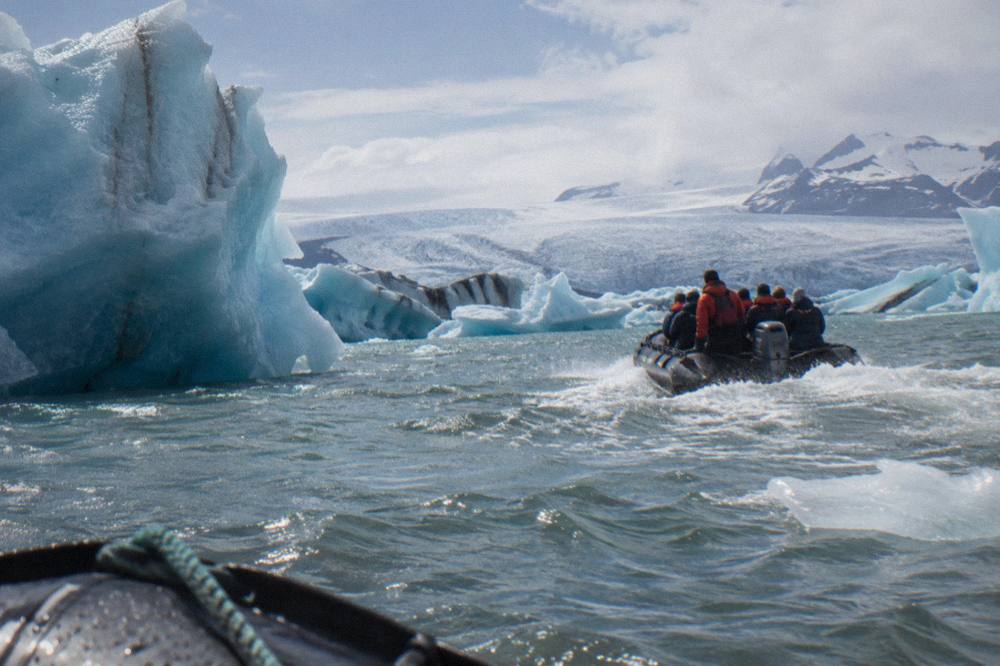
The lagoon operator runs amphibian boat tours from May to October, sometimes into November, and zodiac tours from May to October. The amphibian ride lasts 30 to 40 minutes and the zodiac 1 hour 15 minutes, with about 40 amphibian departures a day in the July to August high season. These boats are sold directly by the lagoon operator, not as standalone products on the booking platforms.
This is the detail that trips up most summer planners. There is no standalone Jokulsarlon boat tour sold on the platforms this site covers. The amphibian and zodiac rides are sold direct by the lagoon operator at the site itself, and the operator's 2026 direct prices are 7,100 ISK for an adult amphibian ticket, 3,500 ISK for a child aged 6 to 12, and 16,600 ISK for an adult zodiac ticket. Those are the operator's own prices at the lagoon, not part of any tour card price printed here. Some day trips include a boat ride in the ticket, some list it as an optional paid add-on selected at booking, and some say nothing about it at all.
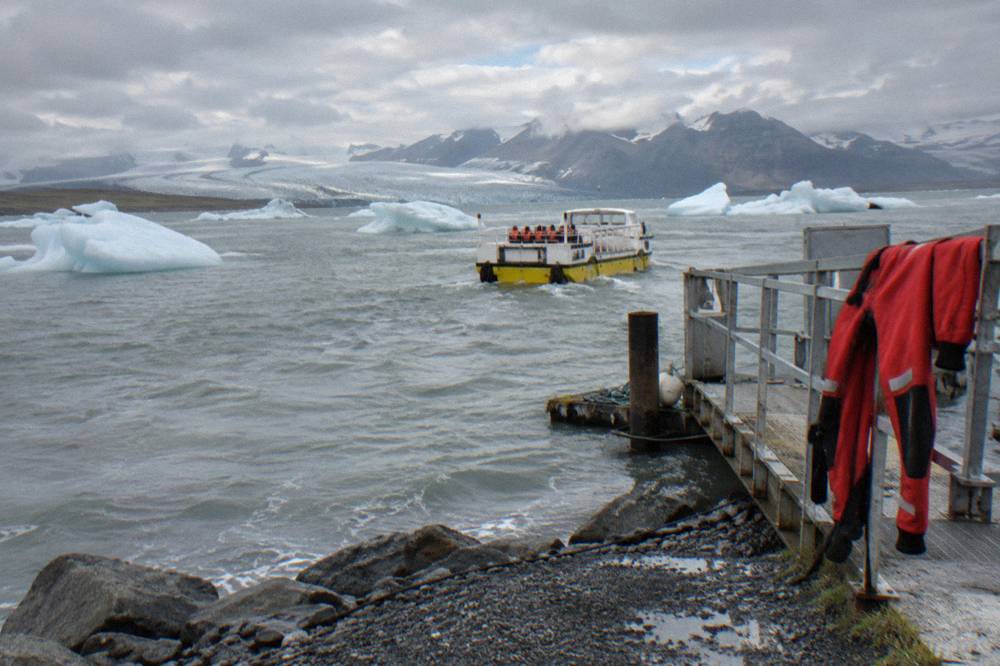
The zodiac has extra rules worth knowing before you commit. Check-in is 30 minutes before departure, children must be at least 130 cm tall, and flotation suits are supplied. The amphibian is the family-friendly option, with four boats in the fleet and the last tour departing about an hour before closing. Ice conditions change daily depending on glacier activity, weather, tides and ocean currents, as the operator states plainly on its own FAQ page, so icebergs near the boat route are never guaranteed.
The three cheapest ways to bundle the lagoon with transport from Reykjavik are the tours in this selection:
The most reviewed of the three, at 4.7 across 4,069 reviews, runs 14 hours from $211 per person with hotel pickup in Reykjavik and lists the lagoon boat ride as an optional paid add-on rather than part of the base price. The Gray Line 14.5-hour option, 4.5 across 1,582 reviews from $234, explicitly lists the boat tour as not included, while the 14 to 15 hour trip at 4.5 across 1,460 reviews from $225 also treats the boat as an optional extra. If a boat ride on the lagoon is the point of your trip, read each option's inclusions before booking rather than assuming, and see the dedicated lagoon boat tour guide for the full season picture.
For readers weighing the two boat types against each other, the zodiac versus amphibian comparison breaks down duration, price and age limits side by side, and the amphibian boat tour page covers the slower option in detail.
How Much Daylight Does Jokulsarlon Get In Summer?
Jokulsarlon gets 16 hours 53 minutes of daylight on 1 May, rising to 21 hours 14 minutes on 21 June, when the sun sets at 23:39, and 20 hours 55 minutes on 1 July. By 1 September the figure falls to 14 hours 34 minutes. The numbers come from the Hofn station, east of the lagoon, and the lagoon sits within minutes of them.
That much light changes how a summer trip works. A day trip leaving Reykjavik in the early morning reaches the lagoon in the early afternoon with the brightest hours still ahead, and the same light means an evening visit after the tour buses leave can feel almost private. Photographers get a long golden window rather than a rushed one, and the 500 m walk across the road to Diamond Beach can be done late without losing the scene.
| Date | Daylight at Hofn | Notes for the lagoon |
|---|---|---|
| 1 May | 16 h 53 min | Boat season underway |
| 1 June | About 20 h | Full tour schedule |
| 21 June | 21 h 14 min | Sunset at 23:39, no true midnight sun |
| 1 July | 20 h 55 min | Peak boat frequency |
| 1 September | 14 h 34 min | Season winding toward October |
The daylight figures are astronomical calculations for Hofn from timeanddate.com, and the lagoon is within a few minutes of them. Iceland holds UTC+0 all year with no daylight saving shifts, so a June sunset at 23:39 is real clock time, not a trick of a time zone change.
Long light cuts both ways. It lures travellers into over-planning, stacking a lagoon visit, a glacier hike and a Diamond Beach walk into one day, and the 370 km drive each way from Reykjavik eats most of the advantage. It also means the evening at the lagoon stays cold and windy even in July, because the temperature drops little but the wind off the ice does not stop for the calendar. Pack layers for a winter evening even on the longest day.
Can You Visit An Ice Cave At Jokulsarlon In Summer?
No. Natural ice cave tours inside Vatnajokull National Park are not run in summer, after the practice was banned following the August 2024 fatal collapse on Breidamerkurjokull. The natural cave season runs roughly October to April, conditions permitting. Summer visitors who want to stand on or inside glacier ice should look at glacier hikes instead.
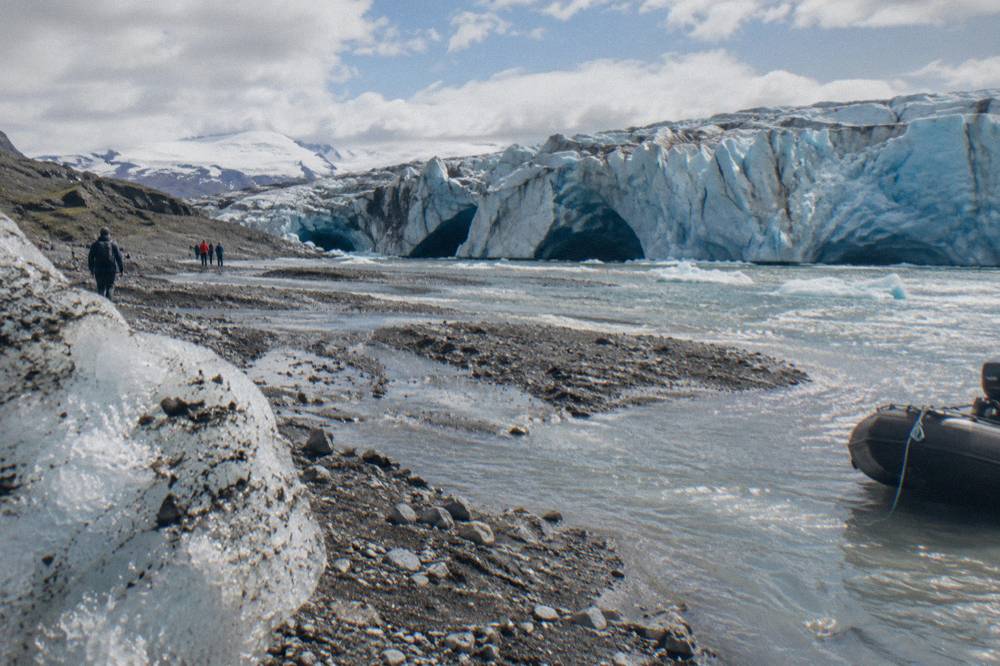
The background matters for understanding why. A tourist died in a collapsing ice cave on Breidamerkurjokull in August 2024, and the national park responded with stricter operator conditions, including a lead guide requirement and daily safety assessments of each cave, as reported by Iceland Review. In September 2025 the national broadcaster reported the park's position that taking summer groups into natural ice caves was unacceptable, and summer natural cave tours inside the park stopped. One major operator's FAQ describes the natural cave season as roughly October to April, with cave-specific dates varying, so any ice cave itinerary at the lagoon is a winter plan, not a summer one. For travelers reshaping a lagoon trip around the cold season, the month by month breakdown of the ice cave season explains how daylight and weather shape the choice of dates.
Summer alternatives are genuinely good. The glacier hikes around the lagoon get you onto the ice, and the blue is no less striking for the season. The Vatnajokull guided hike, 4.5 hours from $149 per person, rated 4.8 across 1,081 reviews, starts at Jokulsarlon main parking and includes crampons, helmet and safety gear, with no pickup, so you meet the guide at the lagoon. A longer option is the 6-hour hike to a remote ice cave at 4.9 across 273 reviews from $279; check the live booking page for when the cave itself is open. The details are laid out in the glacier hike guide.
One honest note on safety that applies year-round: safetravel.is states you should never go on a glacier without experience or the proper equipment, and that hiring a certified glacier guide is highly recommended. Commercial access to the ice around the lagoon runs through park-contracted operators who assess conditions daily, and that daily assessment is exactly why no summer tour promises a specific cave or a specific colour of ice.
What Else Can You Do At The Lagoon In Summer?
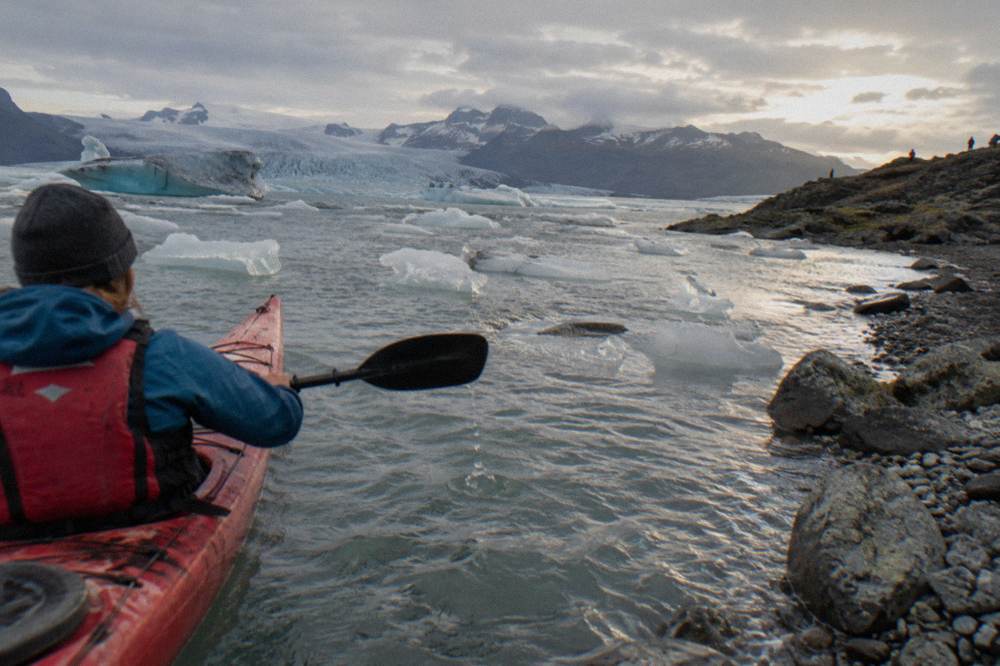
Beyond the boat rides, summer at Jokulsarlon offers kayaking on a nearby lagoon, glacier hikes, walking trails on both sides of the river, and seal watching from the shore. The kayaking tour runs 1.5 hours from $155 per person, rated 4.7 across 532 reviews, with gear and guide included and no pickup, meeting at the Glacier Lagoon parking lot.
Kayaking is the summer activity that most visitors do not know exists. The 1.5-hour tour, 4.7 across 532 reviews from $155 per person, includes the guide and safety gear, meets at the lagoon parking lot and lists food, drinks and transport to the meeting point as not included. It is a different experience from the amphibian boat: smaller, quieter and closer to the water.
On land, the park maintains marked walking trails: B1 runs from the main lot north to the Helguholl ridge, B2 covers Eystri-Fellsfjara on the Diamond Beach side, and B3 is a 15 km route between Fjallsarlon and Jokulsarlon for anyone with a full day and proper boots. Seals are frequently seen resting on icebergs or swimming in the lagoon, and in winter they gather in large numbers at the lagoon mouth to feed, so summer sightings are common but never promised. Camping at the lagoon is not permitted, part of the site's protection as national park land, and overnight options are covered in the guide to where to stay near Jokulsarlon.
Drone photographers should check the park's rules before flying. Drones are banned at Jokulsarlon and Fellsfjara entirely from 15 April to 15 July for the nesting birds, and outside that window they are only allowed before or after set hours that shift through the year. The red-shaded busy zone is prohibited always, and commercial filming needs a permit. In practice, the heart of summer is a no-fly period at the lagoon itself. The wider set of guides lives on Jokulsarlon Glacier Lagoon Tours.
How Busy Does Jokulsarlon Get In Summer?
Parking costs 1,110 ISK for a passenger car, valid until midnight on the day paid, with free in and out that day.
The parking fee is the park's regional charge, collected by licence-plate photo on entry and payable at machines in the car parks or through the Parka app. The 1,110 ISK passenger-car fee buys the day at Jokulsarlon, and the pricelist offers 50% off the regional fee if you visited another fee-based Vatnajokull service area the same date. The park page does not state that one payment covers the Diamond Beach lots, so do not plan on that being true.
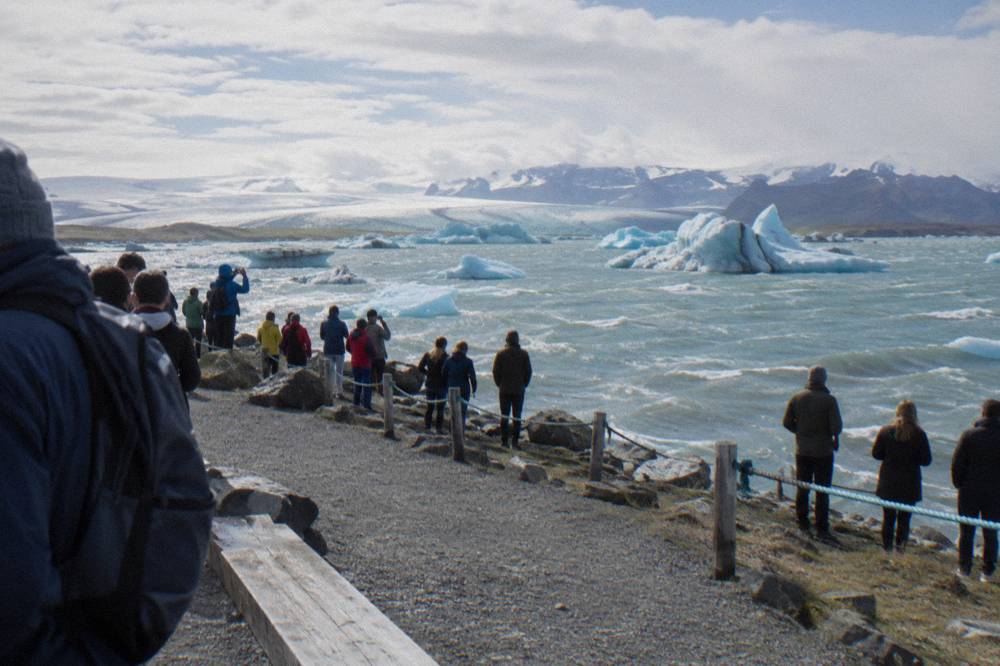
Crowds thin at the edges of the day. The same long daylight that draws the crowds also creates the workaround: the lagoon at 21:00 in June is a different place from the lagoon at 13:00. Day-trippers on a fixed coach schedule cannot choose their hour, but self-drivers can, and anyone booking a zodiac with its 30-minute check-in should build slack into the arrival time anyway. The same logic holds in winter, and the guide to ice cave tour timing from Jokulsarlon shows how to budget a full day around them.
Rangers supervise Jokulsarlon, Fellsfjara and Fjallsarlon every day of the year, and flush toilets sit at Jokulsarlon and Fjallsarlon. The cafe at the lagoon is open year-round except 24 to 26 December and 31 December to 2 January, running 09:00 to 19:00 from June to September. None of this removes the basic high-season arithmetic: book accommodation and any fixed-departure tour early for July and August, because the south coast's capacity is finite even when the daylight is not.
Should You Take A Tour Or Drive Yourself In Summer?
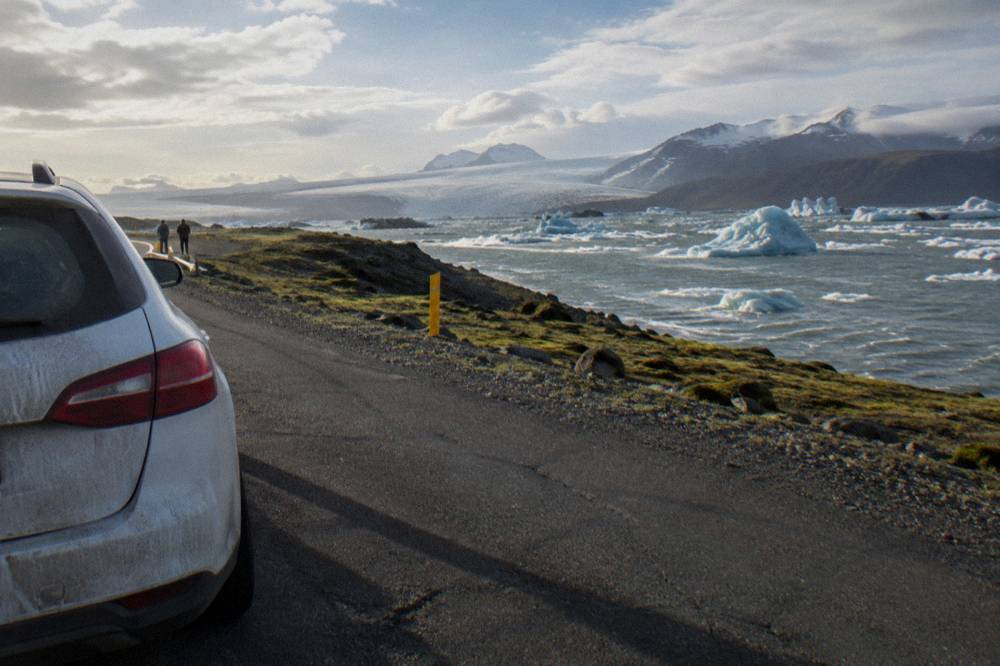
A summer day trip from Reykjavik runs 14 to 15 hours and costs from $211 to $234 per person for the main coach options, while self-driving means 370 km each way. The tour buys a guide, a fixed schedule and no winter-driving worry. The car buys the freedom to time the lagoon for the empty evening hours.
The self-drive case is stronger in summer than in any other season. Route 1 to the lagoon is a paved road, the daylight removes the pressure of driving dark coastal roads both ways, and the evening light lets a self-driver arrive when the coach groups are leaving. The trade is total drive time: close to ten hours behind the wheel for the round trip, more with stops, which is why many travellers split the distance and overnight near the lagoon or in Hofn. The full argument, including the winter comparison, is in the self-drive versus tour guide.
The tour case rests on the guide and the pace. Every Reykjavik day trip covered here includes a guide, and several also build in the south coast waterfalls and black sand stops along the way, turning a very long drive into a structured day. The three main coach options compare like this:
| Tour | Duration | Price from | Rating | Boat ride on the ticket |
|---|---|---|---|---|
| BusTravel Diamond Beach Day Trip | 14 hours | $211 per person | 4.7, 4,069 reviews | Optional paid add-on |
| Gray Line 14.5-Hour South Coast | 14.5 hours | $234 per person | 4.5, 1,582 reviews | Listed as not included |
| 14 to 15 Hour Day Trip | 14 to 15 hours | $225 per person | 4.5, 1,460 reviews | Optional paid add-on |
All three offer free cancellation up to 24 hours before, and none includes food and drinks, though day trips make scheduled stops where food can be bought. A fourth option worth knowing is the 14-hour trip with a Fjadrargljufur canyon stop, 4.8 across 456 reviews from $229 per person, which also comes with pickup clearly included. Meeting points vary by operator, from hotel pickup to the BSÍ bus terminal, so check the specific meeting detail at booking rather than assuming.
For travellers who find 14 hours in one day too much, the two-day small group option at 5.0 across 206 reviews from $639 per person spreads the south coast across two days, includes a glacier hike with gear, breakfast, pickup and a small group size, and treats the lagoon boat ride as an optional add-on. The two-day south coast guide covers that format in full.
What Should You Know About Diamond Beach In Summer?
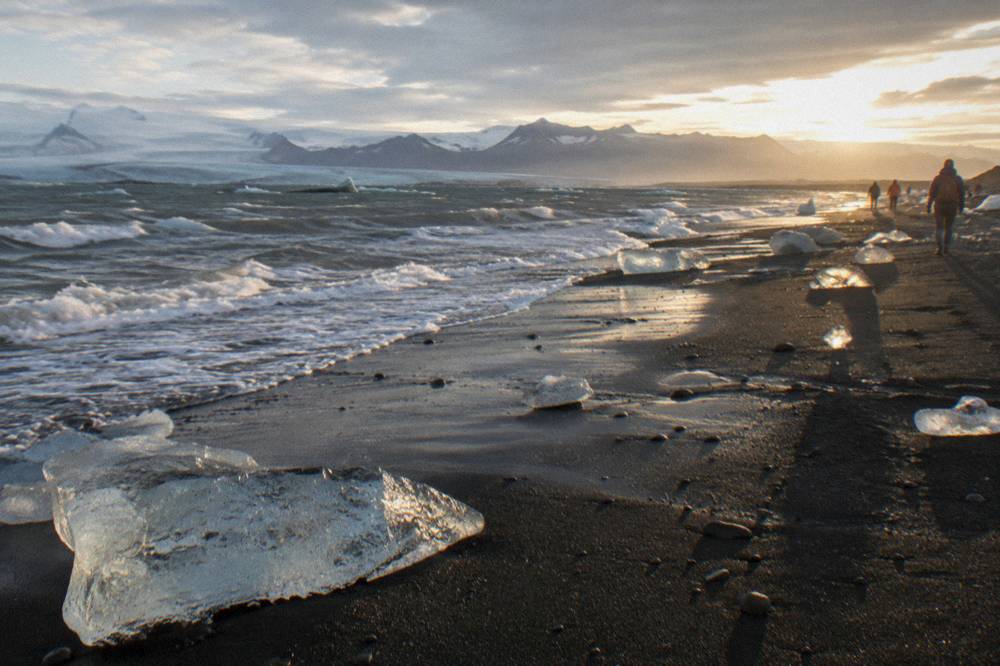
Diamond Beach sits about 500 m across Route 1 from the lagoon, reached by walking under the bridge, not over it, per the park's own page. In summer, sneaker waves remain a real hazard on any open Atlantic black beach: at the orange hazard level safetravel.is advises staying at least 25 m from the sea, and at red the beach closes with only the viewing area open.
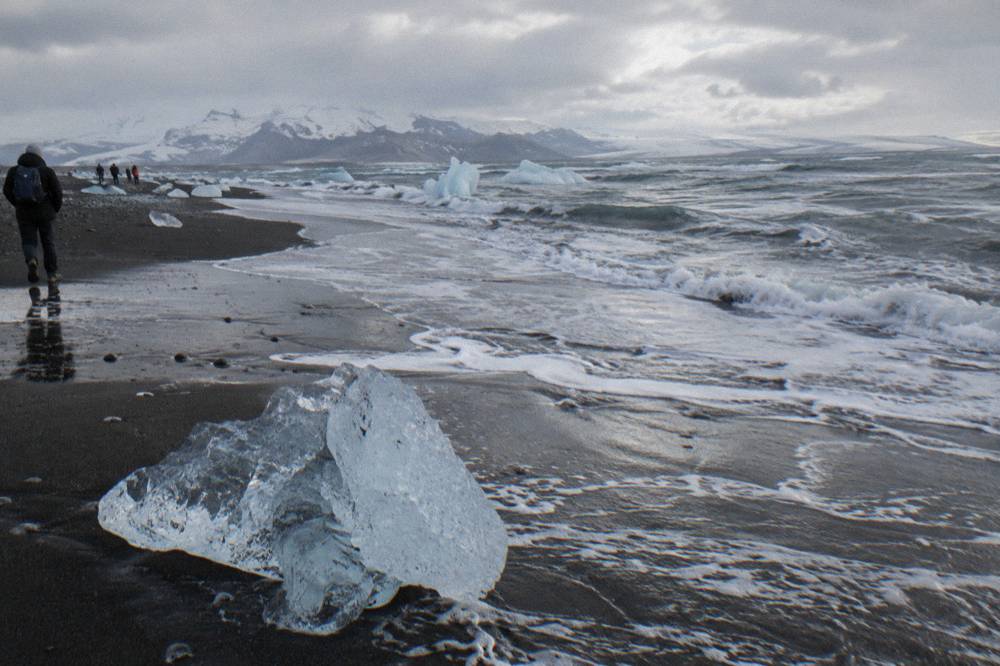
Summer ice on the beach is a matter of daily conditions, not calendar. The operator states that ice conditions change daily depending on glacier activity, weather, tides and ocean currents, so some July days deliver a shoreline scattered with clear ice and others deliver black sand alone. There is no verified best month for beach ice, and any source claiming one is guessing.
The safety guidance transfers directly from safetravel.is's black beach page, written for Reynisfjara but applying to any open Atlantic black beach: sneaker waves arrive without warning, surge far above the normal waterline and can sweep an adult out to sea in seconds. At the yellow level the hazard is moderate, at orange stay at least 25 m from the sea, and at red the beach is closed with the viewing area open. Standing between stranded ice and the sea is consistent visitor advice, not an official ban with a fine, but the reason behind it is the same wave physics.
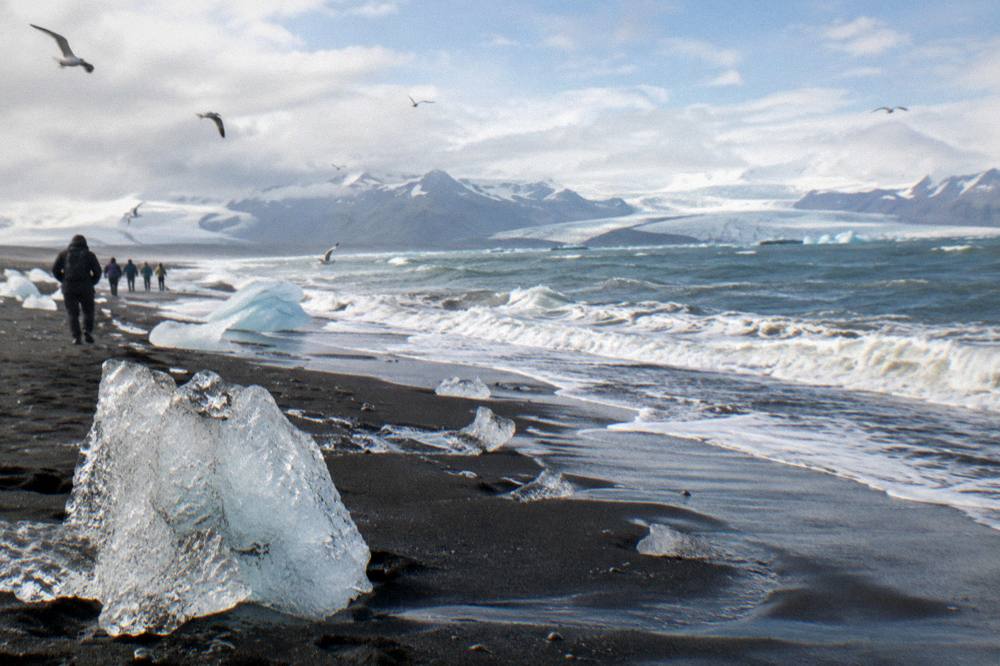
Summer-specific notes are few and practical. The beach is at its most crowded from late morning to mid-afternoon when the coaches are parked, and the long evening light again offers a quiet alternative. The park asks visitors to walk under the Route 1 bridge rather than over it, and the nesting season matters here too: Breidamerkursandur is a nesting ground for great skuas, red-throated divers and greylag and barnacle geese, so give birds standing on the sand a wide berth, particularly from May into July. The Diamond Beach guide covers timing and photography in more depth.
How Do You Choose The Right Summer Trip To Jokulsarlon?
Choose by what you want on the water and how much day you can spend. If the boat ride is the point, pick a tour that includes it or plan to buy direct from the operator at the lagoon. If time is the constraint, the 14-hour BusTravel option at from $211 is among the shortest covered coach days. If comfort is the priority, the canyon-stop trip at 4.8 across 456 reviews includes pickup from $229 per person.
The honest frame is that the three main coach days are more alike than different: all run about 14 to 15 hours, all include a guide, all exclude food and drinks, and all allow free cancellation up to 24 hours before. The differences that matter are the boat-ride treatment, the meeting point and roughly $23 of price spread. The most reviewed, at 4.7 across 4,069 reviews, is the BusTravel day trip, and that review pool is large enough to treat its rating as a stable signal rather than a small-sample fluke. Gray Line's 14.5-hour option and the 14 to 15 hour trip both sit at 4.5 across roughly 1,500 reviews each, which is still a substantial base.
Travellers who want a boat ride genuinely included in the ticket price need to look at the more expensive options: the 14-hour tour with the boat ride included runs from $292 per person at 4.7 across 492 reviews, and the Reykjavik Excursions boat-inclusive day runs from $328 at 4.7 across 126 reviews. Both are more than the base coach options, which is the simple arithmetic of adding a boat to a 14-hour day. Every summer traveller covered by this site's picks, from the coach day tripper to the two-day hiker, is choosing between the same underlying assets: the lagoon, the boats, the glacier and the beach. What the ticket changes is who arranges the logistics, and Jokulsarlon Glacier Lagoon Tours exists to make that choice legible, season by season.
Before any final decision, weigh the two structural choices that shape the day more than the operator does: one very long day versus two moderate ones, and a fixed coach schedule versus your own wheels timed for the evening light. The rest, from the amphibian ticket to the parking fee, is detail this guide has already pinned down.
Common Questions About Jokulsarlon In Summer
Is Jokulsarlon Worth Visiting In Summer?
Yes, for most travellers. Summer is the only season when the amphibian and zodiac boats, glacier hikes, kayaking and the longest daylight all coincide, and the lagoon is accessible year-round. The trade-offs are crowds in July and August, no ice cave tours inside the national park, and rain that persists through the season.
Do Boat Tours Run At Jokulsarlon In Summer?
Yes. The operator runs amphibian tours from May to October, sometimes into November, and zodiac tours from May to October, with about 40 amphibian departures a day in the July to August high season. The boats are sold directly by the lagoon operator at the site; some day trips include a ride, some offer it as an optional add-on, and some exclude it.
How Much Daylight Does Jokulsarlon Get In Summer?
Daylight runs from 16 hours 53 minutes on 1 May to a peak of 21 hours 14 minutes on 21 June, when the sun sets at 23:39, and 20 hours 55 minutes on 1 July. The figures are for Hofn, east of the lagoon, and the lagoon sits within minutes of them. There is no true midnight sun at this latitude.
Can You See Ice Caves At Jokulsarlon In Summer?
No. Natural ice cave tours inside Vatnajokull National Park are not run in summer, following the ban imposed after the August 2024 fatal collapse. The natural cave season runs roughly October to April, conditions permitting. Glacier hikes are the standard alternative for getting onto the ice.
Is Jokulsarlon Crowded In Summer?
July and August are the busiest months, with the operator reporting about 40 amphibian trips a day in high season and the main car park filling by midday. Early morning and the long evening hours are noticeably quieter, and September brings shorter days but thinner crowds.
What Does Parking Cost At Jokulsarlon In Summer?
The Vatnajokull National Park regional fee is 1,110 ISK for a passenger car up to 5 seats, valid until midnight on the day paid with free in and out that day. It is collected by licence-plate photo and payable at machines in the car parks or through the Parka app. A 50% discount applies if another fee-based park service area was visited the same date.