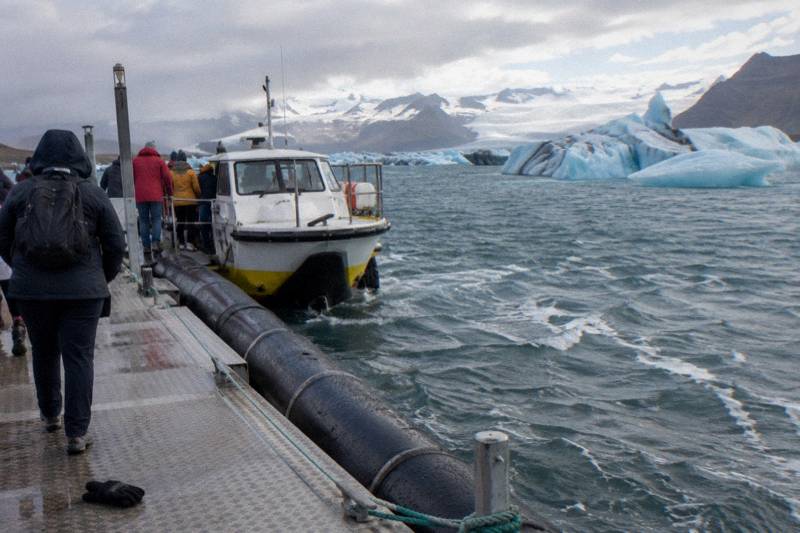
How Much Time Do You Need At Diamond Beach?
A planning answer to how much time Diamond Beach deserves: stop lengths on guided day trips, daylight and season effects, and how to combine the beach with Jökulsárlón.
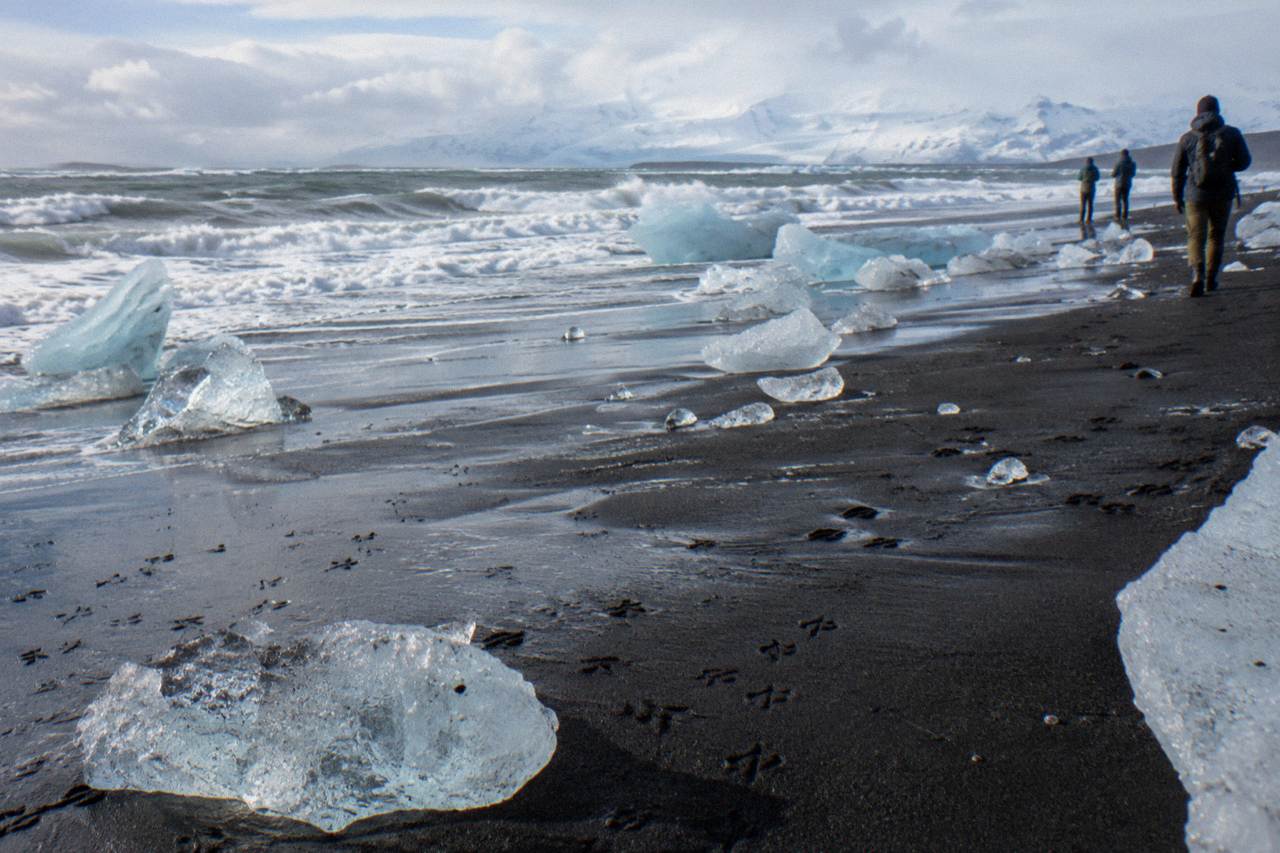
Plan on 30 minutes to one hour for the beach itself, and add buffer for parking, walking and changing conditions. Guided day trips that publish a stop length allow roughly 30 minutes, and that is set by the operator's schedule rather than by the tide. Photographers and ice hunters routinely stay longer.
The beach, Fellsfjara on the map, lies directly across the ring road from the lagoon's main car park, about 500 m away. That closeness is the reason the time question trips people up: the walk is short, but the beach rewards lingering, and the Atlantic does not reward rushing. Ice conditions change daily depending on glacier activity, weather, tides and ocean currents, so one day the sand is scattered with clear chunks the size of dinner plates and the next day it is nearly bare. Nobody can promise icebergs on the beach.
What can be stated plainly is the logistics. The park charges a regional parking fee, 1,110 ISK for a passenger car up to 5 seats, valid until midnight on the day paid with free in and out that day. The park page asks visitors to walk under the Route 1 bridge rather than over it to reach the beach. Both facts shape the stop more than most first-time visitors expect, because the under-bridge route adds a few minutes each way and the payment machines add a few more.
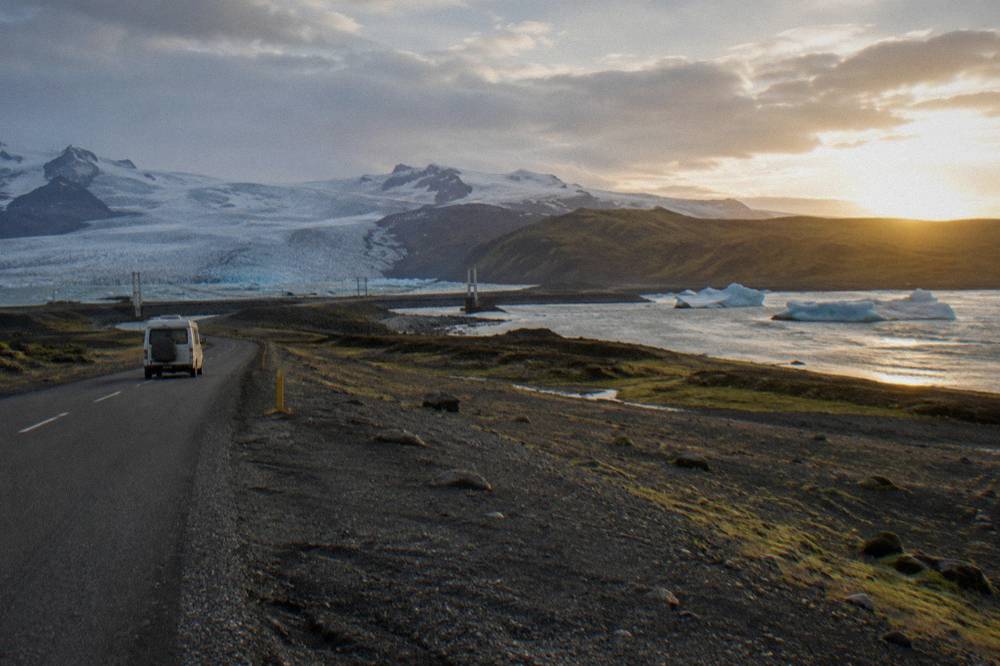
For context on the wider area, the park's own page on Fellsfjara and the surrounding Breidamerkursandur area describes the walking routes and wildlife, including nesting great skuas in summer and the reindeer that cross the road on the eastern side in winter. A quick read before arrival helps set expectations about what the stop involves.
How Long Is The Stop On A Guided Day Trip?
Guided tours that publish a stop length give the beach about 30 minutes, a figure set by the operator's schedule. The 14-hour boat-ride-included day trip and the private guided Diamond Beach day both state 30 minutes at Diamond Beach on their itineraries. Other operators simply do not publish a number.
A few covered itineraries state the figure directly. "Boat Ride Included, 14 Hours", from $292 per person and rated 4.7 across 492 reviews, lists 30 minutes at the beach. The "Private Guided Diamond Beach Day", from $1,912 per group and rated 5.0 across 58 reviews, does not mention a duration. That is the industry's working assumption: enough time to walk under the bridge, reach the surf line, take photographs and return.
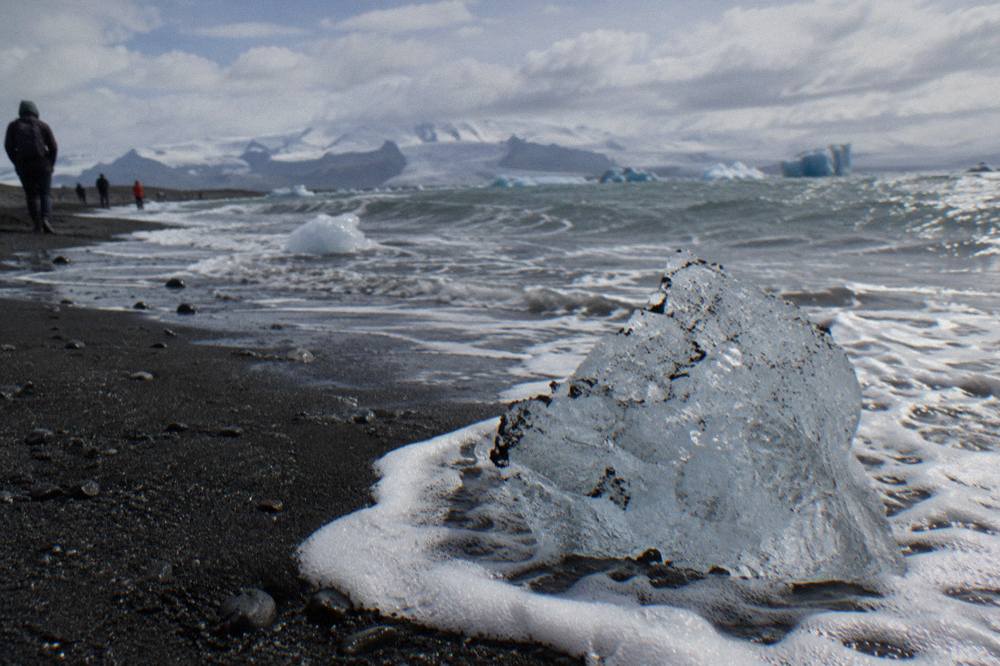
It is worth reading the fine print on what that half hour excludes. The stop usually does not include time at the payment machines or a wait for the toilets, and at the height of summer the beach can be busy enough that the walk itself slows down. Independent travellers who arrive by rental car have no such constraint and can stay as long as the light and the surf allow.
| Tour | Price basis | Rating | Stated Diamond Beach stop |
|---|---|---|---|
| Boat Ride Included, 14 Hours | From $292 per person | 4.7 from 492 reviews | 30 minutes |
| Private Guided Diamond Beach Day | From $1,912 per group (up to 3) | 5.0 from 58 reviews | 30 minutes |
| BusTravel Diamond Beach Day Trip | From $211 per person | 4.7 from 4,069 reviews | Not stated on the itinerary |
| Gray Line 14.5-Hour South Coast | From $234 per person | 4.5 from 1,582 reviews | Not stated on the itinerary |
The table shows the pattern honestly: where a number exists it is 30 minutes, and where it does not exist the operator decides on the day. Anyone who wants a longer beach stop should either self-drive or pick a tour whose pace suits them, a trade-off covered in the self-drive versus guided comparison.
A related detail shapes the guided stop length: the drive back. Every Reykjavik day trip on this route covers roughly 370 km each way, so operators build their itineraries backwards from a safe arrival time in the capital. A longer beach stop on a guided day means a shorter stop somewhere else, whether that is a waterfall, a canyon or dinner. That arithmetic, not the beach itself, is what fixes the half hour.
Can You Combine The Beach And The Lagoon In One Stop?
Yes, and that is the normal pattern: the two sit about 500 m apart, on opposite sides of Route 1, and share the same visit. Count 2 to 3 hours for both together, allowing time for the lagoon shore, the bridge walk, the beach and parking. Rushing both in under an hour is possible but thin.
The main car park beside the lagoon serves both sides of the road. Pay the regional parking fee, spend time at the lagoon shoreline watching for seals, which the lagoon operator says are frequently seen resting on icebergs, then cross under the bridge to the beach. Rangers supervise Jökulsárlón, Fellsfjara and Fjallsarlon every day of the year, and flush toilets sit at the lagoon itself, a detail that matters on a cold day.
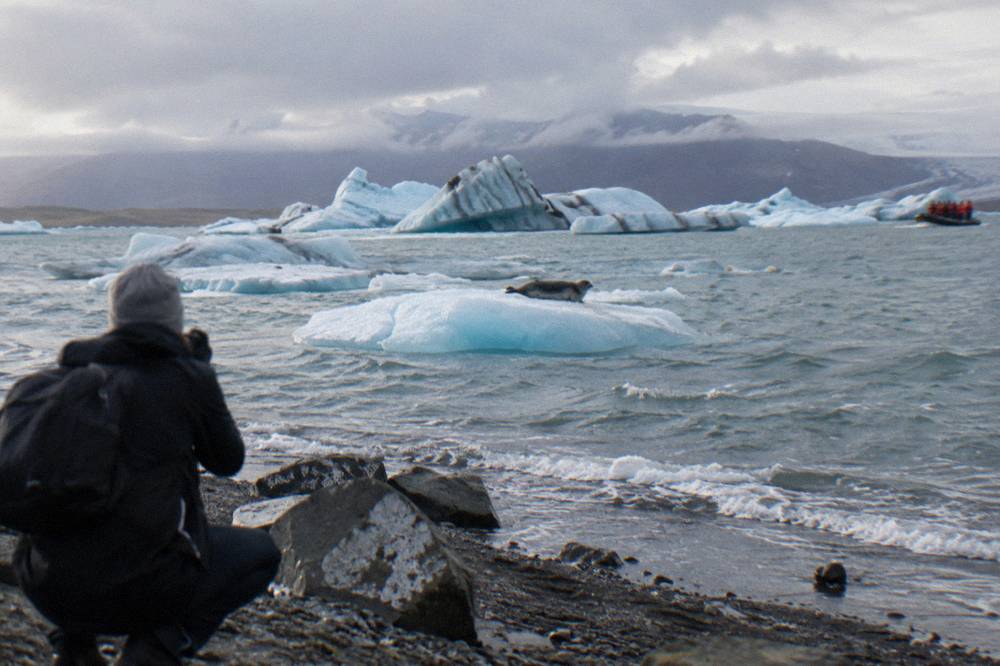
This pairing is exactly how the day trips from Reykjavik are built. The most reviewed tour on this route, the BusTravel Diamond Beach Day Trip, rated 4.7 across 4,069 reviews, from $211 per person, visits both in a 14-hour day out of Reykjavik; check the booking page for pickup details. Food and drinks are not included, and the lagoon boat ride is an optional paid add-on rather than part of the base price. It is a sensible fit for a reader whose real question is how to budget a stop within a very long day.
Is 2 to 3 hours generous? For most people, no. The lagoon alone can absorb an hour on a good iceberg day, and photography on the beach is slower than walkers expect because the light changes every few minutes as clouds move. The travellers who regret the stop are usually those who budgeted for one photograph rather than for the walk, the wait and the second, better photograph.
What Affects How Long You Should Stay?
Three things move the clock: the ice itself, the tide, and safety. Ice conditions change daily, the surf is dangerous on any Atlantic black beach, and the sneaker-wave hazard level on the day dictates how close to the water you can responsibly stand. A bare-sand day ends the visit early; a loaded beach can double it.
Start with ice. The lagoon operator's own words are that ice conditions change daily depending on glacier activity, weather, tides and ocean currents. The beach's famous diamonds are fragments of icebergs that have washed out of the lagoon mouth and back onto the sand, so the count on any given morning is not predictable. The honest phrasing is that it varies.
Then safety. Safetravel's guidance on black beach sneaker waves describes surges that arrive without warning, can sweep far above the normal waterline and can carry an adult out to sea in seconds. The colour levels run yellow for moderate hazard, orange for considerable, when visitors should stay at least 25 m from the sea, and red for severe, when the beach itself is closed and only the viewing area is open. The page is written for Reynisfjara, but the same rule applies on any open Atlantic black beach, and Diamond Beach is one. Standing between the ice and the sea is dangerous; stay well back from the waterline because sneaker waves can reach far up the beach.
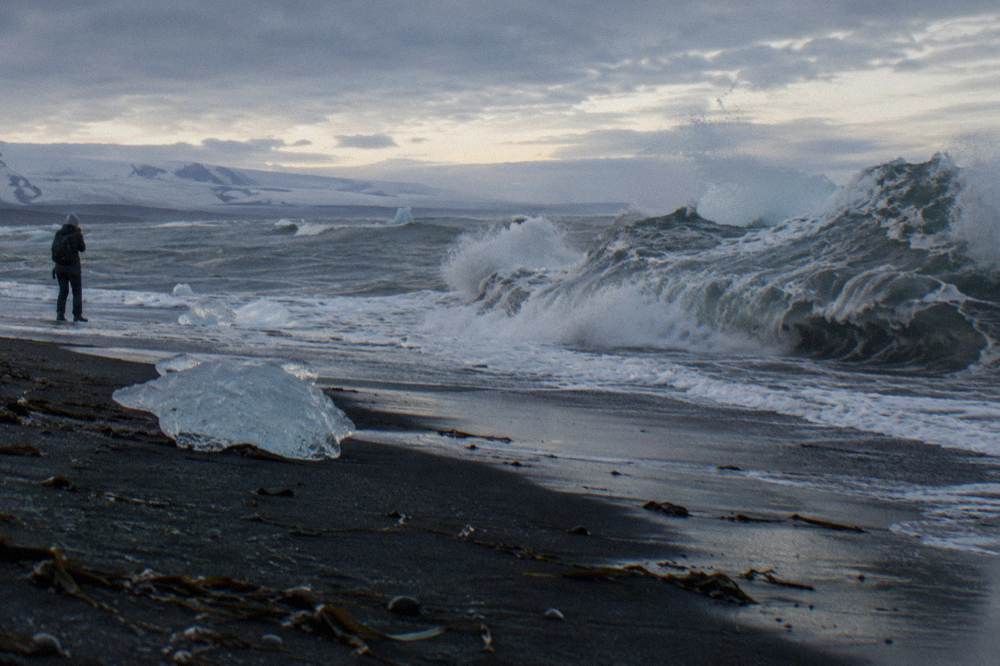
Finally, crowd rhythm. Day tours from Reykjavik stop here on their long South Coast runs, and the beach fills and empties as each group arrives and moves on. Independent travellers with flexibility can wait out a busy half hour and have the sand almost to themselves. For a fuller picture of the area, the site's guide to Diamond Beach itself covers the crossing, the photography and the ice in more depth.
How Does Daylight Change The Budget?
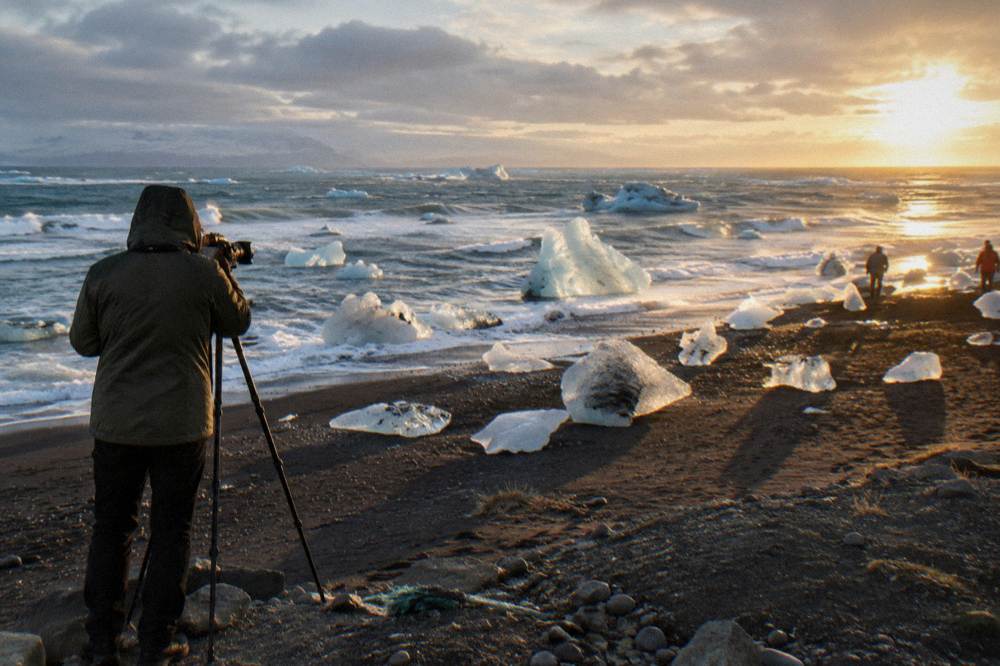
Daylight near the lagoon swings from about 4 hours in December to about 21 hours in late June, measured at Höfn, the nearest town with daylight data. In deep winter the entire lagoon-and-beach visit must fit inside roughly 4 to 5 hours of usable light, while in June the light barely ends and time pressure disappears.
The daylight figures come from timeanddate.com's pages for Höfn, and the coast at the lagoon sits within minutes of them. On 1 November the day is 7 hours 58 minutes; on 1 January it is down to 4 hours 21 minutes; on 21 December, the shortest day, sunrise is 10:57 and sunset 15:00. At the other extreme, 21 June gives 21 hours 14 minutes, and since the sun does not set until 23:39 there is no true midnight sun. Iceland runs on UTC+0 all year with no daylight saving, so the clock never jumps.
| Date | Daylight at Höfn | What it means for the stop |
|---|---|---|
| 1 Jan | 4 h 21 m | Beach visit must share a narrow window with the drive |
| 1 Mar | 10 h 10 m | Comfortable half-day outing on the coast |
| 21 Jun | 21 h 14 m | No time pressure; sunset 23:39 |
| 1 Sep | 14 h 34 m | Full day plus evening light for photography |
| 1 Nov | 7 h 58 m | Arrive by early afternoon or lose the beach |
| 21 Dec | 4 h 03 m | Short window around midday |
Winter adds a driving constraint on top of the light. Safetravel's winter driving guidance requires headlights front and rear around the clock, a rental car with winter tyres, and patience with limited visibility; road conditions post at umferdin.is/en and forecasts at en.vedur.is, with 112 as the emergency number. The lagoon is about 370 km east of Reykjavik on Route 1, a long drive even without stops, so a winter self-drive day at the beach is a serious commitment.
Weather adds its own tax on the clock in the colder half of the year. The nearest long-term climate record is from Kirkjubaejarklaustur, about 200 km west of the lagoon, where the 1981 to 2010 normals show daily means around freezing from November through March and roughly 133 to 177 mm of rain per month. The coast at the lagoon differs from that station, so the numbers are a broad signal rather than a forecast, but the practical point stands: winter visitors should budget extra minutes for wind, dressing and undressing, and a car that needs scraping before the drive back.
When Is The Sand At Its Best During A Visit?
There is no best month for ice on the beach; it varies with tides and glacier activity rather than the calendar. Within a single day, low-angle light around sunrise and sunset photographs the ice best, and the lagoon's own season runs May to October for boats, sometimes into November.
The temptation is to look for a month that guarantees diamonds. No such month exists, and any source that promises one is guessing. The beach is a tide-driven display: what the ocean delivers in the morning can be gone by afternoon. Guided tours handle this honestly by describing the beach visit without promising ice, and the ice cave tours in the region carry the same conditions-permitting wording for the same reason.
Light, by contrast, is predictable. The site's seasonal guides, including Jökulsárlón in winter, cover the photographic planning in detail, but the short version is that winter's low sun puts a long window of golden light across the sand, and the drifting ice is at its most dramatic from November through March. Summer offers quantity of light instead: at midsummer the sand stays photogenic well past 22:00.
| Season factor | Effect on the stop |
|---|---|
| Summer daylight | 16 to 21 hours of light; no rush, but busy midday |
| Winter daylight | 4 to 8 hours; schedule the beach for the middle of the day |
| Golden light | Winter low sun extends sunrise and sunset work |
| Ice on the sand | Varies daily with tides and glacier activity; never guaranteed |
| Boat season | Lagoon boats run May to October, sometimes into November |
One activity that pairs naturally with a longer stop is time on the water or on the ice. The lagoon kayaking tour, 1.5 hours, from $155 per person and rated 4.7 across 532 reviews, meets at the lagoon parking lot with gear and guide included, and the operator does not recommend private boats or kayaks on the lagoon because icebergs roll. A reader building a full day around the beach could pair a morning activity with an afternoon beach walk.
The pairing logic also explains the price ladder among the day trips. The cheapest covered way to stand on this beach from Reykjavik among tours with a substantial review history is the BusTravel trip at from $211, and the premium option with the lagoon boat ride actually included, rather than an add-on, is the 14-hour boat-ride-included trip at from $292. Both include a beach stop, though one itinerary does not mention the length; the difference is what happens on the water.
Should Photographers Budget Longer Than Other Visitors?
Yes, and by a wide margin. A photographer working the ice seriously should plan 1 to 2 hours on the beach alone, plus time at the lagoon for the iceberg shots, because the best frames usually come after the crowd thins and the light drops. Casual visitors are satisfied far sooner.
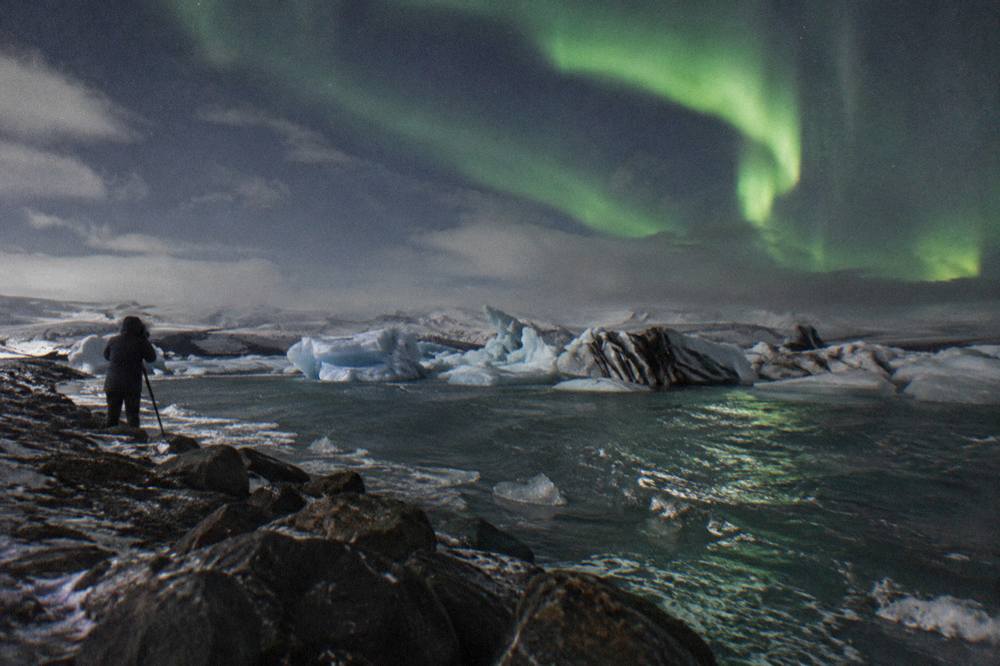
The reason is practical. Ice fragments on black sand are a study in changing light: a chunk that looks flat grey at noon can glow blue and gold an hour before sunset. Photographers who wait out that transition need a stop measured in hours, not minutes, and the winter calendar helps by compressing golden hour into the early afternoon. A tripod slows the pace further, and moving between compositions along the sand, while respecting the surf distance guidance, eats time faster than walkers expect.
Drones deserve a special note here. The park bans recreational drone flying at Jökulsárlón and Fellsfjara between 15 April and 15 July for the nesting birds, and outside that window flight is only permitted before or after set hours that shift through the year; the park's drone rules page carries the full schedule. Anyone planning aerial work should read it before assuming a launch is allowed, because the busy red-shaded zone is prohibited year-round and commercial filming needs a permit.
Is One Day Enough For The Beach And The South Coast?
For the beach and the lagoon alone, yes, one long day from Reykjavik covers it, though the drive makes it a 14-hour day. For a relaxed south coast trip with waterfalls, canyons and a glacier hike, two days is the better frame, and three days adds the Golden Circle and more cave time.
The single-day format is well established: every tour in the Reykjavik day trip category runs 14 to 15 hours because the distance demands it. The trade-off is a compressed stop at the beach, roughly the 30 minutes discussed above, and a lot of coach time. The multi-day options change the rhythm entirely. The 2-day small-group tours from Reykjavik start at $633 per person, include breakfast, a guide and usually a glacier hike or ice cave stop, with lunch and dinner paid separately, and they turn the beach from a whistle-stop into an evening or morning visit at whatever pace the group wants.
Between those poles sits the self-drive traveller, who controls the clock entirely. For that reader the realistic plan is a night in the Hofn or Vik area, a morning at the lagoon and beach with no schedule, and the drive back the next day. The site's where to stay near the lagoon guide covers the overnight options, and camping at the lagoon itself is not permitted, which is worth knowing before anyone improvises.
For readers who want one recommendation distilled from the review counts: the BusTravel Diamond Beach Day Trip, 4.7 across 4,069 reviews, is the most reviewed option and a proven single-day answer, while travellers who want the boat on the water and the beach in one ticket should compare it against the boat-ride-included trip. Both, and the Jokulsarlon Glacier Lagoon Tours selection as a whole, run on free cancellation up to 24 hours before, which removes most of the planning risk from deciding today.
Common Questions About Diamond Beach
How Much Time Do You Need At Diamond Beach?
Roughly 30 minutes to one hour for the beach itself, plus time for parking and the walk under the bridge. Guided itineraries that publish a stop length allow about 30 minutes, set by the operator rather than the tide.
How Far Is Diamond Beach From Jökulsárlón?
About 500 m across Route 1. The park asks visitors to walk under the bridge rather than over it, which adds a few minutes each way but keeps walkers off the road.
Is There A Parking Fee At Diamond Beach?
The regional Vatnajokull National Park fee applies: 1,110 ISK for a passenger car up to 5 seats, valid until midnight on the day paid with free in and out that day.
Can You See Ice On The Beach All Year?
It varies. Ice conditions change daily with glacier activity, weather, tides and currents, so the amount of ice on the sand is never guaranteed on any date.
How Much Daylight Is There In Winter?
At Höfn, within minutes of the lagoon, daylight runs about 4 hours 21 minutes on 1 January and 4 hours 3 minutes on 21 December, so plan the visit for the middle of the day.
How Long Do Guided Tours Stop At The Beach?
Where itineraries state a figure, it is 30 minutes. Other operators leave the length to the day's schedule and do not publish a number.