Diamond Beach Iceland: Where It Is And How To Visit
Diamond Beach sits directly across Route 1 from Jokulsarlon, a strip of black sand where glacier ice strands after drifting out of the lagoon. This guide covers where it is, how the ice gets there, the sneaker-wave rules that matter, and the day trips from Reykjavik that build in a stop.
Short answer
Diamond Beach, the black-sand shore at Fellsfjara, lies about 500 m across the road from Jokulsarlon, roughly 370 km east of Reykjavik on Route 1. Parking runs 1,110 ISK for a car. Day trips from Reykjavik start from $211 per person, and the most reviewed option, at 4,069 reviews, stops here alongside the lagoon.
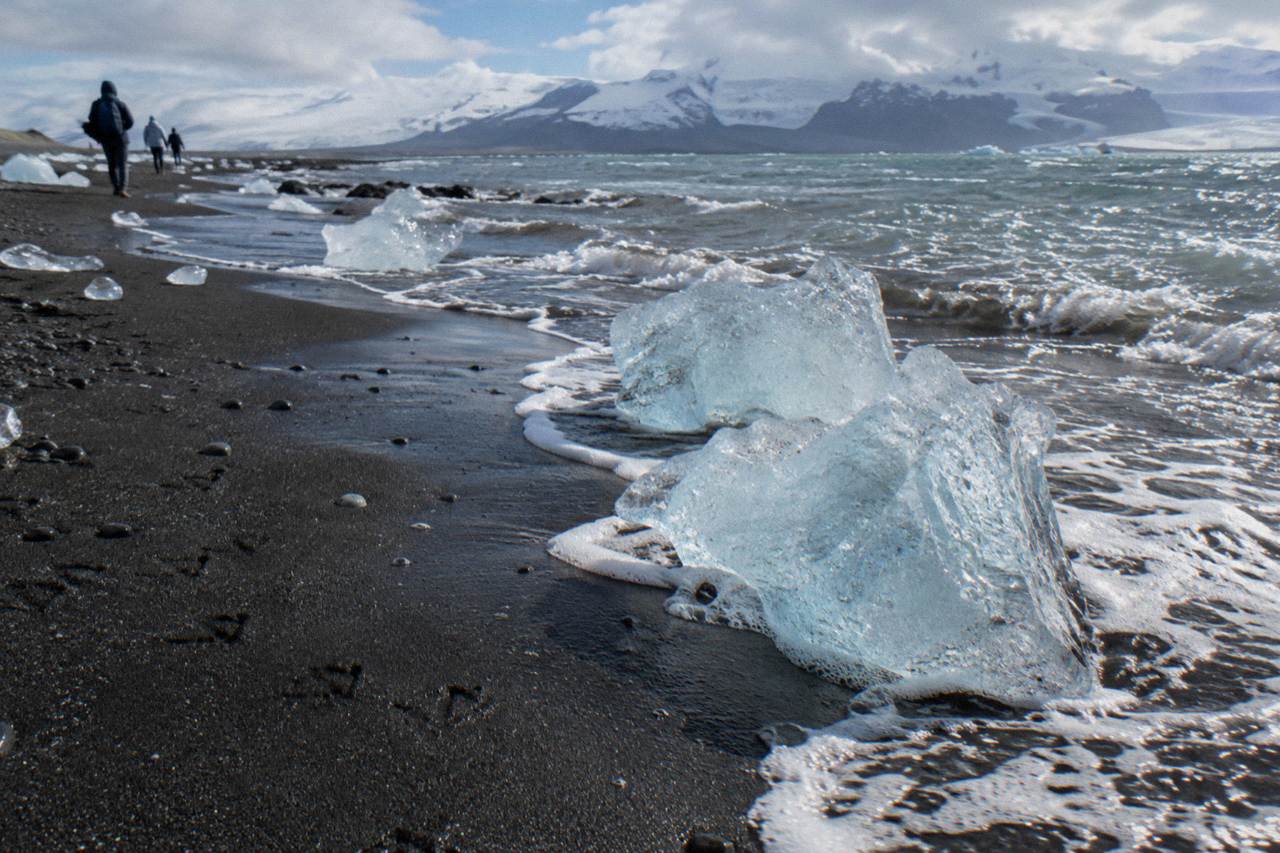
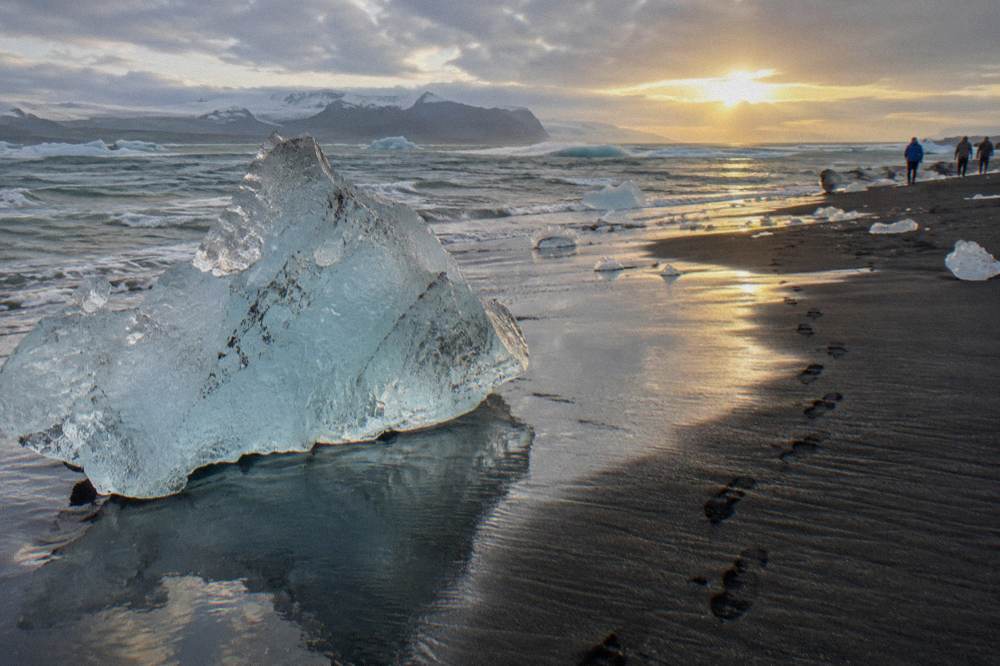
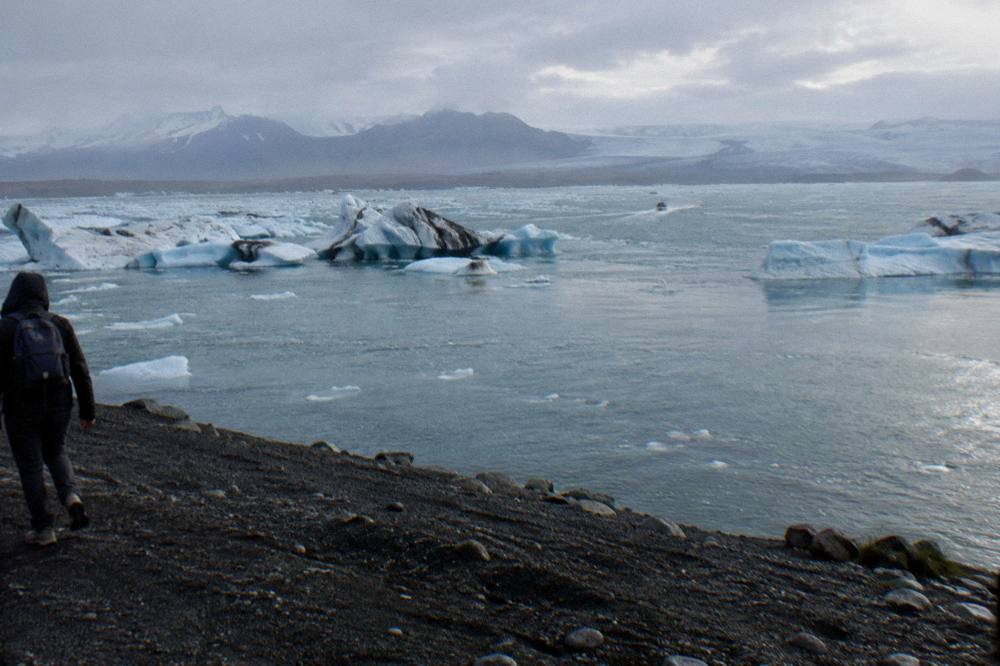
The black sand at Fellsfjara catches glacier ice that has drifted out of Jokulsarlon, washed down the short outlet river and landed on the shore in the tide. On a good day the beach glitters with clear chunks of berg; on other days it is nearly bare, because ice conditions change with glacier activity, weather, tides and currents, and nothing about the amount of ice is ever fixed. That single uncertainty shapes every honest plan for visiting, and it is worth understanding before booking anything. This guide covers the geography, the safety rules that genuinely matter here, and the tours that build the beach into a south coast day.
Where Is Diamond Beach In Iceland?
Diamond Beach sits at Fellsfjara on the south coast, directly across Route 1 from Jokulsarlon, about 500 m from the lagoon's main car park on foot, roughly 370 km east of Reykjavik. The beach faces the open Atlantic at the mouth of the glacier river, and the park asks visitors to walk under the Route 1 bridge rather than over it to reach it.
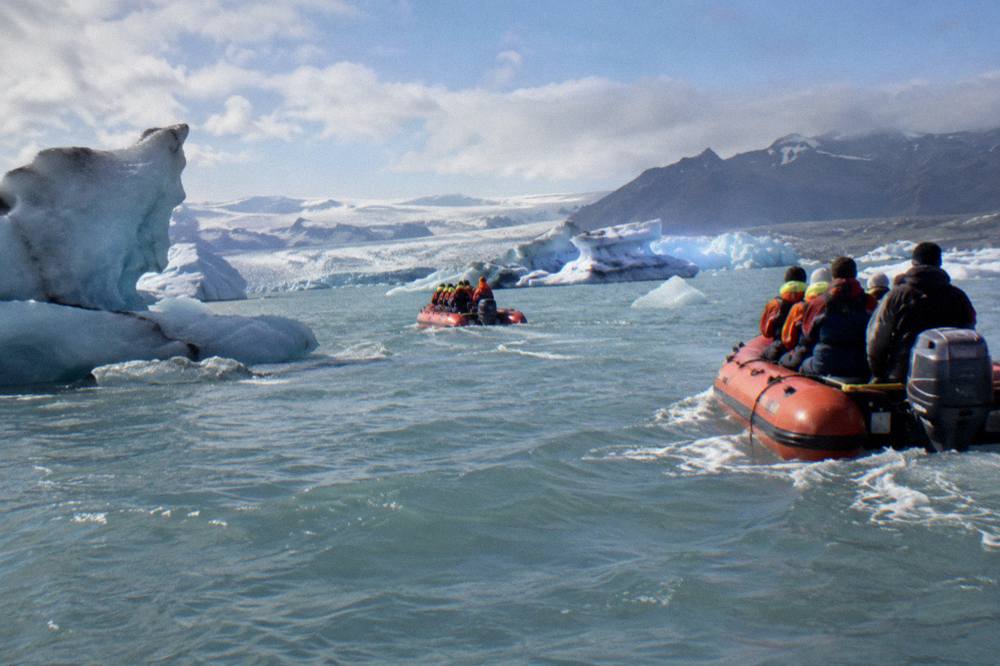
The two sights work as a pair. Jokulsarlon is the lagoon where icebergs calve off Breidamerkurjokull and float before drifting to sea; Diamond Beach is where some of that ice ends up, stranded on black volcanic sand. You may not get to choose between them in practice, so treat the parking areas as separate until confirmed on site. The park's Fellsfjara page puts it plainly: visitors should not hike over the bridge, it is possible to hike under it, and that under-bridge route is the intended crossing.
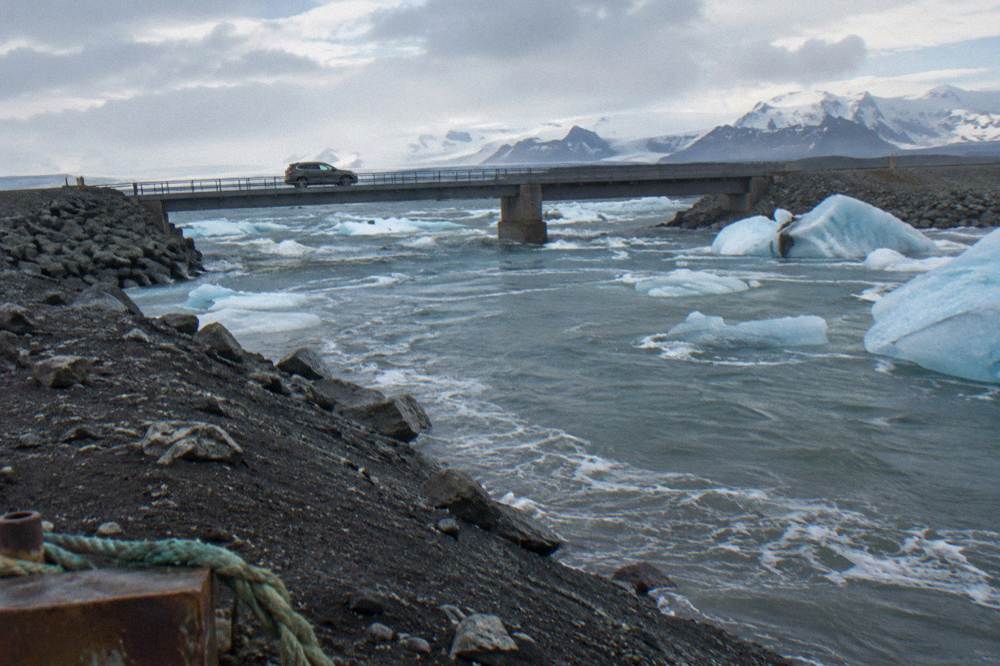
Getting there means Route 1 the whole way. The road passes Vik, Skeidararsandur and Skaftafell before reaching the lagoon, and the drive is the real constraint on a day trip: 14 to 15 hour itineraries from Reykjavik exist precisely because of the distance, not because the stops take that long. Road conditions in winter are checked on the national road condition site, and forecasts on the Icelandic Met Office page, both worth a look the evening before any winter drive.
Why Does Ice Wash Up On The Black Sand?
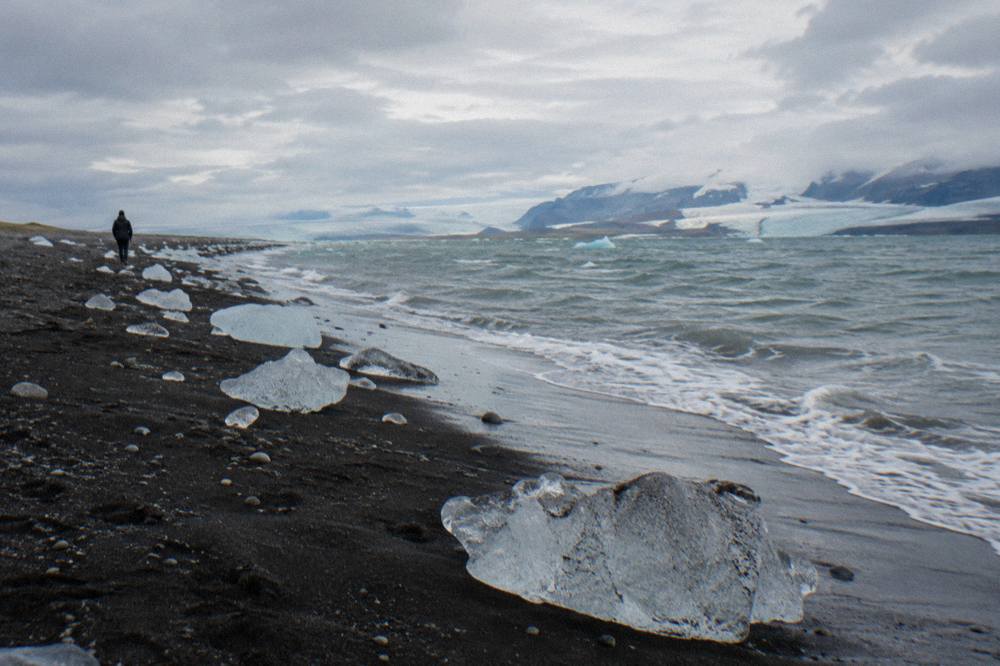
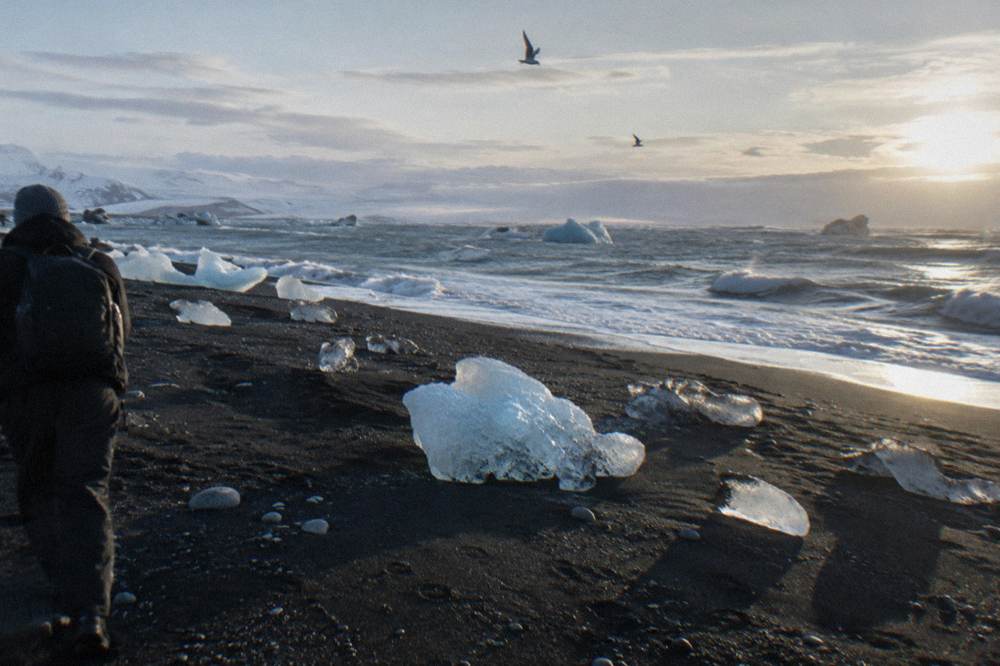
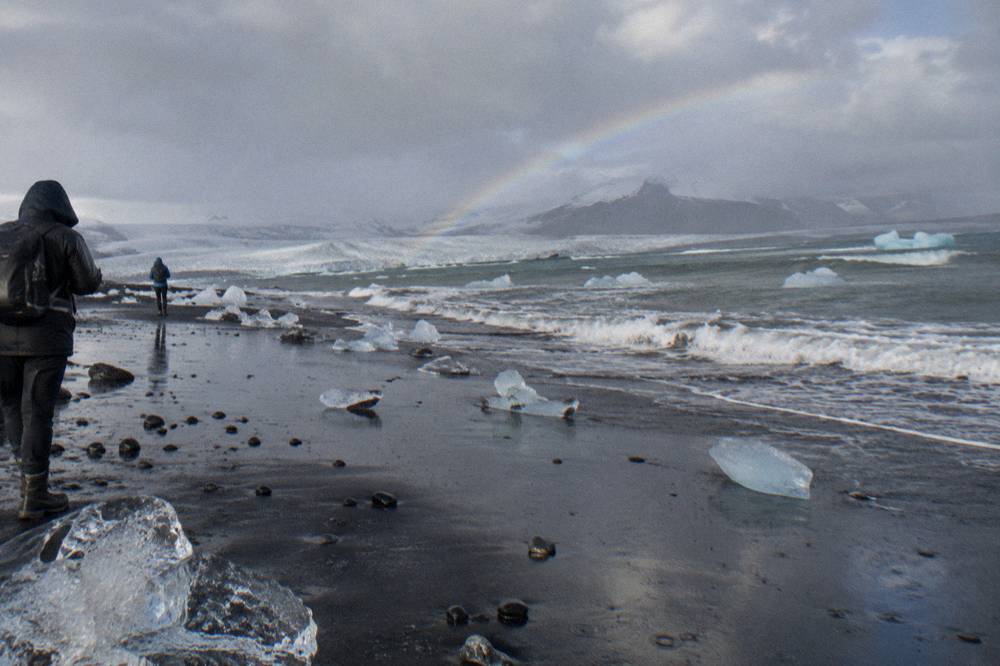
Icebergs that calve from Breidamerkurjokull float across Jokulsarlon, drift down the short outlet river to the Atlantic, and the tide then strands pieces of them on the black sand at Fellsfjara. The result is the diamond effect: translucent ice on dark volcanic sand. How much ice sits on the beach on any given day depends on glacier activity, weather, tides and currents, so the amount is never guaranteed.
The lagoon itself is a young feature. Lakes began forming here in the 1930s as the glacier retreated, and the lagoon now covers roughly 25 square kilometres and reaches depths of up to about 284 m in places, with seawater entering at high tide. Every piece of ice on the beach began as part of that glacier, calved, drifted and dispersed. Some chunks are small enough to lift; others are the size of a car. The colour range, from milky white to glass-clear blue, comes from how the ice compressed and how long it has been melting.
The ice is also why photography here is famous. Dark sand acts as a natural reflectorless backdrop, and the low winter sun rakes across the beach at an angle that lights the ice from the side. Long lens or wide, the composition is essentially given: pick a chunk, watch the surf, keep well back. The operator's own FAQ notes that seals are frequently seen resting on icebergs in the lagoon and gather in numbers at the lagoon mouth in winter, which is worth knowing if your visit falls in the colder months.
There is a companion guide on this site, why the lagoon ice is blue, for readers who want the science of glacial ice colour in more depth.
Which Tours From Reykjavik Include A Diamond Beach Stop?
Day trips from Reykjavik to Jokulsarlon pair the lagoon with a Diamond Beach stop, running 14 to 15 hours and priced from $211 to $234 per person for the main bus options. The most reviewed is the BusTravel Diamond Beach day trip, rated 4.7 across 4,069 reviews, from $211 per person, with Reykjavik pickup available if you select that option. None of these base prices includes a lagoon boat ride, which on some options is a paid add-on at booking. If that short stop feels tight, the guide to how much time you really need at Diamond Beach explains how long guided tours stay and how to pair the beach with the lagoon.
Sixteen of the 27 tours covered on this site mention the beach in their itineraries, and the three below are the strongest Reykjavik day-trip options. What separates them is meeting point, boat add-on policy and price, not the core route, which follows the south coast to the lagoon in every case.
| Tour | Duration | Price (from, per person) | Rating and reviews | Meeting point | Boat ride |
|---|---|---|---|---|---|
| BusTravel Diamond Beach Day Trip | 14 hours | $211 | 4.7 across 4,069 reviews | Pickup option available | Optional paid add-on |
| Gray Line 14.5-Hour South Coast | 14.5 hours | $234 | 4.5 across 1,582 reviews | BSÍ Bus Terminal, Reykjavik | Excluded (listed as not included) |
| 14 to 15 Hour Day Trip | 14 to 15 hours | $225 | 4.5 across 1,460 reviews | 36 drop-off locations, depends on option | Optional paid add-on |
All three allow free cancellation up to 24 hours before, and none includes food, so plan on restaurant and fuel stops along the route, which Gray Line in particular notes as built into the day. The Gray Line option names the boat tour on the lagoon explicitly as not included, while the other two sell it as an optional extra rather than folding it into the base fare, a distinction that matters when comparing prices.
For readers who want pickup included without option-dependent fine print, the Small-Group Minibus, Hotel Pickup tour runs 14 hours from $229 per person, rated 4.8 across 456 reviews, with pickup included and food and drinks not included. It adds Fjadrargljufur Canyon to the south coast and lagoon route.
A similar pickup-included option is the 14-hour, 30-minute guided day trip from $234 per person, rated 4.7 across 727 reviews, meeting at BSÍ in Reykjavik with pickup included. The reader profile matters more than the price gap here: travellers staying near a bus stop network do fine at BSÍ, while anyone outside central Reykjavik saves real hassle with pickup built in.
Ratings cluster tightly: every option listed scores between 4.5 and 4.8. The Small-Group Minibus, Hotel Pickup tour posts the highest mark at 4.8, while Gray Line and the 14 to 15 hour trip share the 4.5 floor. Review depth varies more than the scores, running from 456 reviews for the canyon tour to 4,069 for BusTravel, with no other option clearing 1,600.
On the boat question the choice is binary: only two of the three main trips let you add the lagoon ride, while Gray Line's tour rules it out, so anyone set on the boat should weigh that before booking. Duration leaves little room to optimize, since every option here runs 14 hours or longer. For arrival logistics, the 14 to 15 hour trip lists 36 drop-off locations, the widest coverage in the group.
Is Diamond Beach Dangerous? Sneaker Waves And Safety Rules
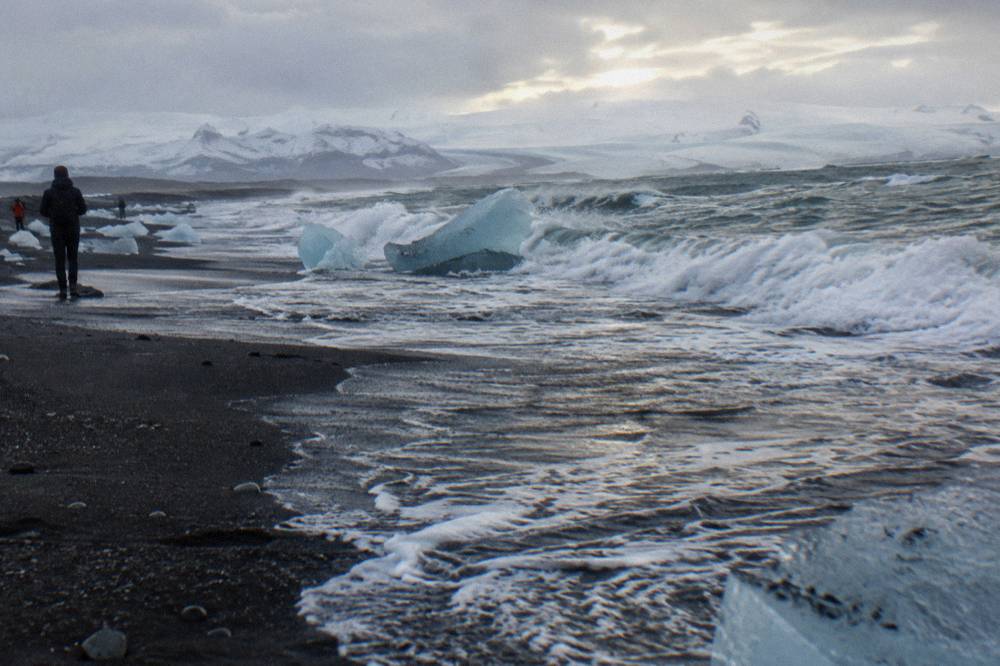
Yes, the surf at Diamond Beach deserves respect: sneaker waves on open Atlantic black beaches surge far above the normal wash with no warning and can sweep an adult out to sea in seconds. Safetravel's hazard levels run yellow for moderate, orange for considerable, which means staying at least 25 m from the sea, and red for severe, when the beach is closed and only the viewing area is open. The same rules apply on any open Atlantic black beach.
Safetravel publishes its sneaker-wave guidance on a black-beach safety page written for Reynisfjara, and there is no separate Diamond Beach page, so the honest framing is that identical physics applies here: a flat, seemingly calm shore with periodic surges. The practical habits are simple. Never turn your back on the surf. Keep well back from the waterline, especially with children. Do not stand between stranded ice and the sea, since a surge can push ice as well as water, which is consistent visitor guidance rather than an official ban. And check the hazard level for the day before walking down.
| Hazard level | Meaning | What to do |
|---|---|---|
| Yellow | Moderate | Stay alert, keep back from the waterline |
| Orange | Considerable | Stay at least 25 m from the sea |
| Red | Severe | Beach closed, viewing area only |
Two further rules come from the park itself rather than Safetravel. Drones are banned at Jokulsarlon and Fellsfjara between 15 April and 15 July for the nesting season, and outside that window they are only permitted before or after set hours, per the park's drone rules. And camping at the lagoon is not permitted, since the area is part of Vatnajökull National Park. Rangers supervise Jokulsarlon, Fellsfjara and Fjallsarlon every day of the year, so on-site questions have an answer on the ground.
How Much Time Do You Need At Diamond Beach?
Most visitors spend 30 to 60 minutes on the beach itself, which is enough to walk from the lagoon car park under the bridge, along the sand and back, with time to photograph ice. Add time at Jokulsarlon across the road, longer if a lagoon boat ride is booked. On a day trip from Reykjavik the stop is scheduled for you; independent travellers should budget a couple of hours total for both sides of the road.
The physical walk is short. The beach lies about 500 m across the road from the lagoon, and the under-bridge route keeps you off Route 1 traffic entirely. What expands the visit is photography: ice moves with each tide, so the beach you see at noon differs from the one at 4 p.m., and patient visitors who wait for a clearing sky between showers often get the best light. The cafe at the lagoon is open year-round except 24 to 26 December and 31 December to 2 January, which makes an easy warm-up stop, and flush toilets are available at the lagoon. Other pages covering the same trip are gathered on Jokulsarlon Glacier Lagoon Tours.
There is a fuller treatment of timing on this site, how long you need at the lagoon, and a dedicated look at time needed at Diamond Beach.
What Does Visiting Diamond Beach Cost?
The beach itself has no admission price, and no lagoon admission price exists either; the fixed cost is the Vatnajokull National Park regional parking fee, 1,110 ISK for a passenger car up to 5 seats, valid until midnight on the day paid. Guided day trips from Reykjavik run from $211 to $234 per person, and the operator's direct amphibian boat price is 7,100 ISK for an adult if added on site.
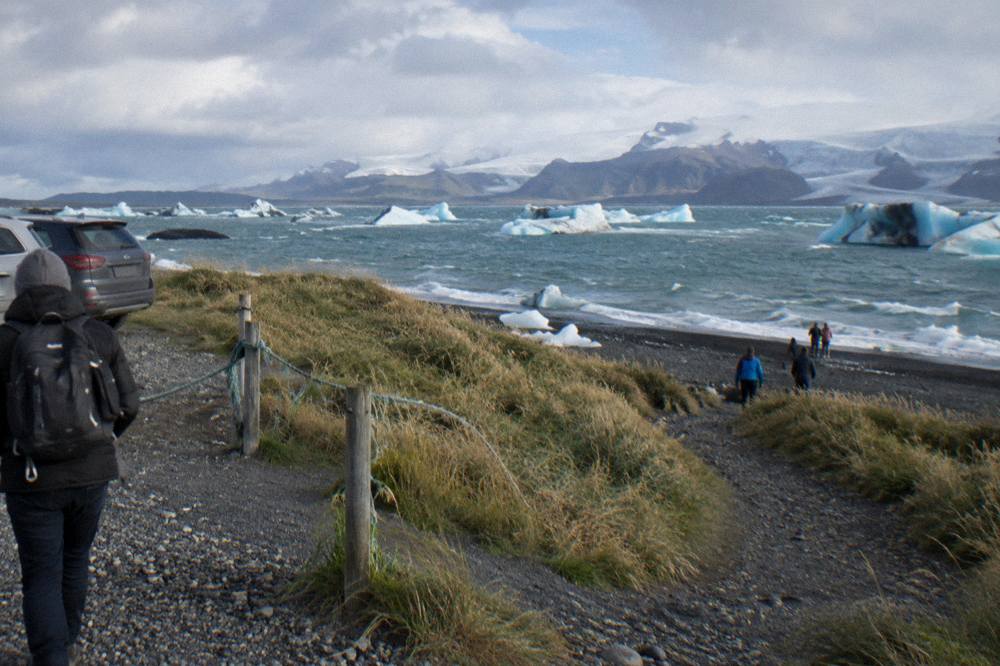
Parking is collected by licence-plate photo on entry and payable at machines in the car parks or through the Parka app. Larger vehicles pay more: 1,440 ISK for 6 to 9 seats, 2,770 ISK for a bus of 10 to 21 seats, 5,200 for 22 to 32 seats, 9,400 for 33 or more, and 450 ISK for a motorcycle. There is a 50 percent discount on the regional fee if another fee-based Vatnajokull service area was visited the same date. The pricelist page does not state that one payment covers the Diamond Beach lots, so treat those as separate until confirmed on site.
| Vehicle | Parking fee (ISK) |
|---|---|
| Passenger car up to 5 seats | 1,110 |
| 6 to 9 seats | 1,440 |
| Bus 10 to 21 seats | 2,770 |
| Bus 22 to 32 seats | 5,200 |
| Bus 33 or more seats | 9,400 |
| Motorcycle | 450 |
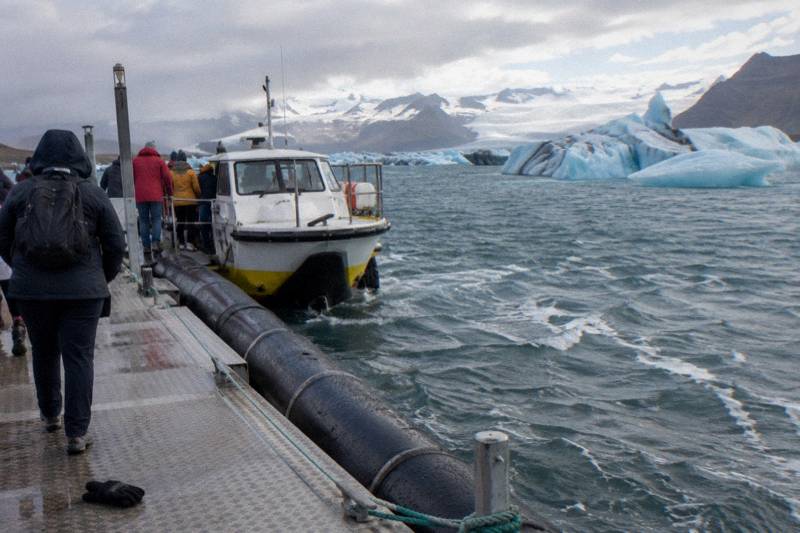
Boat prices deserve their own caveat. The amphibian and zodiac rides are sold directly by the lagoon operator, not as standalone products on the booking platforms this site covers, and the figures above are the operator's own list prices, not tour prices: 7,100 ISK for an adult amphibian ticket, 3,500 ISK for a child aged 6 to 12, and 16,600 ISK for the adult zodiac. Some Reykjavik day trips include a boat ride in the fare, notably the Boat Ride Included 14 Hours option from $292 per person, rated 4.7 across 492 reviews, while others offer it as a paid add-on or exclude it. The full cost breakdown for lagoon boats covers this in detail.
When Is The Best Time Of Year To Visit Diamond Beach?
There is no single best month, because the amount of ice on the sand varies with calving, tides and weather rather than the calendar. Summer gives the longest days, up to 21 hours 14 minutes of daylight at Hofn on 21 June; winter gives low sidelight that photographs ice beautifully but shrinks the window to about 4 hours in December. Boat tours run May to October, sometimes into November, and ice caves roughly October to April.
Daylight figures for Hofn, east of the lagoon and within minutes of it, make the seasonal trade-off concrete. The beach is walkable in any month, but winter visits need more planning around both light and road conditions, since safetravel's winter driving guidance applies: lights on front and rear at all hours, a rental car with winter tyres, and limited daylight.
| Month (1st of month) | Daylight at Hofn | Notes for the beach |
|---|---|---|
| January | 4h21 | Short days, sidelight, possible ice |
| March | 10h10 | Ice cave season in full swing |
| June | 20h11 | Longest days, boat season running |
| September | 14h34 | Crowds easing, weather turning |
| December | 4h59 | Lowest light, 21 Dec has 4h03 |
Weather context comes with an honest caveat: the nearest long-term normals are for Kirkjubaejarklaustur, about 200 km west, where the 1981 to 2010 daily mean runs from 0.0 °C in February to 11.6 °C in July and precipitation totals about 1,700 mm a year spread across roughly 182 days with at least 1 mm. The coast right at the lagoon differs, so treat those numbers as regional context, not a forecast for the beach. There is more in the site's lagoon weather guide.
Can You Visit Diamond Beach Without A Tour?
Yes, the beach is a public shoreline with no admission gate; independent visitors drive Route 1, pay the regional parking fee and walk under the bridge to the sand. The trade-off is the drive, roughly 370 km each way from Reykjavik, which makes a comfortable day trip long and pushes many travellers toward either a guided tour or an overnight stay near Hofn or Vik. In winter, self-driving adds real road risk.
The self-drive case is genuinely strong in summer: you control the schedule, can arrive early or late when tour buses are thinner on the ground, and can pair the beach with Skaftafell hiking or the Fjadrargljufur Canyon on your own route. The self-drive versus tour comparison on this site walks through the decision in full. What the independent plan gives up is the guide's read on the day: which ice cave is open, where the surf is running, whether the beach or the lagoon side deserves the longer stop.
In winter the balance tips. Safetravel's winter driving guidance is blunt about limited daylight, mandatory lights and the limits of four-wheel drive on ice, and the Route 1 stretch beside the lagoon has been closed for roadworks. Guided tours absorb that risk with experienced drivers. A middle path is a two-day trip: the 2-Day Tour, Lagoon Boat Ride option runs from $696 per person, rated 4.9 across 194 reviews, with the lagoon boat ride included, breakfast included, and lunch and dinner paid by the traveller.
For a small-group two-day format with a glacier hike, the 2-Day Glacier Hike option runs from $639 per person, rated 5.0 across 206 reviews, with hotel pickup and breakfast included and the lagoon boat ride as an optional paid add-on. Two-day itineraries split the roughly 370 km drive into two shorter driving days and give the beach a second chance if the first afternoon is flat grey rain.
What Should You Wear And Bring For The Beach?
Dress for wind and blowing sand, not for a stroll: waterproof layers, a hat and gloves even in summer, and sturdy shoes you do not mind getting wet, since spray reaches well up the sand. The Kirkjubaejarklaustur normals put the daily mean at 11.6 °C in the warmest month, and the coast at the lagoon is windier than that sounds, so assume it feels colder on the shore than the forecast number.
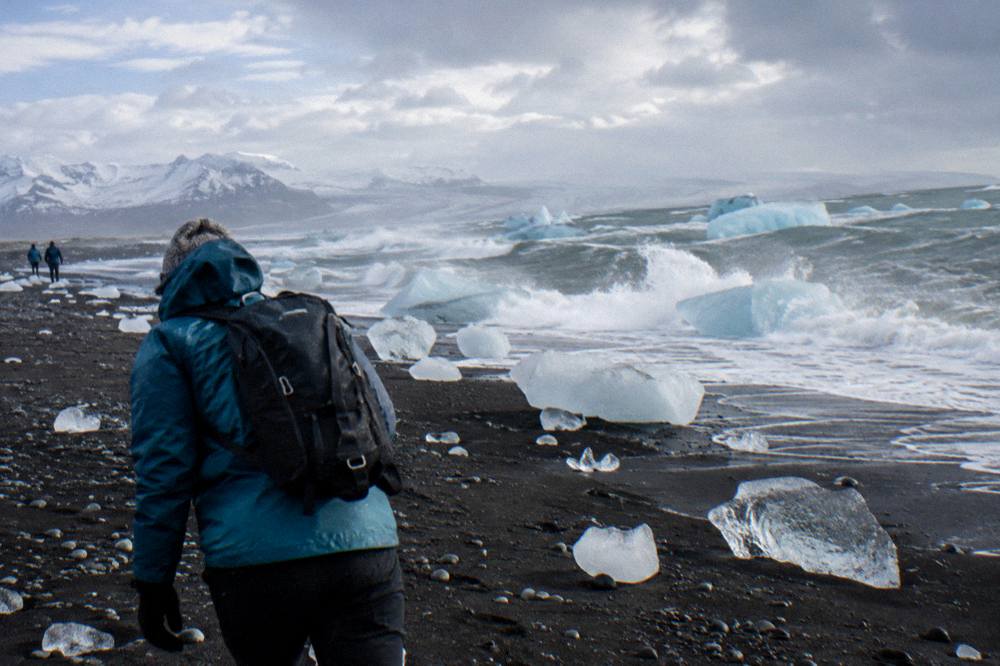
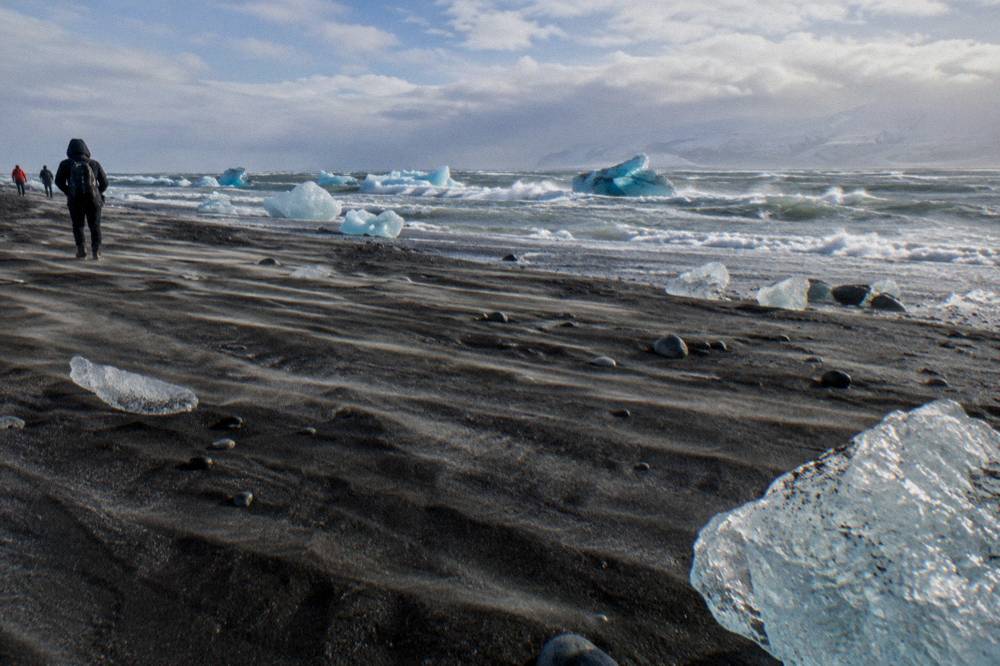
Sand moves horizontally here when the wind is up, and it stings. Sunglasses help more than they do on most beaches. Tripods survive fine but get a wipe-down after. If you pair the beach with an ice cave or glacier hike tour, several of those operators include crampons, helmet and safety gear in the fare but expect you to bring your own warm clothing and hiking boots, so the clothing list above is not optional. The site's what to wear guide extends this to boat-ride clothing.
What Else Can You Combine With Diamond Beach?
The realistic combinations are Jokulsarlon itself, which shares the car park zone; ice cave tours that start at the lagoon car park between roughly October and April, plus glacier hikes that meet there; and south coast waterfalls such as Seljalandsfoss and Skogafoss on the drive. Kayaking runs from the lagoon parking area, 1.5 hours from $155 per person, rated 4.7 across 532 reviews, and multi-day tours bundle several of these into one booking.
The lagoon-start tours are the efficient pairing for anyone already driving east. The Blue Ice Cave tour from Jokulsarlon, 3 hours from $195 per person and rated 4.6 across 973 reviews, meets at the lagoon boat tours and cafe address, so a morning cave trip and an afternoon on the beach use the same parking. Ice cave season runs roughly October to April, conditions permitting, and no operator promises entry or cave colour on a given day. There is a fuller treatment in the site's ice cave tour guide.
Beyond the glacier activities, the south coast drive itself is the attraction. Waterfall stops, the canyons, and the town of Vik all sit on the same Route 1 corridor, which is why the south coast tour guide on this site treats the whole route as one itinerary rather than a set of separate destinations. Travellers with three days can add the Golden Circle, and the two-day versus longer trips comparison lays out where the extra day pays off.
Common Questions About Diamond Beach In Iceland
Where Exactly Is Diamond Beach In Iceland?
It is at Fellsfjara, directly across Route 1 from Jokulsarlon on the south coast, about 500 m from the lagoon's main car park and roughly 370 km east of Reykjavik on Route 1.
Is There A Fee To Visit Diamond Beach?
The beach has no admission price. The cost for drivers is the Vatnajokull National Park regional parking fee, 1,110 ISK for a passenger car up to 5 seats, valid until midnight on the day paid.
Is There Always Ice On The Beach?
No. Ice conditions change daily with glacier activity, weather, tides and currents, so the amount of stranded ice varies and is never guaranteed on any given day.
Which Tours From Reykjavik Stop At Diamond Beach?
Multiple 14 to 15 hour day trips pair the lagoon with the beach, from $211 to $234 per person. The most reviewed is the BusTravel Diamond Beach day trip at 4.7 across 4,069 reviews, from $211 per person.
Is Diamond Beach Safe For Children?
Yes, with supervision and distance from the waterline. Sneaker waves surge far above the normal wash with no warning; at the orange hazard level Safetravel advises staying at least 25 m from the sea, and at red the beach is closed with the viewing area open.
Can You Visit Diamond Beach In Winter?
Yes, and winter sidelight photographs the ice well, but daylight shrinks to roughly four hours midwinter, and winter driving rules apply: lights on at all hours, and road and weather checks before setting out.