How Long Do You Need At Jokulsarlon Glacier Lagoon?
A practical timing guide to Jokulsarlon: how long the boat rides, ice cave tours, hikes and Diamond Beach take, and how to plan a day trip from Reykjavik.
Jokulsarlon sits about 370 km east of Reykjavik on Route 1, a long drive each way even without stops, which means the single biggest timing decision is not the lagoon itself but how you get there. The lagoon stop can run from a fast 30 minutes to a full day with a boat ride, an ice cave trip and a walk on Diamond Beach. What follows breaks each piece down with the real durations operators publish, so the day can be planned around what actually matters on the ground. For anyone stretching the day on a budget, the guide to free things to do around Jokulsarlon and Diamond Beach shows which stops cost nothing beyond the parking fee.
Most travellers who arrive on their own plan between one and two hours for the lagoon viewpoint and a walk on the shore, which is enough to take in the icebergs, walk the main path and cross to Diamond Beach briefly. Add a boat ride and the visit grows by an hour or more; add an ice cave tour from the lagoon car park and the stay becomes closer to half a day.
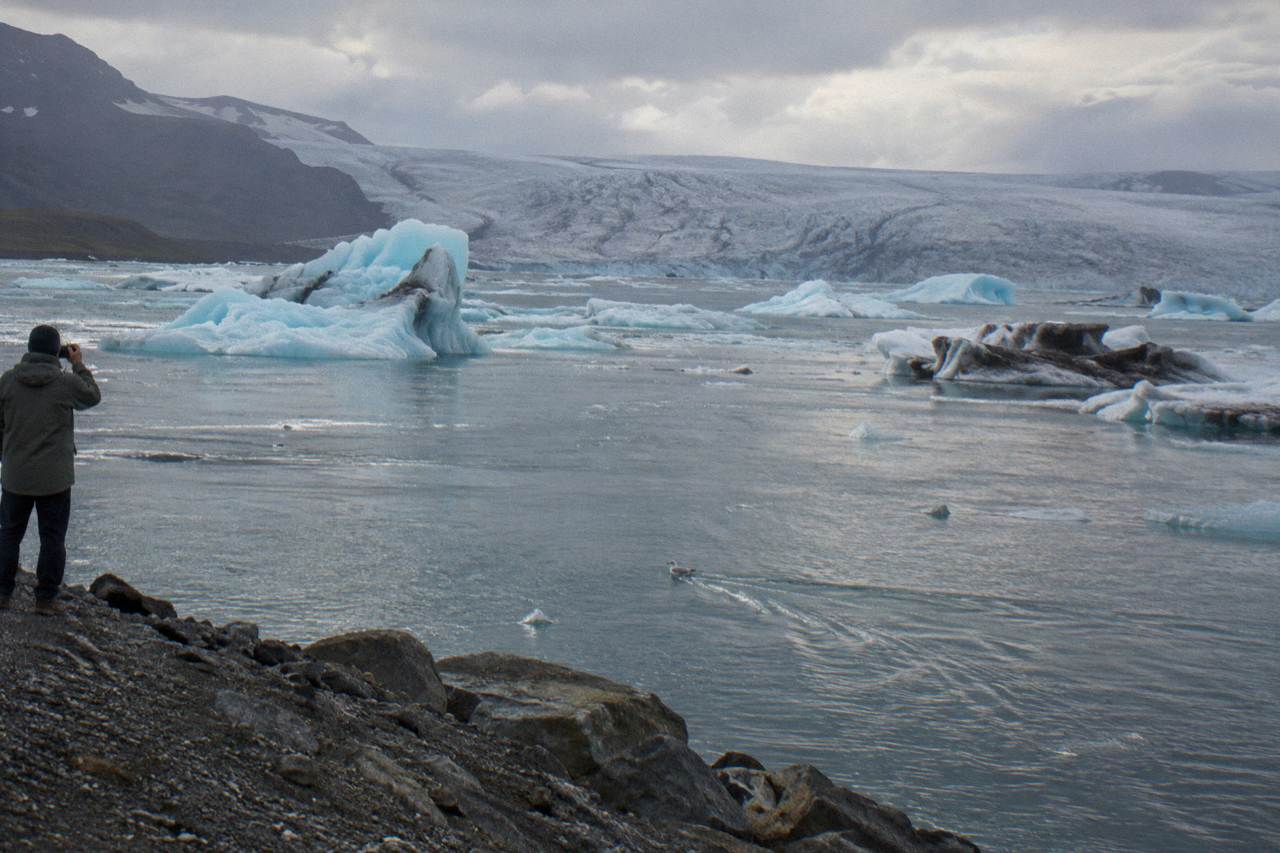
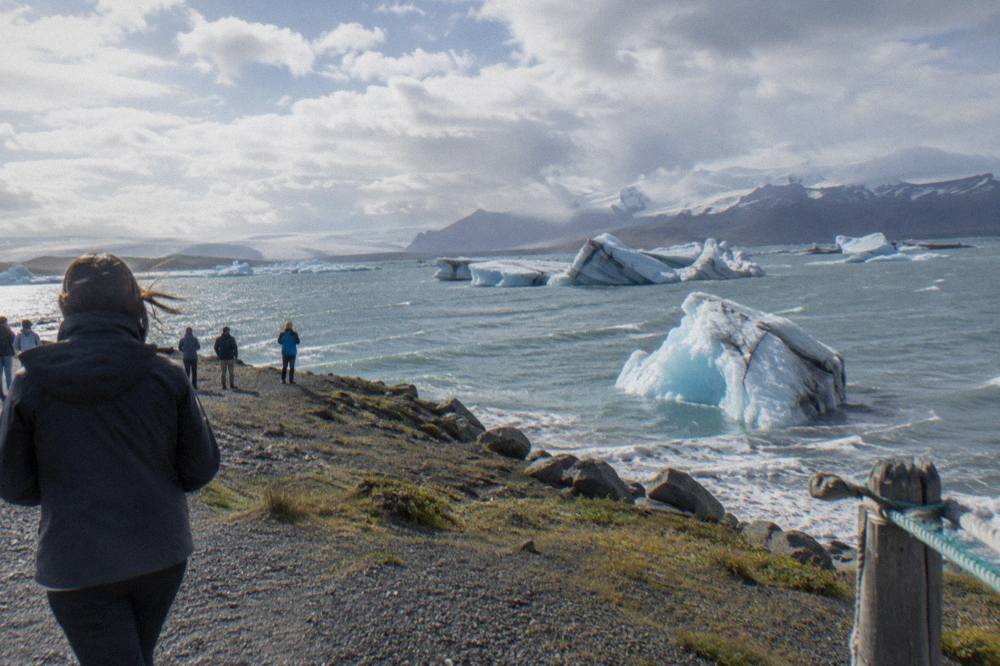
That baseline assumes good conditions and no queue at the car park payment machines. The lagoon is a place where ice changes daily, depending on glacier activity, weather, tides and ocean currents, as the lagoon operator itself explains, so what you see in the first ten minutes may look different an hour later. Icebergs drift, tilt and occasionally break apart in the channel toward the sea. Seals are frequently seen resting on the ice or swimming in the lagoon, and part of the appeal is standing still long enough for the scene to change.
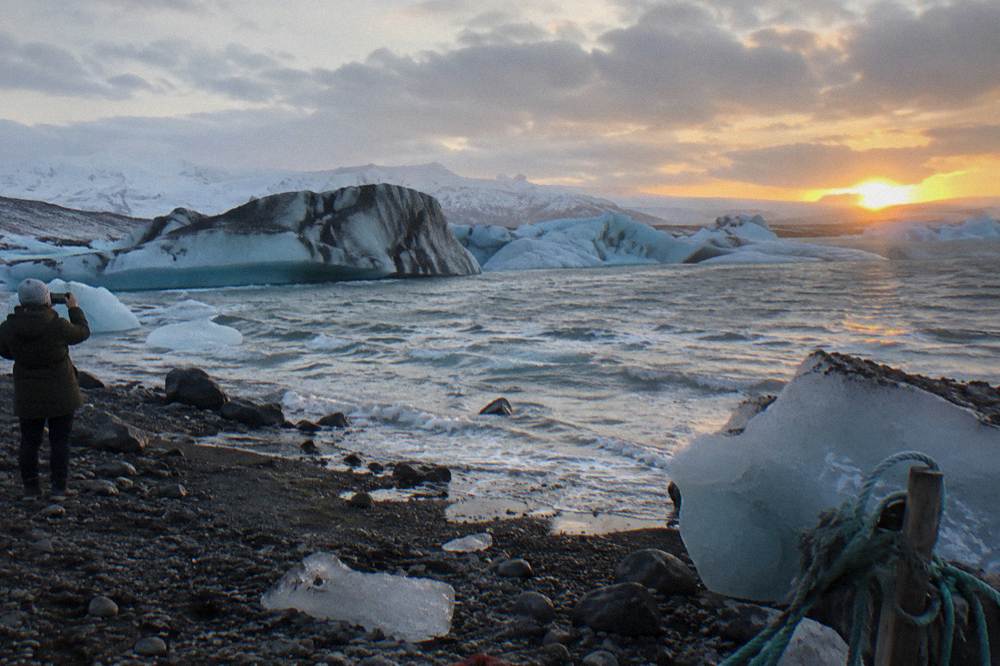
The practical floor is shorter than many itineraries suggest. If a self-drive day along the south coast is running late, a 20 minute stop at the main viewing platform still delivers the core view: the lagoon, the floating ice, the glacier tongue behind it. But that version skips the beach almost entirely, and the beach is where the ice becomes most photogenic up close.
For visitors without a car, the arithmetic is different. A booked day trip handles the drive, the schedule and the parking, and the day runs long: the covered options from Reykjavik list durations of 14 hours, 14.5 hours and even 14 to 15 hours door to door. The most reviewed of these, the BusTravel Diamond Beach day trip, is rated 4.7 across 4,069 reviews and costs from $211 per person, and it is a sensible answer when the alternative is the same long drive there and back on winter roads. You can check availability for the day trip, or compare it against the alternatives below.
These tours take roughly the same full day, so the choice comes down to pickup logistics and whether the boat matters.
How Long Does A Boat Ride On The Lagoon Take?
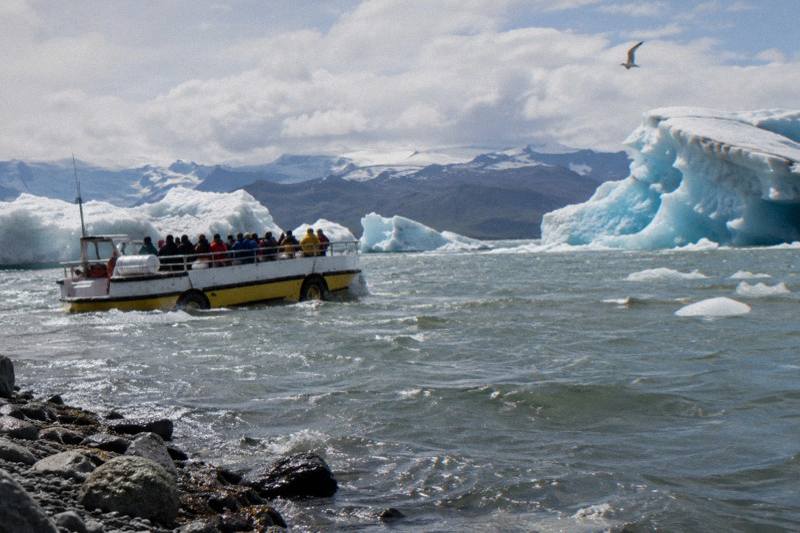
The amphibian boat runs 30 to 40 minutes on the water, and the zodiac runs about 1 hour 15 minutes, both operated by the lagoon operator directly, May to October, sometimes into November for the amphibian. With check-in and boarding, budget closer to a full hour for the amphibian and up to two hours for the zodiac.
These are the operator's own published durations, not estimates. The operator runs four amphibian boats and about 40 trips a day in high season, from 1 July to 31 August, with the last tour about an hour before closing. The zodiac requires check-in 30 minutes before departure, children must be at least 130 cm tall, and flotation suits are supplied. Neither boat type is sold as a standalone product through the booking platforms this site covers: the rides are bought directly from the lagoon operator, at its own kiosk by the water, at prices the operator lists in Icelandic krona for the 2026 season.
If the boat ride is the reason for the visit, timing the whole day around it matters. Among the covered day trips, only a couple include the ride in the base fare: the Boat Ride Included 14-hour tour, from $292 per person and rated 4.7 across 492 reviews, and the Reykjavik Excursions boat tour option at 14 hours 30 minutes, from $328 per person across 126 reviews. Others list it as an optional paid add-on selected at booking, and some say nothing about it at all. Checking which of the three applies, before booking, avoids the common disappointment of expecting a ride that is not in the fare. More on the differences between the two boat types is in the zodiac vs amphibian boat comparison, and the boat tour season guide covers when each runs.
One structural point that surprises first-time visitors: ice is never guaranteed on any ride. The operator states plainly that ice conditions change daily, and trips adapt to what the lagoon holds that morning. The duration of the ride is fixed; the scenery is not.
How Long Is The Drive From Reykjavik, Really?
The drive from Reykjavik to Jokulsarlon is about 370 km on Route 1, long enough that day trips from the capital run 14 to 15 hours door to door once pickups, food stops and the lagoon visit itself are counted.
Tour durations bear this out. Every Reykjavik-departure day trip in this category lists 14 hours or more, and one lists 14 to 15 hours outright. That is not padding; it is the honest arithmetic of a long drive each way plus a meaningful stop. The published itineraries typically include south coast waterfalls such as Seljalandsfoss and Skogafoss on the way, which spreads the drive but also lengthens the day considerably.
For self-drivers, the same maths applies with more freedom. Two days is the comfortable pattern: drive the south coast one day with waterfall stops, overnight near Hofn or Vik, and give the lagoon a full unhurried morning before returning. The two-day small-group tours follow a similar shape, from $633 to $696 per person, with breakfast included, and pickup is tour specific, so check the booking page if you would rather skip the early-morning bus-terminal start. The 2-day glacier hike option, rated 5.0 across 206 reviews, adds a guided glacier walk to the same route.
Winter changes the risk profile more than the clock. Safetravel's winter driving guidance is blunt: headlights front and rear around the clock, a rental car with winter tyres, limited daylight, and no illusion that four-wheel drive removes skid risk. Road conditions are published at umferdin.is and forecasts at en.vedur.is, and both are worth a look the evening before any winter run to the lagoon. The winter driving and planning guide goes deeper on this.
| Option | Duration | Price basis | Notes |
|---|---|---|---|
| Self-drive, one day | 9 to 11 hours driving plus stops | Fuel and parking | Possible but tiring; short daylight in winter |
| BusTravel day trip | 14 hours | From $211 per person | Boat ride optional paid add-on; pickup available as an option |
| Gray Line south coast | 14.5 hours | From $234 per person | Boat ride excluded; starts at BSÍ terminal |
| Two-day small group tours | 2 days | From $639 per person and up | Breakfast and pickup included |
How Long Do Ice Cave Tours From The Lagoon Take?
Ice cave tours that start at Jokulsarlon run between 2.5 and 3 hours from the meeting point in the main car park, including the super-jeep or hike to the cave and the guided time inside. Entry is always conditions permitting: no operator promises the cave, and the season for natural caves runs roughly October to April. If you're weighing the shorter jeep-accessed visits against the longer hikes to more remote caves, the guide to ice cave hike times at Jokulsarlon lays out exactly what fills the time and how to plan the day.
The durations from the booking pages are consistent: the Small Group Ice Cave tour runs 2 hours 30 minutes, rated 4.8 across 298 reviews and from $194 per person; the Blue Ice Cave tour runs 3 hours, rated 4.6 across 973 reviews and from $195; The Original Ice Cave Tour on Vatnajokull runs 3 hours, rated 4.5 across 1,238 reviews and from $176. All include the safety gear, crampons and helmet, and most meet at the lagoon or its main parking: check the live booking page for pickup, since some tours offer it as an option. Travellers otherwise get themselves to Jokulsarlon first, about 370 km from Reykjavik, or arrive on a day trip and book a lagoon-start tour separately.
Pickup varies by tour, and that detail is the timing trap. A 3-hour tour that starts at the lagoon car park is really a full-day or two-day proposition for anyone based in Reykjavik. For travellers already sleeping in Hofn or near Skaftafell, the same tour slots neatly into a morning, with time for the lagoon viewpoint afterwards.
The season matters as much as the clock. Natural ice cave tours inside the national park do not run in summer: after a fatal collapse on Breidamerkurjokull in August 2024, the park imposed stricter operator conditions, including a lead guide and a daily safety assessment of each cave, and summer group trips into natural caves were ruled out, as national reporting in September 2025 confirmed. The practical planning answer is roughly October to April, cave by cave, and the ice cave season guide covers it in full.
How Much Time For Glacier Hikes And Kayaking?
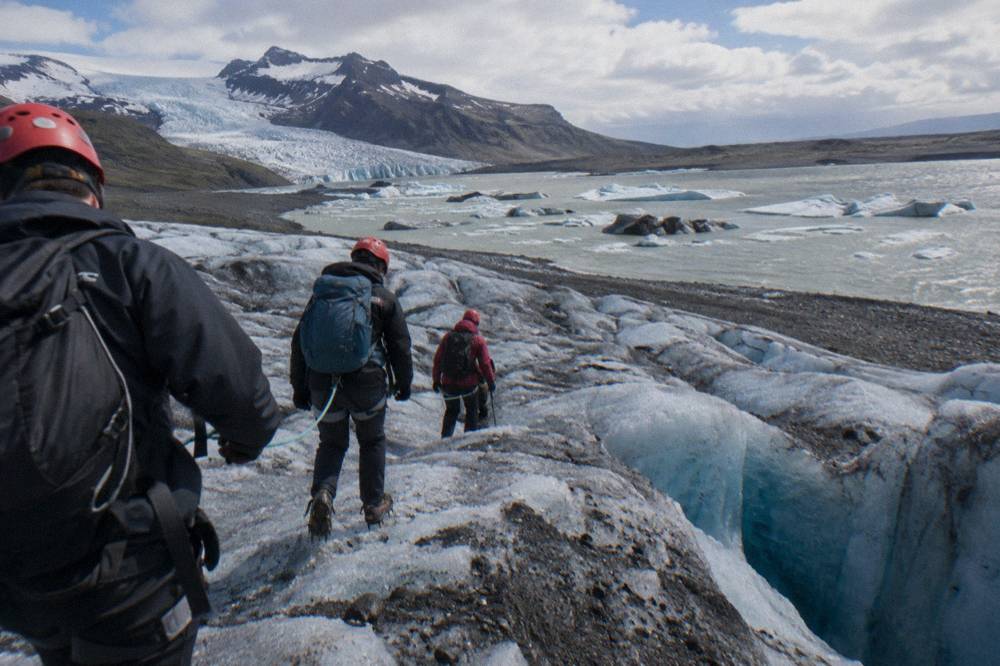
A guided glacier hike from the Jokulsarlon area takes 3 to 4.5 hours for the standard options, and the lagoon kayaking tour runs 1.5 hours on the water, so either one fits into a half-day anchored at the lagoon car park. The longest option, a hike to a remote ice cave, takes about 6 hours.
The Skaftafell glacier hike, 3 hours and from $96 per person, is the lowest per-person price among the covered tours, rated 4.8 across a small pool of 57 reviews, so take the rating as directional rather than settled. The Vatnajokull guided hike runs 4.5 hours, from $149, rated 4.8 across 1,081 reviews, meeting at Jokulsarlon main parking. Both include crampons, helmet and safety gear, and both require travellers to arrive with proper boots and clothing, which one tour marks as not included while the other's exclusions are not mentioned.
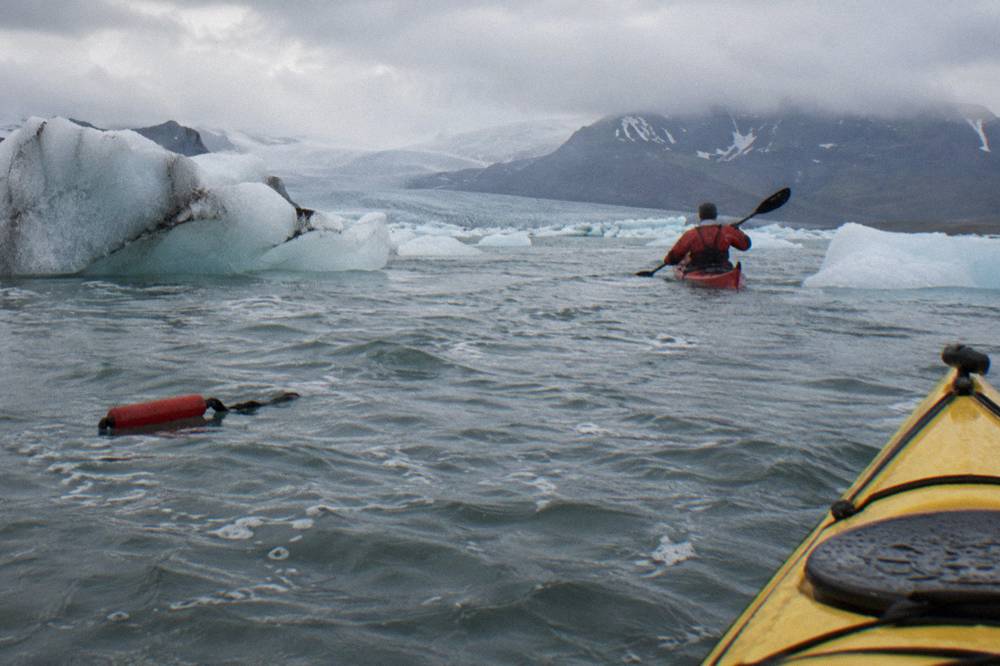
Kayaking is the shortest water option of all. The lagoon kayak tour, 1.5 hours from $155 per person and rated 4.7 across 532 reviews, meets at the Glacier Lagoon parking lot, includes the gear and guide, and offers the lowest-to-the-water view of the ice of any activity here. It is a different proposition from the powered boats: small group, quiet, and close enough to the ice to hear it.
Stacking activities is where a day at the lagoon becomes a full plan. A realistic active morning looks like a 3-hour glacier hike from the main parking, a late lunch at the lagoon cafe, which the operator keeps open year-round except 24 to 26 December and 31 December to 2 January, then a 1.5-hour kayak in the afternoon, with the viewpoint and Diamond Beach squeezed around the edges. That is a full and satisfying day, and it needs an overnight nearby to work.
For safety framing, Safetravel's guidance is that no one should go onto a glacier without experience or the proper equipment, and hiring a certified glacier guide is highly recommended, which is exactly what these guided products provide. The 6-hour hike to a remote ice cave, from $279 and rated 4.9 across 273 reviews, is the deepest version: a full day of walking with cave entry if conditions allow.
How Much Time Do You Need For Diamond Beach?
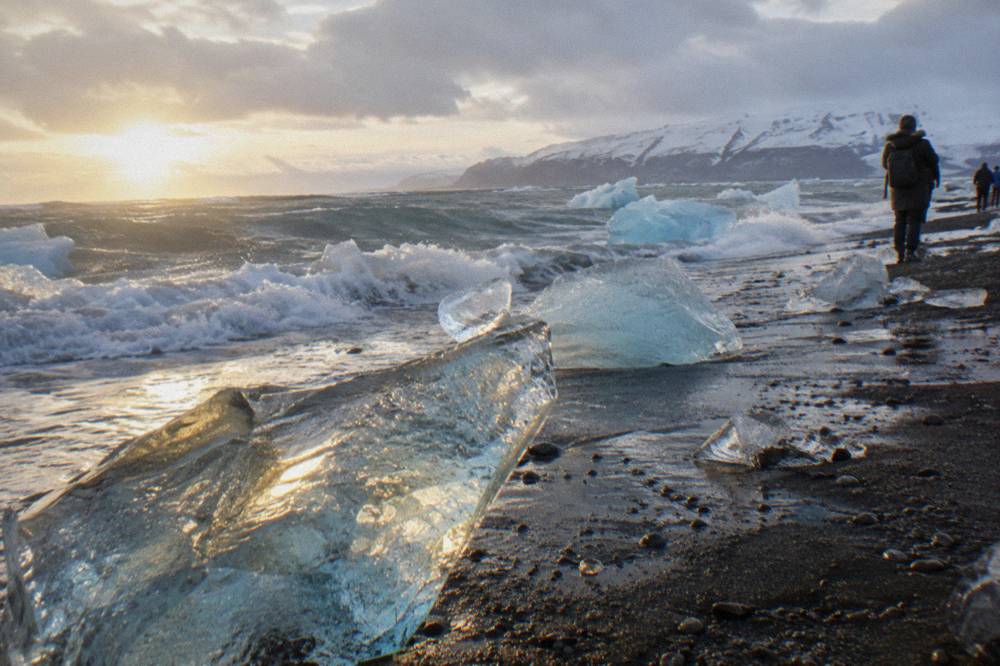
Diamond Beach sits about 500 m across Route 1 from the lagoon, and about half an hour is enough for a real visit, crossing under the bridge, walking the black sand and photographing the ice pieces. Photographers chasing specific light commonly give it an hour or more, often returning at a different time of day.
The crossing detail matters more than it sounds. The park is explicit: do not hike over the Route 1 bridge, walk under it, which is the designed crossing between the lagoon side and the beach side. Ignoring that turns a short stroll into an unnecessary hazard on a road bridge.
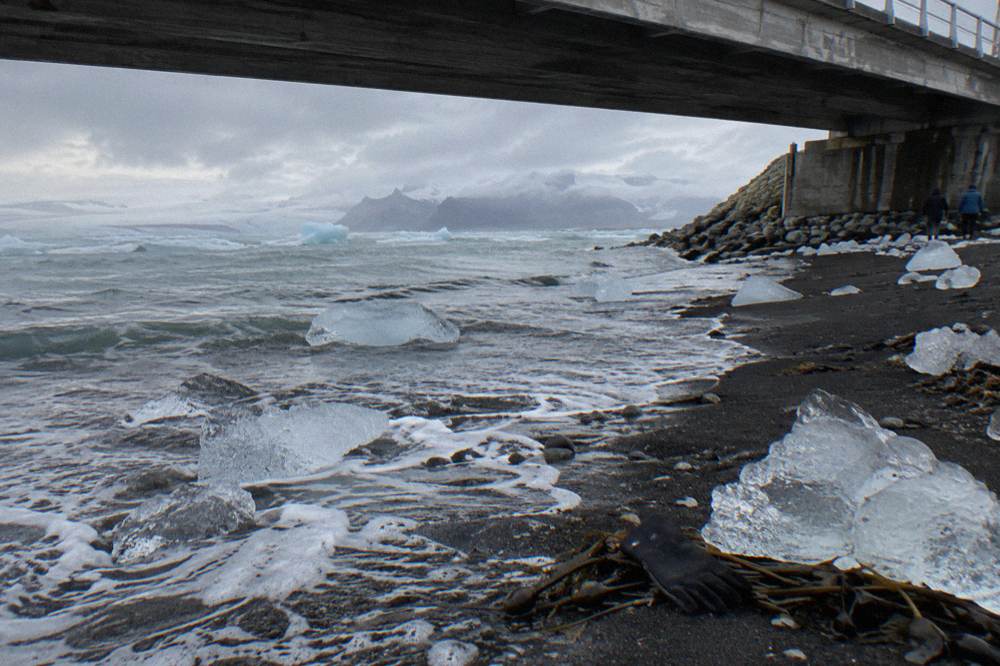
Safety on the sand is the other time-shaping factor. There is no Diamond Beach specific warning page, but the same sneaker-wave rule that applies on any open Atlantic black beach applies here, per Safetravel's black beach guidance: waves arrive without warning and can surge far above the normal line. When hazard levels are orange, visitors are advised to stay at least 25 m from the waterline, and at red the beach closes with only the viewing area open. In practice this means the visit is spent scanning the sea as much as the ice, and standing between stranded ice and the surf line is best avoided entirely, as consistent visitor guidance suggests.
| Activity at the lagoon area | Published duration | Extra time to allow |
|---|---|---|
| Lagoon viewpoint and shore walk | Not fixed | 30 min to 1 hour |
| Diamond Beach visit | Not fixed | About 30 min, longer for photography |
| Amphibian boat | 30 to 40 min on water | About 1 hour with boarding |
| Zodiac boat | 1 h 15 min | About 2 hours with check-in |
| Kayaking tour | 1.5 hours | 2 to 2.5 hours with gear-up |
| Ice cave tours from the lagoon | 2.5 to 3 hours | Half day including travel to cave |
| Glacier hikes | 3 to 4.5 hours | Half day; 6 hours for the remote-cave hike |
The beach and the lagoon pair naturally because the same parking visit covers both. The regional parking fee for a passenger car is 1,110 ISK, valid until midnight on the day paid, collected by licence-plate photo and payable at machines or via the Parka app. The park's price list does not state whether one payment covers the separate Diamond Beach lots, so plan on paying at the machine and checking on site.
How Does Daylight Change The Timing?
At Hofn, the nearest town with daylight data, daylight runs just 4 hours 21 minutes on 1 January, rises past 10 hours by 1 March, peaks at 21 hours 14 minutes on 21 June, and falls back to 4 hours 59 minutes by 1 December, so the usable visiting window swings from an essentially full summer day to a narrow midwinter slot.
The lagoon sits within minutes of those Hofn figures. In deep winter, that 4-to-5-hour window, roughly from about 11:00 to 15:00 at the solstice, is the entire window for photography, boat-adjacent views and the beach walk, and anything else happens in the dark. In June, the sun sets at 23:39 on the 21st with no true midnight sun, which means near-continuous usable light and effectively no time pressure at all. These figures come from timeanddate.com's sun tables for Hofn.
Season also feeds back into the activity list. Boats run May to October, sometimes into November; ice caves run roughly October to April. That leaves roughly October as the shoulder where boats wind down and caves open, and summer as boats-plus-hikes season with no natural caves. A visit planned for a specific activity needs to check both the calendar and the clock.
| Month | Daylight at Hofn on the 1st | What it means for the visit |
|---|---|---|
| January | 4 h 21 min | Midday-only window; ice caves in season |
| March | 10 h 10 min | Comfortable full day |
| June | 20 h 11 min | Near-endless light; boats and hikes, no caves |
| August | 17 h 59 min | Long days; peak amphibian frequency ends 31 Aug |
| October | 11 h 20 min | Caves opening, boats closing; weather less stable |
| December | 4 h 59 min | Shortest days; cave tours still run, book midday |
Can You Fit Everything Into One Day?
No single day from Reykjavik fits a boat ride, an ice cave tour and Diamond Beach together; a day trip covers the lagoon viewpoint and the beach, while ice caves and glacier activities require either a lagoon-start tour on a separate day or an overnight. Travellers who want two or more activities should plan two days. Before locking in that second day, the honest assessment of whether Diamond Beach justifies the drive can help you decide how much time the beach itself deserves.
The arithmetic is unforgiving. A 14-hour day trip spends roughly 9 to 10 of those hours on the bus and at intermediate stops, leaving a meaningful but bounded block at the lagoon itself, and stop durations on those itineraries are set by the operator, not chosen by the traveller. Meanwhile several ice cave and glacier products meet at the lagoon car park with pickup not mentioned, while the multi-day tours include pickup, so check the booking page.
Two clean patterns emerge from the covered options. Pattern one: a single booked day trip for the overview, accepting the schedule. Pattern two: two days with a small-group tour, either the glacier-hike version from $639 or the blue ice cave version from $689, both including pickup, breakfast and a guide, and both rated 4.9 or better across strong review pools. Pattern two is the only one that reliably combines a glacier activity with unhurried lagoon time.
For self-drivers the honest summary is: one hour is enough to see Jokulsarlon, half a day is enough to see it well with the beach and a boat, and a full day plus an overnight is what it takes to add the ice. The site behind this article, Jokulsarlon Glacier Lagoon Tours, breaks each activity into its own guide if one piece of the plan needs more detail. And whatever the plan, conditions on the day decide the final version of it, which is the lagoon's real lesson in time.
Common Questions About Time At Jokulsarlon
How Long Do You Need At Jokulsarlon Glacier Lagoon?
One to two hours covers the lagoon viewpoint, a shore walk and a quick Diamond Beach crossing. Add about an hour for an amphibian boat, up to two for a zodiac, and 2.5 to 3 hours for an ice cave tour that starts at the lagoon car park.
How Long Is The Amphibian Boat Ride?
The amphibian boat runs 30 to 40 minutes on the water, operated by the lagoon operator directly from May to October, sometimes into November. With boarding, allow about an hour.
Can You Do Jokulsarlon As A Day Trip From Reykjavik?
Yes. The covered day trips list 14 to 15 hours door to door, because the drive is about 370 km each way. The trip covers the lagoon and Diamond Beach; it does not leave room for a separate ice cave tour.
How Long Do Ice Cave Tours From The Lagoon Take?
Between 2.5 and 3 hours from the meeting point at the lagoon, including transport to the cave and guided time inside. Entry is conditions permitting, and the natural cave season runs roughly October to April.
How Much Time Do You Need At Diamond Beach?
About half an hour for a real visit, crossing under the Route 1 bridge, walking the sand and photographing the ice. Allow more when waves are high, since Safetravel advises keeping at least 25 m from the waterline at orange hazard level.
Is One Hour At The Lagoon Enough?
One hour is enough for the main viewpoint and a short shore walk in good conditions. It is not enough for a boat ride, and it leaves Diamond Beach rushed, so treat it as the floor rather than the plan.