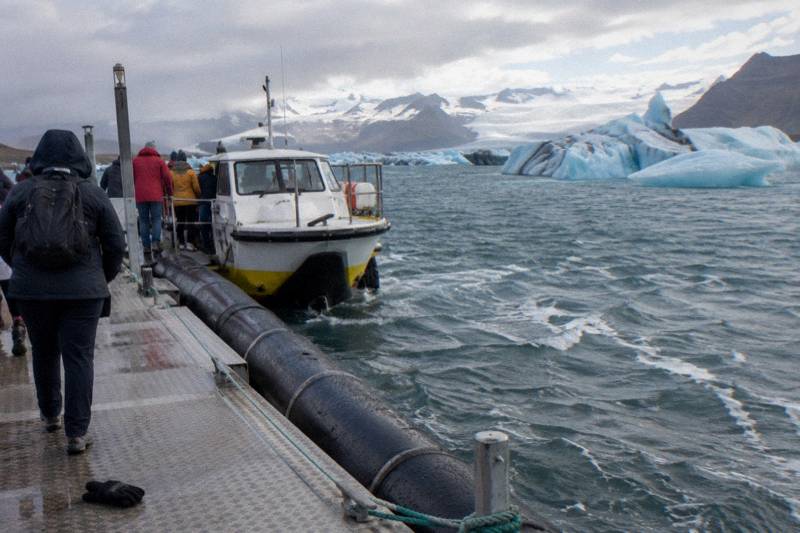
Is Diamond Beach Worth It?
An honest look at Diamond Beach near Jokulsarlon: what you actually see, the safety rules, when to go, what it costs, and whether a day trip from Reykjavik is worth the long drive.
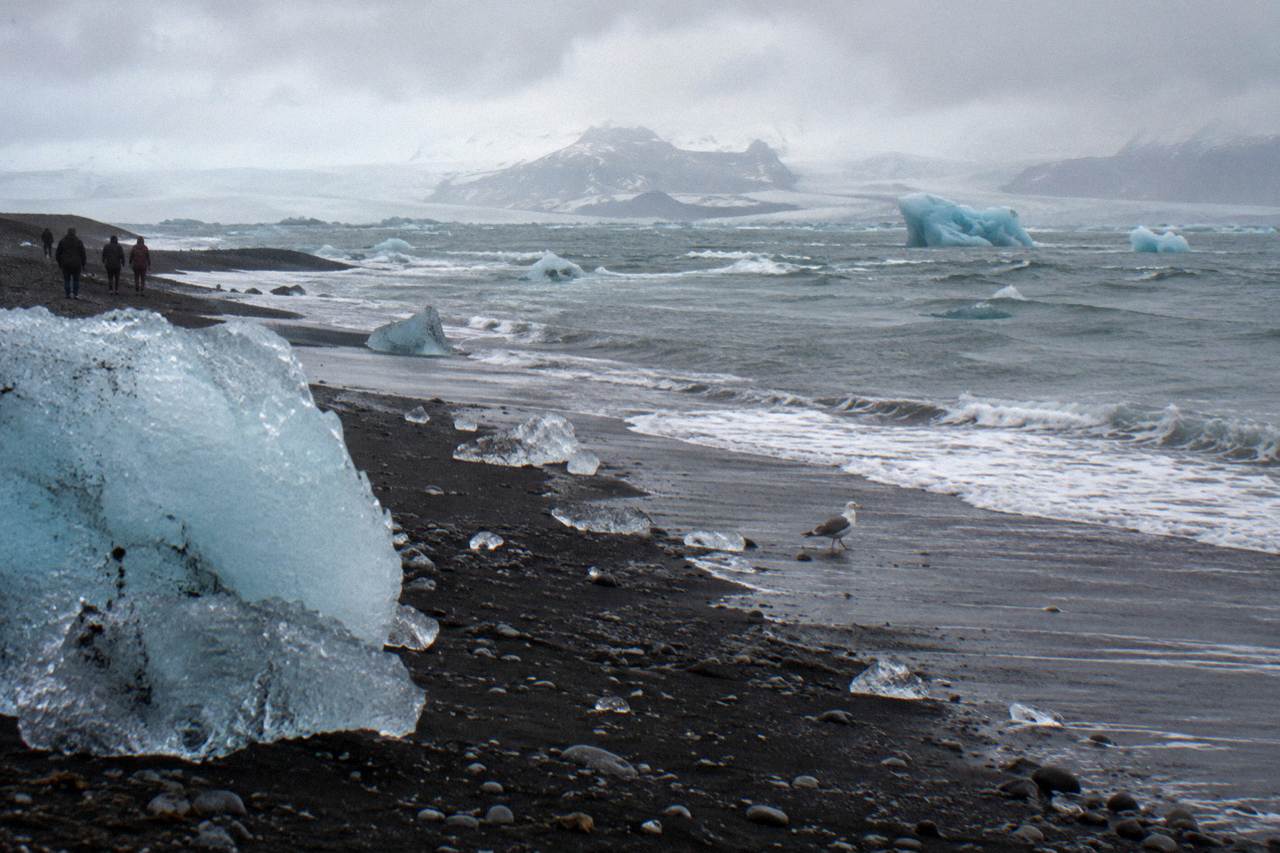
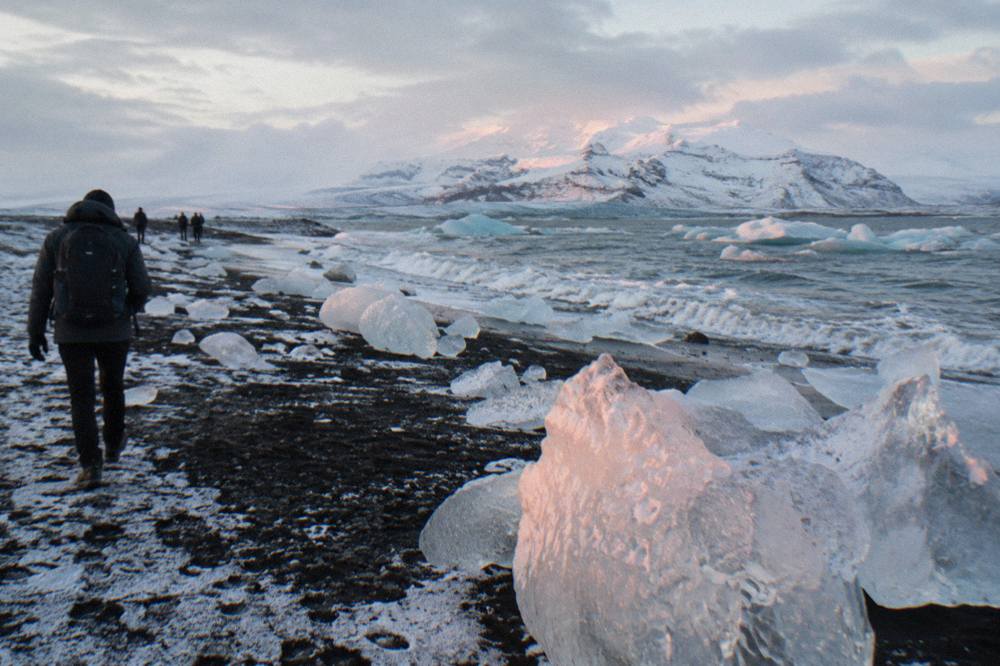
Diamond Beach is the strip of black volcanic sand where icebergs from Jökulsárlón wash ashore after drifting down the short outlet river and out into the Atlantic. Some of them sit on the sand like glass sculptures, glowing against the dark grains when the light is low. The honest answer to whether it is worth it involves three variables nobody controls: how much ice is on the sand that day, how the ocean is behaving, and how much daylight you have to see either. This page works through each of them, plus the costs, the drive and the tour options, so the decision rests on facts rather than the brochures. Since Diamond Beach sits at the far end of the route, the honest verdict on whether Iceland's south coast is worth it covers the waterfalls, the glacier lagoon and everything in between.
Yes, for most travelers Diamond Beach is worth the stop, and often worth planning a full day around, since it lies only 500 m from Jökulsárlón across Route 1 and combines two of Iceland's most photographed sights in a single parking decision. Just remember that ice on the sand varies enormously, so treat it as a bonus to a lagoon visit rather than a guaranteed scene. For the practical side of a visit, the guide to Diamond Beach at Jökulsárlón covers sneaker-wave safety, tours that stop there, and what to budget for.
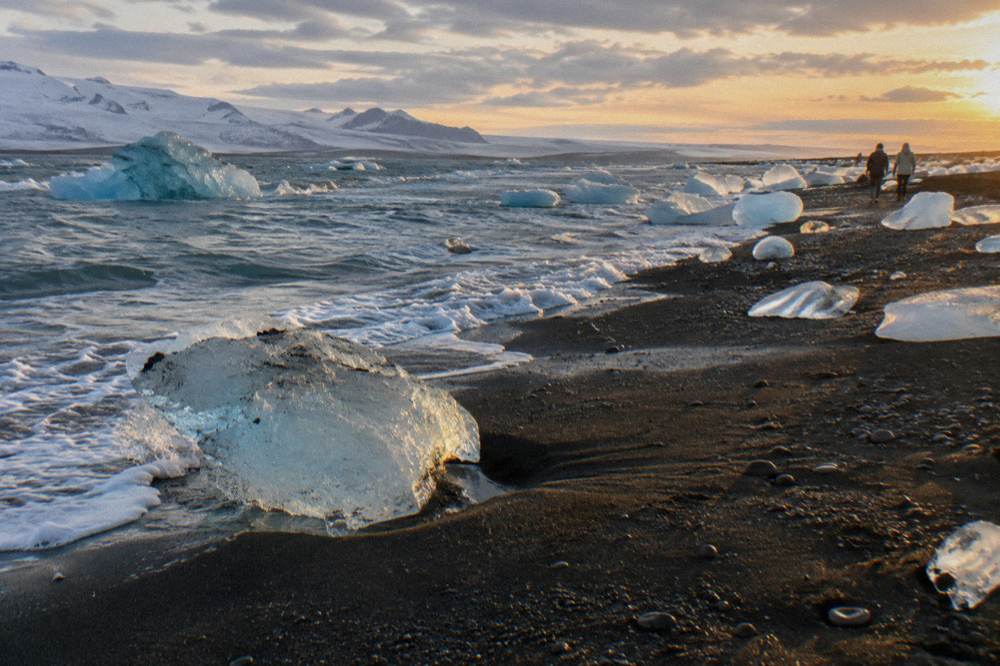
The case for the beach is scale and contrast. The ice that lands here has calved off Breiðamerkurjökull, drifted through the lagoon, and been tumbled by the surf into pieces that can range from fist-sized shards to blocks the size of a small car. On a good day, with low winter light or a golden summer evening, the scene is genuinely uncommon. There is no other place on the South Coast where glacier ice and black sand meet in this volume, this close to a paved road.
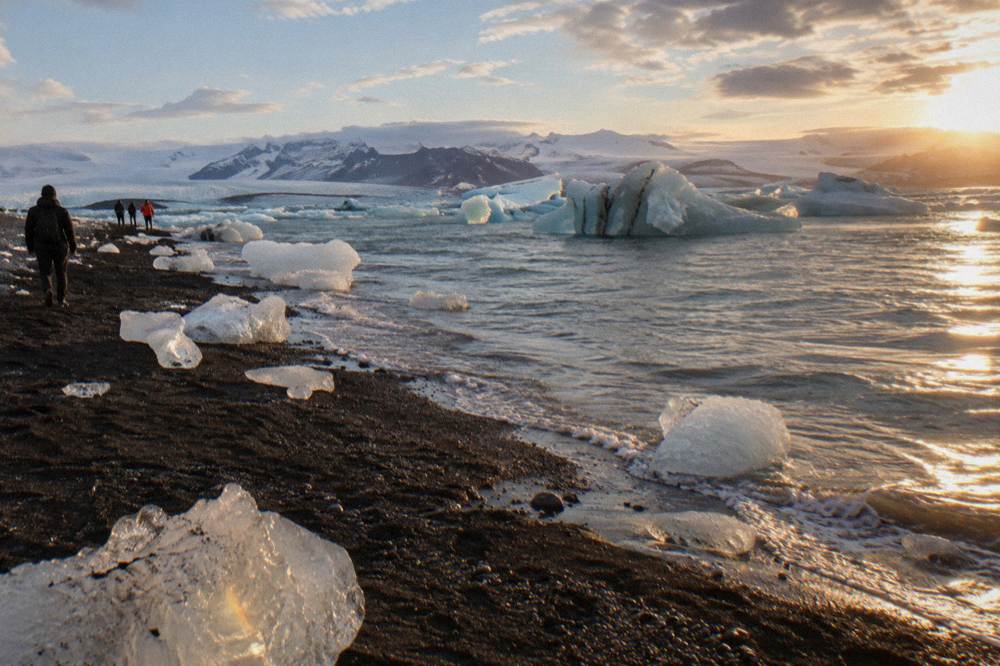
The case against it is honesty about variance. The operator of the lagoon boats is explicit that ice conditions change daily depending on glacier activity, weather, tides and ocean currents, and that icebergs are never guaranteed. The same applies to the beach. Travelers who arrive expecting the cover-photo wall of ice sometimes find a mostly empty shoreline, particularly after a storm has swept the sand clean or when the lagoon has been quiet for weeks. Anyone who visits with flexible expectations tends to leave happy.
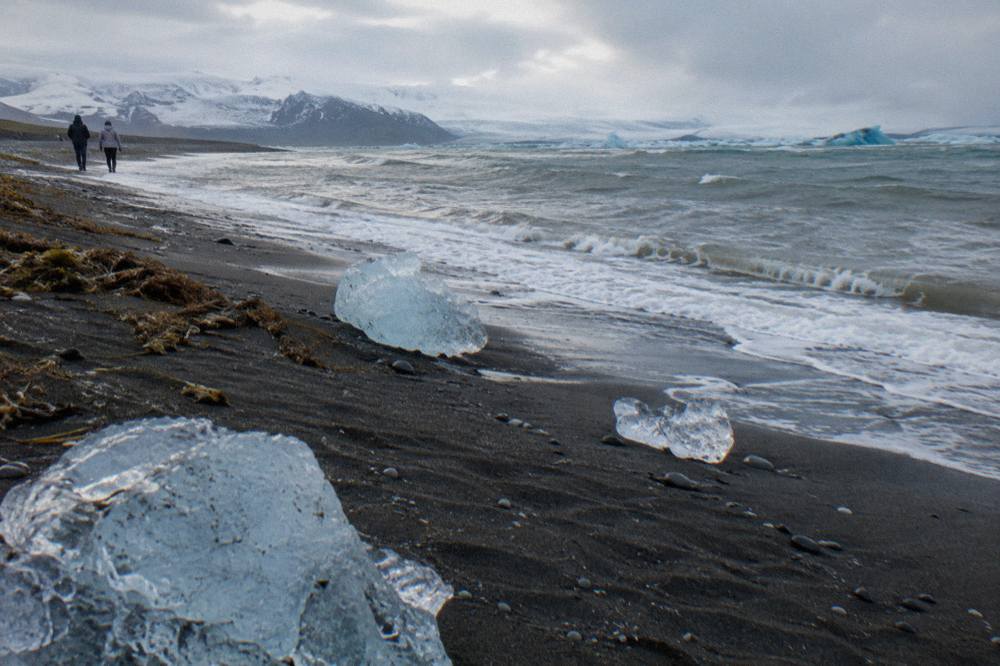
The practical verdict: if you are already driving Route 1 past the lagoon, the beach costs you ten minutes and is nearly always worth it. If you are deciding whether to commit a full day from Reykjavik, the pairing of lagoon plus beach is what justifies the journey, and that is exactly the shape of the classic day trip in this region. Since the lagoon is the anchor of that pairing, the Jokulsarlon Glacier Lagoon guide covers the parking costs and seasonal limits worth knowing in advance.
How Far Is Diamond Beach From The Lagoon?
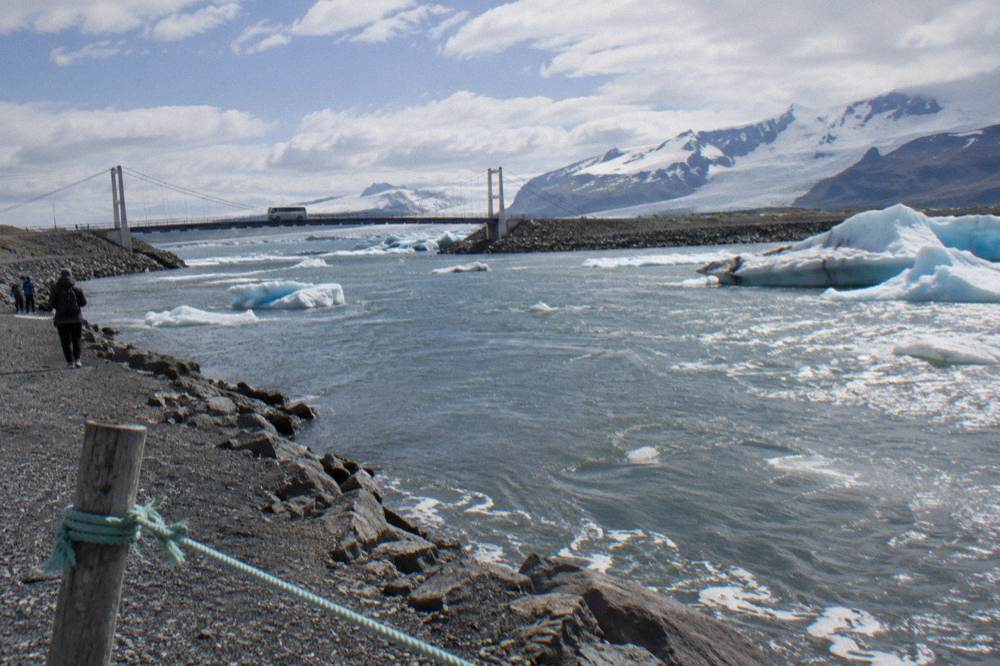
The beach lies about 500 m from Jökulsárlón, directly across Route 1, and the park instructs visitors to reach it by walking under the Route 1 bridge, not over it. From the main lagoon car park the whole crossing takes most people under fifteen minutes, which makes this one of the shortest detours with the biggest payoff on the entire ring road.
The bridge matters more than visitors expect. The Route 1 crossing over the Jökulsá outlet river is a working road bridge with no pedestrian walkway, and the national park's own page for Fellsfjara, the beach side of the river, states plainly: do not hike over the bridge, it is possible to hike under it. Walking under keeps you off the traffic lanes of the single road that links the whole region. The under-bridge route is also the more atmospheric option, passing close to the river where icebergs drift seaward.
Parking is straightforward but not free. The main car parks sit inside Vatnajökull National Park, which charges a regional parking fee collected by licence-plate photo, payable at machines in the car parks or through the Parka app. A passenger car of up to 5 seats pays 1,110 ISK, valid until midnight on the day paid with free in and out that day, and half price if you visited another fee-based Vatnajökull service area the same date. The pricelist covers the lagoon side; whether one payment also covers the beach-side lots is not mentioned on the official price page, so budget for a second payment and treat anything less as a bonus.
| Vehicle category | Fee |
|---|---|
| Passenger car, up to 5 seats | 1,110 ISK |
| 6 to 9 seats | 1,440 ISK |
| Bus, 10 to 21 seats | 2,770 ISK |
| Bus, 22 to 32 seats | 5,200 ISK |
| Bus, 33 or more seats | 9,400 ISK |
| Motorcycle | 450 ISK |
Rangers supervise Jökulsárlón, Fellsfjara and Fjallsárlón every day of the year, according to the park's page for the area, and there are flush toilets at the lagoon. The cafe at the lagoon is open year-round except 24 to 26 December and 31 December to 2 January. Camping at the lagoon itself is not permitted. For a fuller walk through the shore itself, the Diamond Beach visitor guide covers the practical detail, and if a boat ride is on your list, the Jokulsarlon boat tour overview explains how the operator sells those seats directly.
Should you combine the beach with the lagoon on one booking?
The beach and lagoon pair naturally on a single day trip from Reykjavik.
Free cancellation up to 24 hours before departure applies, so plans can change.
What Will You Actually See On Diamond Beach?
Expect black sand, breaking Atlantic surf, and a shifting scatter of glacial ice that ranges from a few shards to hundreds of chunks, with the amount determined by calving activity, tides and wind in the days before your visit. Seals are frequently seen resting on icebergs or swimming near the lagoon in summer, and gather at the lagoon mouth in winter, but sightings are a possibility, never a promise.
The ice itself deserves a word. The famous glassy blue pieces are ancient, compressed ice from which most air has been squeezed out, which is why it reads blue against the black sand. How much of it is on the beach at any moment is not something any operator can tell you in advance. The lagoon's icebergs drift down the roughly 500 m outlet river, meet the surf, and either ground on the sand or continue out to sea. A calm week after heavy calving can stack the beach with ice. A storm can remove all of it overnight.
Photography conditions swing just as hard. Midwinter around the solstice gives roughly four hours of daylight at this latitude, with low, warm light that flatters ice, but very little margin for error. June gives more than 20 hours, with a sun that sets near midnight and returns before the sky fully darkens. Overcast days, which are common on this coast, mute the blue of the ice but can still produce dramatic long-exposure work at the waterline. So is Diamond Beach worth it? Go for the ice, stay for the surprise.
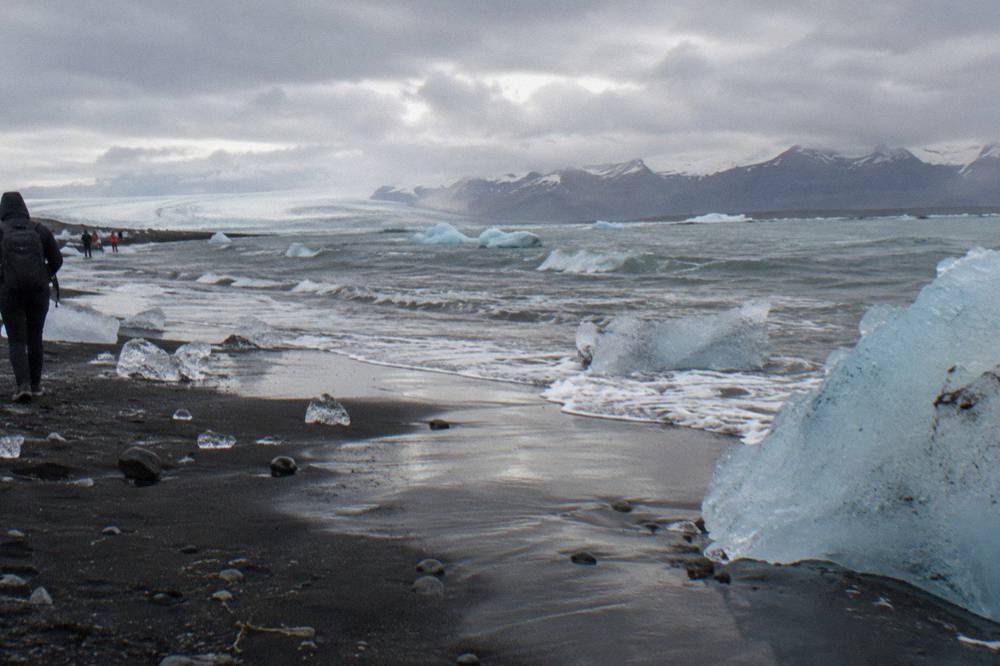
One phenomenon first-time visitors often miss: great skuas nest on the Breiðamerkursandur outwash plain behind the beach, and reindeer herds cross the road on the eastern side of the region in winter, per the park's own pages. Neither is a reason to come, but both are reasons to keep your eyes up while walking the sand rather than locked on the ice. The park page describes the area as a nesting ground for great skua, red-throated diver, greylag and barnacle goose.
For readers willing to spend longer in the region, a two-day format spreads the drive out and adds glacier time. The 2-Day Glacier Hike, Small Group tour runs two days from Reykjavik with pickup and drop-off, breakfast included, glacier gear and guide, rated 5.0 across 206 reviews, from $639 per person, with the lagoon boat ride available as an optional paid add-on at booking.
Is Diamond Beach Dangerous?
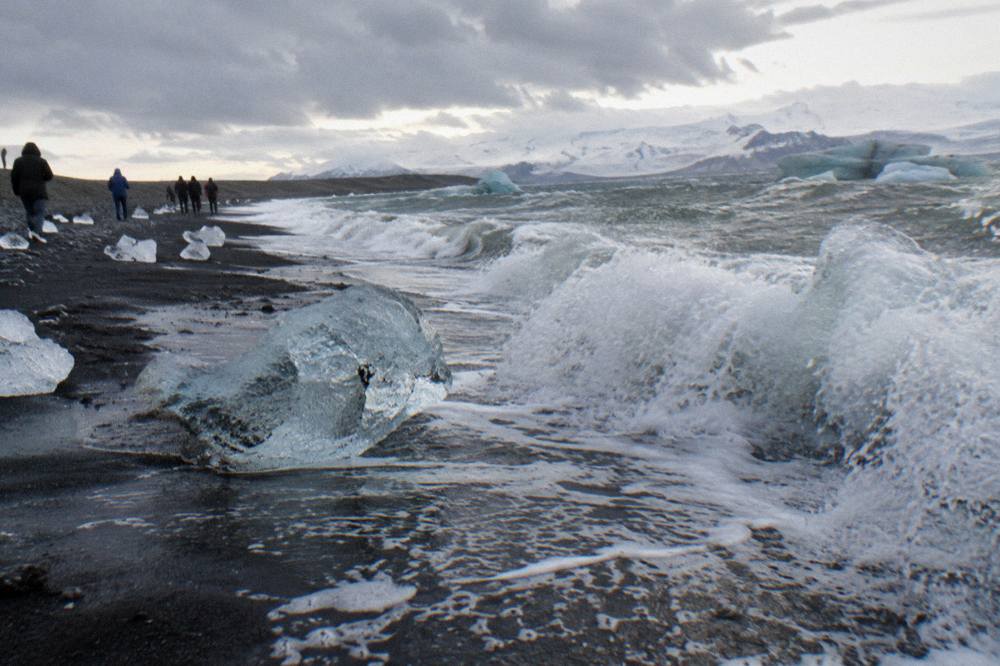
Yes, in a specific and avoidable way: Diamond Beach is an open Atlantic black beach, and the main hazard is the sneaker wave, a surge that arrives without warning, runs far up the sand, and can sweep an adult off their feet. Safetravel rates conditions by colour; at orange, visitors should stay at least 25 m from the waterline, and at red the beach is closed with only the viewing area open.
Safetravel has no page specific to Diamond Beach, so the honest framing is that the same rule applies on any open Atlantic black beach, including this one. The yellow level means moderate hazard, orange means considerable hazard, and red means severe. The numbers are not decoration: sneaker waves can surge far up these black beaches with little warning, which is why you never turn your back on the surf. Check the safetravel black beach safety levels before you walk down.
| Safetravel level | Meaning | What to do |
|---|---|---|
| Yellow | Moderate hazard | Keep distance, never turn your back on the surf |
| Orange | Considerable hazard | Stay at least 25 m from the sea |
| Red | Severe hazard | Beach closed, viewing area only |
Two further pieces of guidance round out the picture. Advice for visitors is consistent: do not stand or climb between grounded ice and the sea, because a wave that lifts a berg can push it toward you. And the ice itself is heavy and sharp: touching it is part of the fun, climbing on it near the waterline is not. The park's guidance for reaching the beach, walking under rather than over the bridge, is covered earlier on this page.
The ocean is not the only dynamic risk. The Route 1 bridge over the outlet river is threatened by coastal erosion in the long term, and the road beside the lagoon was closed overnight for roadworks on 27 to 28 September 2026, a past event that shows how quickly this single road can be interrupted. Weather forecasts sit at vedur.is, with live traffic at umferdin.is; the park itself recommends vedur.is for weather and vegagerdin.is and safetravel.is for roads. Emergency services are reached at 112.
When Is The Best Time To Visit Diamond Beach?
There is no single best month, because the two things visitors want, plentiful ice and safe, visible conditions, respond to different forces: calving and tides decide the ice, while daylight and road weather decide the experience. What can be stated is the daylight budget, measured at Höfn, the nearest town with daylight data, which runs from about 4 hours in deepest December to over 20 hours in late June, and that winter visits trade short days for low, photogenic light.
Daylight figures below are calculated for Höfn, which is within minutes of the lagoon. The pattern matters more than any single number: a January visit gives roughly four hours of usable light to fit both lagoon and beach, while a June visit gives an evening that never fully ends, with the sun setting near 23:39 on 21 June and no true midnight sun at this latitude.
| Month (1st of month) | Daylight at Höfn |
|---|---|
| January | 4h21 |
| February | 7h06 |
| March | 10h10 |
| April | 13h33 |
| May | 16h53 |
| June (21st) | 21h14 |
| July | 20h55 |
| August | 17h59 |
| September | 14h34 |
| October | 11h20 |
| November | 7h58 |
| December | 4h59 |
Weather-wise, the nearest long-term station with published normals is Kirkjubæjarklaustur, about 200 km west of the lagoon, and the coast near the beach differs, so treat these as regional texture rather than a forecast. Daily means there run from around 0.0 °C in February to 11.6 °C in July, and precipitation falls on roughly half the days of the year, about 1,700 mm annually. Winter driving rules on the south coast are strict and sensible: headlights on front and rear around the clock, a rental car with winter tyres, and limited daylight planned for. Anyone self-driving in the colder half of the year should read the safetravel winter driving guidance before committing to the long drive each way.
One seasonal rule that catches photographers out: recreational drones are banned at Jökulsárlón and Fellsfjara between 15 April and 15 July for the nesting birds, and outside that window they are permitted only before or after set hours that shift through the year. The full timetable is on the park's drone rules page. Anyone hoping for aerial footage of the ice should plan around it.
How Much Does It Cost To Visit Diamond Beach?
The beach itself has no admission price, and the only mandatory cost for a self-drive visitor is the regional parking fee of 1,110 ISK for a passenger car, while guided access runs from $96 per person for the shortest activity to over $1,000 for a three-day small-group itinerary, with the standard day trips from Reykjavik clustered between $211 and $234 per person.
That spread deserves a table. The figures below come from the current tour pages for this region, priced per person, and they show the real decision: how much of the south coast you want to buy.
| Option | Duration | From price | Rating |
|---|---|---|---|
| Skaftafell Glacier Hike (from the lagoon area) | 3 hours | $96 per person | 4.8 across 57 reviews |
| BusTravel Diamond Beach Day Trip | 14 hours | $211 per person | 4.7 across 4,069 reviews |
| 14 to 15 Hour Day Trip | 14 to 15 hours | $225 per person | 4.5 across 1,460 reviews |
| Gray Line 14.5-Hour South Coast | 14.5 hours | $234 per person | 4.5 across 1,582 reviews |
| Boat Ride Included, 14 Hours | 14 hours | $292 per person | 4.7 across 492 reviews |
| 2-Day Glacier Hike, Small Group | 2 days | $639 per person | 5.0 across 206 reviews |
| Private Full Day, 14 Hours | 14 hours | $2,054 per group, up to 5 | 5.0 across 20 reviews |
Two reading notes on that table. The lowest per-person price in the region, $96, belongs to a glacier hike that starts from the Jökulsárlón parking area, not from Reykjavik, so it suits travelers already overnighting in the southeast. And the private options are priced per group, not per person, which changes the maths completely for families of four or five.
Food is a separate line. Day trips from Reykjavik consistently exclude food and drinks, though the Gray Line itinerary notes scheduled stops at local restaurants and gas stations along the way. Multi-day tours include breakfast with the accommodation, while lunch and dinner stay with the traveler. The lagoon cafe on the spot is the fallback, open almost every day of the year.
Can You Visit Diamond Beach On A Day Trip From Reykjavik?
Yes, and it is the standard way most people see it: the drive from Reykjavik runs about 370 km each way on Route 1, a long day on the road even before stops, and most mainstream tours pair the beach with the lagoon and south coast waterfalls on one loop that runs 14 hours or more door to door. The most reviewed tour of this kind carries 4,069 reviews at 4.7, from $211 per person.
The pairing logic is worth stating plainly, because it answers the worth-it question for most readers. Nobody sane drives five hours each way for a beach walk. They drive it for the combination: Seljalandsfoss and Skógafoss on the way east, the lagoon, the beach, and, if booked, a boat ride among the icebergs. The tour that anchors this article's comparison, the BusTravel Diamond Beach Day Trip, runs 14 hours from Reykjavik with a guide included, food and drinks not included, and free cancellation up to 24 hours before. Its lagoon boat ride is an optional paid add-on selected at booking, not part of the base fare, and some day trips bundle the boat in instead. Read more in the Jokulsarlon tour from Reykjavik guide, or check availability on the tour page.
The near-identical alternatives differ at the margins. The Gray Line 14.5-Hour South Coast departs from the BSÍ Bus Terminal, lists the boat ride as explicitly not included, and runs from $234 per person. The 14 to 15 Hour Day Trip offers 36 drop-off locations and a pickup arrangement that depends on the option selected, from $225. For travelers who want the boat locked in rather than added, the Boat Ride Included, 14 Hours option at from $292 per person includes the lagoon ride in the fare, rated 4.7 across 492 reviews, meeting at Þórunnartún 1 in Reykjavík.
At the premium end, private versions of the same day exist for travelers who want the itinerary shaped around photography or pace. The Private Guided Diamond Beach Day runs from $1,912 per group for up to 3 people with pickup included, rated 5.0 across 58 reviews, while the Private Full Day, 14 Hours runs from $2,054 per group for up to 5.
One timing caution for day trippers in winter: with roughly 4 to 8 hours of daylight between November and January, a 14-hour tour spends most of its hours in the dark, and the beach stop may land in twilight or later. Ask the operator where in the running order the beach falls before booking a midwinter departure.
The Verdict On Diamond Beach
Yes, Diamond Beach is worth it for the overwhelming majority of visitors, provided you pair it with Jökulsárlón rather than treating it as a standalone promise. The beach is free to walk, lies directly across Route 1 from the lagoon and a short walk from the car park, and sets glacier ice against black sand for photographers when the timing lands.
The failure mode is expectation. Arrive believing in a guaranteed cathedral of blue ice and the beach may disappoint. Arrive as part of a lagoon day, dressed for wind, walking under the bridge, staying 25 m back from the sea when the surf advisory runs orange, and the odds tilt heavily in your favor. The southeast corner of Iceland earns its reputation one stop at a time, and this is the stop that costs the least and photographs the best per minute spent.
Common Questions About Diamond Beach
Is Diamond Beach Worth It?
For most visitors, yes. The beach lies about 500 m from Jökulsárlón, costs nothing to walk beyond the regional parking fee, and offers glacier ice on black sand found nowhere else this accessible. The amount of ice varies daily, so treat it as the companion piece to a lagoon visit rather than a guaranteed spectacle.
Is Diamond Beach Dangerous?
It can be. Sneaker waves on open Atlantic black beaches arrive without warning and can sweep an adult off their feet. Check the safetravel hazard level before walking the sand, stay at least 25 m from the waterline at the orange level, and never turn your back on the surf.
How Do You Get From The Lagoon To Diamond Beach?
Walk under the Route 1 bridge, not over it. The national park's page for Fellsfjara states this directly, and the crossing takes most people under fifteen minutes from the main lagoon car park.
Does Diamond Beach Cost Anything?
The beach has no admission price. Parking is the regional Vatnajökull National Park fee, 1,110 ISK for a passenger car of up to 5 seats, valid until midnight on the day paid, payable at machines or via the Parka app.
Is There Ice On The Beach All Year?
The quantity of ice varies enormously with calving activity, tides, wind and currents, and no operator can promise a full shoreline. Some days carry hundreds of chunks, others nearly bare sand.
Can You See Diamond Beach On A Day Trip From Reykjavik?
Yes. The drive is about 370 km each way, so tours run 14 hours or more and pair the beach with the lagoon and south coast waterfalls, from $211 per person with free cancellation up to 24 hours before.