Is Jokulsarlon Glacier Lagoon Worth It?
An honest look at whether Jokulsarlon Glacier Lagoon justifies the long drive from Reykjavik, with real tour prices, parking costs, seasonal limits and what to expect.
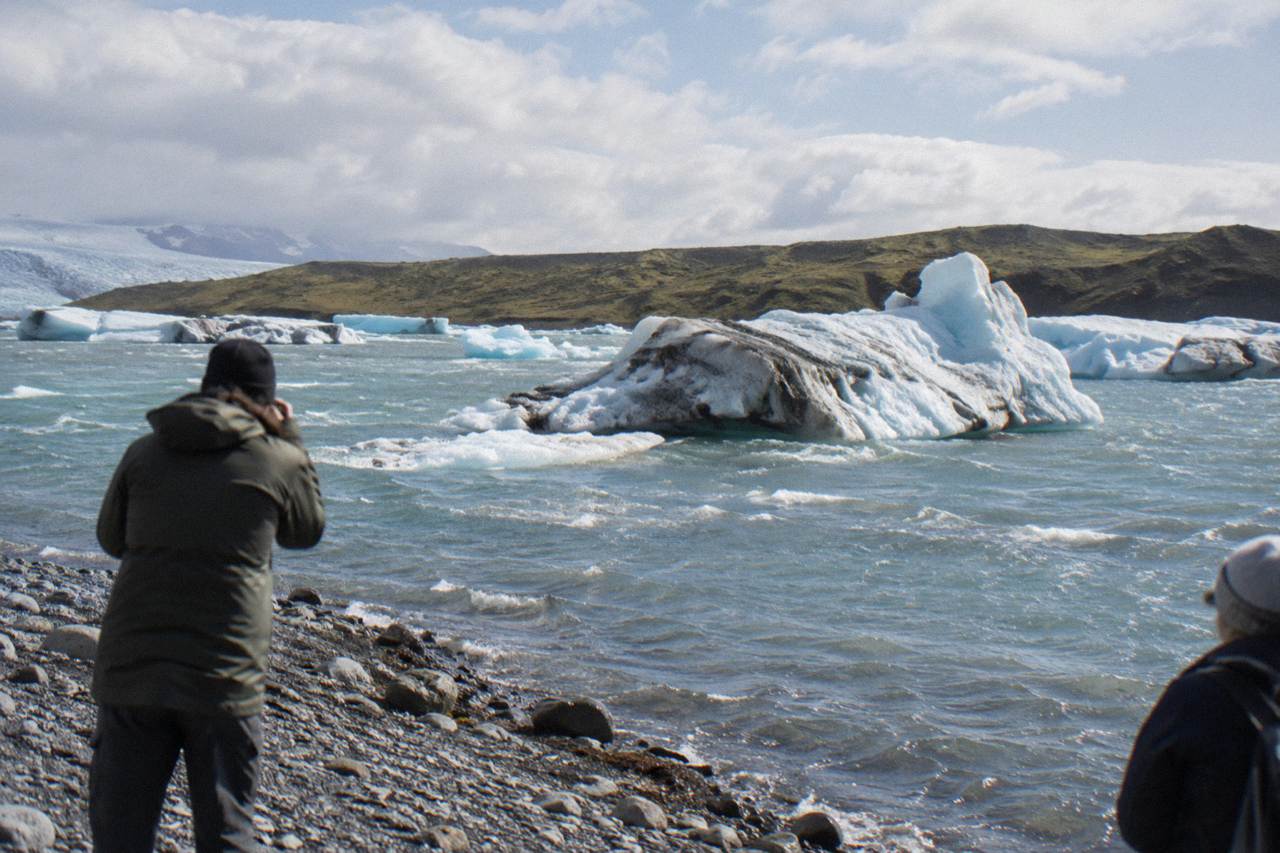
Yes, for most travellers the lagoon is worth the long day, because nothing else on the Ring Road puts a drifting iceberg lagoon, a calving glacier and an Atlantic black sand beach within a short walk of each other. The catch is the journey: about 370 km east of Reykjavik on Route 1, a long drive each way even without stops. Whether it is worth it depends on the drive and the season. Since the black sand beach sits just across the road, most visitors pair the two, and the guide to whether Diamond Beach is worth the stop covers what to expect before walking over.
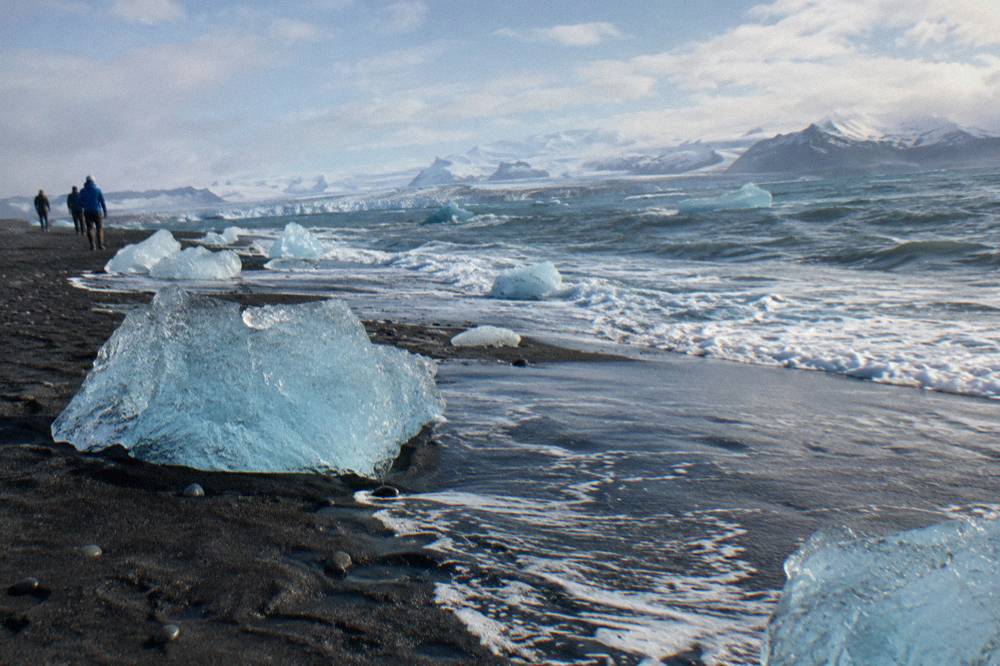
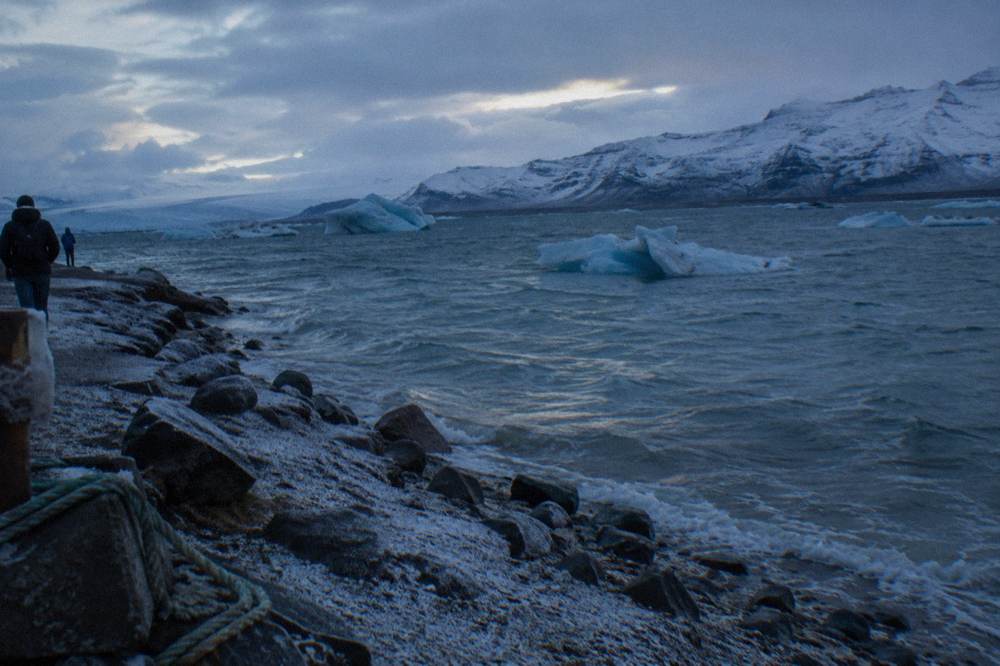
The case for the lagoon is not marketing gloss. Breidamerkurjokull, an outlet glacier of Vatnajokull, calves icebergs straight into the lagoon, and the lagoon sits at sea level, so sea water enters at high tide and the ice slowly drifts toward the outlet river and the ocean beyond. The icebergs that wash ashore just across the road are what people call Diamond Beach, about 500 m from the main lagoon car park, reached on foot under the Route 1 bridge rather than over it, as the national park's Fellsfjara page instructs. Two radically different landscapes, one short walk between them.
The case against is honest too. It is a very long day from Reykjavik, the boats on the lagoon only run in the warmer months, ice conditions change daily and icebergs are never guaranteed, and winter visits come with as little as four hours of daylight near the solstice. None of that makes the trip a bad idea, but it makes it a trip worth planning rather than one to improvise.
For travellers who would rather not drive 370 km themselves, guided day trips absorb the journey entirely.
What Are You Actually Paying To See?
You are paying to stand at the edge of a young, active lagoon filled with ice calved from a living glacier, and to watch that same ice either drift past seals or wash up as clear chunks on black sand. The lagoon covers roughly 25 km2 and reaches depths of up to about 284 m. The landscape here is genuinely fast-changing by glacial standards.
That is a dense paragraph of geography, but it explains why the place feels different from a standard scenic stop. This is not a static lake with a view. Ice is produced, drifts, melts and escapes continuously, and the park notes that the lagoons here only appeared from the 1930s as the glacier pulled back, with the state buying the Fell farm in 2017 to fold the area into Vatnajokull National Park, a UNESCO World Heritage site since 2019. What looks timeless is actually one of the faster-changing landscapes in Iceland.
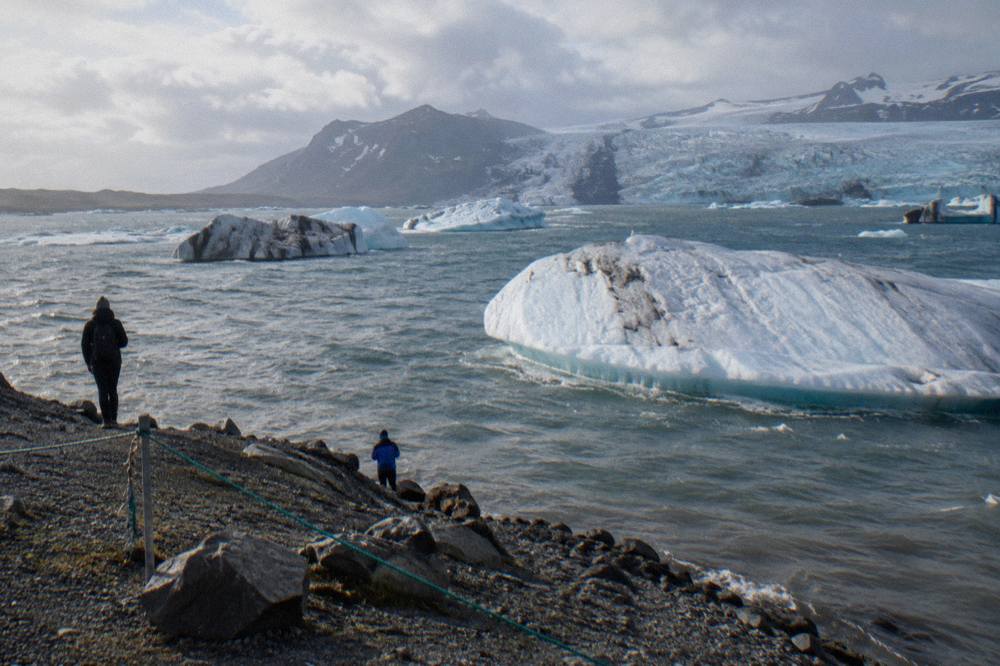
Wildlife adds to it. The operator's own frequently asked questions page notes that seals are frequently seen resting on icebergs or swimming in the lagoon, and the park describes large seal colonies where the rivers meet the sea. Seals are common, not promised. The same page is blunt about the ice itself: conditions change daily depending on glacier activity, weather, tides and ocean currents. Some days the lagoon is crowded with bergs, some days it is quieter, and no tour or operator can change that.
The surrounding sandur, Breidamerkursandur, is also a nesting ground for great skuas, red-throated divers and geese, and reindeer herds cross the road on the eastern side in winter, per the park's own area pages. In practice, there is plenty to look out for along the drive, which softens the length of the day.
What Does A Trip To The Lagoon Really Cost?
The lagoon itself has no admission price, but parking is a regional park fee of 1,110 ISK for a passenger car of up to 5 seats, collected by licence-plate photo and payable at machines or via the Parka app, valid until midnight on the day paid. A guided day trip from Reykjavik runs from $211 to $234 per person among the three most reviewed options. Food is extra on essentially every day trip.
Parking deserves a short explanation because it catches self-drivers off guard. The fee schedule from the park's official price list charges by vehicle size: 1,110 ISK for a car up to 5 seats, 1,440 ISK for 6 to 9 seats, 450 ISK for a motorcycle, and more for buses. The payment is tied to your number plate, is valid until midnight that day with free in and out of the area, and there is a 50 percent discount if you visited another fee-based Vatnajokull service area the same date. What the price list does not spell out is whether one payment covers both the lagoon lot and the Diamond Beach lots, so do not plan on it; budget the fee and check the signage on site.
The tour side of the ledger looks like this, using only the figures on the operators' booking pages.
| Tour | Duration | Price from | Rating | Boat ride |
|---|---|---|---|---|
| BusTravel Diamond Beach Day Trip | 14 hours | $211 per person | 4.7 across 4,069 reviews | Optional paid add-on |
| Gray Line 14.5-Hour South Coast | 14.5 hours | $234 per person | 4.5 across 1,582 reviews | Excluded, listed as not included |
| 14 to 15 Hour Day Trip | 14 to 15 hours | $225 per person | 4.5 across 1,460 reviews | Optional paid add-on |
| Boat Ride Included, 14 Hours | 14 hours | $292 per person | 4.7 across 492 reviews | Included |
| Reykjavik Excursions Boat Tour | 14 hours 30 minutes | $328 per person | 4.7 across 126 reviews | Included |
Two patterns stand out. First, the tours with a boat ride baked in cost more up front than the ones where it is an add-on or excluded, so whichever way you book, a seat on the water is paid for on top of the standard lagoon day trip. Buying the boat as an add-on on a cheaper tour, or on site, and buying a tour with the boat baked in can land in a similar place, so the decision is really about convenience and certainty rather than price. Second, food and drinks are not included on any of these day trips, so add a realistic budget for the restaurant and fuel stops along the way.
The most reviewed tour to the lagoon is the BusTravel Diamond Beach day trip, rated 4.7 across 4,069 reviews, from $211 per person, with free cancellation up to 24 hours before; pickup is not mentioned, so check the booking page. For a reader weighing whether the destination justifies the effort, that tour answers the biggest objection directly: it turns the long round trip into a seated, guided day. The tour's lagoon and Diamond Beach day trip page has the full details.
Is The Lagoon Worth It Without A Boat Ride?
Yes, and this is worth saying plainly: the viewing experience from shore is free beyond parking, and the lagoon's scale reads clearly from the walkways and the ridge trail. The amphibian and zodiac boats are seasonal, running May to October and sometimes into November, and they are sold directly by the lagoon operator rather than as standalone products on the booking platforms. No boat ride is needed for the place to make sense. Once you decide to skip the boats, the guide to free sights around Jokulsarlon and Diamond Beach lays out how to fill the rest of the day without spending beyond the parking fee.
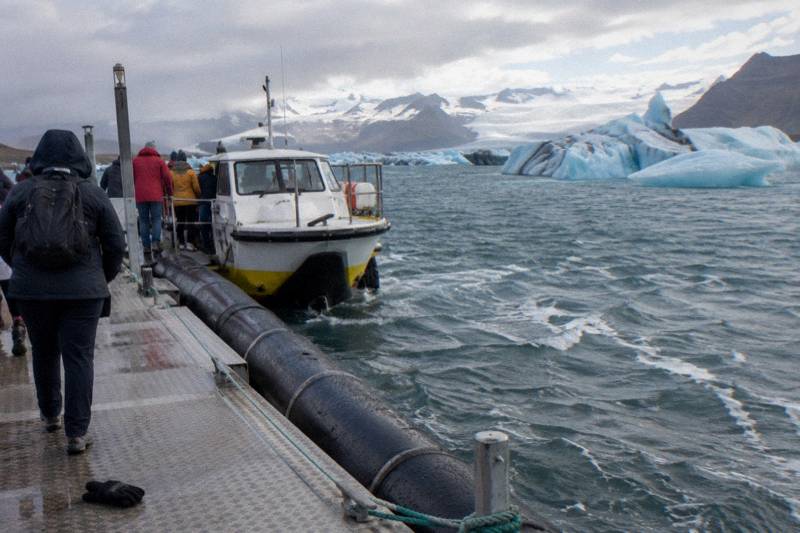
The boat question confuses a lot of first-time visitors, so here is the honest structure of it. There is no standalone Jokulsarlon boat tour sold on the booking platforms this site covers. The amphibian and zodiac rides are operated by the lagoon company itself, from the lagoon shore, and among the guided day trips covered here, only two include a boat ride in the base price, two list it as an optional paid add-on chosen at booking, and one, the Gray Line 14.5-hour tour, lists the lagoon boat tour explicitly as not included.
If the boat matters to you, the cleanest paths are either a day trip that marks it as included or a cheaper day trip plus the operator's own ticket bought at the lagoon. The operator's terms for direct bookings allow a full refund 24 hours or more ahead, 50 percent from 23 hours to 2 hours before, and a rebook or full refund if they cancel for weather. Children on zodiacs must be at least 130 cm tall, check-in is 30 minutes before departure, and flotation suits are supplied. Zodiacs run about 1 hour 15 minutes, amphibians 30 to 40 minutes. After the season ends, the operator lists no winter boat tours on the lagoon, so a November-to-April visit is a shore visit, full stop.
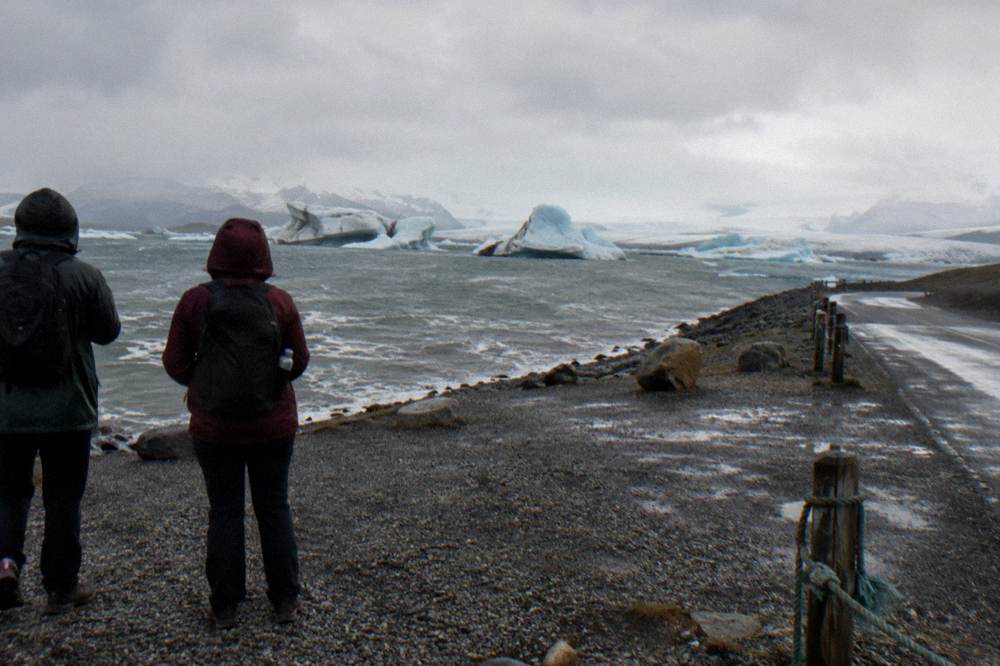
A shore-only visit still has plenty to hold it up. The park's trail network includes the short walk from the main lot north to the Helguholl ridge, trails along the eastern side of Fellsfjara, and a 15 km route between Fjallsarlon and Jokulsarlon for anyone with time and energy. Flush toilets sit at the lagoon, the cafe opens year-round except 24 to 26 December and 31 December to 2 January, and rangers supervise the area every day of the year. For more on the boat decision, the site's guides to the zodiac versus amphibian choice and the boat tour season go deeper.
Do You Need More Than A Few Hours There?
Most visitors spend between one and three hours across the lagoon and Diamond Beach, and that is usually enough for the shore experience in good weather. The case for longer is real but specific: ice cave tours in winter, a glacier hike, kayaking, or spreading the trip over two days so the drive is halved and you see the lagoon in evening or morning light instead of at peak crowding.
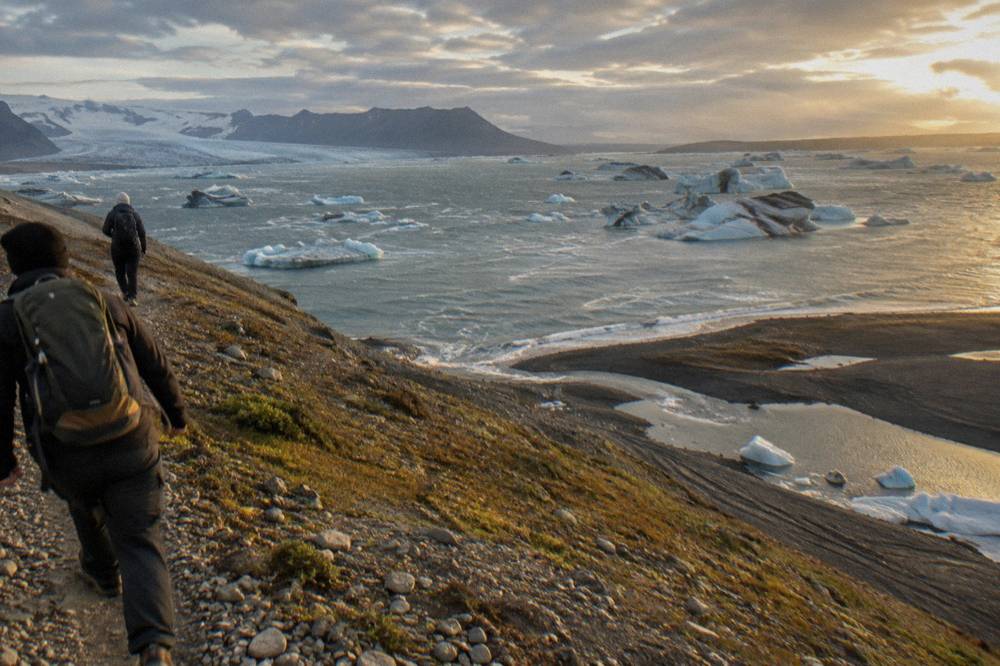
The standard day trip math is unforgiving. Fourteen hours total, the bulk of them on the bus, and a stop at the lagoon that the itinerary measures in a chunk of an afternoon. That is enough to walk the shore, cross under the bridge to Diamond Beach, and take photos, but it does not leave room for much else, and the cafe stop competes with the ice.
Travellers who want the lagoon as a destination rather than a stop have two realistic upgrades. The first is to sleep near the lagoon, in Hofn or the farms around it, and add an activity that starts at the lagoon car park. The kayaking tour, 1.5 hours from $155 per person, rated 4.7 across 532 reviews, puts you on the water at glacier level with a guide and gear included, though you must get yourself to the lagoon parking lot, a long way from Reykjavik, since pickup is not mentioned. It is a different register of experience from watching from the bank.
The second upgrade is the two-day structure. The 2-day small group tour with the blue ice cave, rated 4.9 across 795 reviews and from $689 per person, includes breakfast, an ice cave visit when conditions allow, and the lagoon, with lunch and dinner bought along the way; pickup, a glacier hike and gear are not mentioned, so check the booking page. Two people paying for a day trip each can end up spending a sum not far off a small-group tour price, and the payoff is time: you stand at the lagoon when the day buses have gone.
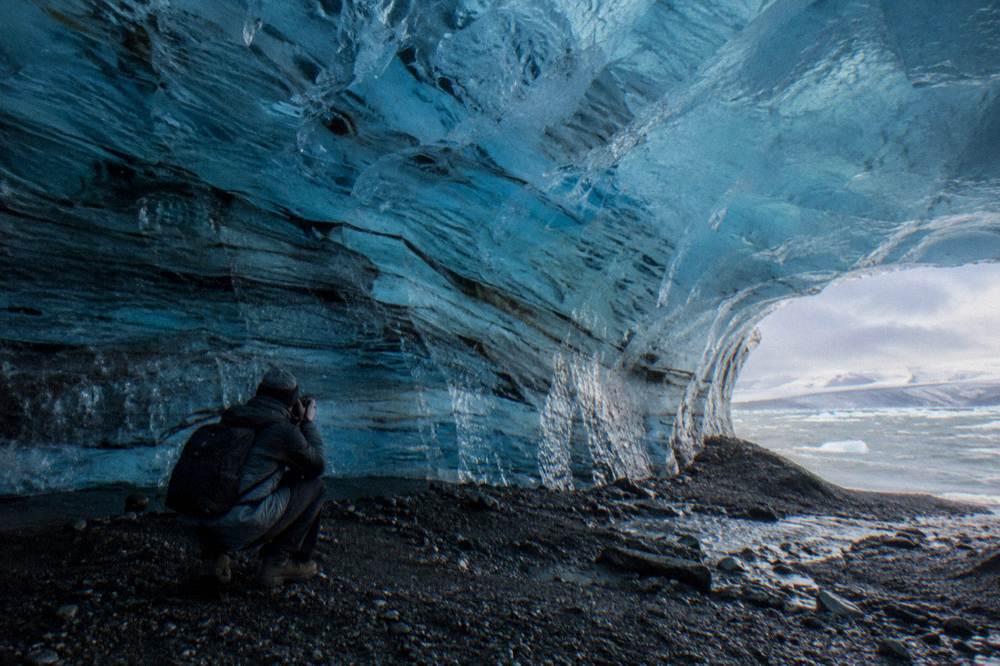
Winter changes the calculus again. Ice cave season runs roughly October to April, conditions permitting, and the tours that run from the lagoon car park, such as the 3-hour Blue Ice Cave tour from $195 per person, rated 4.6 across 973 reviews, or the Original Ice Cave tour from $176, rated 4.5 across 1,238 reviews, bundle a super-jeep approach with a guided cave entry. Entry is never promised: weather and glacier conditions can close a cave on short notice, and operators may switch caves or cancel the trip. After the August 2024 fatal collapse on Breidamerkurjokull, the park imposed stricter operator rules, including daily risk assessments by lead guides and professional oversight. Iceland Review reported. Summer visits have no ice cave equivalent: natural ice cave tours inside the national park are not run in summer following that accident, so do not plan a July cave trip to this glacier.
When Is The Lagoon Not Worth It?
The honest weak spots are three: a winter day trip that arrives with four to five hours of daylight and a real chance of weather closing the roads; a tight schedule that cannot absorb a 14-hour day; and a visitor who expects guaranteed icebergs, blue caves or seals, none of which any operator can promise. If any of those describe your trip, adjust the plan rather than cancel it.
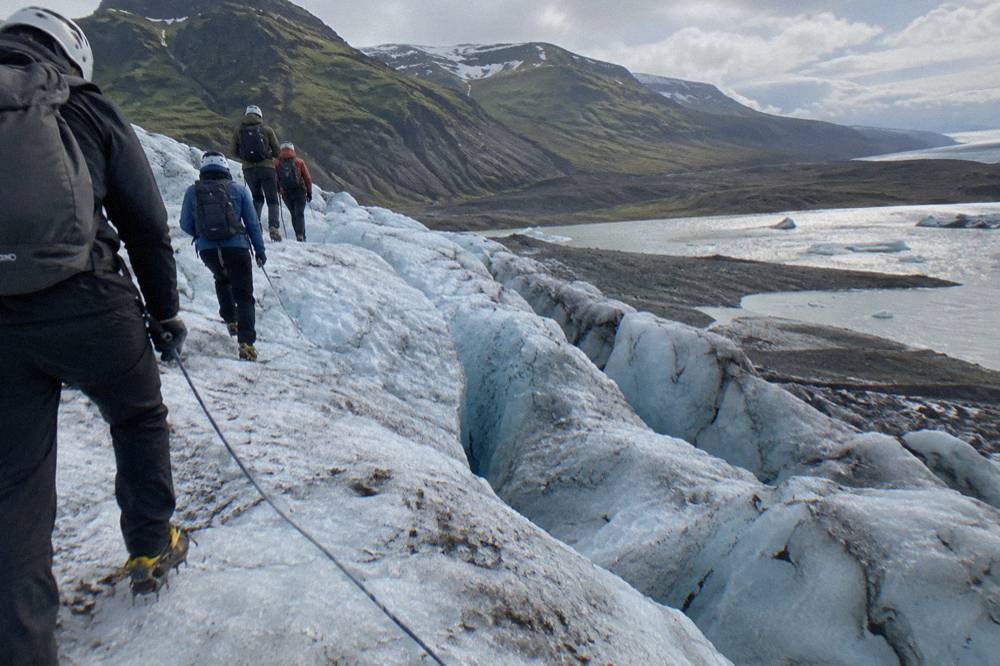
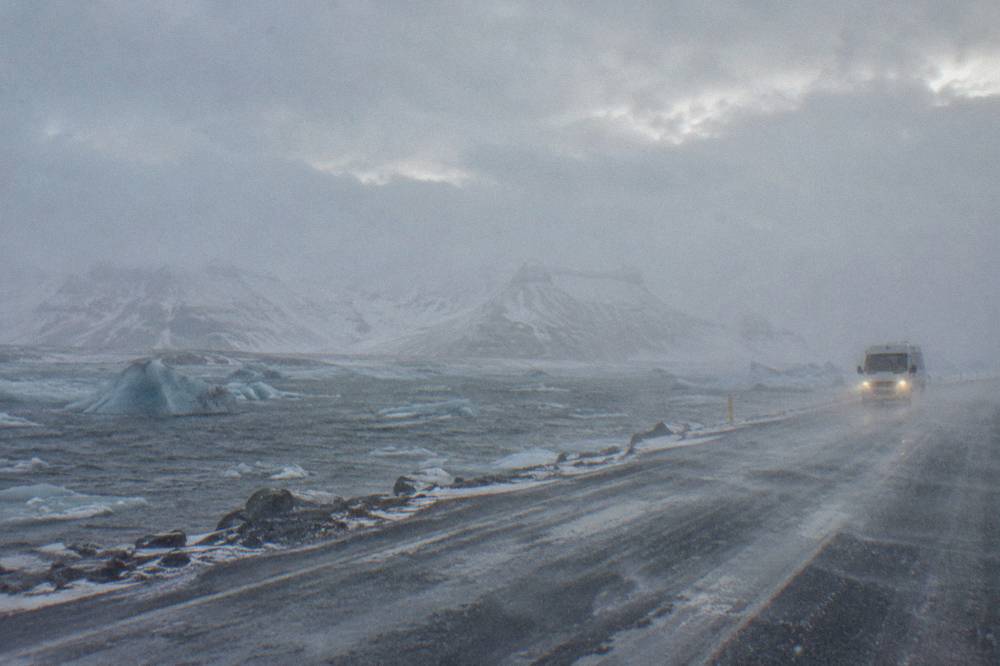
Winter is the sharpest version of this. Daylight at Hofn, the nearest town with daylight data and within minutes of the lagoon's own times, runs 7 hours 58 minutes on 1 November and shrinks to 4 hours 3 minutes on 21 December, with sunrise near 11:00 and sunset at 15:00, per timeanddate.com. Iceland stays on UTC+0 all year with no daylight saving. A 14-hour day trip in that light spends most of its hours in the dark, and the road conditions along the south coast in winter demand respect: Safetravel's winter driving guidance requires lights on front and rear around the clock, a rental car with winter tyres, and a check of road conditions before setting out. The lagoon's side of the Ring Road has already seen a full overnight closure for roadworks in late September 2026, with no detour, which is a reminder that this is a working road corridor, not a parkway.
| Date | Daylight at Hofn | Note for the lagoon |
|---|---|---|
| 1 January | 4h21 | Shortest-weather window, ice cave season |
| 1 March | 10h10 | Late ice cave season, longer road margins |
| 1 May | 16h53 | Boats usually starting |
| 21 June | 21h14 | Longest day, no true midnight sun, sunset 23:39 |
| 1 September | 14h34 | Boat season nearing its end |
| 1 November | 7h58 | Boat season ending, ice cave season opening |
The second weak spot is schedule compression. If your Iceland trip is three days and based in Reykjavik, a 14-hour lagoon day eats one of them whole. Alternatives that keep the south coast flavour in less time are covered in the site's south coast tour guide, and the trade-offs of short versus long itineraries in this look at whether the south coast is worth it.
The third is expectation management. Icebergs are not guaranteed on any given day, the cave is closed in summer and conditional in winter, seals are frequent but not scheduled, and Diamond Beach's ice depends on what the tide has delivered. The park and the operator both say versions of this plainly. The visitors who report the best value are the ones who treat the lagoon as a spectacular, variable natural system and build slack into the day.
How Do You Decide If It Is Worth It For You?
Use three tests. One: can your itinerary absorb a 14-hour day or an overnight near Hofn without strain? Two: does the season match what you want, boats and long light in summer, ice caves and short days in winter? Three: do you want to drive Route 1 yourself or hand the day to a guided tour? If the answers are yes, matched and guided, or yes, matched and confident driving, the trip is very likely worth it.
On the driving question, the site's comparison of self-driving versus taking a tour lays out the trade in detail, but the short version is that self-driving buys flexibility and costs you a full day of concentration, a winter-capable rental, parking fees and fuel. A tour buys the seat, the guide and the schedule, and costs you control of the stops. Neither is objectively better, and Jokulsarlon Glacier Lagoon Tours exists because a lot of travellers land firmly on the second side of that line.
On the season question, summer and winter are close to different destinations. Summer gives boats, up to 21 hours of daylight, and easier roads, at the cost of crowds, since the operator runs about 40 amphibian trips a day in the July and August high season. Winter gives ice caves, possible snow, and days that end before 16:00. The in-between months, May and September, often hit a middle ground, though operators decide the boat season day by day against ice and weather.
On the value question, the final honest note is about what kind of traveller you are. If you measure a destination by the ratio of driving hours to minutes of spectacle, the lagoon can lose on paper. If you measure a day by whether you saw something you cannot see anywhere else, a Breidamerkurjokull iceberg drifting toward the Atlantic while seals watch from the ice, the arithmetic flips. The most reviewed day trip averages 4.7 across 4,069 reviews.
If the long day is the only thing holding you back, these are the three tours that solve it most directly.
Common Questions About Jokulsarlon Glacier Lagoon
Is Jokulsarlon Glacier Lagoon Worth It?
For most travellers, yes. The lagoon, the calving glacier and Diamond Beach sit within a short walk of each other, and there is nothing comparable on the Ring Road. The cost is time: about 370 km each way from Reykjavik, a long drive without stops, or a 14 to 15 hour guided day trip.
Can You Visit Jokulsarlon Without A Tour?
Yes. The lagoon shore and Diamond Beach are open to any visitor, with parking at 1,110 ISK for a passenger car under the park's regional fee. Boats, ice caves and glacier hikes, however, only run with operators, and ice cave access requires a guided tour, with a certified glacier guide highly recommended for hiking.
Is The Boat Ride Necessary To Enjoy The Lagoon?
No. The shore view of the icebergs, the seals and the glacier is free beyond parking. The amphibian and zodiac boats, sold directly by the lagoon operator, add closeness rather than access, run May to October and sometimes into November, and are an optional add-on or an inclusion on some guided day trips.
How Many Hours Do You Need At The Lagoon Itself?
Most visitors spend one to three hours across the lagoon shore, the walk under the bridge to Diamond Beach and a cafe stop. Add more time if you plan a kayaking trip, an ice cave tour or a glacier hike, all of which start from the lagoon area.
Is Jokulsarlon Worth It In Winter?
It can be, for a different reason: winter is ice cave season, roughly October to April, conditions permitting. The trade is very short daylight, as little as four hours near the solstice, no boats on the lagoon, and winter driving conditions on Route 1. Many travellers split the trip over two days in winter.
What Is The Cheapest Way To See The Lagoon?
Self-driving and paying only the 1,110 ISK parking fee is the cheapest shore visit, though fuel for the full round trip adds up. Among the guided activities on this page, the Skaftafell glacier hike from $96 per person has the lowest from-price, and it pairs naturally with a lagoon stop on the same drive.