Why Is Jokulsarlon Blue? Ice, Light And Icebergs
Jokulsarlon's icebergs glow blue because centuries of compression squeeze air out of glacier ice, leaving crystals dense enough to absorb red light and scatter blue back to your eye. The lagoon only exists because Breidamerkurjokull has been retreating since the 1930s.
Short answer
Jokulsarlon looks blue because glacier ice, compressed over long periods, loses its air bubbles and absorbs red wavelengths of light while reflecting blue ones. The lagoon formed as Breidamerkurjokull retreated from the 1930s onward, and its icebergs calve straight into that young lake, about 370 km east of Reykjavik.
Jokulsarlon appears blue because its ice is old, dense glacier ice. Snow fallen on the Vatnajokull ice cap compresses over long periods until almost all air is squeezed out, and ice that dense absorbs the red end of sunlight and returns the blue. The lagoon itself is geologically young: Breidamerkurjokull, the outlet glacier feeding it, began retreating in the 1930s and the lake has been growing ever since.
The colour is the single most photographed feature on Iceland's south coast, and it is also one of the most misunderstood. Icebergs at Jokulsarlon are not blue because the water is blue, and they are not blue because of minerals or dye in the glacier. The explanation sits in the physics of light passing through ice, and it changes with the age of the ice, the weather, the time of day and even the season. This guide walks through the science in plain language, then covers what it means for a visit: when the blue is strongest, why some icebergs look white or striped black, and which tours put you closest to the ice.
The lagoon sits in Vatnajokull National Park, roughly 370 km east of Reykjavik on Route 1. It became part of the protected park after the State bought the Fell farm in January 2017, and the park itself joined the UNESCO World Heritage list in July 2019. For a site that feels timeless, almost everything about it is recent history.
Why Is The Ice At Jokulsarlon Blue?
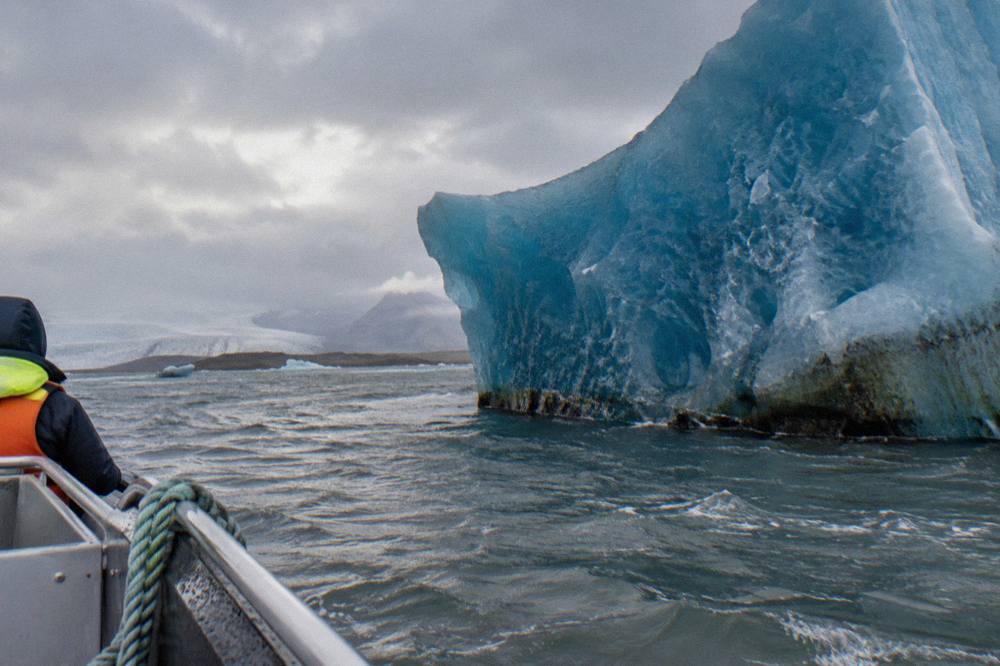
The ice at Jokulsarlon is blue because the enormous weight of the ice cap has compressed it until nearly all the trapped air was forced out. Fresh snow is full of tiny air pockets and scatters every wavelength equally, which reads as white, but dense old ice absorbs red and yellow light as sunlight passes into it, so the blue that remains is what comes back out.
That is the whole mechanism, and every other explanation you will hear is a variation on it. The ice at Jokulsarlon is not filtered water, and it carries no pigment. What it carries is time. The interior of Vatnajokull holds snow that fell long ago, compacted into near-solid ice, and Breidamerkurjokull, the outlet that calves into the lagoon, delivers that ancient ice to the surface when it fractures and drops icebergs into the water. A freshly calved berg often shows its densest, most vivid blue at the fracture face, where the interior ice is exposed.
The surrounding water matters only as a stage. On a flat grey day the same bergs can look slate or near-white. The operator that runs boat trips on the lagoon puts it plainly: ice conditions change daily depending on glacier activity, weather, tides and ocean currents, and the same honesty applies to the colour. Nothing about the appearance of the lagoon is fixed from one day to the next.
How Old Is The Ice In The Lagoon?
No single age can be printed for a Jokulsarlon iceberg, and none is stated in the verified park or operator material. What can be said is that the ice calving into the lagoon fell as snow on the Vatnajokull ice cap and was compressed there over long periods before reaching the glacier's edge. The lagoon itself is young: the lakes on Breidamerkursandur appeared from the 1930s as the glacier retreated, according to the park's own pages.
The park's account of the area keeps the timeline honest. As Breidamerkurjokull thinned and pulled back, hollows it had carved into the ground filled with meltwater, and Jokulsarlon grew into the largest of the lakes that formed, alongside Breidarlon and Fjallsarlon. Breidamerkurjokull still calves into Jokulsarlon today, which is why bergs keep arriving even as the glacier's edge moves. The retreat that created the scenery a visitor photographs is the same process that keeps resupplying it.
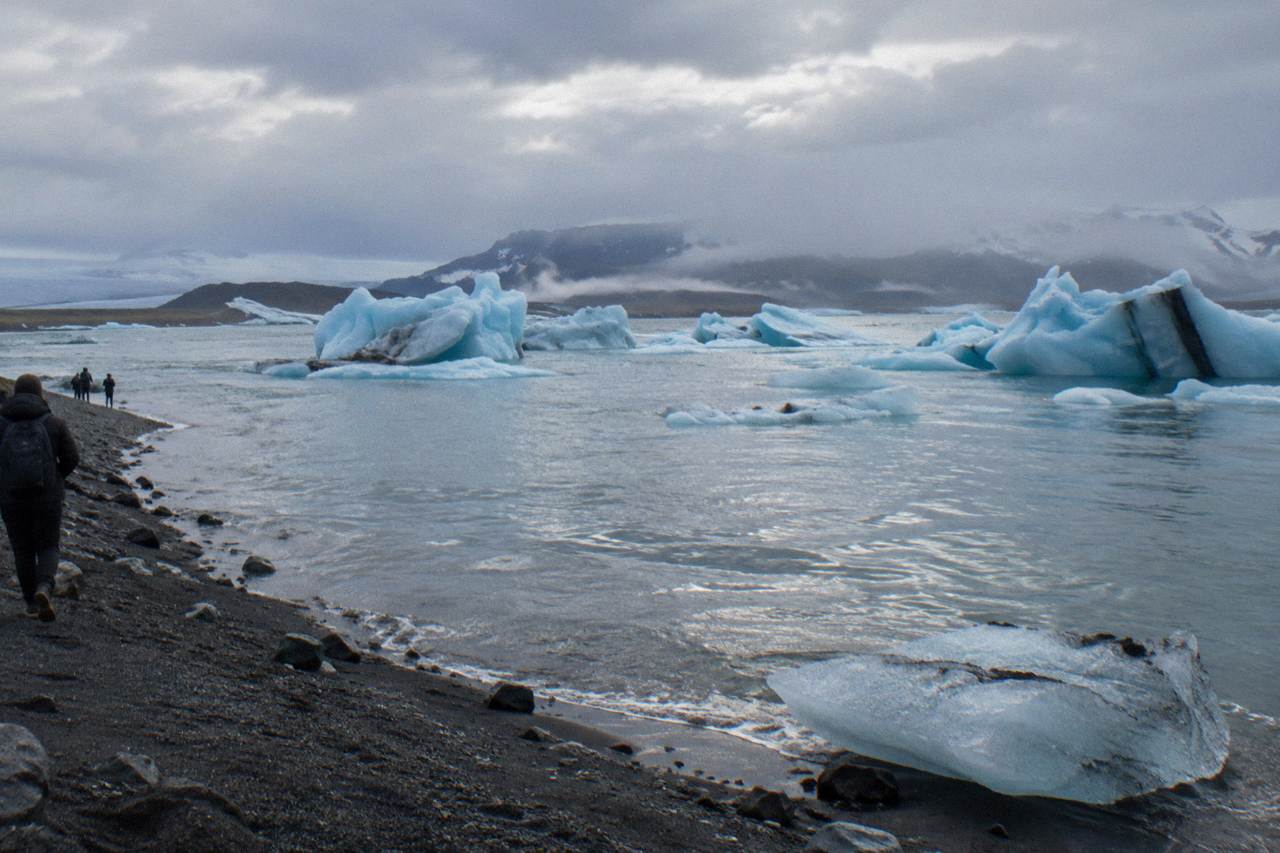
For planning purposes, the age question matters less than the access question. The blue ice is not a museum piece behind glass. It drifts within a few hundred metres of the car park, some of it washes out onto the black sand of Diamond Beach about 500 m across the road, and in season boats and kayaks work among the bergs. The most reviewed day trip from Reykjavik, the BusTravel Diamond Beach Day Trip at 14 hours and from $211 per person, rated 4.7 across 4,069 reviews, reaches the lagoon with free cancellation up to 24 hours before. The lagoon boat ride on that tour is an optional paid add-on rather than part of the base price, worth knowing when the whole point of the trip is getting near the ice.
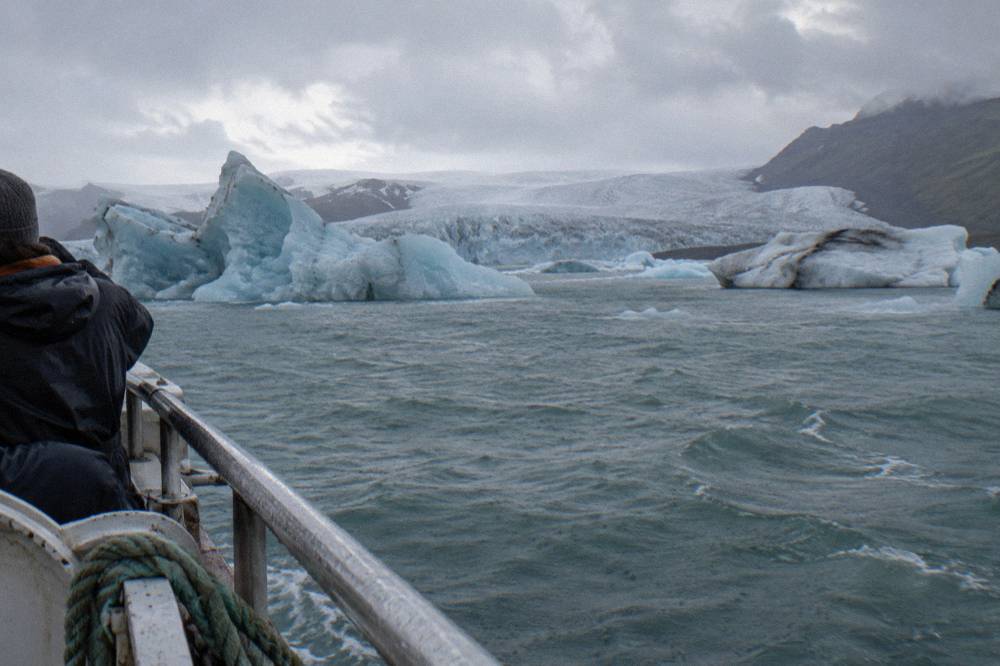
All three of those day trips cover the same 14 to 15 hour corridor along the south coast, differing in meeting point, price and how the boat ride is handled. The Gray Line 14.5-Hour South Coast option, from $234 per person and rated 4.5 across 1,582 reviews, starts at the BSÍ Bus Terminal and lists the lagoon boat ride outright as not included. The 14 to 15 Hour Day Trip, from $225 per person and rated 4.5 across 1,460 reviews, offers a long list of drop-off locations and treats the boat as an optional add-on selected at booking.
Why Are Some Icebergs White, Black Or Striped?
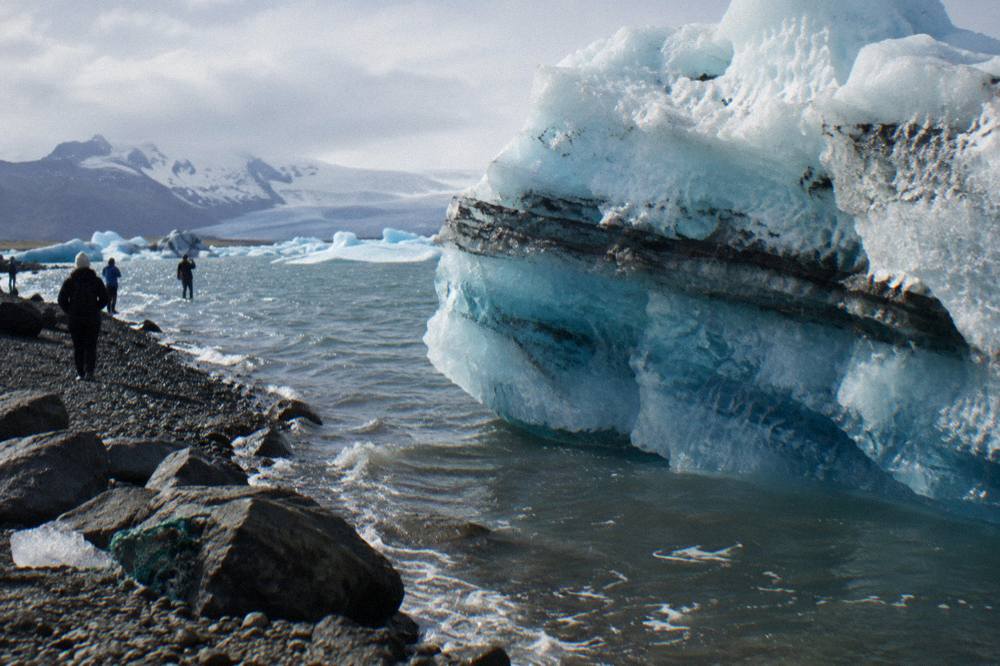
Iceberg colour at Jokulsarlon tracks air content, age and debris. White ice is bubbly, younger ice that scatters all light. Vivid blue is dense, well-compressed ice. Black and brown stripes are moraine, rock and gravel the glacier plucked from the bedrock and folded into the ice on its way down. A single berg can carry all three, layered like a geological record of its journey.
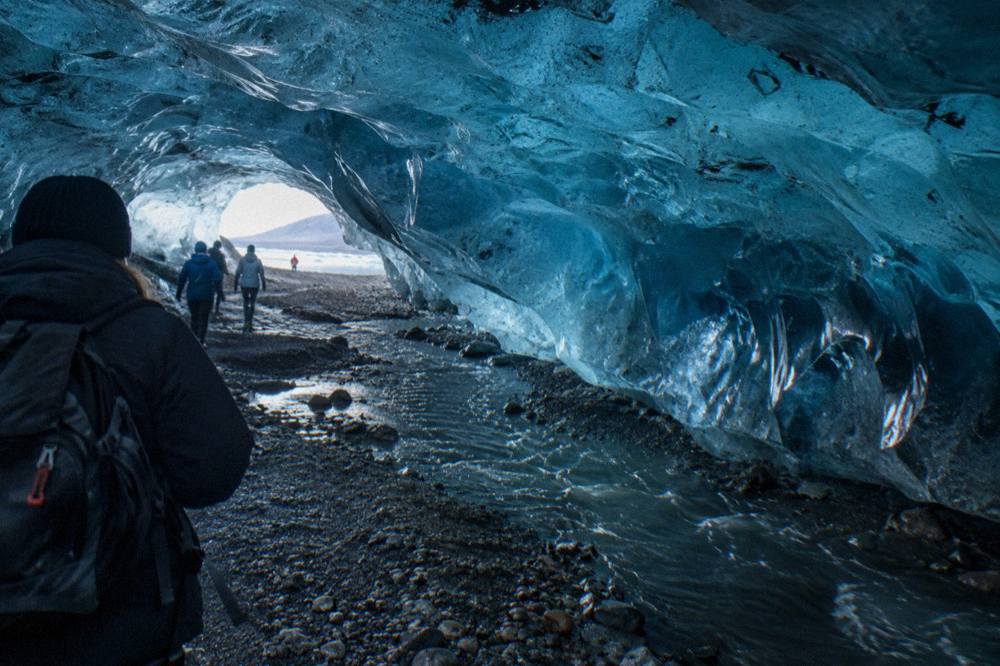
The striped bergs are the ones visitors most often ask about. As a glacier slides over bedrock it rips up sediment, and that debris rides along inside and beneath the ice, emerging as dark bands when a berg calves and rolls. A berg that has tipped over in the lagoon can display a clean blue face above the waterline and a gravel-dark keel below it, because roughly nine tenths of any iceberg sits underwater. Seals, which the lagoon operator notes are frequently seen resting on icebergs, haul out on those low bergs and treat the dark ones like any other platform.
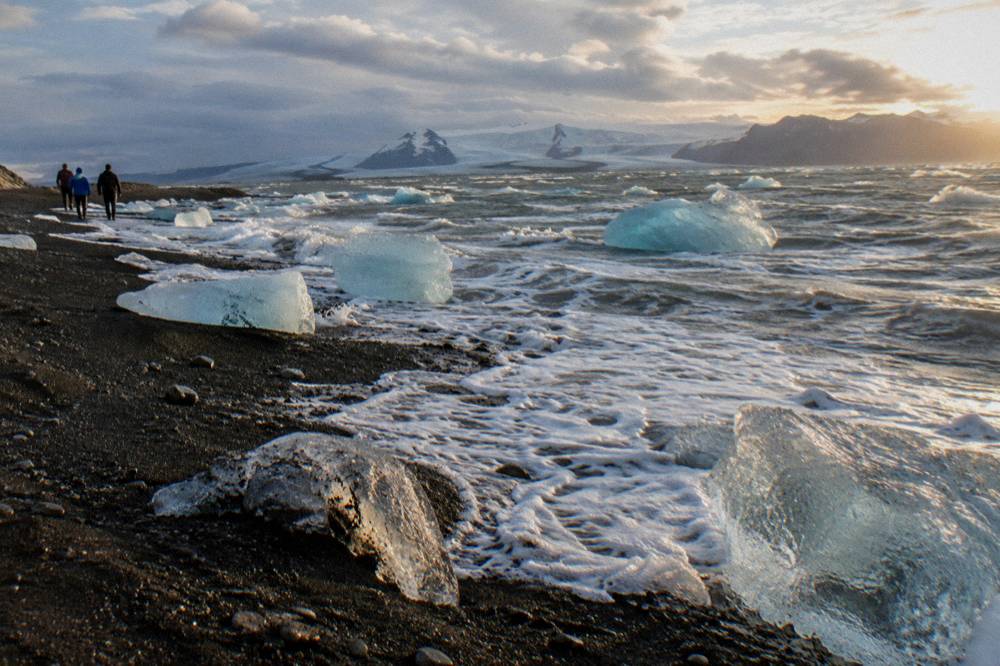
Clear, glassy ice is a slightly different case again. Some bergs and some ice fragments on Diamond Beach look like cracked glass, with a transparency closer to a gemstone than to a snowball. That is ice that spent the longest under compression and lost the most air. The fragments that wash ashore at the beach, the so-called diamonds, are often exactly this dense clear ice, and in low light they glow blue from within while white chunks beside them stay dull. Whether a given tide leaves many diamonds or none varies, and no month can be promised for ice on the beach.
| Ice appearance | What it usually means | Where you see it best |
|---|---|---|
| Vivid electric blue | Dense, old, well compressed ice, often freshly fractured | Calved berg faces, zodiac routes among the bergs |
| Milky white | Bubblier, younger ice scattering all wavelengths | Small bergs and brash ice throughout the lagoon |
| Transparent glassy | Ice with the least trapped air, polished by water | Diamond Beach fragments at low tide |
| Black or brown stripes | Moraine debris folded in from the glacier bed | Rolled bergs, large tabular bergs |
| Teal water tint | Fine rock flour suspended in meltwater | The lagoon on bright days, near the glacier edge |
How Did The Jokulsarlon Lagoon Form?
Breidamerkurjokull, an outlet of Vatnajokull, retreated from the 1930s onward and left a deep basin that meltwater and seawater filled, creating Jokulsarlon. The park's pages describe lakes appearing across Breidamerkursandur as the ice pulled back, with Jokulsarlon, Breidarlon and Fjallsarlon the largest. The glacier still calves into the lagoon, and the short river that connects it to the sea keeps the water brackish.
The lagoon sits at sea level, and seawater enters at high tide, which is part of why the water behaves more like a fjord than an alpine lake. Tides and currents push icebergs around, and the lagoon's surface area of roughly 25 km2 gives them room to drift, tilt and melt for weeks before they either waste away or ride the outgoing river toward the Atlantic. The park's rangers supervise the lagoon, the Diamond Beach side and the ice-cave areas of Breidamerkurjokull every day of the year, and flush toilets and a year-round cafe sit beside the main car park, closed only over a few days in late December and the turn of the year.
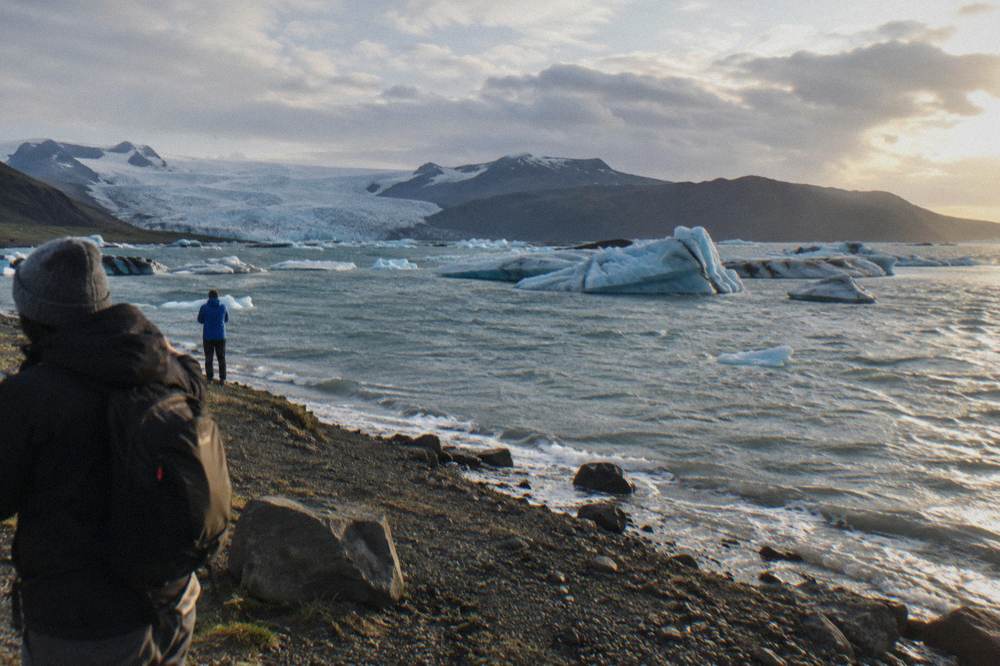
The shape of the lagoon keeps changing, and that is worth knowing before you plan around any single viewpoint. As the glacier retreats further, the lagoon grows, and the icebergs travel farther before they reach the sea. Sea erosion is a live concern on this stretch of coast: the Route 1 bridge over the glacial river is a concrete structure about 90 m long, built in 1967, and the river outlet has lengthened to roughly 500 m as the coast changes.
| Lagoon fact | Figure | Source basis |
|---|---|---|
| Distance from Reykjavik | About 370 km on Route 1 | Operator page |
| Surface area | About 25 km2 | Secondary reference |
| Maximum depth | Up to about 284 m | Secondary reference |
| Diamond Beach distance | About 500 m across the road | Operator page |
| Park protection | Fell farm bought by the State in January 2017 | Park record |
| UNESCO World Heritage | Vatnajokull National Park, July 2019 | Park record |
When Is The Blue At Its Best?
The blue reads strongest on bright days with low-angle light, when sunlight penetrates the ice and the red end is absorbed before the light returns. Midday sun can flatten the colour, and heavy overcast can grey it out entirely. Daylight hours swing enormously here, from about 4 hours in deep winter to over 20 hours at midsummer at nearby Hofn, so both the season and the hour of your visit shape what you see.
Daylight figures for Hofn, a town east of the lagoon, give the honest picture of how much time you have. On 1 January the sun is up 4 hours 21 minutes; by 1 April it is 13 hours 33 minutes, and by 21 June it is 21 hours 14 minutes, though Iceland never reaches true midnight sun, with the latest sunset at Hofn at 23:39. From late June the light runs the other way fast: 1 September gives 14 hours 34 minutes, 1 November 7 hours 58 minutes, and 21 December just over 4 hours. There is no daylight saving, and the country runs on UTC all year, so the arithmetic is at least simple.
Weather is the other variable, and the coast makes its own. The nearest long-term climate station with published normals is Kirkjubaejarklaustur, about 200 km west of the lagoon, and the coast near the lagoon differs, so the figures below are a regional guide rather than a forecast. Daily means there sit near freezing from November through March and reach about 11.6 °C in July, with rain falling on roughly half the days of the year. For photography, the practical advice from the site's Jokulsarlon Glacier Lagoon Tours perspective is simple: plan more hours at the lagoon than you think you need, because the light changes every half hour and one squall can wipe out a whole afternoon's colour.
| Month | Daylight on the 1st (Hofn) | Daily mean C (Kirkjubaejarklaustur normals) | Rain mm |
|---|---|---|---|
| January | 4h21 | 0.1 | 157 |
| March | 10h10 | 0.8 | 133 |
| May | 16h53 | 6.9 | 104 |
| July | 20h55 | 11.6 | 123 |
| September | 14h34 | 8.1 | 158 |
| November | 7h58 | 1.8 | 145 |
Can You Get Close To The Blue Ice?
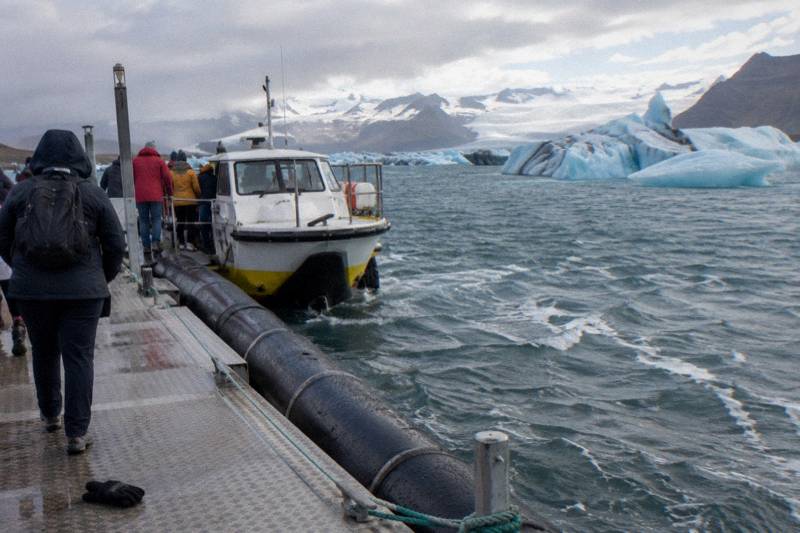
Yes, and closeness is what makes the colour real. The lagoon operator runs amphibian boat trips of 30 to 40 minutes and zodiac trips of 1 hour 15 minutes in roughly May to October, sometimes into November, booked direct or added to some day tours. Kayaking, glacier hikes and ice cave tours from the lagoon car park reach blue ice by other routes, and several covered day trips from Reykjavik include or offer the boat ride.
The boat picture needs one honest clarification: no standalone lagoon boat tour is sold through the booking platforms this site covers. The amphibian and zodiac rides are run by the lagoon operator itself, with its own direct 2026 prices in Icelandic krona, an amphibian adult ticket at 7,100 ISK and a zodiac adult ticket at 16,600 ISK. Those are the operator's prices at its own counter, not the price of any tour card. Zodiac riders check in 30 minutes before departure, children must be at least 130 cm tall, and flotation suits are supplied.
| Tour | Duration | Price from | Boat ride | Rating and reviews |
|---|---|---|---|---|
| Boat Ride Included, 14 Hours | 14 hours | $292 per person | Included | 4.7 across 492 reviews |
| Reykjavik Excursions Boat Tour | 14 hours 30 minutes | $328 per person | Included | 4.7 across 126 reviews |
| BusTravel Diamond Beach Day Trip | 14 hours | $211 per person | Optional paid add-on | 4.7 across 4,069 reviews |
| Gray Line 14.5-Hour South Coast | 14.5 hours | $234 per person | Excluded, listed as not included | 4.5 across 1,582 reviews |
Among the covered day trips, the Boat Ride Included, 14 Hours option from $292 per person is the straightforward choice if a boat among the blue bergs is the point of the day: the lagoon boat ride is part of the package, and the tour is rated 4.7 across 492 reviews. It meets at a fixed central Reykjavik address, with pickup dependent on the option selected. The Reykjavik Excursions Boat Tour, from $328 per person and rated 4.7 across 126 reviews, also includes the boat and starts from the BSÍ terminal.
Kayaking reaches the ice at water level, the closest quiet approach of all. The Kayaking, 1.5 Hours trip from $155 per person, rated 4.7 across 532 reviews, meets at the lagoon parking lot with gear and guide included and no pickup, so it suits travellers already overnighting in the area or driving themselves. The operator of the lagoon does not recommend private boats or kayaks on the lagoon, because icebergs roll without warning, which is a good reason to take the guided option seriously.
The Small Group Ice Cave, 2h 30m tour, from $194 per person and rated 4.8 across 298 reviews, is one of the ice cave formats that put you inside the blue rather than beside it. It meets at the lagoon, includes crampons, helmet and safety gear, and runs roughly October to April, conditions permitting, because ice cave access in this national park is a winter activity. Ice cave visits are never promised: conditions and daily safety assessments decide, and the entry, like the colour inside, varies.
Why Is Diamond Beach Ice A Different Kind Of Blue?
Ice on Diamond Beach is the same glacial ice, but it is smaller, wetter and backlit. Berg fragments that escape the lagoon wash up on the black sand, melt into clear chunks, and the dark background plus low-angle light makes the surviving blue glow like stained glass. The beach is about 500 m from the lagoon across Route 1, and the park asks visitors to walk under the bridge, not over it.
The beach adds a second act to the day. What drifted as a blue iceberg in the morning can lie as a cluster of glassy chunks on black sand by evening, and photographers value the pairing precisely because the black sand reverses the lagoon's visual logic. Safety comes with it. The Atlantic here produces sneaker waves, sudden surges that run far up the sand with no warning, and Safetravel's black beach guidance applies on any open Atlantic black beach: stay well back from the waterline. Staying clear of the gap between large ice and the sea is consistent visitor advice, not an official rule, because the ice can shift in a surge. The dedicated Diamond Beach guide covers the tide and safety picture in full.
Most Reykjavik day trips visit both shores in one stop, which is the practical reason they work so well for a single-day visit. The BusTravel Diamond Beach Day Trip visits both the lagoon and the beach with a guide, and the multi-day options in the south coast family do the same on their itineraries, with far less time pressure. For readers weighing the seasons, the Jokulsarlon in summer and Jokulsarlon in winter guides break down what changes, from boat seasons to ice cave windows.
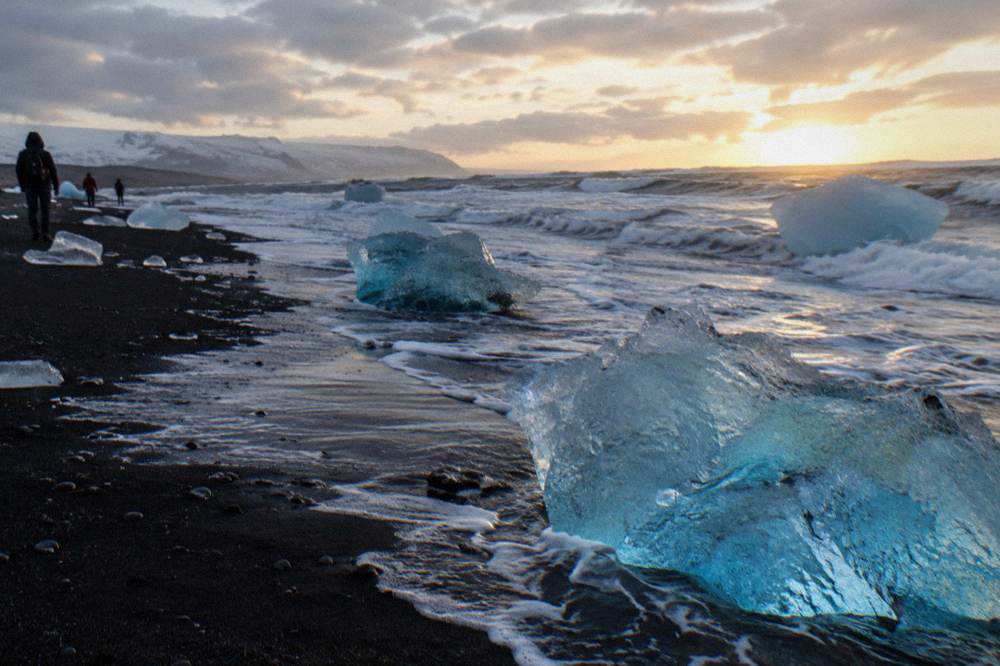
Does The Blue Fade As The Ice Melts?
It does. Melting ice regains air and micro-cracks, so it scatters more light and drifts back toward white and grey as it wastes. The blue is a phase of the ice, not a permanent property, which is part of why no two visits match.
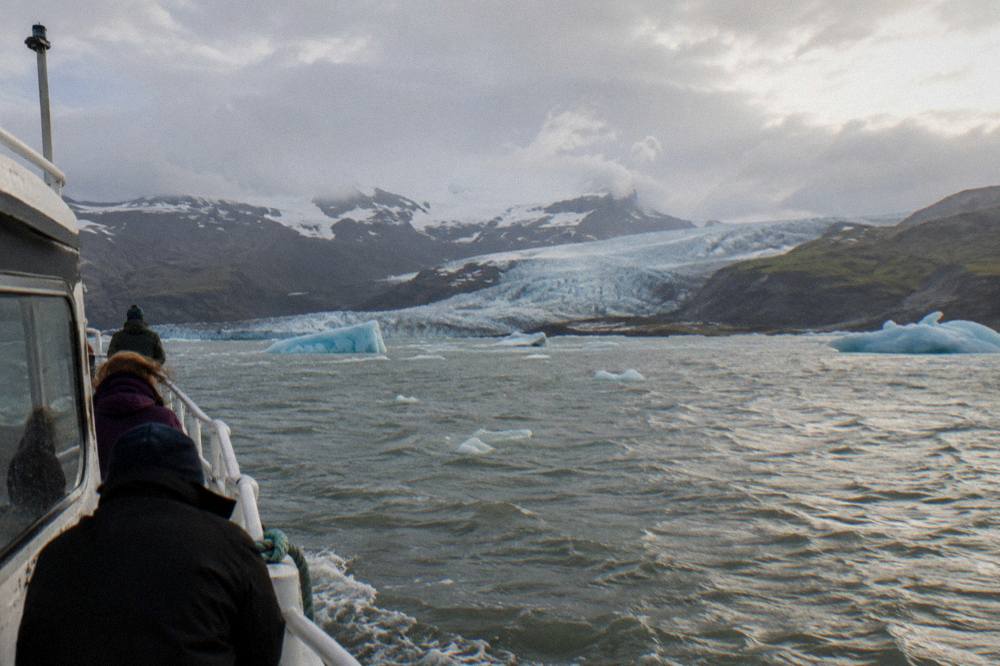
This is also why timing within the day matters for photography. Morning and evening low-angle sun travels a longer path through each ice face, deepening the blue, while flat midday light bounces off the surface before it can penetrate. After rain, wet ice surfaces darken and the colour reads more saturated still. None of it is promised, and the lagoon operator's own FAQ states that ice conditions change daily with glacier activity, weather, tides and currents. Visitors who arrive expecting a postcard and get fog can come back two hours later to a completely different lagoon.
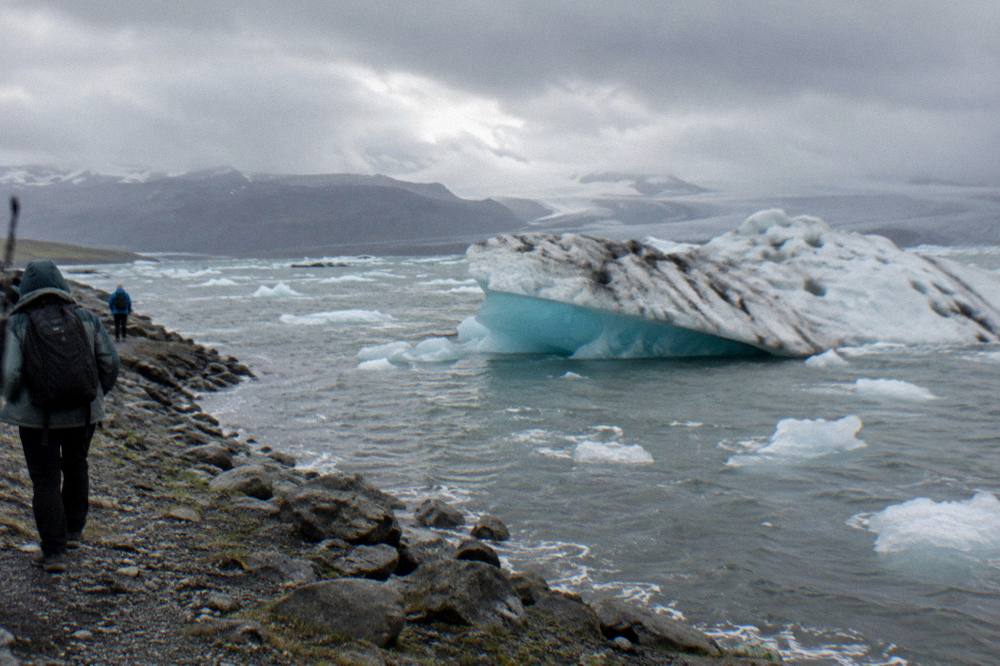
The retreat that supplies the bergs is the same force that will eventually thin the supply. The park's pages trace the lakes of Breidamerkursandur to the glacier's pullback from the 1930s, and the lagoon keeps lengthening as the ice edge moves back. No reliable date exists for the lagoon's eventual disappearance, and any timeline remains a guess. What the record does show is a landscape that has changed within living memory, with retreating glacier ice giving way to a 25 km2 lagoon.
How Do You Plan A Day Around The Colour?
Build the day around light and driving time rather than a single arrival hour. The lagoon is about 370 km from Reykjavik on Route 1, a long drive each way even without stops, so most visitors take a 14 hour guided day trip or split the journey with a night near Hofn or Vik. Parking at the lagoon is the park's regional fee, 1,110 ISK for a passenger car, valid until midnight on the day paid.
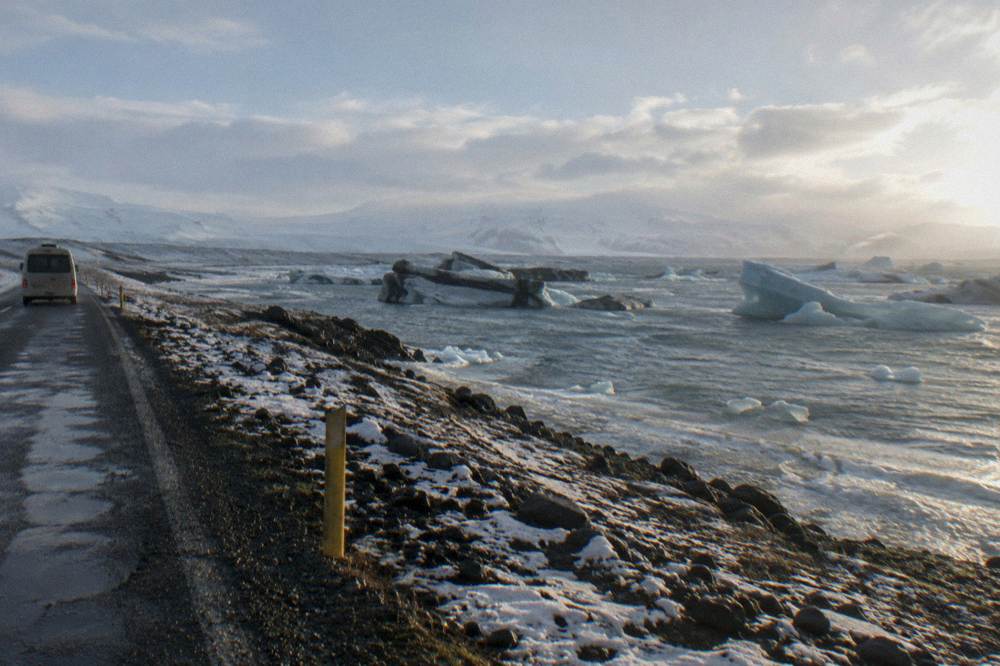
That parking detail catches self-drivers out, because the fee is collected by licence-plate photo and paid at machines in the car park or via the Parka app. Check road conditions at umferdin.is/en and the forecast at en.vedur.is before setting out, especially from October onward, when the safetravel winter driving rules apply: headlights front and rear around the clock, a rental car with winter tyres, and respect for how little daylight there is. Winter weather on this coast is the reason many travellers hand the driving to a guided tour at all.
Travellers with two days to spare get a better version of the same idea: the multi-day south coast tours reach the lagoon with an overnight nearby, which means evening and morning light instead of a single midday stop. The glacier retreat story, the nesting skuas on the sandur and the reindeer that cross the road on the eastern side in winter all reward the slower pace.
Common Questions About Jokulsarlon's Blue Colour
Why Is Jokulsarlon Blue?
Glacier ice compressed over long periods loses its trapped air, and the resulting dense ice absorbs red and yellow light while returning blue. The bergs calving from Breidamerkurjokull into the lagoon expose that old, dense ice, especially at fresh fracture faces, which is why the blue is strongest there.
Why Are Some Icebergs Striped Black?
The dark bands are moraine, rock and gravel the glacier plucked from its bed and folded into the ice on the way down. When a berg calves and rolls, those layers show on its surface, sometimes beside vivid blue faces on the same berg.
Does The Lagoon Look Blue All Year?
The colour varies with light, weather and the ice itself. Bright, low-angle light deepens it, overcast flattens it, and melting bergs drift back toward white. Daylight at nearby Hofn runs from about 4 hours in midwinter to over 20 hours at midsummer, so both season and hour matter.
Can You Touch The Blue Ice?
Small fragments wash up on Diamond Beach about 500 m across the road and can be approached with care, staying alert for sneaker waves and keeping clear of the waterline. In the lagoon itself, the closest safe contact comes on the operator's boat trips or a guided kayak tour, since icebergs can roll without warning.
Is The Ice In The Ice Caves The Same Blue?
It is the same physics. Winter ice caves form in dense glacier ice, and light passing through the walls can glow a deep blue. Access runs through park-contracted operators in roughly October to April, conditions permitting, and neither the visit nor the colour is ever guaranteed.
Why Is Diamond Beach Ice Clearer Than The Lagoon Ice?
Beach ice is often older, denser ice with fewer trapped bubbles, so it looks clear and glassy rather than milky. On black sand, backlit by low sun, that clear ice reads blue while bubblier white chunks stay dull, which is the beach's signature look.