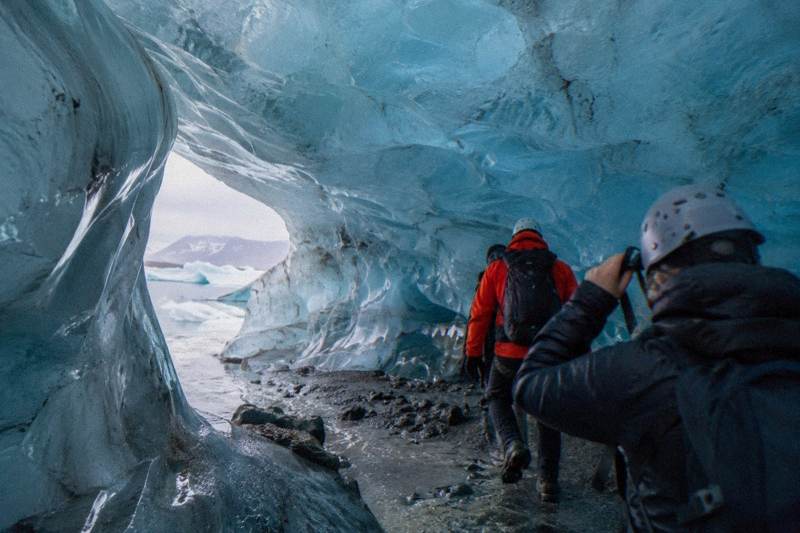
Are Ice Cave Tours Worth It?
An honest cost, duration and conditions comparison of the ice cave tours that start at Jokulsarlon, to help you decide whether the price is worth paying.
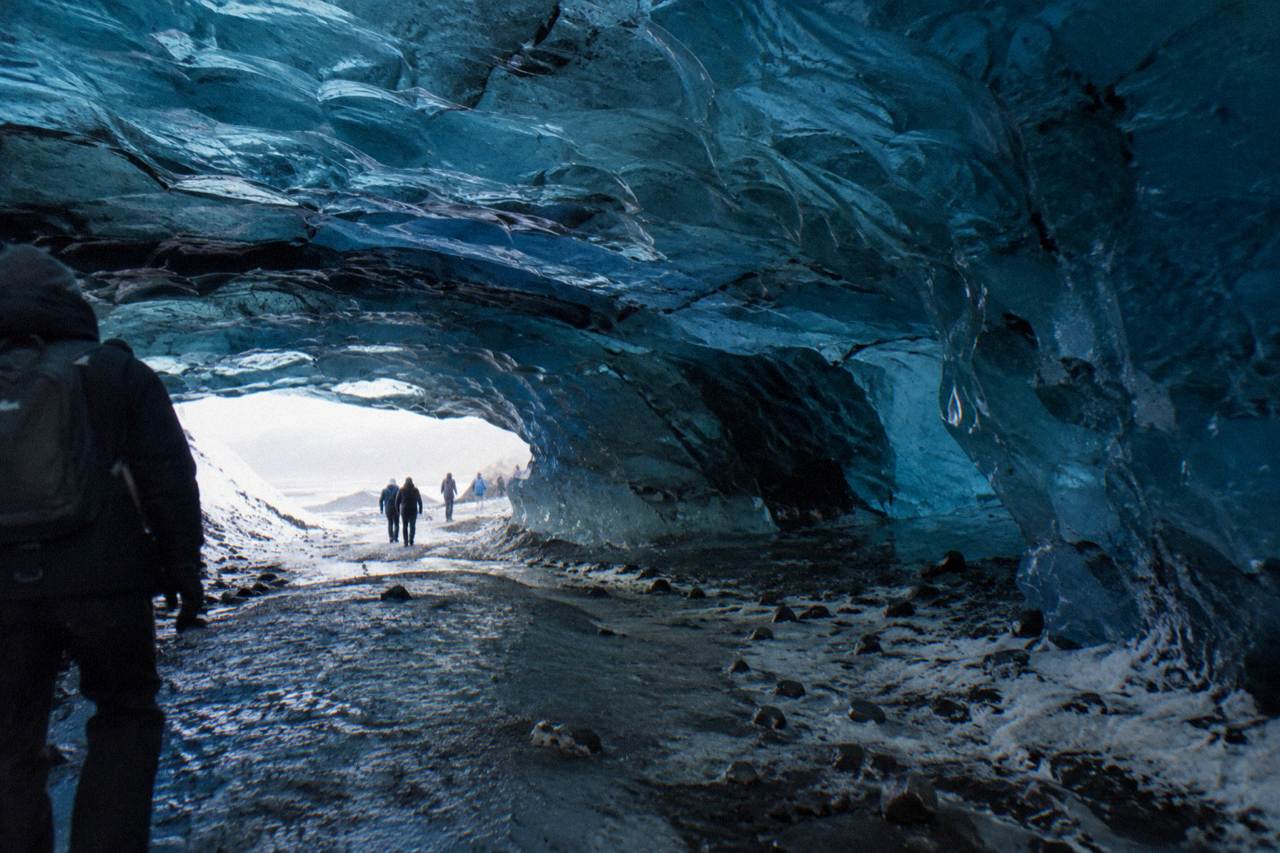
For most visitors standing at Jokulsarlon in winter, yes, the tours earn their price. The cheapest covered option costs from $164 per person for roughly three hours with crampons, helmet and safety gear included, and Safetravel highly recommends a certified guide who assesses conditions daily. The honest caveats: caves open roughly October to April, entry is never promised, and colour varies with the light.
That is the short answer, and it comes with a decision attached. The tours covered here all start at the lagoon itself, which means you have already driven about 370 km from Reykjavik on Route 1, before any stops along the way. Adding a cave tour converts that drive from a viewpoint stop into the reason you came. Skipping it means watching other groups head up onto the Breidamerkurjokull glacier while you stay in the car park.
The comparison also has to be honest about what you are weighing. A cave tour is not competing against a boat ride on the lagoon or a walk on Diamond Beach, both of which are cheaper or free; it is competing against the alternative of seeing the glacier only from the shore, across the water, from a distance of a few hundred metres. The step from shore to inside the ice is the entire product. Everything else on this page, the prices, the durations, the review counts and the safety regime, exists to help you judge whether that single step is worth what it costs.
This tour meets at the lagoon, includes the safety gear, and runs from $164 per person.
What Does An Ice Cave Tour Cost At Jokulsarlon?
The seven ice cave tours covered here run from $164 to $195 per person, a spread of just $31 at the base price, so the decision is rarely about money. The cheapest, the Guided Vatnajokull Ice Cave at from $164 for three hours, is also the most reviewed at 4.2 across 2,194 reviews. Joint most expensive, the Frozen Wonders small group trip at from $195, carries 5.0 across 404 reviews, a smaller pool.
Price alone tells you little here because the base inclusions are nearly identical across the set: every tour in the list states crampons, helmet and safety gear in its inclusions. What actually differs is duration, review depth, and how the tour reaches the cave, by super jeep or on foot from the meeting point.
| Tour | Duration | Price (from) | Rating | Reviews |
|---|---|---|---|---|
| Guided Vatnajokull Ice Cave | 3 hours | $164 | 4.2 | 2,194 |
| Crystal Cave Super Jeep | 2.5 hours | $168 | 4.2 | 1,772 |
| Crystal Blue Super Jeep | 3 hours | $168 | 4.4 | 635 |
| The Original Ice Cave Tour | 3 hours | $176 | 4.5 | 1,238 |
| Blue Ice Cave | 3 hours | $195 | 4.6 | 973 |
| Small Group Ice Cave | 2h 30m | $194 | 4.8 | 298 |
| Frozen Wonders Small Group | Not stated | $195 | 5.0 | 404 |
The smallest tour on this page carries 20 reviews, and the rest run well beyond that, so every rating above carries some weight. But note the shape of the table: the two cheapest tours also have the two largest review pools, which usually means the most departures and the most battle-tested logistics. The 5.0 rating sits on 404 reviews, a genuinely strong showing, not a fluke of a handful of bookings.
One cost the table does not show: parking at the lagoon. The regional fee is 1,110 ISK for a passenger car, valid until midnight on the day paid, collected by licence-plate photo and payable at machines in the car parks or through the Parka app per the park pricelist. Budget it into the day.
Is the price worth it against what a self-drive day already costs? A round trip from Reykjavik in your own car still means paying for fuel, food and parking, all on a very long day behind the wheel. The cave ticket is the part of the day that cannot be replicated from a viewpoint.
How Long Do The Tours Actually Last?
Count on roughly three hours from meeting to finish, of which time inside the cave itself is a fraction; transport to the glacier edge, gearing up and safety briefing take the rest. The super jeep ice cave tours list 2.5 and 3 hours, the Small Group Ice Cave 2h 30m, and three others a flat 3 hours. Frozen Wonders states no duration, so check its booking page before booking a tight schedule.
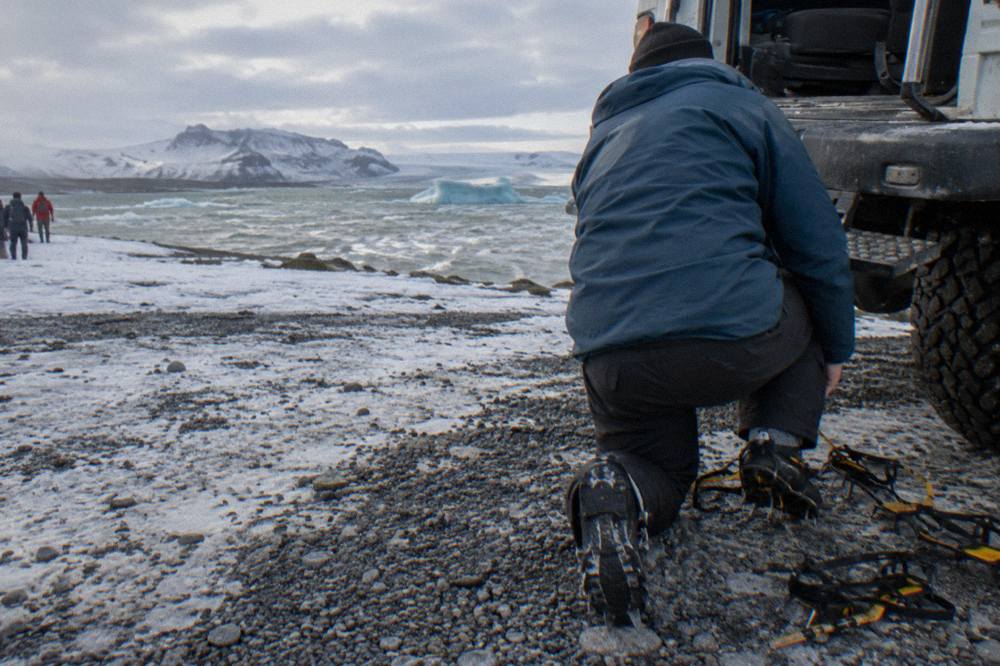
Duration matters less than timing. Every one of these tours starts at the lagoon, at meeting points like the Jokulsarlon Main Parking on Thjodvegur or the glacier lagoon parking beside the cafe. That means your day is really built around two clocks: the long drive each way from Reykjavik, and the daylight window at the coast.
Daylight at Hofn, the nearest town with daylight data, runs 10h10 on 1 March, 7h58 on 1 November and 4h59 on 1 December, an astronomical calculation per timeanddate.com. A 3-hour tour that meets at noon in deep December finishes at dusk. Most winter visitors on a day trip from Reykjavik instead pair the cave with a lagoon stop and Diamond Beach in one long loop, or book a two-day south coast tour and take the cave on the second morning. The 2-Day Small Group Blue Ice Cave tour, from $689 per person with breakfast and pickup included, rated 4.9 across 795 reviews, is the covered way to do that without the same-day marathon.
Is The Ice Really That Blue?
The blue is real but conditional. Caves form where meltwater carves channels through the glacier, and old, compressed ice absorbs red light and returns blue, so the effect is strongest in freshly scoured caves under thin, clear ice. Operators generally do not promise a colour or a size, and cave conditions can shift from week to week. Book the experience, not a photograph.
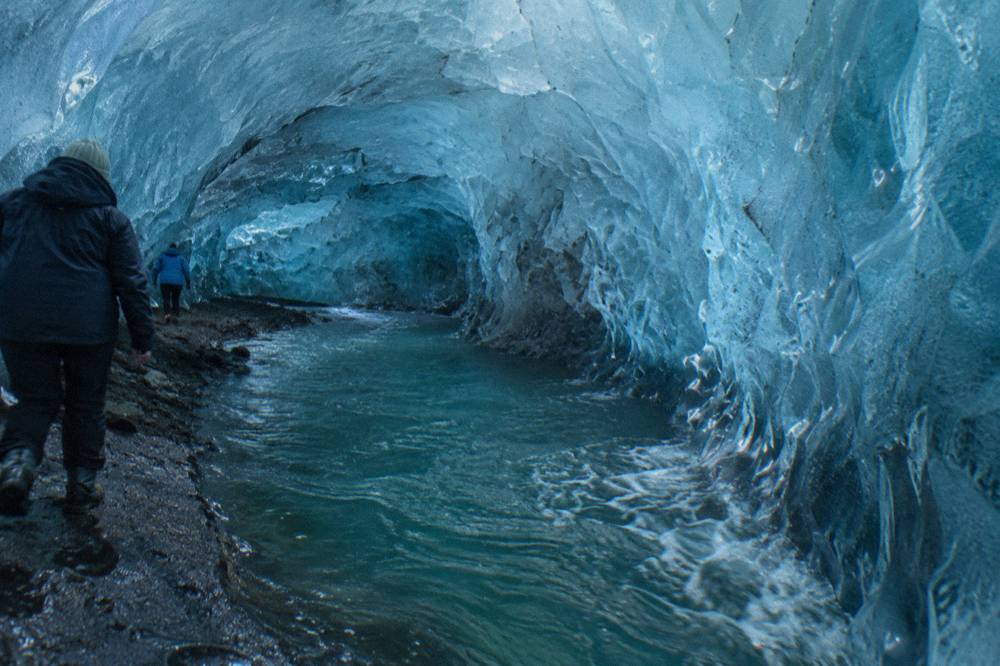
The seasonal logic explains why. These are natural caves under a living glacier, and one major operator's FAQ describes natural cave seasons running roughly October to April, with cave-specific dates. Each winter the caves are rediscovered and reassessed; each summer they collapse or close. That is not marketing vagueness, it is physics. The ice at Breidamerkurjokull moves, and the park's post-2024 safety regime requires a daily assessment of each cave and its overhanging ice before any group enters, as reported when the stricter rules were imposed.
So the honest framing of worth is: you are paying for guided access to a dynamic glacier feature that may be spectacular or may be merely very good, decided on the day by people whose job is to decide it. Readers who want the deeper geology can read why the ice looks blue at Jokulsarlon; readers weighing alternatives can compare Katla against Vatnajokull caves.
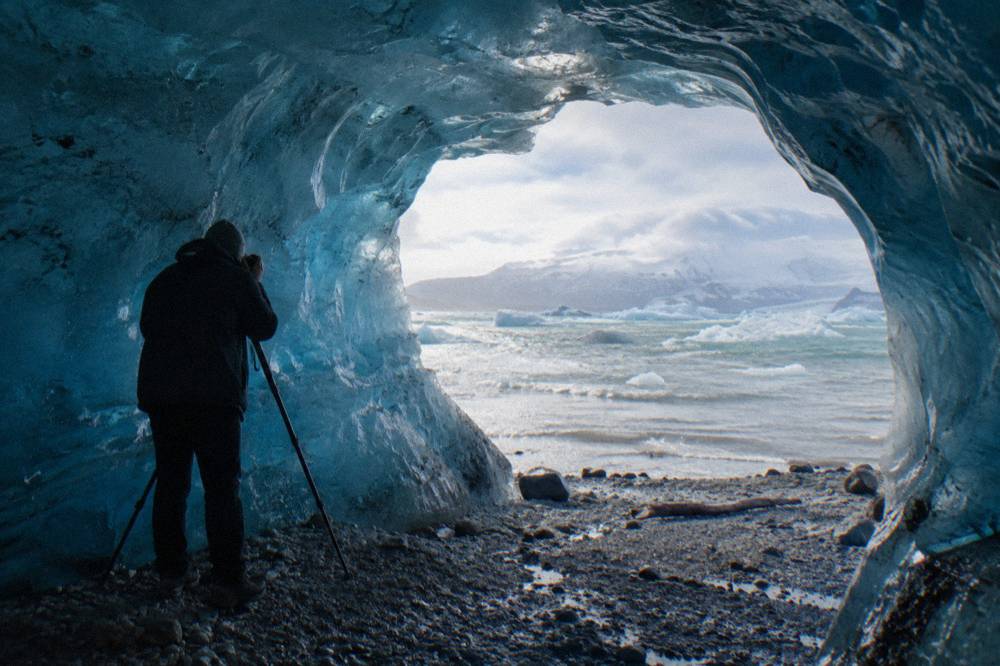
Photographers should calibrate expectations the same way. A wide lens, a fast shutter and a guide who lets the group spread out matter more to the final image than which of the seven tours you pick, since several of them visit caves on the same glacier under the same assessment regime. The premium small group options buy space and time, two things that genuinely change a shoot, while the volume tours buy reliability. Neither buys weather.
Can You See An Ice Cave Without Paying For A Tour?
No, and this is the one question with a firm answer. The lagoon's ice caves sit under Breidamerkurjokull inside Vatnajokull National Park, commercial access runs through park-contracted operators, and Safetravel states plainly that you should never go onto a glacier without experience or proper equipment, with a certified guide highly recommended. There is no free viewpoint, no trail to the cave mouth, and no safe informal route.
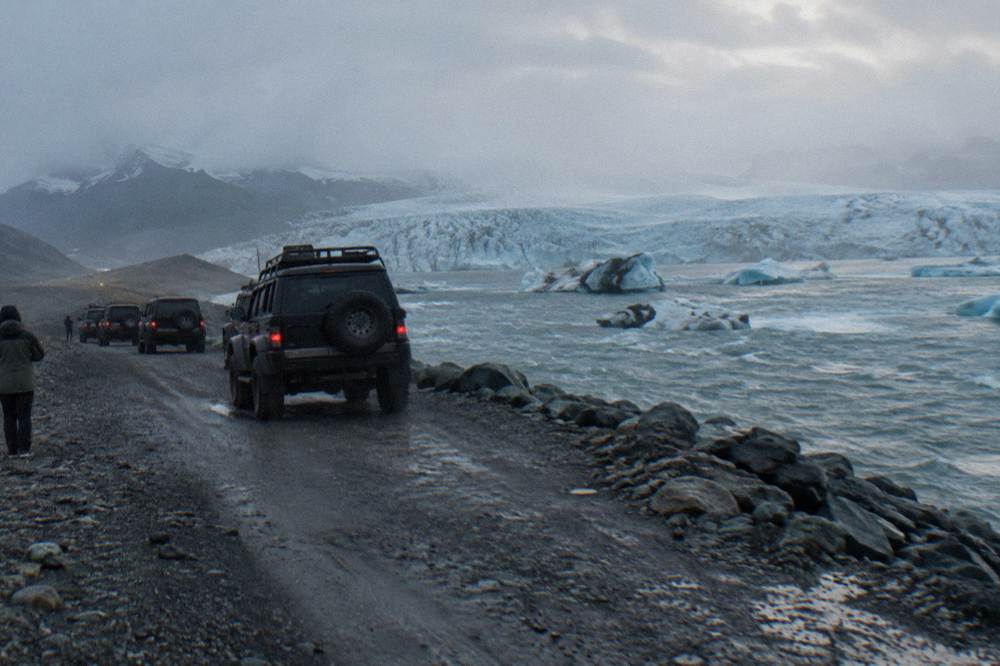
The glacier is not a hillside with a path. Crevasses are mapped and re-mapped because they change, and the maps were updated as recently as March 2026. What looks like a solid snow slope from the car park can be a bridge over a void. This is also why safety gear appears in the inclusions: some tours spell out crampons and a helmet, others simply say all safety gear. You are not renting scenery, you are paying for the judgment that keeps the scenery survivable.
The full version of this argument, including what happens at other glacier areas, is in can you go to an ice cave without a tour. The short version for Jokulsarlon: a guide is the price of admission, in every sense.
What If The Cave Is Closed On Your Day?
Every covered tour offers free cancellation up to 24 hours before, and operators hold final say on the day. If conditions fail the daily safety check, the tour is altered or cancelled rather than run as a forced bad-weather cave visit; the remedy depends on the operator, so check the booking page. The honest planning move is to leave a buffer day, because a once-in-a-trip glacier window can coincide with a storm.
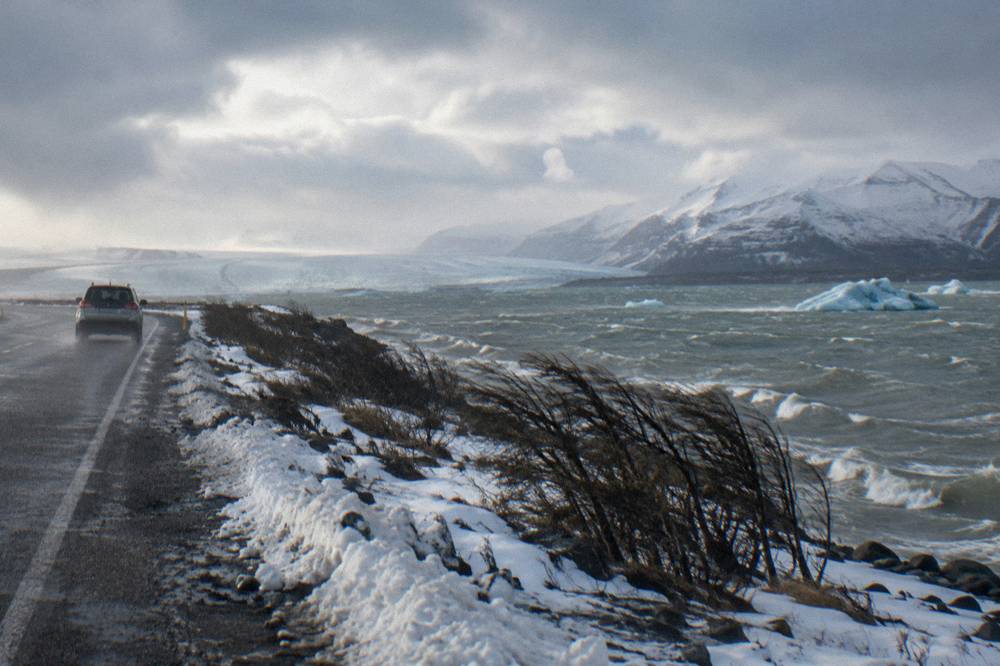
The buffer matters more than most visitors expect because of the drive. Winter driving guidance from Safetravel is blunt: headlights front and rear around the clock, a rental car with winter tyres, limited daylight, and road conditions checked at umferdin.is/en with forecasts at en.vedur.is before setting out. The Route 1 corridor beside the lagoon has already seen an overnight closure for roadworks in late September 2026, a reminder that the southeast coast is an active road corridor, not a parkway. If the forecast turns, the 24-hour cancellation window is your friend, and the guide to booking a Jokulsarlon tour in advance covers how far ahead each kind of tour tends to fill.
A two-day structure is the natural insurance policy. Booking the cave on day two of a south coast trip means one storm does not end the whole plan. The single-day visitor from Reykjavik has no such fallback, which is the strongest argument on this page for the multi-day options when the cave is the priority rather than a bonus.
Is The Cheapest Tour Good Enough?
Usually yes. The Guided Vatnajokull Ice Cave, from $164 for three hours, rated 4.2 across 2,194 reviews, is the cheapest covered option and the most reviewed by a wide margin, and a 4.2 across that many winter departures is a solid, honest number rather than a small-sample gem. The step-up choices buy you smaller groups or a longer pedigree, not a different cave system.
The Guided Vatnajokull ice cave tour meets at Jokulsarlon itself, includes the standard gear set, and states free cancellation up to 24 hours before. Its exclusions are not mentioned. At three hours it is the middle of the duration range, and its price is the floor of the market.
Where the step-ups earn their keep: the Small Group Ice Cave, from $194 for 2h 30m, rated 4.8 across 298 reviews, trades 30 minutes for fewer bodies in the cave and on the walk in, which photographers care about more than anyone. The Original Ice Cave Tour, from $176 for three hours, rated 4.5 across 1,238 reviews, is run by Local Guide of Vatnajokull. The Crystal Blue Super Jeep tour, from $168 for three hours, rated 4.4 across 635 reviews, reaches the cave by vehicle rather than a longer on-foot approach, which matters in bad underfoot conditions.
The Crystal Cave Super Jeep at from $168 for 2.5 hours, rated 4.2 across 1,772 reviews, is the volume player of the super jeep lane. Note its exclusions carefully: it names the parking fee at Jokulsarlon, charged by Vatnajokull National Park, and transport to the lagoon as not included. The other tours in this set do not mention the parking fee, so check each booking page.
Which Months Actually Work?
Roughly October to April, conditions permitting, and the most stable and bluest ice typically arrives December through February. December and January deliver the deepest winter atmosphere but daylight at Hofn falls to 4h03 by 21 December, with sunrise near 11:00 and sunset near 15:00, leaving little margin around a three-hour tour and a long drive.
The seasonal table below pairs the cave window with the daylight figures, and the lesson is not that deep winter is bad, it is that deep winter demands either a nearby base or a multi-day tour rather than a same-day sprint from Reykjavik. For planning around the coast in general, see the guide to Jokulsarlon in winter.
| Month (1st) | Daylight at Hofn | Cave season fit |
|---|---|---|
| October | 11h20 | Shoulder, caves opening |
| November | 7h58 | Core season, short days |
| December | 4h59 | Deep winter, tightest days |
| January | 4h21 | Deep winter, tightest days |
| February | 7h06 | Core season |
| March | 10h10 | Core season, lengthening days |
| April | 13h33 | Late season, caves closing |
Weather adds a second layer the daylight table cannot. The nearest long-run reference station with published normals is Kirkjubaejarklaustur, whose 1981 to 2010 averages show daily means near freezing from November through March and 145 to 177 mm of precipitation in each winter month; the coast right at the lagoon differs, and live forecasts matter more than normals. The practical translation: wet, thawing days can degrade a cave's ceiling as fast as a storm can close a road, which is exactly why each cave is assessed daily.
So Should You Book One?
Book the cave tour if the glacier is the point of your trip, if you are overnighting on the south coast, or if a three-hour, gear-included walk onto a winter glacier sounds like the memory you came for. Skip it only if your day is a Reykjavik out-and-back with no room for a storm, or if you would rather spend the money on a glacier hike from $96 at Skaftafell.
The arithmetic of worth, plainly. A $164 to $195 ticket buys guided access, gear, a lead guide and a daily safety assessment to a feature that cannot be seen any other way, with free cancellation up to 24 hours before on every covered tour. That is a fair price against any other line in an Iceland budget. What it does not buy is a guarantee of colour, size or even entry, and any operator promising those should be treated with suspicion rather than confidence. For readers pairing the cave with hiking, the guide to glacier hikes at Vatnajokull covers the on-foot alternatives, and the wider picture is on Jokulsarlon Glacier Lagoon Tours.
There is one more angle worth naming, because it is the difference between the travellers who rate these tours five stars and the ones who rate them three. The happy customers arrive knowing that a natural ice cave is weather and season and luck stacked together, so a good day feels like a gift and an average day still feels like a story. The disappointed ones arrive expecting the calendar photograph, and no tour on any glacier can sell that. Set expectations the way this page has set them, roughly October to April, conditions permitting, colour not promised, and the tour almost always earns its price.
For most travellers the honest verdict is that the ice cave tour is the single most defensible expense of a southeast Iceland trip: bounded in price, generous in duration, honest in its caveats, and impossible to substitute. Choose on group size and schedule fit rather than the few dollars between tour pages.
Common Questions About Ice Cave Tours
Are Ice Cave Tours Worth It?
For most winter visitors at Jokulsarlon, yes. Tours run from $164 per person for about three hours with crampons, helmet and safety gear included, and going without a certified glacier guide is strongly discouraged. Entry is always conditions permitting, and free cancellation applies up to 24 hours before on every covered tour.
Are Ice Cave Tours Worth It For Non Hikers?
Generally yes. The standard tours involve a walk over uneven ground and ice in crampons, but the distances are short and the pace is set by the guide. The super jeep options reduce the on-foot approach. Sturdy shoes and warm layers are needed; clothing and shoes are listed as not included on several tours.
Can You Visit An Ice Cave In Summer?
Not in the natural caves at Jokulsarlon. After the August 2024 fatal collapse on Breidamerkurjokull, natural ice cave tours were banned inside Vatnajokull National Park during summer, and the caves run roughly October to April, conditions permitting, under daily safety assessment.
What Is The Cheapest Ice Cave Tour At The Lagoon?
The Guided Vatnajokull Ice Cave, from $164 per person for three hours, rated 4.2 across 2,194 reviews. Two super jeep options follow at from $168. All include the standard gear set and free cancellation up to 24 hours before.
Do Ice Cave Tours Get Cancelled Often?
Cancellations happen when the daily safety assessment or weather fails, and operators decide on the day. Every covered tour allows free cancellation up to 24 hours before, and the standard remedy when the operator cancels is a reschedule or refund. A buffer day in your plan is the best protection.
Is The Blue Ice Guaranteed?
No. Colour depends on the ice, the light and the time of year, and no operator promises a shade or a cave size. Reviews of the same tour describe everything from deep sapphire to grey-blue, so book the guided glacier experience rather than a specific photograph.