Which Glacier Lagoon Is Better, Fjallsarlon Or Jokulsarlon?
A practical comparison of Fjallsarlon and Jokulsarlon: boats, access, crowds, cost and which lagoon the guided day trips actually visit.
Two glacial lagoons drain the same ice cap a short drive apart on Route 1, and almost every south coast itinerary forces a choice between them. Jokulsarlon is the famous one, the deep, iceberg-choked lagoon beside Diamond Beach. Fjallsarlon is its quieter neighbour, smaller, further from the road signs, and mostly left off the tour schedules. The honest answer to which is better depends on what you are buying: a boat ride, a photograph, or a guided day trip from Reykjavik, because only one of those is realistically on offer at both.
Which Is Better, Fjallsarlon Or Jokulsarlon?
For almost every visitor, Jokulsarlon is the better choice: it is the lagoon the guided tours visit, the one with a year-round cafe and operator-run boats, and the one paired with Diamond Beach just 500 m across the road. Fjallsarlon wins only on quiet, as a smaller, calmer lagoon that tour buses largely skip, though no guided tour product based there exists among the options covered here and its boats are sold directly by the operator on site.
That distinction drives everything else in this comparison. If you are driving yourself, both lagoons are pull-offs on Route 1 and you can see Fjallsarlon in twenty minutes on the way past. If you are booking a tour, your realistic choice is between different styles of Jokulsarlon day trip, not between the two lagoons at all.
The park that contains both makes the comparison easier to frame. Vatnajokull National Park lists Jokulsarlon, the Fellsfjara beach and Fjallsarlon together, with rangers supervising all three sites every day of the year. Both lagoons formed as the ice cap retreated from the 1930s onward, and both carry flush toilets. Beyond that shared backdrop, the differences are practical: size, services, boat access and how many other people are standing next to you.
Day trips from Reykjavik are the standard way travellers reach the area, roughly 370 km west on Route 1, a long drive even without stops. All of them visit Jokulsarlon. None of them is a Fjallsarlon product, and that is not an accident of this selection, it reflects what the market actually sells: the big lagoon is the destination, and Fjallsarlon is a drive-by. If you would rather pair the lagoon with time on the ice, the guide to glacier hike and Jokulsarlon combination tours compares day tours and longer trips side by side.
What Is The Difference Between The Two Lagoons?
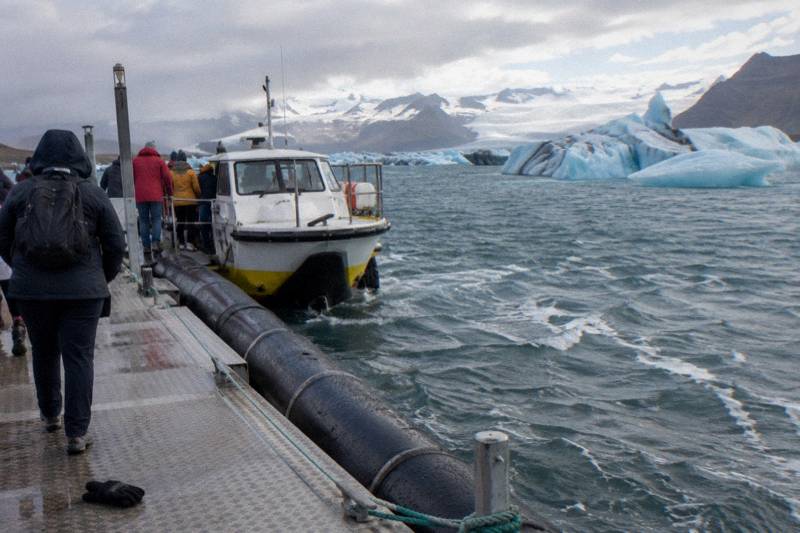
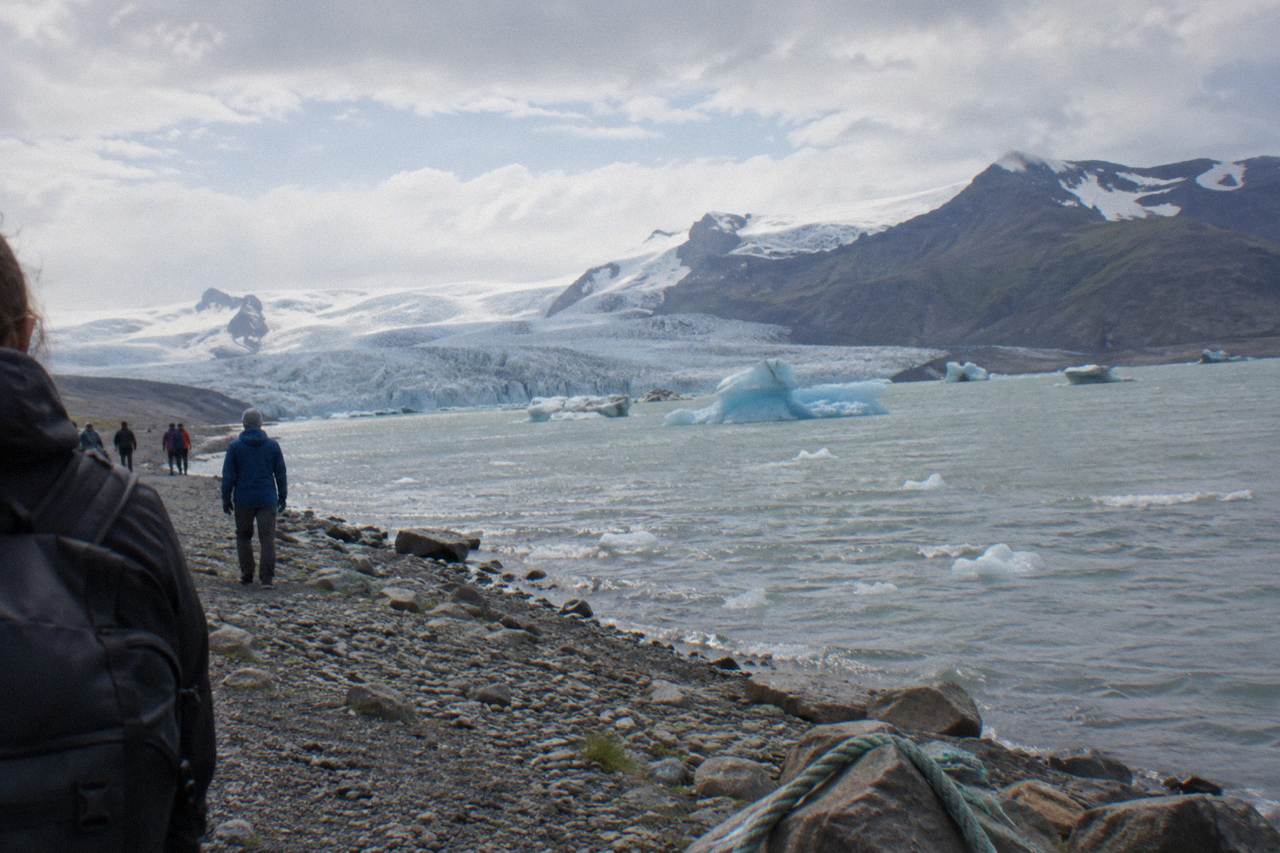
Jokulsarlon is much larger, deeper and busier: about 25 square kilometres of surface and depths up to roughly 284 metres where Breidamerkurjokull calves ice into the water, sitting directly beside Route 1 with a large car park, cafe and boat operation. Fjallsarlon is the smaller, quieter lagoon west of it, with its own glacier tongue, far fewer visitors and far fewer services, and the park describes both under the same Breidamerkursandur ranger coverage.
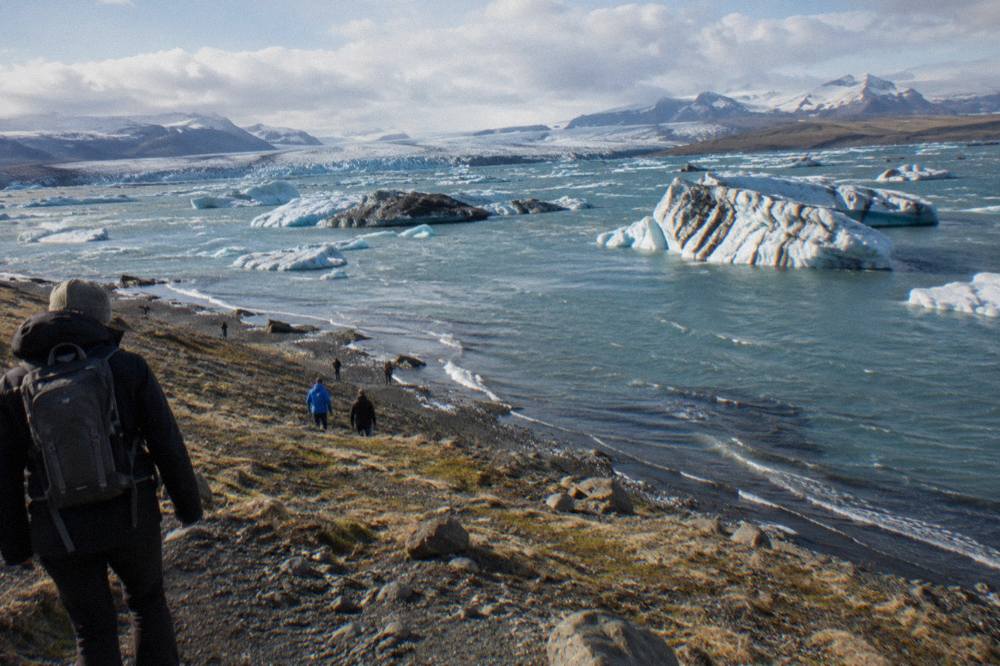
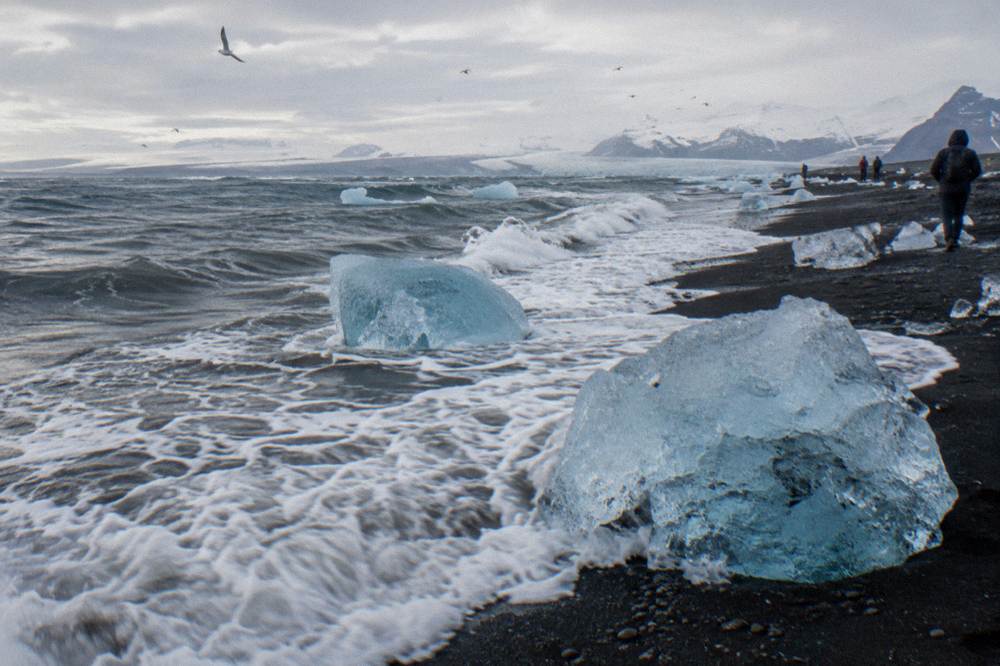
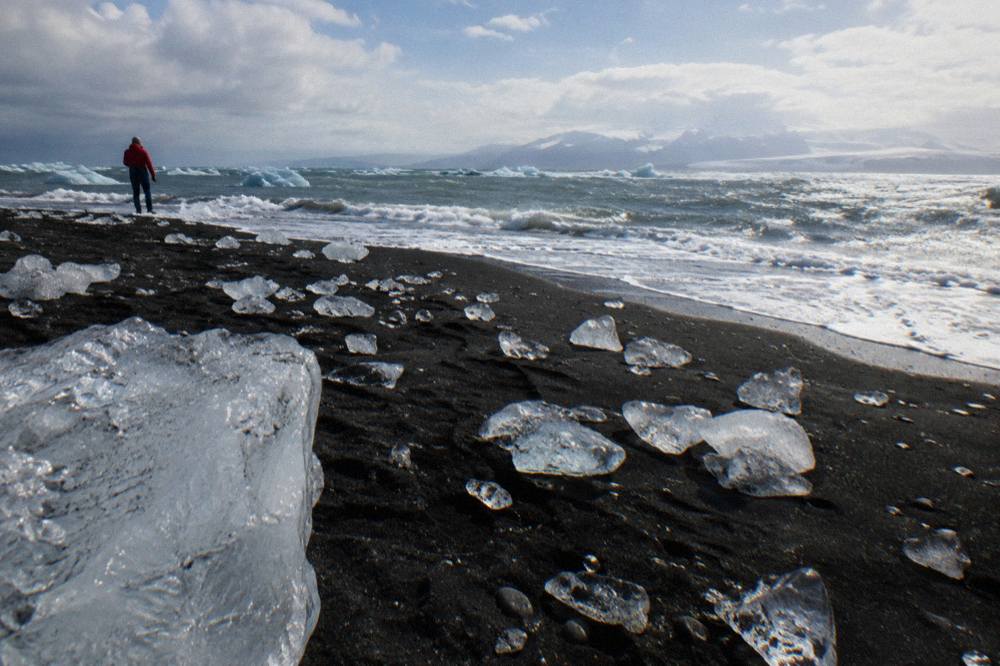
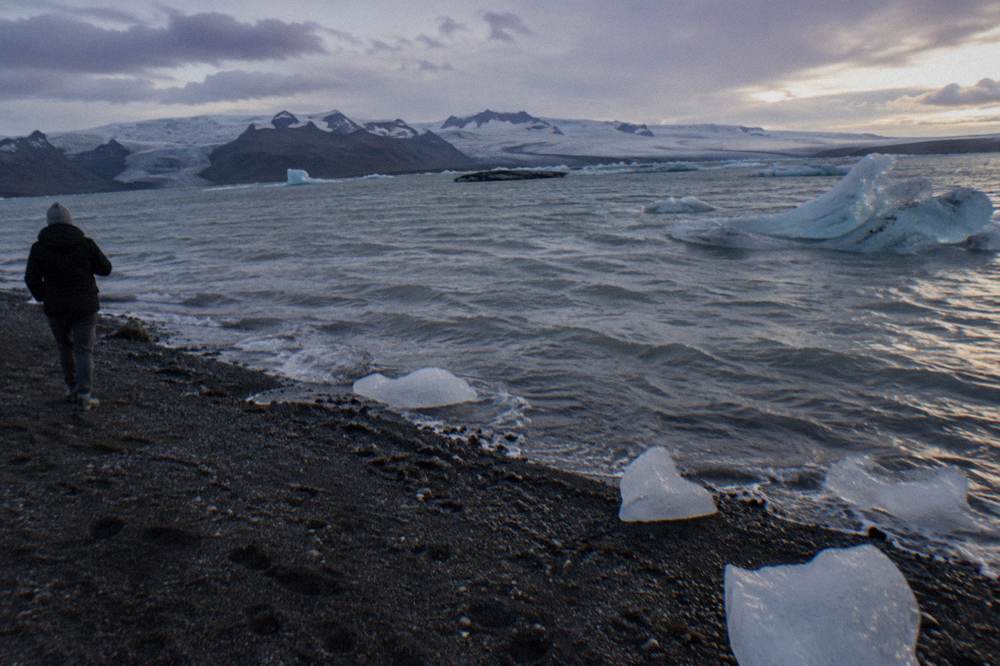
The scale gap is the heart of it. Jökulsárlón drains an outlet glacier that pushes icebergs of real size into a lagoon open to the sea, so the tide pulls broken ice down a short river channel and deposits it on Diamond Beach. That is the pairing photographers come for: blue ice on black sand about 500 m across the road from the main lot. Fjallsarlon has its own ice, generally smaller and denser near the glacier wall, with no diamond beach equivalent, so the drama of the tide-driven ice delivery is not there.
Crowds follow the drama. Jokulsarlon absorbs the full summer wave: tour buses, the cafe queue, the boat check-in line, tripods at the bridge. Fjallsarlon sits a short drive further east along Route 1, and outside the peak summer weeks it sees far fewer visitors than its famous neighbour. For visitors who value silence over spectacle, that emptiness is the entire argument for Fjallsarlon, and it is a fair one.
| Feature | Jokulsarlon | Fjallsarlon |
|---|---|---|
| Setting | Large tidal lagoon, about 25 km2, depths to roughly 284 m | Smaller lagoon, quieter neighbouring glacier margin |
| Ice delivery | Bergs calve, drift to sea, wash onto Diamond Beach 500 m away | Ice gathers near the glacier wall, no ocean outlet |
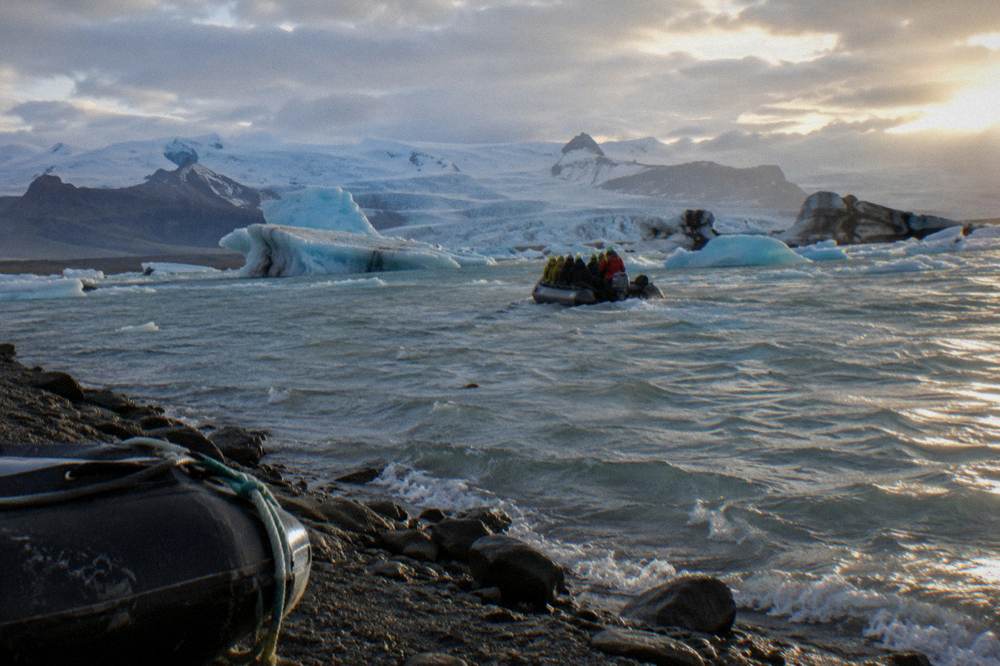
| Boat rides | Operator-run amphibian and zodiac boats, May to October, sometimes into November | Boats sold directly on site by the operator, no season or price published here |
| Guided tours visiting | Every day trip and multi-day option covered here | None of the covered tours stop there |
| Services | Cafe (year-round except late Dec and early Jan), flush toilets, large car park | Flush toilets, far fewer services |
| Crowd level | High in summer, tour bus hub | Quieter at almost any hour |
Can You Take A Boat Tour At Fjallsarlon?
Not through any of the guided tours covered here. Fjallsarlon boat rides exist, but they are not part of the Jokulsarlon tours featured here, and their season and price are not mentioned; check with the operator directly. At Jokulsarlon the amphibian and zodiac rides run roughly May to October, sometimes into November, at the operator's direct prices of 7,100 ISK adult for the amphibian and 16,600 ISK for the zodiac.
That ISK pricing matters because travellers keep trying to bolt a boat ride onto a Reykjavik day trip and get confused by the numbers. The tour card prices are per-person fares for the bus day itself; the boat prices are the lagoon operator's own direct list, paid on site. On several day trips the boat is an optional paid add-on you select at booking, on a couple it is bundled into the fare, and on the rest the tour page says nothing about a boat at all.
The operator's own FAQ spells out the practicalities for the rides it runs: the amphibian lasts 30 to 40 minutes, the zodiac about 1 hour 15 minutes with check-in 30 minutes ahead, and children on the zodiac must be at least 130 cm tall. Ice conditions change daily with glacier activity, weather, tides and currents, so no operator promises icebergs up close on any given departure. Full detail on all of this sits in the Jokulsarlon boat tour guide, including how refunds work on the operator's direct terms.
One safety point worth carrying across both lagoons: the operator does not recommend private boats or kayaks on the lagoon water, because icebergs roll without warning. Anyone tempted to launch their own craft at Jökulsárlón should treat that as the answer.
Which Lagoon Do The Guided Tours Actually Visit?
Jokulsarlon, without exception among the tours covered here. Every Reykjavik day trip, every multi-day south coast option and every lagoon-based activity, ice caves, glacier hikes and kayaking, is anchored on Jokulsarlon and its surroundings. No covered tour product stops at Fjallsarlon, so a reader deciding which lagoon to book around is really deciding which kind of Jokulsarlon tour to buy.
The day trip menu from Reykjavik is broader than most people expect. The most reviewed option is the 14-hour "BusTravel Diamond Beach Day Trip", 4.7 across 4,069 reviews, from $211 per person with free cancellation, pickup details not mentioned on the booking page, and it treats the lagoon boat ride as an optional paid add-on rather than part of the base fare. The Gray Line 14.5-hour alternative runs from $234 from the BSÍ terminal and explicitly excludes the boat. A third 14 to 15 hour trip from $225 lists 36 drop-off locations, with the boat likewise an optional add-on.
For travellers who want the boat bundled in, one 14-hour tour from $292 includes the lagoon boat ride in its price, and the Reykjavik Excursions version at $328 from BSÍ does the same. There is also a 14-hour trip from $229 that adds the Fjaðrárgljúfur canyon stop, for readers pairing the lagoon with one more landmark.
| Day trip from Reykjavik | Duration | From price | Boat ride | Rating |
|---|---|---|---|---|
| BusTravel Diamond Beach Day Trip | 14 hours | $211 per person | Optional paid add-on | 4.7 from 4,069 reviews |
| Gray Line South Coast | 14.5 hours | $234 per person | Excluded | 4.5 from 1,582 reviews |
| 14 to 15 Hour Day Trip | 14 to 15 hours | $225 per person | Optional paid add-on | 4.5 from 1,460 reviews |
| Small-Group Minibus, Hotel Pickup | 14 hours | $229 per person | Not stated | 4.8 from 456 reviews |
| Boat Ride Included, 14 Hours | 14 hours | $292 per person | Included | 4.7 from 492 reviews |
| Reykjavik Excursions Boat Tour | 14 hours 30 minutes | $328 per person | Included | 4.7 from 126 reviews |
The pattern for the buyer is simple. If you want the boat, either book a tour that marks it included or plan to buy the amphibian or zodiac ticket on site through the operator. If you only want to stand at the shore and walk Diamond Beach, the cheaper base fares do exactly that. And if you are staying near the lagoon rather than commuting from Reykjavik, a second family of options opens up that Fjallsarlon has no answer to either.
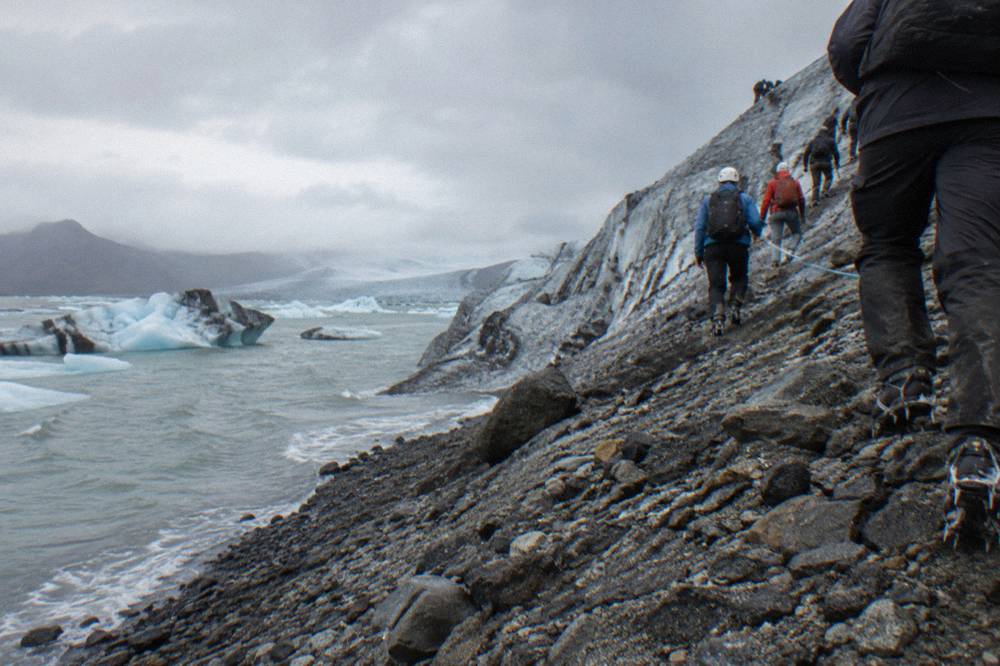
The lagoon-start activities are the strongest argument for making Jokulsarlon your base rather than a drive-by. Ice cave tours depart from the Jokulsarlon car parks by super jeep between roughly October and April, conditions permitting. Glacier hikes and a kayak tour launch from the same parking area. Fjallsarlon offers none of this infrastructure among the covered products, which is why the "which is better" question resolves differently for activity buyers than for photographers.
The 3-hour Blue Ice Cave tour from the lagoon cafe meeting point, 4.6 across 973 reviews and from $195 per person, is a good example of what only the Jokulsarlon side offers. Crampons, helmet and safety gear are included, a guide leads it, and cave entry depends on daily conditions, never a promise. Natural ice cave tours do not run inside the national park in summer, a restriction imposed after the August 2024 collapse on Breidamerkurjokull, with stricter operator rules including a lead guide and daily cave assessments since.
For a slower pace, the guided Vatnajokull glacier hike from the main parking area runs 4.5 hours from $149 per person, 4.8 across 1,081 reviews, with all the safety gear supplied. It is the cheapest substantial glacier activity in the area among tours with large review pools, and like the ice caves it exists only on the Jokulsarlon side of the comparison.
How Much Time And Money Does Each Lagoon Need?
Jokulsarlon deserves the larger slice of any itinerary: the lagoon shore, the bridge underpass to Diamond Beach and a possible boat ride can fill two to four hours, and tour day trips commit 14 or more hours round trip from Reykjavik. Fjallsarlon needs about twenty minutes as a self-drive viewpoint stop, with no entry fee at either lagoon; for parking there, check the current arrangement on site.
Budget the money the same uneven way. A Reykjavik day trip runs from $211 per person at the base end of the covered range. Add the operator's boat ticket on site, 7,100 ISK for an adult amphibian seat, and you have the full classic experience. Two-day small group tours that bundle a glacier hike or ice cave, breakfast included, run from $633 to $696 per person, and the three-day options from $999 to $1,092.2. Against those numbers, Fjallsarlon costs nothing but the fuel and the parking, which is exactly why budget self-drivers like it.
Time of day is the hidden variable. Jokulsarlon changes character with the light and the tide, and ice on Diamond Beach comes and goes with the same tide, so arriving midday with three tour buses is a different visit from arriving at 8 a.m. or 8 p.m. in summer. The Jokulsarlon in summer guide covers the daylight arithmetic; near the lagoon, 21 June brings 21 hours 14 minutes of daylight with the sun setting at 23:39, no true midnight sun but close. Midwinter compresses to about 4 hours at the solstice, which is why winter visits lean on ice caves and northern-lights hope rather than beach photography.
| Cost item | Jokulsarlon | Fjallsarlon |
|---|---|---|
| Parking (passenger car) | 1,110 ISK, valid until midnight | Same regional fee schedule |
| Entry fee | None stated | None stated |
| Boat ride | Operator direct: amphibian 7,100 ISK adult, zodiac 16,600 ISK | Sold direct on site, price not published here |
| Day trip from Reykjavik | From $211 per person | No covered tour stops here |
| Typical time needed | 2 to 4 hours self-drive, 14 hours by day trip | About 20 minutes as a stop |
One caution applies to the beach half of the Jokulsarlon visit. Sneaker waves on open Atlantic black beaches arrive without warning and surge far above the normal line; safetravel's hazard scale runs yellow, orange, with orange meaning stay at least 25 m from the sea, and red meaning the beach is closed. There is no Diamond Beach specific page; the same rule applies on any open Atlantic black beach. The park also asks visitors to walk under, not over, the Route 1 bridge between the lagoon and the beach.
When Is Each Lagoon At Its Best?
Both lagoons are reachable year-round on Route 1, but the experiences diverge by season: Jokulsarlon peaks from May to October, when the boats run, the ice cave season roughly October to April covers the other half, and the long June daylight rewards photographers. Fjallsarlon is at its best whenever you want quiet, which realistically means avoiding the summer midday rush entirely, since it has no seasonal activities of its own among the covered options.
Winter changes the calculus in ways the crowd discussion misses. At Jokulsarlon the boats pause after October, sometimes November, and the action shifts to ice caves, seals gathering at the lagoon mouth to feed, and the chance of northern lights in the limited dark. Winter driving on the south coast is a real consideration: safetravel advises headlights front and rear around the clock, a rental with winter tyres, and checking road conditions and forecasts before every leg. Daylight near the lagoon shrinks from 11 hours 20 minutes on 1 October to 7 hours 58 minutes on 1 November and about 4 hours at the winter solstice, so a Fjallsarlon detour has to fit a narrow window.
Weather normals tell the rest of the story, with the caveat that the nearest long-record station, Kirkjubaejarklaustur, sits about 200 km west of the lagoon and the coast right at the lagoons differs. There the 1981 to 2010 daily means run from about 0 degrees in January and February to 11.6 in July, with precipitation on 182 days of an average year. Plan for wet and wind at either lagoon in any month, and treat a calm hour as a gift.
How Do You See Both Lagoons In One Trip?
Self-drivers can do both in a single afternoon: Fjallsarlon sits west of Jokulsarlon on Route 1, so a short stop there slots neatly before or after the main lagoon and Diamond Beach, all under one regional parking payment window ending at midnight. Tour buyers cannot, because no covered tour stops at Fjallsarlon, so the practical route is a Jokulsarlon day trip plus, for renters, a self-drive day that doubles back.
For the tour buyer, the featured 14-hour day trip from Reykjavik is the benchmark choice: 4.7 across 4,069 reviews, from $211 per person, pickup in Reykjavik available as an option, free cancellation up to 24 hours before, and an optional lagoon boat add-on at booking. Check availability on the operator's booking page. Travelers with more time should read the two day south coast tour guide, since overnighting near the lagoon converts the brutal 14-hour day into two moderate ones and opens the ice cave and kayak departures that only run from the lagoon car parks.
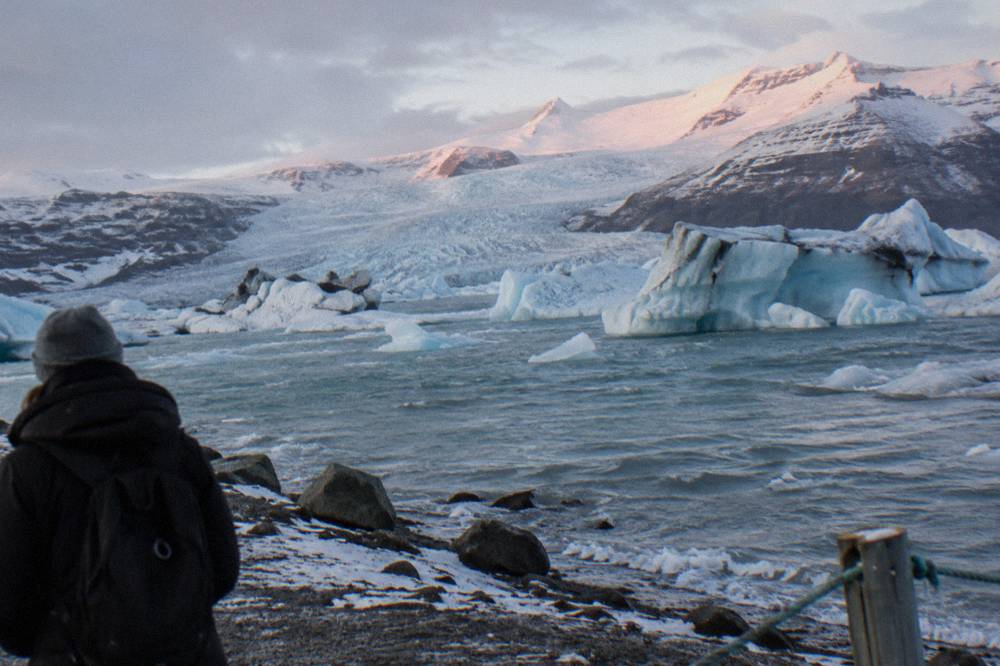
The honest summary, then: Fjallsarlon is the better lagoon for an unhurried photograph and a moment of quiet on a self-drive itinerary, and it costs almost nothing. Jokulsarlon is the better lagoon for everything else, the boats, the beach, the tours, the activities, the services, and it is the only one of the two that a visitor without a car can actually book around. Most travellers should build the day around Jokulsarlon and treat Fjallsarlon as a bonus stop if the schedule allows.
Whatever the choice, the planning basics are the same. Check the road at umferdin.is and the forecast at vedur.is on the morning of the visit, allow far more time than the map suggests for the 370 km from Reykjavik, and keep 112 as the emergency number. This site, Jokulsarlon Glacier Lagoon Tours, exists to make the tour side of that decision easier.
Common Questions About Fjallsarlon Or Jokulsarlon
Which Is Better, Fjallsarlon Or Jokulsarlon?
Jokulsarlon is better for almost every visitor: it has the tours, the boats, the cafe, the services and Diamond Beach 500 m away. Fjallsarlon is better only if your priority is quiet, and you have your own transport, since no covered tour stops there.
Can You Visit Both Lagoons In One Day?
Yes, by car. The two lagoons sit close together on Route 1, and a short Fjallsarlon viewpoint stop fits easily before or after time at Jokulsarlon and Diamond Beach. Tour passengers cannot visit both, because the day trips call only at Jokulsarlon.
Is Fjallsarlon Free To Visit?
Neither lagoon charges an entry fee. What you pay is the Vatnajokull National Park regional parking fee, 1,110 ISK for a passenger car up to 5 seats, valid until midnight on the day paid. Fjallsarlon boat rides, where offered, are sold directly by the operator on site.
Which Lagoon Has The Boat Ride?
Jokulsarlon. The operator runs amphibian boats of 30 to 40 minutes and zodiacs of about 1 hour 15 minutes roughly May to October, sometimes into November, at direct prices of 7,100 ISK and 16,600 ISK for adults. Several Reykjavik day trips bundle the ride in or sell it as an optional add-on.
Is Fjallsarlon Worth The Detour?
For self-drive travellers with spare time, yes, as a quiet twenty-minute stop with its own glacier view and far fewer people. For anyone on a tight schedule or a guided tour, no detour is possible, and the time is better spent at Diamond Beach or on a lagoon activity.