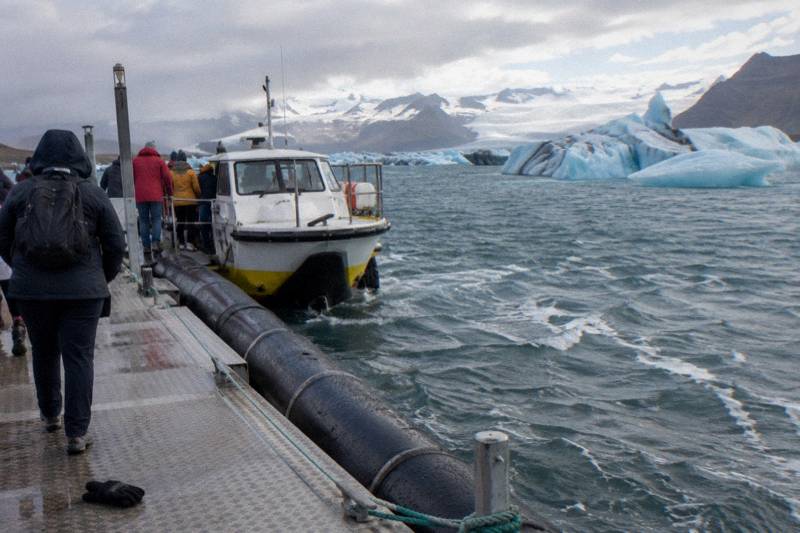
Things To Do In Vik On The Way To The Glacier Lagoon
Vik sits roughly halfway between Reykjavik and Jokulsarlon on Route 1, which is why so many glacier lagoon itineraries pause here. This guide covers what the village offers, how long to allow and which tours build it into the same long day.
Short answer
Vik is a village on the coastal stretch toward the glacier lagoon, which lies about 370 km east of Reykjavik by road, with Kirkjubaejarklaustur another village between Vik and the lagoon. Reynisfjara black beach is the main draw, reached in minutes. Fourteen of the 27 itineraries covered here stop in or near Vik, and eight visit Reynisfjara, so most guided lagoon days include it already.
Where Is Vik And Why Do Lagoon Travellers Stop There?
Vik sits on Route 1 about halfway along the drive from Reykjavik to Jokulsarlon, which lies roughly 370 km east of the capital. That geography makes the village the natural fuel, food and stretch-your-legs point on almost every lagoon itinerary. Kirkjubaejarklaustur lies further along the remaining coastal stretch, and Vik itself appears on 14 of the 27 tour itineraries.
The glacier lagoon sits at the edge of Vatnajokull National Park, and the Jokulsarlon Glacier Lagoon Tours site covers the lagoon end of that drive in depth. This page handles the middle: the village of Vik, its black beach and the cliffs around it, and how it fits into a day that ends at floating ice. Fourteen of the 27 itineraries covered on this site stop in or near Vik, and eight of them include Reynisfjara, the basalt beach just downhill from the village.
That number matters for planning. If you are booking a guided day trip from Reykjavik, the odds are strong that Vik is already on your schedule, as a stop along the route rather than a destination in its own right. If you are self-driving, you control the clock and can give the village two or three hours, which is enough for the beach, the viewpoints above the village and a hot meal before the long final leg east.
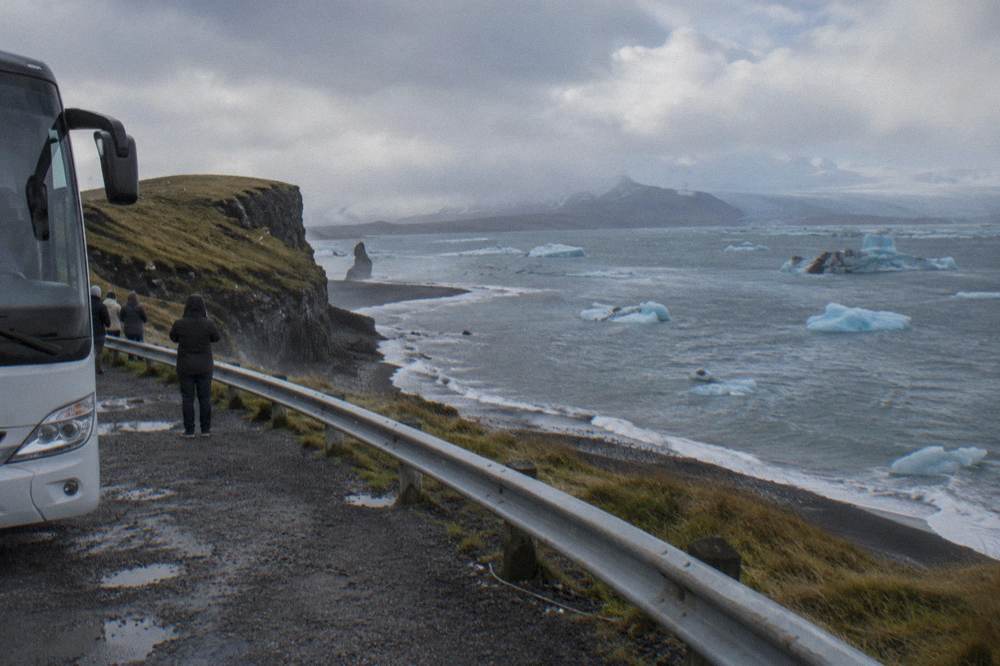
The stretch east of Vik is the quietest part of the whole south coast drive. There are long gaps between services, the road runs closest to the open Atlantic it will ever come, and in winter the combination of wind, drifting sand and limited daylight makes it the section most worth respecting. The practical advice on winter driving from Safetravel applies to the whole route: lights on front and rear around the clock, a rental car with winter tyres, and road conditions checked on umferdin.is before setting out.
One structural fact shapes everything about Vik's appeal: the village is small, and its role in glacier lagoon travel is that of a way station with outsized scenery. Readers deciding between an organised day trip and a self-drive can compare the two approaches in the self-drive versus tour comparison, while the full drive logistics sit in the Reykjavik to Jokulsarlon route guide.
What Are The Best Things To Do In Vik On A Lagoon Trip?
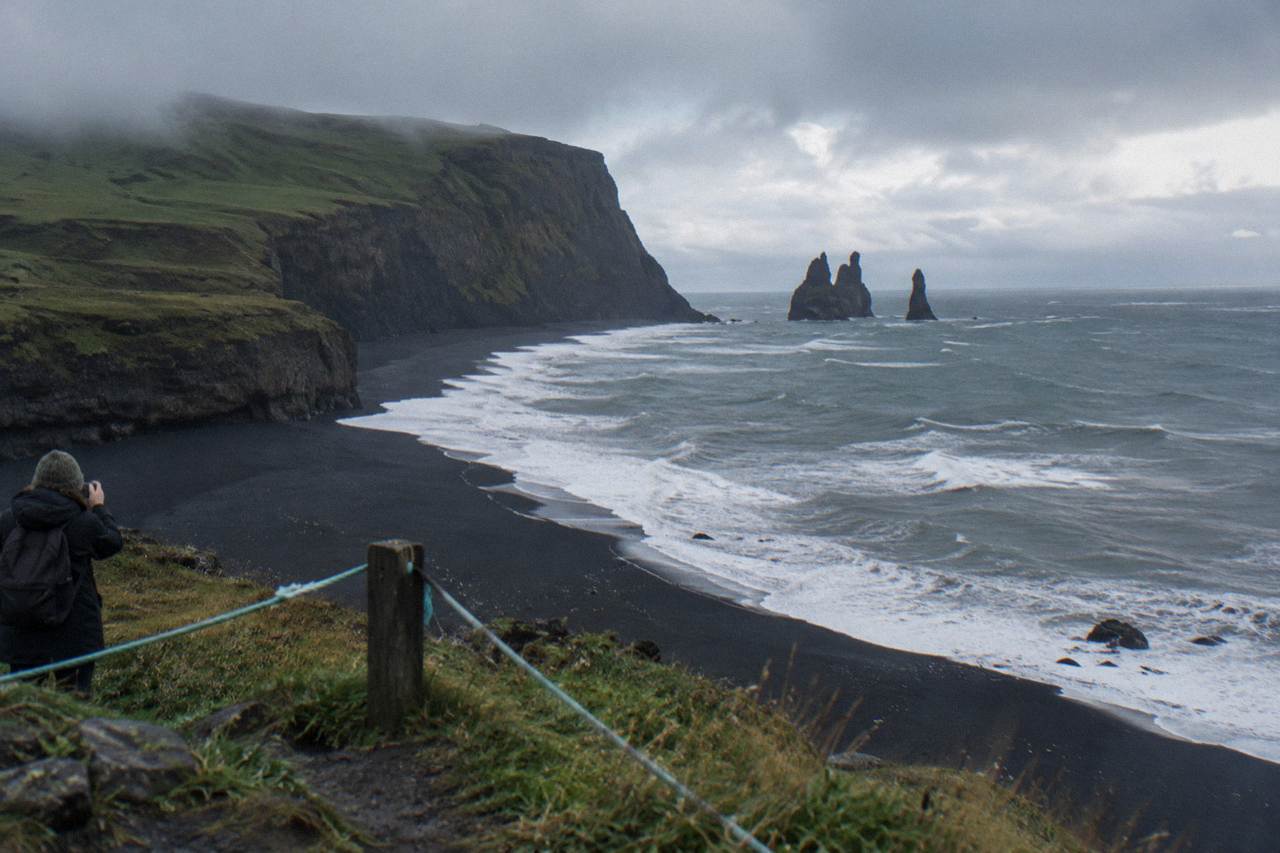
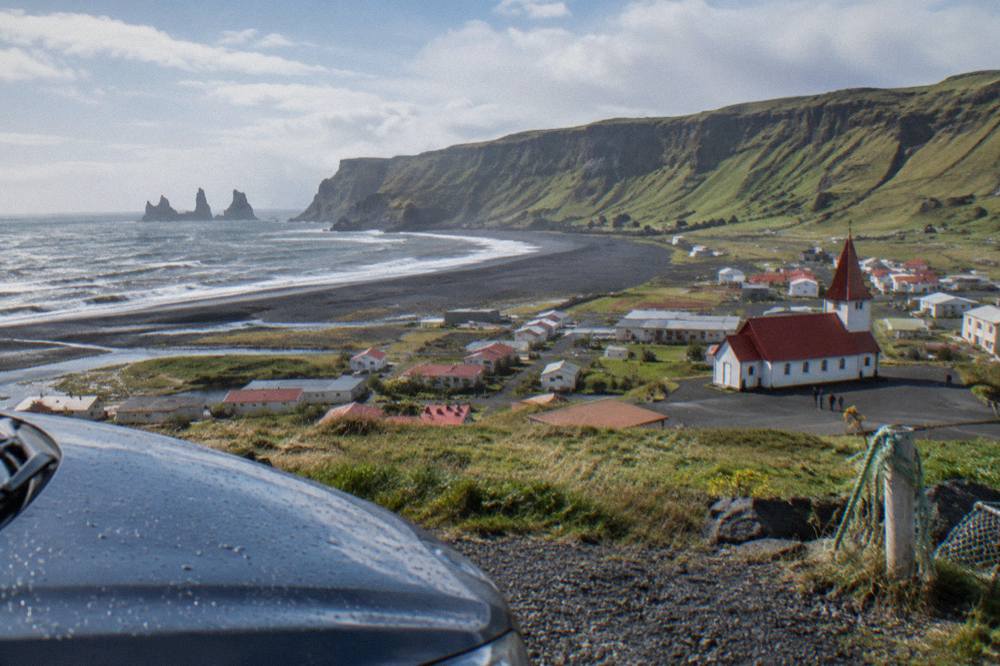
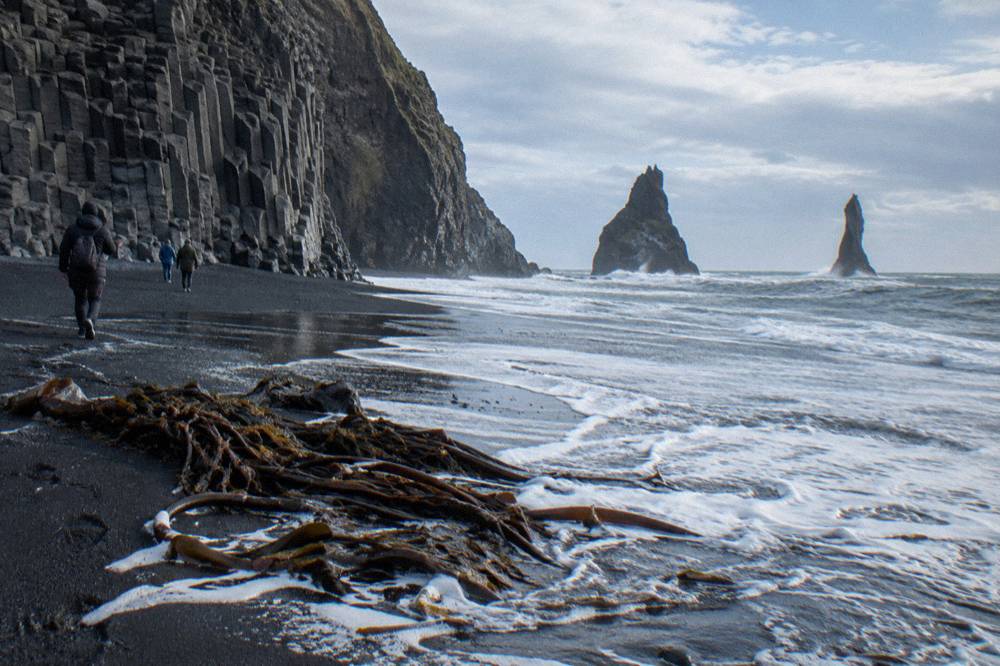
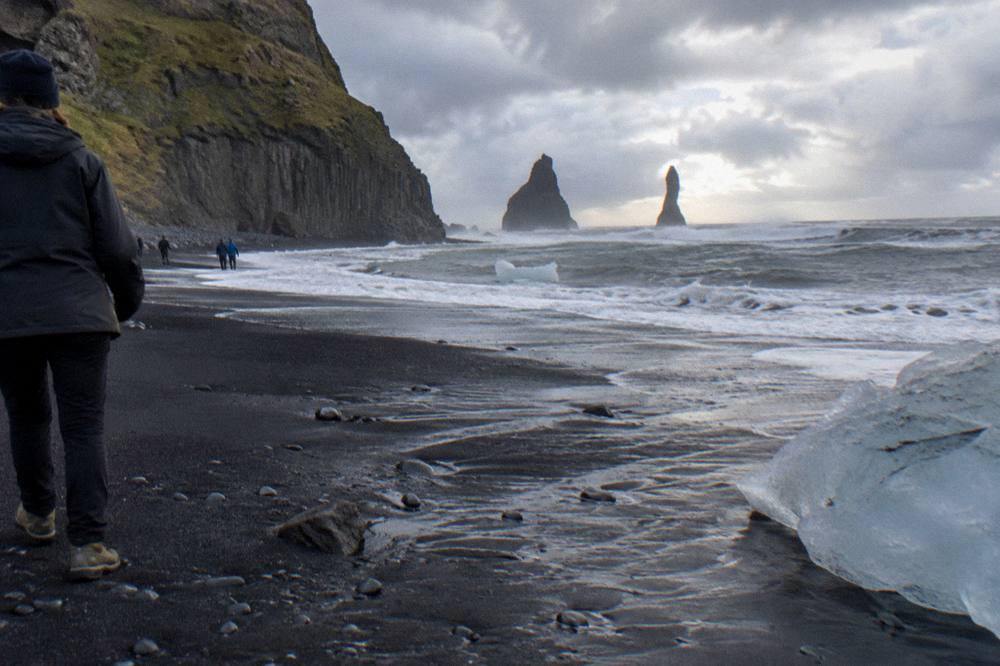
Reynisfjara black beach is the headline stop, a short drive or a downhill walk from the village centre, famous for its basalt columns, sea stacks and sneaker-wave hazard. Above the village, the hilltop church gives the classic postcard view of red roof, black sand and grey sea together. Add Dyrholaey headland to the west when the road is open, and a hot soup stop, and you have a complete Vik visit inside two hours.
Reynisfjara deserves the most caution of anything in this guide. The beach looks calm for long stretches and then produces surges that climb far above the normal waterline with no warning. Safetravel's black-beach guidance warns that sneaker waves arrive without warning on any open Atlantic black beach, and advises visitors to stay well back from the waterline at all times. Those levels are published for Reynisfjara specifically on the Safetravel black beach safety page, and the same rule of distance applies on any open Atlantic black beach, including Diamond Beach at the lagoon end of your day.
The basalt organ pipes at the base of Reynisbjarg cliff and the Reynisdrangar sea stacks offshore are the composition most photographers come for. Keep your back to the cliffs rather than the sea, keep children close, and treat wet sand as a signal to move back rather than closer.
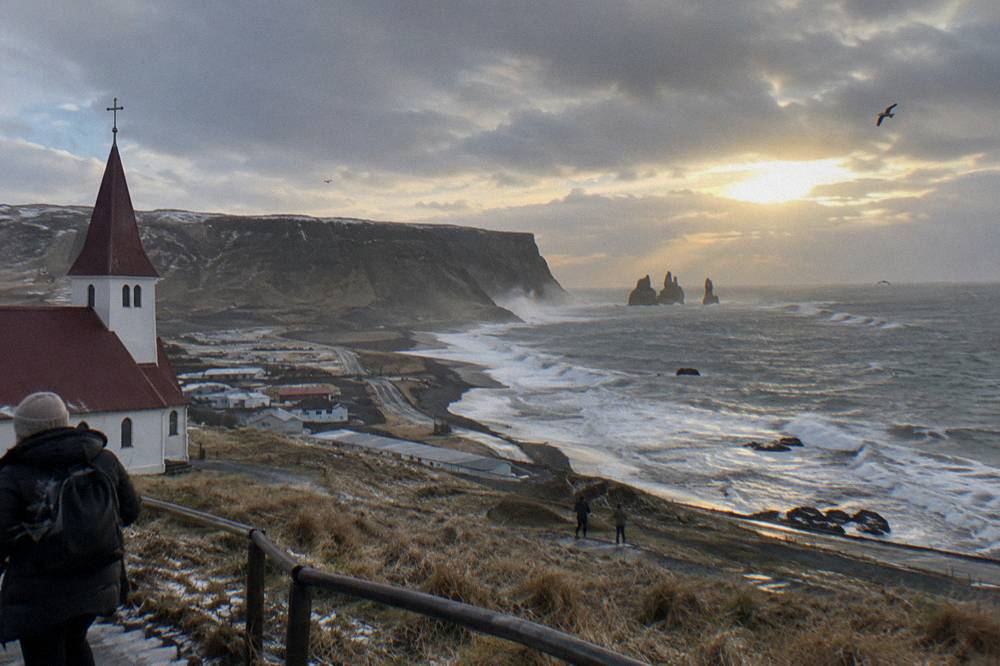
Above the village, the white church with its red roof is the view most people recognise, looking out over black coastline toward the sea stacks. The location is general-knowledge territory on every south coast itinerary; approach it as a viewpoint rather than an attraction with hours or tickets, since none are listed in the verified sources for this site. Dyrholaey, the arch-headland west of Vik, is named on only one of the tours covered here, the Private Full Day, 14 Hours, so the lagoon-bound traveller can treat it as an optional extra rather than a fixture.
Guided tours handle this differently again: the 14.5-hour south coast day trip from Reykjavik notes that there are stops at local restaurants and gas stations on the way, with food and beverages not included, so lunch in or near Vik is bought on the day. Between those meal stops, the same drive passes some of the country's best known falls, and the guide to the south coast waterfalls on the way to the glacier lagoon covers which ones the tours actually visit.
A reasonable time budget for a self-driver looks like this:
| Stop | What it is | Suggested time | Notes |
|---|---|---|---|
| Reynisfjara | Black basalt beach and sea stacks | About 30 min | Watch the hazard level; never turn your back on the sea |
| Village viewpoint | Hilltop church panorama over the coast | 15 to 20 min | Short drive or steep walk up from the centre |
| Dyrholaey | Arch headland west of Vik | 30 min | Seasonal vehicle closures possible; optional |
| Meal stop | Cafe, bistro or fuel station shop | 45 to 60 min | Buy on the day; tours exclude food and drinks |
| Fuel and restroom | Vik is not the last services point, as Kirkjubaejarklaustur lies further east between Vik and the lagoon | Varies | Top up even at half a tank in winter |
Which Day Tours From Reykjavik Combine Vik And Jokulsarlon?
The most reviewed option is the BusTravel Diamond Beach day trip at 4.7 across 4,069 reviews, from $211 per person for 14 hours with a selectable pickup option in Reykjavik, and it is the tour this site features for the Vik-plus-lagoon combination. The Gray Line 14.5-hour tour from $234, rated 4.5 across 1,582 reviews, and a 14 to 15 hour trip from $225 with multiple drop-off locations complete the trio. For travelers watching the budget, a guide to the free sights around Jokulsarlon and Diamond Beach shows which stops cost nothing and where the parking fee applies.
All three are long days of 14 to 15 hours, because they fold the waterfalls, the Vik area and the lagoon into a single outbound-and-return run. The differences that matter at booking time are the meeting point, the price and how the lagoon boat ride is treated. On the BusTravel trip the lagoon boat tour is an optional paid add-on rather than part of the base price; the Gray Line tour lists the lagoon boat tour among its exclusions outright; and the 14 to 15 hour trip also treats the boat as an optional add-on. None of these prices includes food, and all three allow free cancellation up to 24 hours before departure.
| Tour | Duration | Price | Rating and reviews | Meeting point | Boat ride |
|---|---|---|---|---|---|
| BusTravel Diamond Beach Day Trip | 14 hours | From $211 | 4.7, 4,069 reviews | Pickup option available | Optional paid add-on |
| Gray Line 14.5-Hour South Coast | 14.5 hours | From $234 | 4.5, 1,582 reviews | BSÍ Bus Terminal | Not included |
| 14 to 15 Hour Day Trip | 14 to 15 hours | From $225 | 4.5, 1,460 reviews | Varies by selected option | Optional paid add-on |
The featured BusTravel trip suits a traveller who wants the fullest single-day sweep of the south coast and values the biggest review pool behind the operator. The Gray Line alternative suits someone starting at the BSÍ terminal who prefers a fixed, well-known meeting point and is content to view the lagoon from shore, since the boat is excluded rather than addable. The 14 to 15 hour trip sits between the two on price and offers many drop-off locations, though its pickup arrangements depend on the option selected. Whichever you lean toward, the south coast tour overview runs through what these long day trips actually involve.
If a boat ride on the lagoon is the part of the day you care about most, there is a cleaner route: a dedicated day trip that includes the boat in the base price. The Boat Ride Included trip runs 14 hours from Þórunnartún 1 in Reykjavik, from $292 per person, rated 4.7 across 492 reviews, with the lagoon boat ride included rather than optional. It costs more upfront but removes the on-the-day decision, and free cancellation up to 24 hours before still applies.
One pairing to think about before booking: no standalone Jokulsarlon boat tour is sold on the booking platforms at all. The amphibian and zodiac rides are operated by the lagoon company itself, priced in Icelandic krona and bought on site or direct, and the tours above either fold them in, offer them as an add-on, or leave them out entirely. The details of that direct operation, including operator prices and seasons, are covered in the Jokulsarlon boat tour guide.
How Long Should You Spend In Vik On The Drive?
A guided day trip typically gives Vik a meal or viewpoint stop, enough for soup and the church view but not for Reynisfjara at leisure. A self-driver should budget 90 minutes to two hours to add the beach properly, and in winter the arithmetic gets tighter because daylight at this latitude shrinks to about four hours in late December. The honest answer depends on direction of travel and season.
Daylight is the controlling variable. Figures for Hofn, a town east of the lagoon and within minutes of the same day length, show 4 hours 21 minutes of daylight on 1 January, rising through 7 hours 6 minutes on 1 February and 10 hours 10 minutes on 1 March, per timeanddate.com. In midsummer the same coast sees over 20 hours of light, with the 21 June figure at 21 hours 14 minutes and the sun setting at 23:39. A winter self-driver leaving Reykjavik at 09:00 reaches Vik around lunchtime and needs to decide quickly how much of that light to spend standing still.
Travellers heading east toward the lagoon face a real choice at Vik: linger, or push on. The remaining drive to Jokulsarlon is the emptiest leg of the day, and arriving at the lagoon in good light matters more than a second viewpoint in Vik, because ice conditions on the lagoon change daily and the beach beside it rewards the daylight you have left. A common compromise is a full stop on the outbound leg and a shorter one on the return, when the pressure is off and dinner in Vik is a pleasant end to a long day.
Guided tours solve this for you, which is part of what the ticket buys. The driver and guide follow a set itinerary that includes the Vik-area stop, the lagoon stop and the waterfalls, and the traveller trades flexibility for not having to compute daylight windows on an empty coast. The trade-offs of that decision are laid out in the Jokulsarlon in winter guide for cold-month travellers.
What Can You Do Near Vik If You Stay Overnight?
Staying overnight in or near Vik converts the brutal 14-hour day trip into a two-day journey and opens the activities that start at the lagoon itself, including ice cave tours, glacier hikes and kayaking, none of which are reachable in comfort on a single winter day from Reykjavik. The two-day tours from $633 per person with pickup and breakfast included are built exactly for this pacing. Travelers continuing east along the coast can pair the lagoon with a stop in Hofn, and the guide to Hofn's tours, hikes and winter driving covers everything that side of the trip involves.
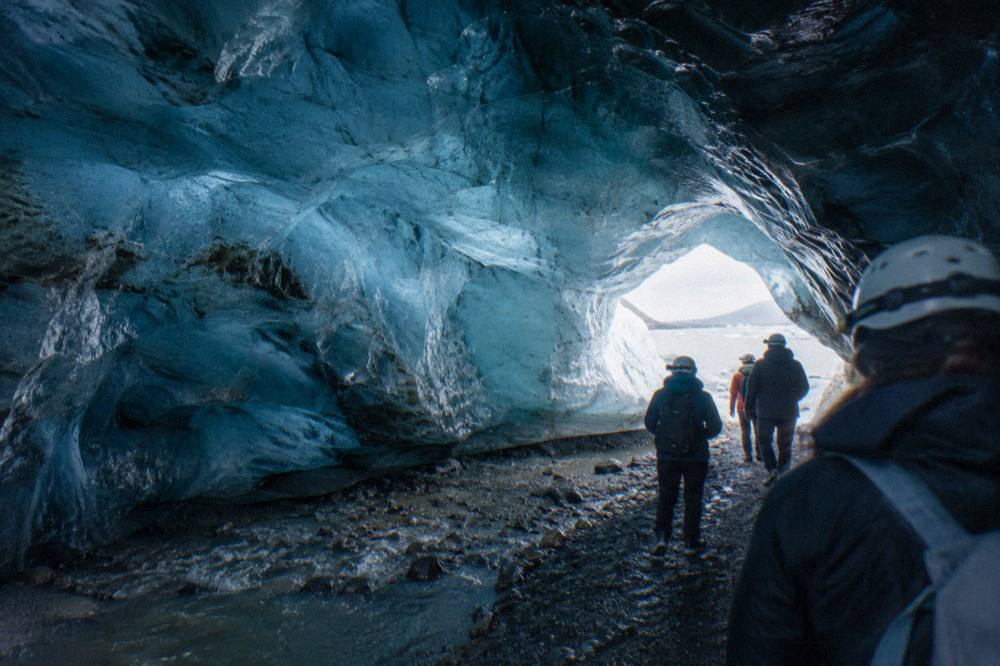
The lagoon-start activities are the reason to break the journey. Ice cave tours under Vatnajokull run roughly October to April, conditions permitting, and after the August 2024 fatal collapse inside the park, natural ice cave tours are no longer run in the national park during summer, with stricter operator conditions including a lead guide and daily safety assessment of each cave, as reported by Iceland Review. A small-group ice cave tour from Jokulsarlon, 2 hours 30 minutes and from $194 per person, rated 4.8 across 298 reviews, meets at the lagoon and includes crampons, helmet and safety gear; you get yourself to the lagoon first, which is the same 370 km drive that makes the day trip so long.
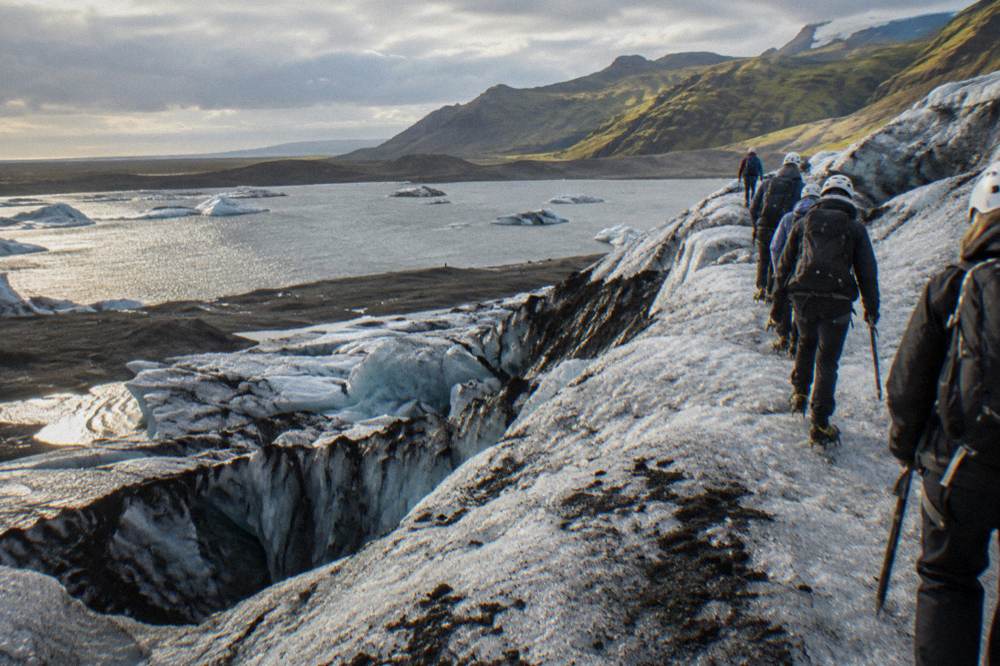
Glacier hikes are the other lagoon-area activity a Vik or Hofn base unlocks. The Skaftafell glacier hike, 3 hours and from $96 per person, rated 4.8 across 57 reviews, is the lowest per-person price of anything on this site and starts from the Jokulsarlon lagoon parking area per its meeting point, gear included. Longer options include a 4.5-hour Vatnajokull hike from $149, rated 4.8 across 1,081 reviews, and a 6-hour hike to a remote ice cave from $279, rated 4.9 across 273 reviews. Safetravel's guidance is blunt: never go onto a glacier without experience or the proper equipment, and hiring a certified guide is highly recommended. The full range is compared in the best glacier hike roundup.
| Activity from the lagoon area | Duration | From price | Rating and reviews | Starts |
|---|---|---|---|---|
| Small-group ice cave tour | 2 h 30 min | $194 | 4.8, 298 reviews | Jokulsarlon |
| Blue ice cave tour | 3 hours | $195 | 4.6, 973 reviews | Jokulsarlon |
| Skaftafell glacier hike | 3 hours | $96 | 4.8, 57 reviews | Jokulsarlon |
| Vatnajokull guided hike | 4.5 hours | $149 | 4.8, 1,081 reviews | Jokulsarlon |
| Glacier lagoon kayaking | 1.5 hours | $155 | 4.7, 532 reviews | Jokulsarlon |
The two-day structured option deserves a look before you book anything à la carte. The 2-Day Glacier Hike small-group tour runs from Reykjavik at from $639 per person, rated a perfect 5.0 across 206 reviews, with pickup included, breakfast included, a glacier hike with gear and guide, and the lagoon boat ride as an optional paid add-on. Lunch and dinner are bought en route. Its sibling, the 2-Day Blue Ice Cave small-group tour from $689, rated 4.9 across 795 reviews, swaps the hike for an ice cave visit, conditions permitting. Both remove the 370 km question from your morning entirely.
Kayaking rounds out the lagoon-side list: a 1.5-hour paddle from $155 per person, rated 4.7 across 532 reviews, gear and guide included, meeting at the lagoon parking lot with no pickup. Note that the lagoon operator itself does not recommend private boats or kayaks on the lagoon, because icebergs roll, so a guided kayak tour is the recommended way onto the water under power of your own arms. Details sit in the kayak tour guide.
When Is The Best Time To Pass Through Vik?
Summer gives easiest driving and up to 20-plus hours of daylight but brings the fullest car parks and the most tour buses; winter offers ice-cave season and quiet roads against roughly four hours of December daylight and genuine road risk; the shoulder months of May, September and October split the difference and are when many travellers find the coast at its most workable. There is no single best month, only the trade you prefer.
The verified climate normals come from Kirkjubaejarklaustur, about 200 km west of the lagoon, and the coast near Vik and Jokulsarlon differs, so treat them as a regional sketch rather than a forecast. Daily means run from around freezing in January and February to 11.6 °C in July, with precipitation spread across every month, heaviest in December at 177 mm and August at 166 mm, totalling about 1,700 mm a year. In plain terms: pack for wind and rain in any month, and expect the difference between seasons to be about light and road ice rather than about warmth.
Winter travellers should check two things every morning of the drive: the road map at umferdin.is/en and the forecast at en.vedur.is, the latter recommended by the national park's own travel advice. The Route 1 bridge and road beside the lagoon have seen closures for works, including an overnight closure in late September 2026 and a week-long paving closure of the main lagoon car park in early October 2026, both now finished, which is a useful reminder that this coast is under constant maintenance pressure. Rangers supervise the Jokulsarlon, Fellsfjara and Fjallsarlon sites every day of the year per the park's pages.
Parking at the lagoon itself is a regional park fee, 1,110 ISK for a passenger car of up to five seats, valid until midnight on the day paid with free re-entry, per the park price list. Vik sits outside that fee area; budget the krona for the lagoon end of the day.
Common Questions About Vik
Is Vik Worth Stopping At On The Way To Jokulsarlon?
Yes, for most travellers. It is the last full-service village before the long coastal stretch to the lagoon, and Reynisfjara is one of the most photographed beaches in Iceland. Fourteen of the 27 itineraries covered here stop in or near Vik, so guided travellers usually get it automatically.
How Far Is Vik From The Glacier Lagoon?
Vik sits roughly halfway on the roughly 370 km Route 1 drive from Reykjavik to Jokulsarlon. From Vik you are on the quieter, emptier half of the drive, so fuel and food stops should happen in the village.
Do Day Tours From Reykjavik Stop In Vik?
Most long-day south coast tours do, usually with a stop for food or a viewpoint. The BusTravel Diamond Beach trip, the Gray Line 14.5-hour tour and the 14 to 15 hour day trip all build south coast stops into their 14-hour-plus schedules, with meals bought on the day.
Is Reynisfjara Dangerous?
Sneaker waves are a real hazard. Safetravel warns of sneaker waves at the beach: waves run far further up the sand than they appear to, so stay well back from the waterline at all times. Check the hazard level on arrival and never turn your back on the sea.
Should I Stay Overnight In Vik Or Do The Lagoon As A Day Trip?
A day trip works in summer when a 14-hour day fits the daylight. In winter, or if you want an ice cave tour, glacier hike or kayaking, a two-day tour or an overnight near the lagoon is the better structure; two-day tours run from $633 per person, most with breakfast and pickup included.
Can I Visit An Ice Cave In Summer From This Area?
No. Natural ice cave tours inside the national park run roughly October to April and were banned in summer after the August 2024 accident. Year-round glacier options such as man-made tunnels exist elsewhere in Iceland, but the natural caves near Jokulsarlon are a winter-season product, conditions permitting.
The most practical single-day options remain the guided tours from Reykjavik, which run 14 to 15 hours end to end.